How is it done? Just hard work?

Joined
Jul 17, 2006
Messages
772
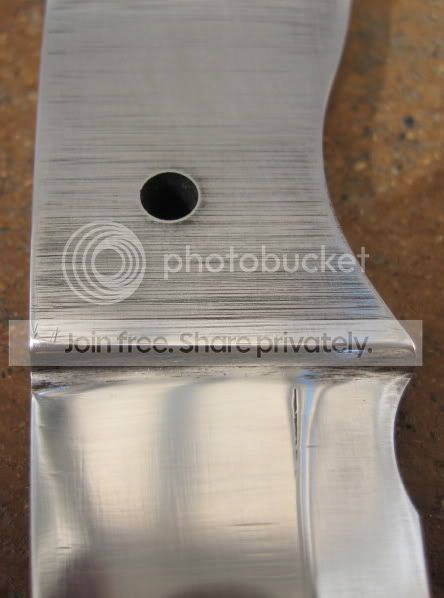
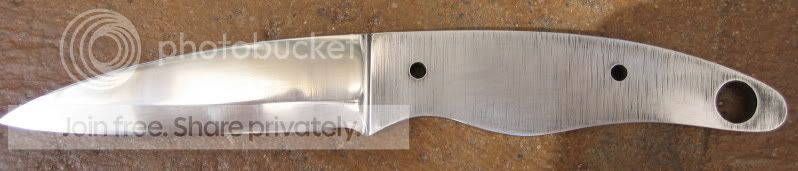
Hey there, I'm almost finished with another knife, how does anybody get into the little nooks and crannies to sand? Is it just hard work, tricks of the trade or is it possible to not have these little areas to start with? I can't seem to get these areas flat no matter what I do, maybe just better glasses would help. I don't see them until I think it's finished then bam, there they are. Any pointers? Thanks P.S., that's not a crack, it's gone and looking much better since grinding again.
IMG_3938_1.jpg

IMG_3939_1.jpg
 
I like to use india stones. work just like sandpaper but they are rectangular and hold there shape untill they break down. You can put a shape on them on the sander then sand away.
 
I use a brass bar that I have for making bolsters. I lay the sandpaper on the metal, say the ricasso next to the bolster, and lay the bar on top of the paper. This allows me to get into the joint between the bolster and the riccaso without rounding anything out and without trying to use my fingernails to push it into the tight spots. The brass wont scratch or gouge hard steel but is hard enough to keep it from rounding while you sand. You may have to put a sharp 90 degree edge on the brass bar first.

For plunges is you have a belt grinder get your higher grits in th klingspor yellow belts from Pops and run them over the edge of your platten. I cut and refine my plunges this way.

If I have a dent inside a finger choil or something where the small wheel will be a pain or remove to much I will just breakdown and hand sand. To get a side of a piece flat a granite plate or piece of plate glass with sand paper on top works good. Sand in a figure 8 to avoid rounding any corners.
 
Blub: Not being a smarta** here. The trick is to not make a shape that you can't clean up with your belt sander. If you're doing it by hand, then the suggestions above will certainly work.
 
yup, any flat piece of hard stuff you can wrap sandpaper around with a square edge will work. I am actually using a sanding bar from tower hobbies. Check this.
http://www2.towerhobbies.com/cgi-bin/wti0001p?&I=LXK314&P=0

The edges are pretty square, and the bottom is pretty flat., and its only 6 bucks. the rounded edges are nicer on the fingers compared to holding on to flat stuff. I dont bother with the stick on sandpaper, it just comes off when you try to wet sand. I just use regular sheets like any other Joe does. Another hint, especially for the guts of the blade. when you move up to a higher grit when hand sanding, use a permanent marker, and mark the whole blade. When you cannot see any more marker, then all the scratches from the previous grit are gone. Even using a magnifying glass really lets you see if all the marker is gone.
 
One trick I've started to use to get the inside curve of small choils and the like nicely polished is to spray the back of a strip of wet-n-dry with photo mount spray and then wrap it around a piece of rod smaller than the choil in the same direction as my drill runs. Then the rod goes in the rechargable drill and I work it into the choil. A little water on the paper once I get to 1200 grit and no-one could tell it wasn't mirror polished in those little bits ;)

As the wet-n-dry wears I simply tear off one circumference of the wrap and expose a fresh layer. Use a brass rod and any splits through the paper won't mar the blade.
 
I make polishing sticks out of hardwood, similar to BigJims brass bar trick (:thumbup: ) I also use diemakers polishing stones for most of my prefinish work (up to & including 600 grt. stone ) followed by emery for finish clean-up.


Blub: Not being a smarta** here. The trick is to not make a shape that you can't clean up with your belt sander. If you're doing it by hand, then the suggestions above will certainly work.


RJ, I've seen you start quite a few posts to different threads like that ;) I'm getting the idea that maybe you're a smarta** :D ;)
 
Seems like everyone has covered most of the tricks. The only suggestion that I might offer is to use mold stones. These stones are used to polish plastic molds. They break down a little faster than the India stone and you must keep them lubricated with an oil. I like the 600 grit the best. Two manufactures are Norton and Gesswein. You can shape them with a grinding wheel. Hope this helps.
 
I agree with simplifying your blade shapes and bevels. That will make it easier to do my next suggestion, which is to sand the blade flats by moving the blade lengthwise on the sandpaper versus moving the sandpaper. I tape the sandpaper down to a known flat surface like a piece of steel (ie, table saw bed) or piece of polished granite from a headstone carver or a bench block. That works for the large flat surfaces on blades and keeps you from having to change little pieces of sandpaper time after time.

Some heavy rubber mat like the stuff that's used for floor matting or sometimes big truck mud flaps makes a nice thing to sand against when you want to sand inside or outside corners.

Another tip is people tend to use sandpaper too long. Use more fresh sandpaper and you will get the job done much faster and you'll be happier with the finish.

Don't paint yourself into a corner when you design your knife and finishing will be much easier.
 
Another tip is people tend to use sandpaper too long. Use more fresh sandpaper and you will get the job done much faster and you'll be happier with the finish.

That's really important. I've been guilty of trying to make paper "last longer" and always regretted it. Also when using a file, card it often. A file with metal particles in it can leave a really ugly scratch or three (yup, I learned that the hard way too :o).
 
Seems like everyone has covered most of the tricks. The only suggestion that I might offer is to use mold stones. These stones are used to polish plastic molds. They break down a little faster than the India stone and you must keep them lubricated with an oil. I like the 600 grit the best. Two manufactures are Norton and Gesswein. You can shape them with a grinding wheel. Hope this helps.

Already got ya covered in post # 10 ;) :) Add a Diprofil to the stones & the combo is super :thumbup:

Kerry, whats the fun if we don't challenge ourselves with "impossible designs" ;) :D Good tip on trashing the paper after it's "done its job" :thumbup:
 
Back
Top