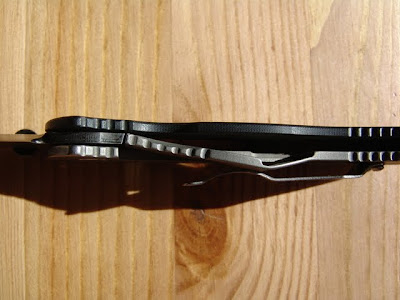
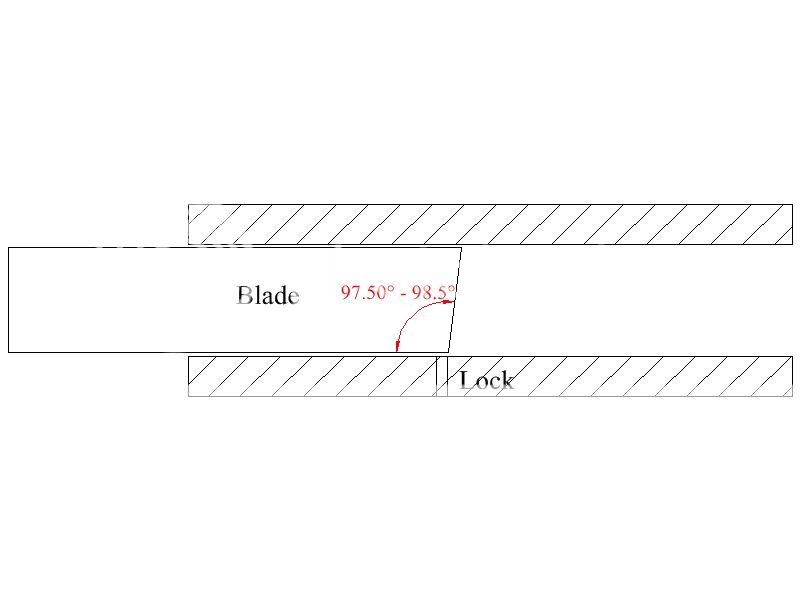
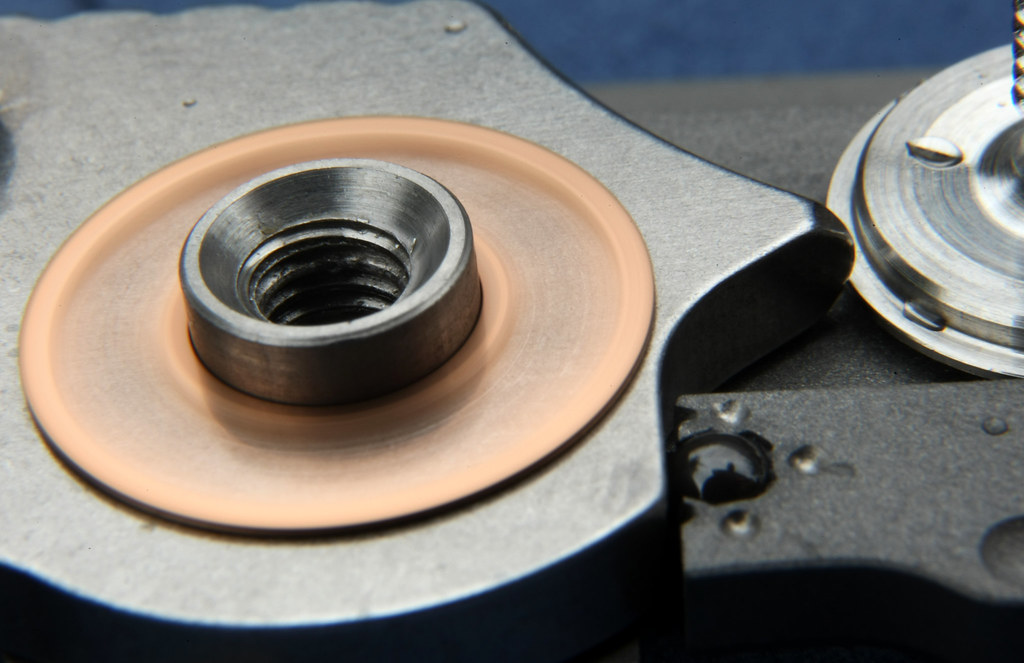
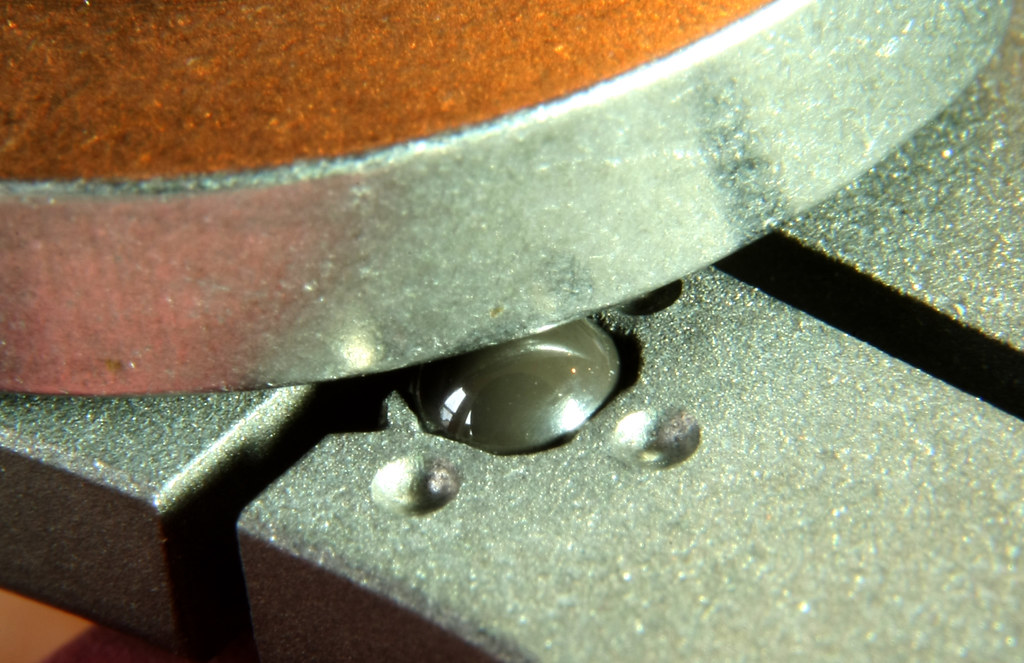
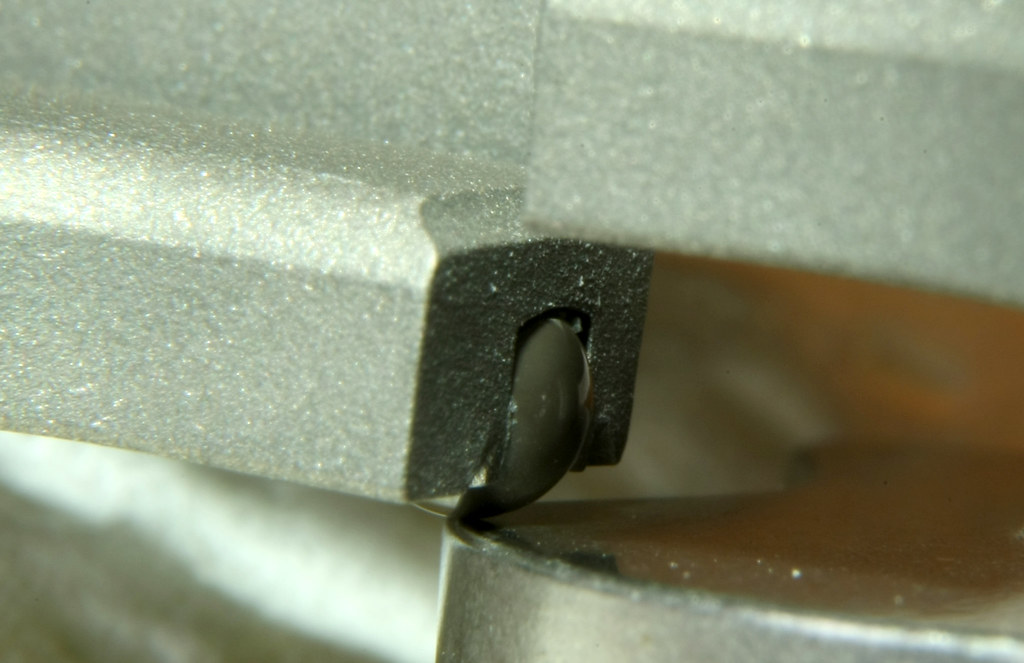
"The lock should engage at between 50% and 75% of travel. With the Umnumzaan, because the interface between the blade and the lock bar is a ceramic ball, it is the ball that must be at 50 75%. This will give the visual that the lock bar is further over than with a Sebenza."
I have yet to hear of a single lock with the ceramic ball interface that gives any problems. Since the release of the Umnumzaan, despite people complaints of it being "late" no one has had one wear out, disengage or develop any "sticky" lock.
There has been only reports of people overextending the lock resulting in problems and from there the CR over extension tab/disc or whatever was applied.
So, in short. Dont mess with what works and use it. Also, a very important thing is maintenance. Maintenance of your knife for good, reliable and safe locking engagement is important.
Added from:
http://www.knife-expert.com/liners.txt
THE LINERLOCK -- RIGHT FROM THE SOURCE
Michael Walker's invention and development of the LinerlockTM
by Bernard Levine (c)1997 - for Knives Illustrated
The "Linerlock" knife is now so familiar that it is easy to
forget that both the knife and the name are relatively recent
inventions. Michael Walker made the first modern Linerlock in
1980, and he registered the name Linerlock as a trademark in
1989. Since the mid 1980s, dozens of hand knifemakers and factory
knife manufacturers have made locking liner type knives inspired
by Walker's designs, although very few of them fully understand
either the advantages or the limitations of this mechanism. The
best way to understand the Linerlock is to look back at how
Walker developed it.
THE EARLY DAYS
Mike Walker began to make knives early in 1980. One of his
first customers was a collector and dealer in Red River, New
Mexico, named Don Buchanan. Mike made ten fixed blade knives for
Buchanan. Don asked Mike for sheaths to go with these knives.
Mike made those leather scabbards reluctantly, then announced
that he hated making sheaths. So Don said, "Make folders."
Mike did. He made slip joints. He made lockbacks like the
factory folding hunters then on the market. He made mid-locks
with mechanisms copied from antique folders. But he was not
satisfied with any of these. Walker envisioned an improved folder
that would do away with what he saw as the many limitations of
conventional lockbacks.
First, he would design a knife that the user could open and
close safely and easily with one hand, without having to change
one's grip, or rotate the knife in one's hand.
Second, his new knife would do away with the sharp "back
square" of the conventional pocketknife blade. When a
conventional blade is closed, its back corner sticks out, and can
snag the user's clothing. In some folders the back square is
enclosed by extended bolsters, but this can compromise the shape
of the handle. Mike envisioned changing the basic geometry of the
folder, in order to eliminate the problem entirely.
Third, and most subtle, his knife would be self-adjusting
for wear. Other innovative folders of this period, notably the
Paul knife by Paul Poehlmann (patented 1976), were very strong
and very sleek, but they required careful adjustment of set
screws to keep their blades from working loose.
THE LOCKING LINER



 eening the contact is a technique used by cutlers to 'refresh' the actual physical contact area on the lock where it connects to and wears against the blade in use. Since the lock is technically supposed to connect and support the blade at the bottom of the lock at the point far enough away from the mid line of the pivot barrel or pin to prevent 'blade roll', (bottom being the area many refer to as the top since its up by the thumb grooves where one depresses the lock to release and free up the blade to close it. Think bottom of the blade when opened and that is technically the bottom of the knife and the where the edge runs with the spine of the blade when opened being at the bottom running along the full length of the folder)