
How should I cut this walnut slab

Joined
Mar 28, 2016
Messages
811
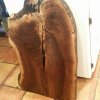
I was given this 2" thick walnut slab and I want to cut it into blocks to send off to K&G to get stabilized.
I was thinking I'd rip 1.75 inch strips down the long side from top to bottom then cut the strips down to around 5.5" lengths. Would that be a good size for stabilization? 1.75x2x5.5?
Is that the right way to cut it?
20180421_142837-1488x1488.jpg
 
Hello, I don’t remember which? But one kind of Walnut will take Stabilization and the other won’t .. Also is it under 10% mostiure ?? The best for you on your project !!
 
Last edited:
I was given this 2" thick walnut slab and I want to cut it into blocks to send off to K&G to get stabilized.
I was thinking I'd rip 1.75 inch strips down the long side from top to bottom then cut the strips down to around 5.5" lengths. Would that be a good size for stabilization? 1.75x2x5.5?
Is that the right way to cut it?
View attachment 892800
The furniture maker in me is screaming not to cut that and that I’d be willing to trade a bunch of handle material to make sure it doesn’t get cut, but if I was cutting it into knife handles I would cut it in a way that lets you use the face grain for the show sides of the handles I would plan how wide of a piece I need On average for handles so if say most my handles are under a inch wide I’d cut a strip 1 to 1.25 inches wide at the most then resale the 2 inch thick block into 4 slices just under a half inch thick, at that point you can dry the slices by letting them air dry for a few months or using a oven at low temps for a few hours at a time until they are bone dry then if K&G thinks they would stabilize well I would send them in so you would basically end up with scales .5x1-1.25x5.5 you can slice each scale thinner to say .25 for smaller knives or down to .375 for larger knives or if your doing more sculpting. The more waste on the blocks before you send them in the more money you waste in resin, now if your doing hidden tangs were you need the solid block that’s different then I would cut them the way you described
 
One other note, when you get to the more figured sections forget cutting strips, lay out a blocks where the grain looks the best even if you have more waste you will get nicer handles, you may have to use a bandsaw to break the slab down to best use the grain
 
I would avoid trying to cut and stabilize thin slabs as suggested by Joshua. Walnut tends to warp a bit ( or a lot) in stabilization and you need to do thicker blocks. You can saw the blocks into thinner pieces after stabilizing.

I would rip it down the split and then slice it into 1.5X5.5X2" blocks as you mentioned. They should not twist/warp much and can be cleaned up after stabilizing.

Some of those stabilized blocks can be cut into 1" thick handle blocks and others can be cut into 4 scales. No need to cut them all up at once, as they can sit on the shelf until a project comes along and then be trimmed to size.
 
The furniture maker in me is screaming not to cut that and that I’d be willing to trade a bunch of handle material to make sure it doesn’t get cut
It actually came from a furniture maker, he had tried to work with it but the crack down the center is too severe for what he planned. It has a lot of wiggle.
. You can saw the blocks into thinner pieces after stabilizing.
That was my plan. I make a lot of smaller knives, so I like to slice off what I need from a larger block. I can get 4-6 little knives out of a decent block.
Thanks guys. It got rained on in the back of my truck, so I'm going to wait a few days to check the moisture, but it has been in a furniture makers shop with hundreds of other beautiful local slabs for a while so I thinks it should be about ready.
 
Thank you Stacy for the correction on stabilizing for walnut, I wasn’t aware of it’s tendency to warp during that process, I just know from a standpoint of trying to dry the material it’s better to cut things down thinner within reason, I would still check the moisture content there is a good chance it isn’t considered dry enough for stabilizing, wood generally takes a year per inch of thickness to air dry, the fact that it has a severe crack and movement would cause me to want to check the pieces when I get them cut closer to size
 
It actually came from a furniture maker, he had tried to work with it but the crack down the center is too severe for what he planned. It has a lot of wiggle.

If I had this block, I would definitely resin fill the crack/void and make a table out of it. The idea of cutting it up hurts. Anyway, I don't think K&G prices differently based on size, only based on weight, so I would leave it in as large a section as is practical to ship. Also I wouldn't stabilize all of it, especially if it is pretty dense. Leave some unstabilized and make handles with both, see if you prefer the stabilized version.

TBH, I don't think every wood benefits from stabilization, and having used a bunch of walnut in a ton of applications, most has been plenty tough without it. (20+ years ago, I turned a judge's gavel from black walnut. the handle was thin and beaded, but turned from a straight grained split. The head was well figured. It was used very regularly until said judge retired many years later. The head looks good, none of the beading chipped, and the handle never split or fractured. I suspect the stabilization wont do that much for you in most of that block. If I was going to use the crotch area or any of the super figured areas, those I would stabilize. The clean heartwood sections look fine unless something diferent is going on on the back side.
 
I understand the pain you furniture guys feel when I say I'm cutting this up, but it comes down to the fact that I make knives, not tables. The gentleman who gave it to me is a local furniture artist (marking tree design) and we have been wanting to collaborate for some time. Some knives will probably end up back in his showroom sitting on top of a table made from the same tree. He also has several knives on order from me and wants me to use his wood. Basicly I'm planning of having a good supply of locally sourced "Marking Tree Design" walnut for people that are interested in the local maker community vibe.
So, yeah it's getting diced.
 
I would also cut it down the middle where the split is then joint it then cut the strips/blocks.
 
I understand the pain you furniture guys feel when I say I'm cutting this up, but it comes down to the fact that I make knives, not tables. The gentleman who gave it to me is a local furniture artist (marking tree design) and we have been wanting to collaborate for some time. Some knives will probably end up back in his showroom sitting on top of a table made from the same tree. He also has several knives on order from me and wants me to use his wood. Basicly I'm planning of having a good supply of locally sourced "Marking Tree Design" walnut for people that are interested in the local maker community vibe.
So, yeah it's getting diced.

I have a few articles I wrote for one of my suppliers on how to cut crotch lumber properly. I will pm it to you when I can
 
Back
Top