

- Joined
- Dec 7, 2008
- Messages
- 7,187
This is how I cut up a Maple side burl with the goal being to show the best figure.
Not saying that this is the only way to do it. This is just how I do it.
The piece in the photos was a burl growing on the side of the trunk on an Oregon Maple. Also called Western Big Leaf Maple. But the Maples are a bit different in Southern Oregon than the ones that grow in the rest of the Northwest.
First I am cutting the burl into 2 more manageable size pieces. The saw is an old meat cutting bandsaw.
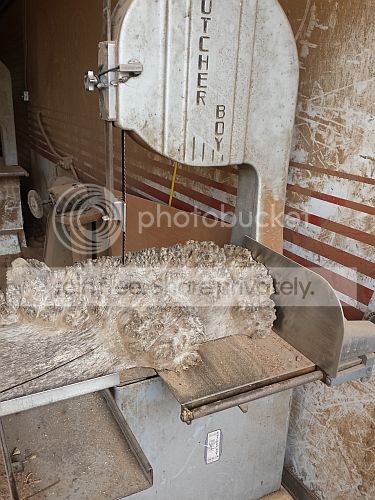
Next I cut a straight edge following the length of the trunk. This way maintains the most strength in the wood.
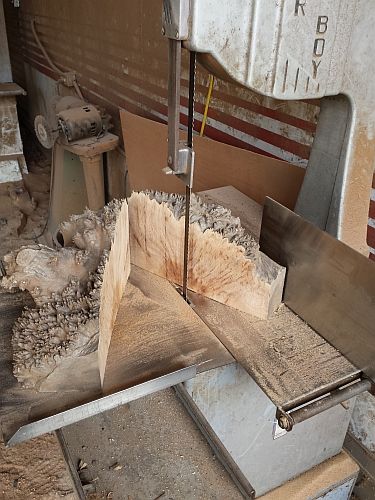
This half is the best part of the burl.
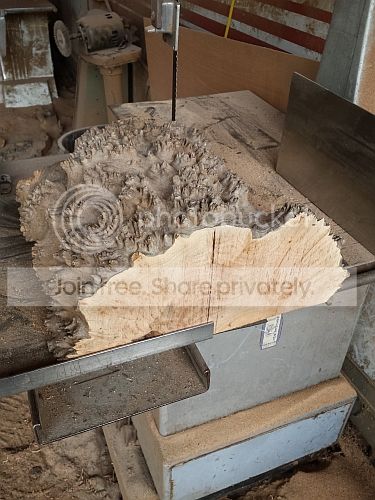
Cutting a straight edge on this chunk. Once again following the length of the tree trunk.
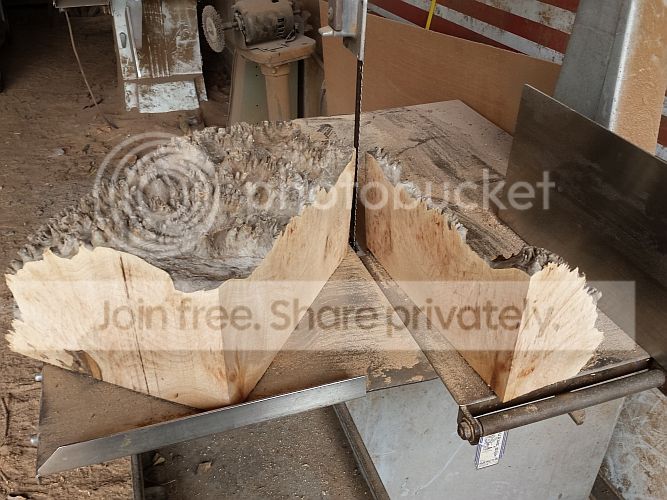
Here I start cutting the burl chunk into strips 2"+ wide.
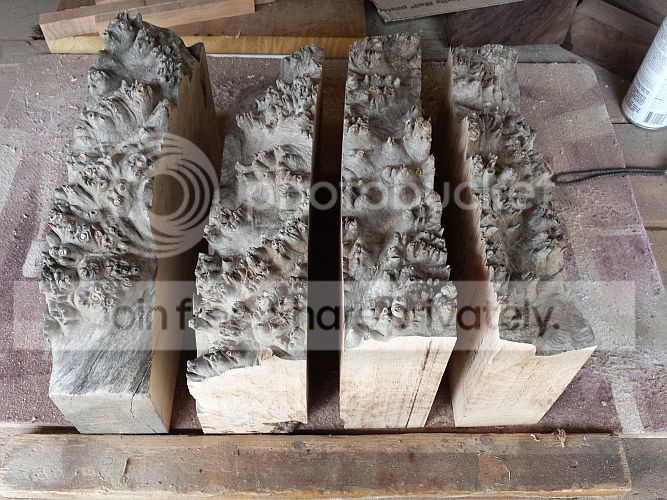
These surfaces will be the edges of the blocks when I cut them. This photo also shows why it is bad to use a saw with a dull blade.
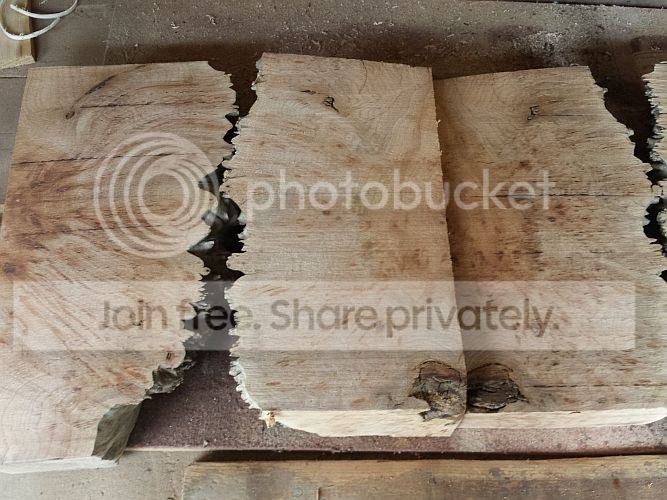
Here I have marked the blocks to make the cut that will expose the surface that will be the faces of the blocks. I am trying to keep my cuts close to being parallel to the outer surface of the burl.
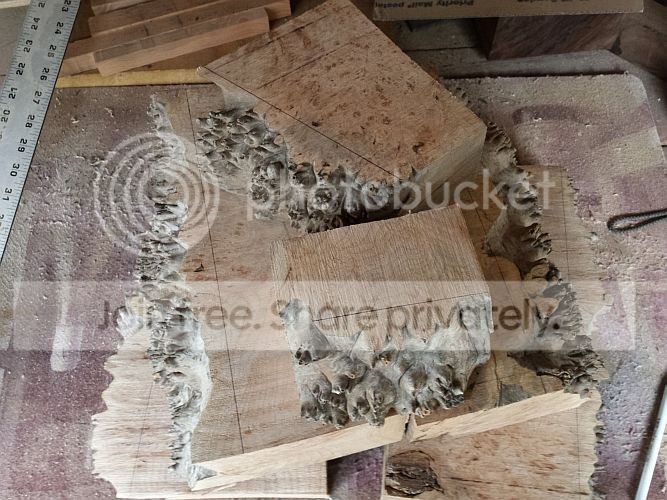
After trimming away the outer surface I can get a glimpse what the figure is like inside.
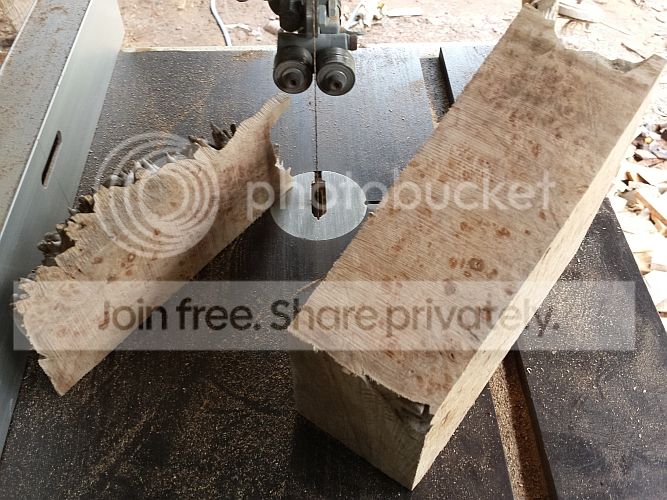
Here I have trimmed off the outer surface of each strip that I cut from the burl.
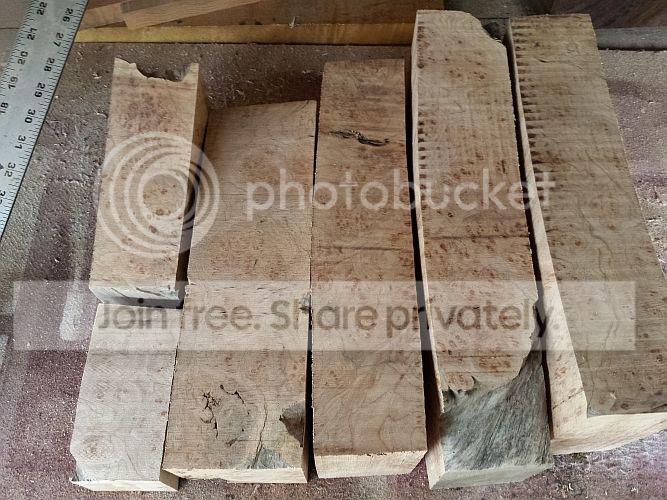
I am not cutting the strips into blocks yet. These strips are going into a drying room for a while to remove more moisture. That way any existing cracks will open up so I can know where to cut to remove any flawed wood.
This piece has been setting under cover for several years but it is not all the way dry. I got moisture readings from 12% to 16%. After I cut these into blocks I will continue drying until I get a consistant 8% or less reading. Then off to K&G for stabilizing.
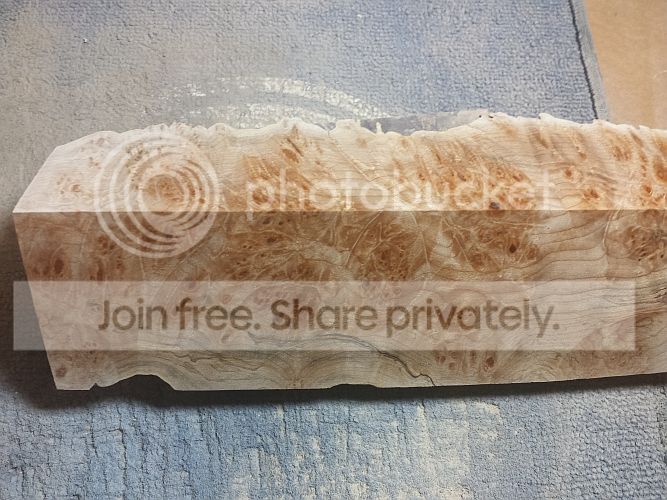
Here I did a quick sanding on one of the cut off pieces. These cuts are not parallel to the outer surface like the blocks will be. So the figure is not as good. I like pieces like this because they end up more colorful than the normal blond color you get when you mill fresh cut maple. If this wood gets dyed the reddish areas will resist the dye and the other colored areas will cause different hues in the coloring. Example; if dyed blue it will show blue, purple, green and various shades of these.
Not saying that this is the only way to do it. This is just how I do it.
The piece in the photos was a burl growing on the side of the trunk on an Oregon Maple. Also called Western Big Leaf Maple. But the Maples are a bit different in Southern Oregon than the ones that grow in the rest of the Northwest.
First I am cutting the burl into 2 more manageable size pieces. The saw is an old meat cutting bandsaw.
Next I cut a straight edge following the length of the trunk. This way maintains the most strength in the wood.
This half is the best part of the burl.
Cutting a straight edge on this chunk. Once again following the length of the tree trunk.
Here I start cutting the burl chunk into strips 2"+ wide.
These surfaces will be the edges of the blocks when I cut them. This photo also shows why it is bad to use a saw with a dull blade.
Here I have marked the blocks to make the cut that will expose the surface that will be the faces of the blocks. I am trying to keep my cuts close to being parallel to the outer surface of the burl.
After trimming away the outer surface I can get a glimpse what the figure is like inside.
Here I have trimmed off the outer surface of each strip that I cut from the burl.
I am not cutting the strips into blocks yet. These strips are going into a drying room for a while to remove more moisture. That way any existing cracks will open up so I can know where to cut to remove any flawed wood.
This piece has been setting under cover for several years but it is not all the way dry. I got moisture readings from 12% to 16%. After I cut these into blocks I will continue drying until I get a consistant 8% or less reading. Then off to K&G for stabilizing.
Here I did a quick sanding on one of the cut off pieces. These cuts are not parallel to the outer surface like the blocks will be. So the figure is not as good. I like pieces like this because they end up more colorful than the normal blond color you get when you mill fresh cut maple. If this wood gets dyed the reddish areas will resist the dye and the other colored areas will cause different hues in the coloring. Example; if dyed blue it will show blue, purple, green and various shades of these.
Last edited:


