How to store plum wood knife scales (not on knife yet...)

Joined
Sep 6, 2013
Messages
86
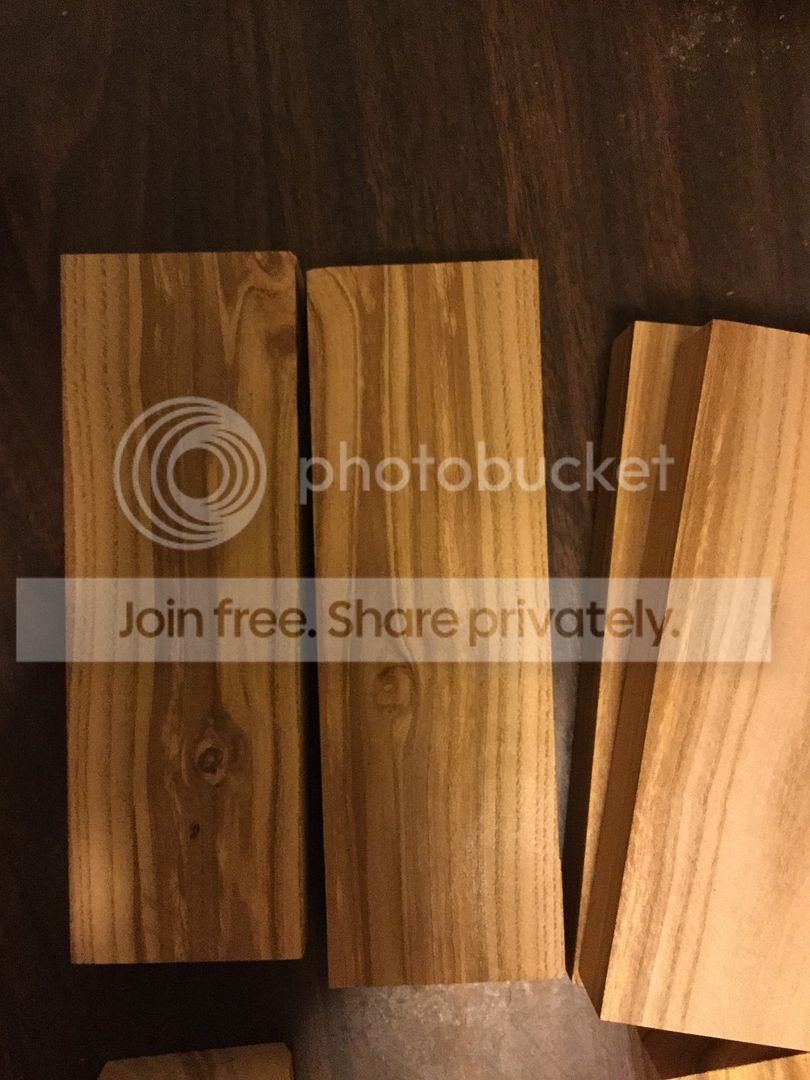
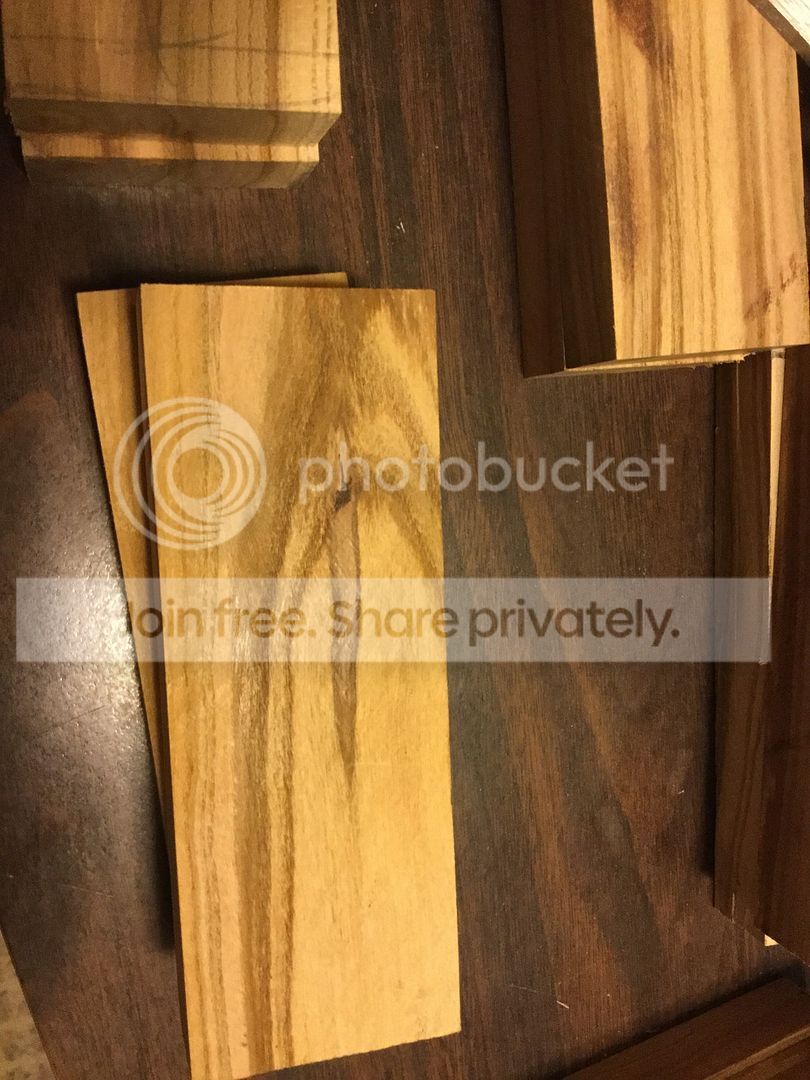
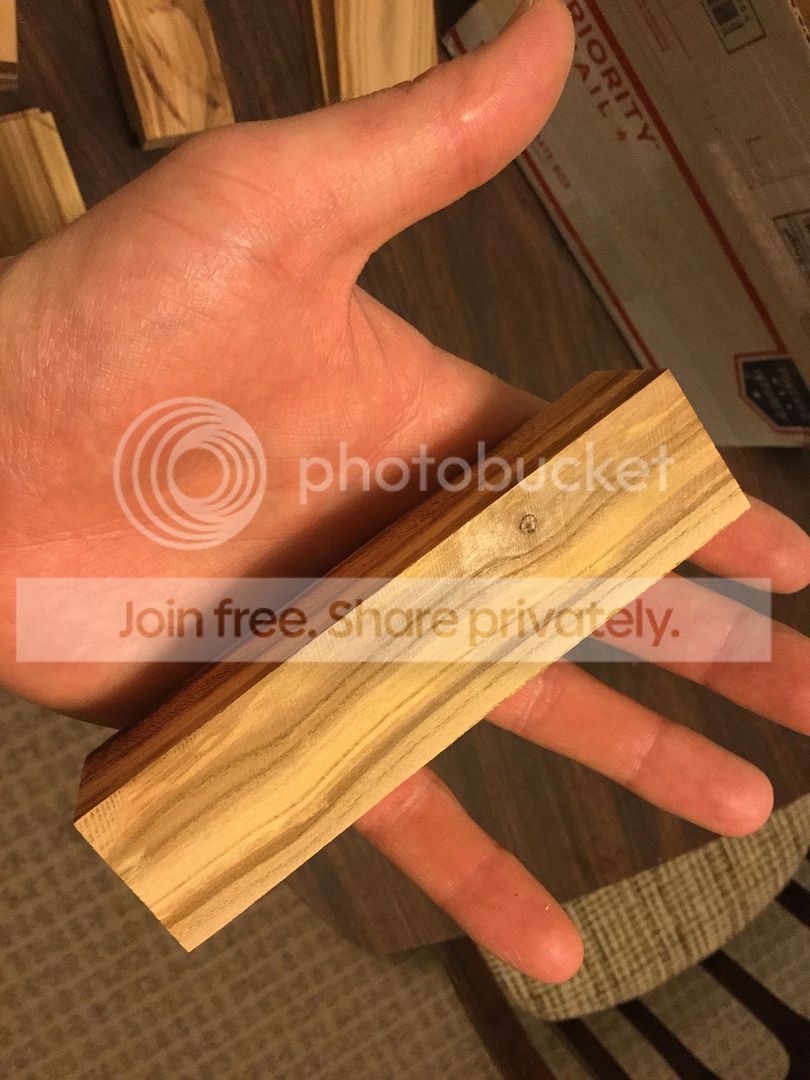
Hello family! I recently cut up the trunk of my grandpa's plum tree that my old man cut down about 20 years ago and stored in the rafters of his work shop. The wood is beautiful and smelled amazing on the saw. I am planning on sending them in for clear stabilization but then the thought occurs to me: What if I'm not yet ready to commit to a clear stabilization on all of the wood? I mean- what if I wanted to do a dyed stabilization in the future? So, I'm thinking of sending in half of my wood (about 6 pairs of scales) to be stabilized for now. Until I want to stabilize the others, how can I store the unstabilized scales to prevent cracking or warpage? Or, would anyone recommend I just go ahead and stabilize the whole lot to save a headache in the future?

As we say here on the forum 'Pics or it didn't happen' so here ya' go!
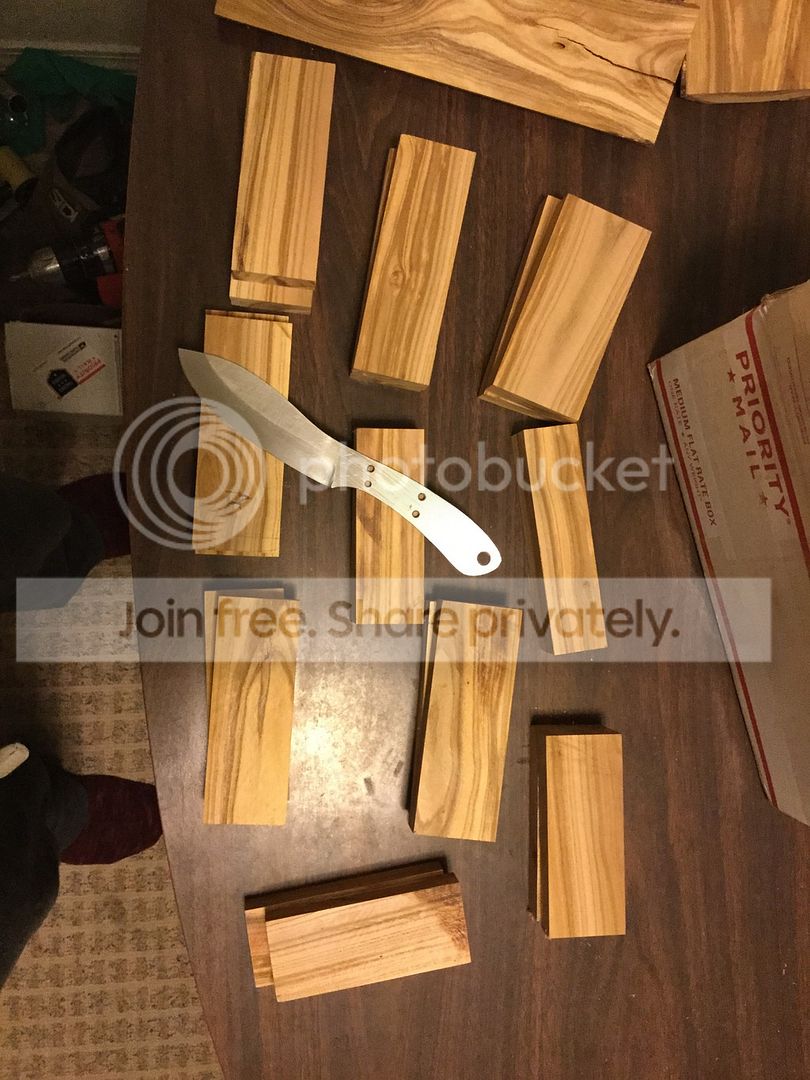


A grohmann #4 (ish), with custom scales? Great project!

As to the topic: I have no advice, only a personal preference for uncoloured wood grain.
 
A grohmann #4 (ish), with custom scales? Great project!

As to the topic: I have no advice, only a personal preference for uncoloured wood grain.

Thanks Dangerously! The blade is actually one that I ground myself. It's loosely based on several of the Nessmuk patterns out there, with a definite nod to the Grohmann. It's funny because I remember climbing in this tree when I was a little kid. I was very close to my grandpa, and it's almost like he wanted that wood on a knife. He was a farmer, so his passion will be forever immortalized in my passion (actually, I'm a PhD student in crop science, so the farming fits well too!).
 
Thanks Dangerously! The blade is actually one that I ground myself. It's loosely based on several of the Nessmuk patterns out there, with a definite nod to the Grohmann. It's funny because I remember climbing in this tree when I was a little kid. I was very close to my grandpa, and it's almost like he wanted that wood on a knife. He was a farmer, so his passion will be forever immortalized in my passion (actually, I'm a PhD student in crop science, so the farming fits well too!).

it looks like it's going to be a real heirloom piece. A great use of that old trunk.
 
Good on you for using that beautiful wood. You do want to store it right, so the scales don't warp (if you've cut them already). There's a lot of info on this, in Maintenance/Tinkering section and Knifemaker's Discussion section. You'll have to do a little digging with the search function.
 
Good on you for using that beautiful wood. You do want to store it right, so the scales don't warp (if you've cut them already). There's a lot of info on this, in Maintenance/Tinkering section and Knifemaker's Discussion section. You'll have to do a little digging with the search function.

Thanks, Brad! You're right- it's better to do it right and not risk wrecking this wood. I think I'm just going to have it all stabilized in one fell swoop so I don't stress out about it.
 
If the tree was felled 20 plus years ago, it seems to me your existing storage system should continue to work just fine . If it ain't broke, why "fix" it?
 
This doesn't really belong in General Knife Discussion. I'm going to move it to Shop Talk.
 
If the tree was felled 20 plus years ago, it seems to me your existing storage system should continue to work just fine . If it ain't broke, why "fix" it?

I've gotta agree. I treasure my wood handled knives. Some of them are daily-use French kitchen knives from 60+ years ago. I doubt very much these were ever treated with anything (oil finish perhaps?) at the factory and to this day I merely rub the handles or the scales down, every once in awhile, with cooking oil or teak & tung oil. Oils do a remarkable job of stabilizing and maintaining wood. If your Plum stock has been seasoned for 20 years already there's no reason the wood will be suddenly decide to shift, shrink or crack some more. If Plum is at all like Cherry or Apple it'll develop a lovely warm rich colour over time as well.

On another note: I muttered "DH Russell" to myself the moment I saw the profile of your self-made knife blank. Parliamentary Secretary to a Canadian Prime Minister, Deane Russell collaborated with Nova Scotia knifemaker Grohmann in the mid 1950s to originate the unique shape that typifies those knives. Saying yours is a Nessmuk inspiration suggests that "imitation is the sincerest form of flattery". I wouldn't swap my Russell #1 Carbon for anything. The shape is unbeatable for hunting and fishing.
 
I've gotta agree. I treasure my wood handled knives. Some of them are daily-use French kitchen knives from 60+ years ago. I doubt very much these were ever treated with anything (oil finish perhaps?) at the factory and to this day I merely rub the handles or the scales down, every once in awhile, with cooking oil or teak & tung oil. Oils do a remarkable job of stabilizing and maintaining wood. If your Plum stock has been seasoned for 20 years already there's no reason the wood will be suddenly decide to shift, shrink or crack some more. If Plum is at all like Cherry or Apple it'll develop a lovely warm rich colour over time as well.

On another note: I muttered "DH Russell" to myself the moment I saw the profile of your self-made knife blank. Parliamentary Secretary to a Canadian Prime Minister, Deane Russell collaborated with Nova Scotia knifemaker Grohmann in the mid 1950s to originate the unique shape that typifies those knives. Saying yours is a Nessmuk inspiration suggests that "imitation is the sincerest form of flattery". I wouldn't swap my Russell #1 Carbon for anything. The shape is unbeatable for hunting and fishing.

Non drying oils like cooking oil and mineral oil soften and damage woods.
 
On another note: I muttered "DH Russell" to myself the moment I saw the profile of your self-made knife blank. Parliamentary Secretary to a Canadian Prime Minister, Deane Russell collaborated with Nova Scotia knifemaker Grohmann in the mid 1950s to originate the unique shape that typifies those knives. Saying yours is a Nessmuk inspiration suggests that "imitation is the sincerest form of flattery". I wouldn't swap my Russell #1 Carbon for anything. The shape is unbeatable for hunting and fishing.[/QUOTE]

That's interesting info! You're right, though- the knife (unintentionally, mind you) came out looking a lot like the the Grohmann. Maybe I need to shift my paradigm here and say it's a Grohmann-inspired design? At any rate, thanks for sharing!
 
Last edited:
20 year old lumber is going to be around 10-12% mosture content. Not to likely to crack on you. Green lumber is 30%+ and will dry fastest at the end of the grain causing cracking and checking. When drying green lumber you should use Anchorseal to prevent the ends from drying out so fast.
 
Non drying oils like cooking oil and mineral oil soften and damage woods.

Then perhaps the secret to keeping wood going for a long time is to use non-drying oils! Kitchen knives definitely get used all the time and mine have been in use for over 30 years. Mere knife scales require no particular strength or hardness anyway.
 
On another note: I muttered "DH Russell" to myself the moment I saw the profile of your self-made knife blank. Parliamentary Secretary to a Canadian Prime Minister, Deane Russell collaborated with Nova Scotia knifemaker Grohmann in the mid 1950s to originate the unique shape that typifies those knives.

Sorry you have the information a bit off.

Dean Russell owned a store in Toronto and designed a knife in the early 1950s, it began to get a huge amount of attention, he brought a cutler and his family from middle Europe, probably Checoslavica and helped him found a business in Nova Scotia, the rest, as they say, is history.
 
Sorry you have the information a bit off.

Dean Russell owned a store in Toronto and designed a knife in the early 1950s, it began to get a huge amount of attention, he brought a cutler and his family from middle Europe, probably Checoslavica and helped him found a business in Nova Scotia, the rest, as they say, is history.

Hopefully the information is accurate. It came from Report on Business November 2015. An entire magazine page was devoted to the history of Grohmann Knives, Pictou, Nova Scotia. I cut out the page and have it on hand but whether 'Report on Business' is an entire magazine or merely a subsection of 'Maclean's' I don't know. Over and above what I reported earlier the article also says that Deane Russell posted a country-wide newspaper ad hoping to find a truly Canadian knife and was contacted by Berta Babinec whose father Rudolph Grohmann had emigrated from Czechoslovakia. The Grohmann family had been sponsored by a Quebec retailer that had grown tired of travelling across the ocean to buy quality pocket knives.

The 3 old duffers at my hunt camp during the 1980s (WWII vets that are gone now) all had Russell #1s and one of them was convinced that Deane Russell was a downtown Ottawa knifemaker during the 1950s. Whatever is going on the truth is out there somewhere!

Incidentally I have one of the original #1s and stamped on one side of the blade is 'Pat 1958' and on the other 'Russell BELT KNIFE Canada'.

POST SCRIPT: "Report on Business" is in fact a magazine supplement of national newspaper "The Globe & Mail". Highly unlikely this source for background on Grohmann Knives is erroneous, plus they interviewed current President Mike Babinec in order to prepare that article.
 
Last edited:
Back
Top