I keep screwing up.

Joined
Apr 8, 2009
Messages
1,367
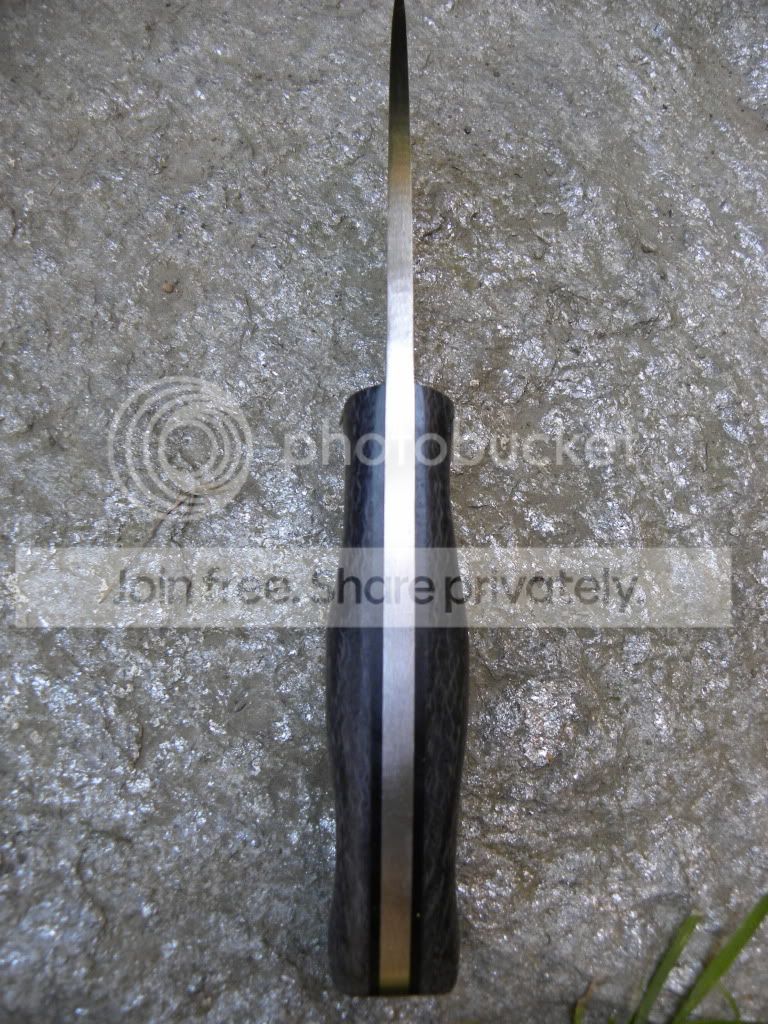
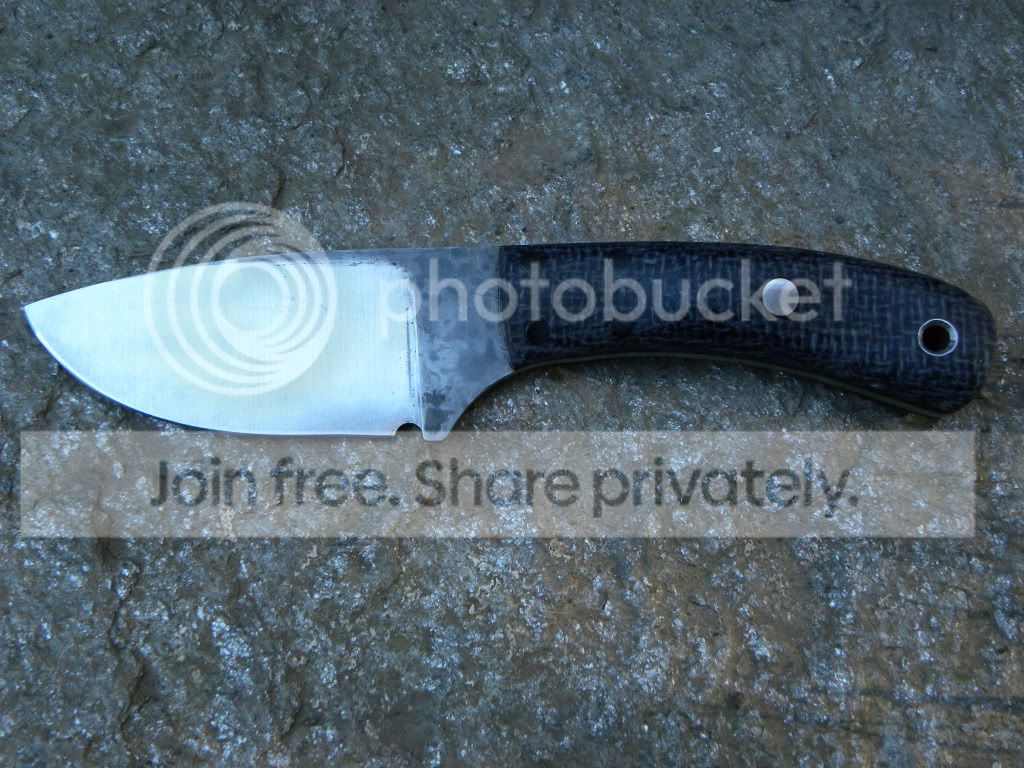
I just finished this big ugly skinner for a friend. This one is number 7. It's Aldo's 1084. It has a 3-1/4" blade, 4-3/8" handle with an overall length of 8". The scales are Suntree's Black and white burlap over G10 liners.

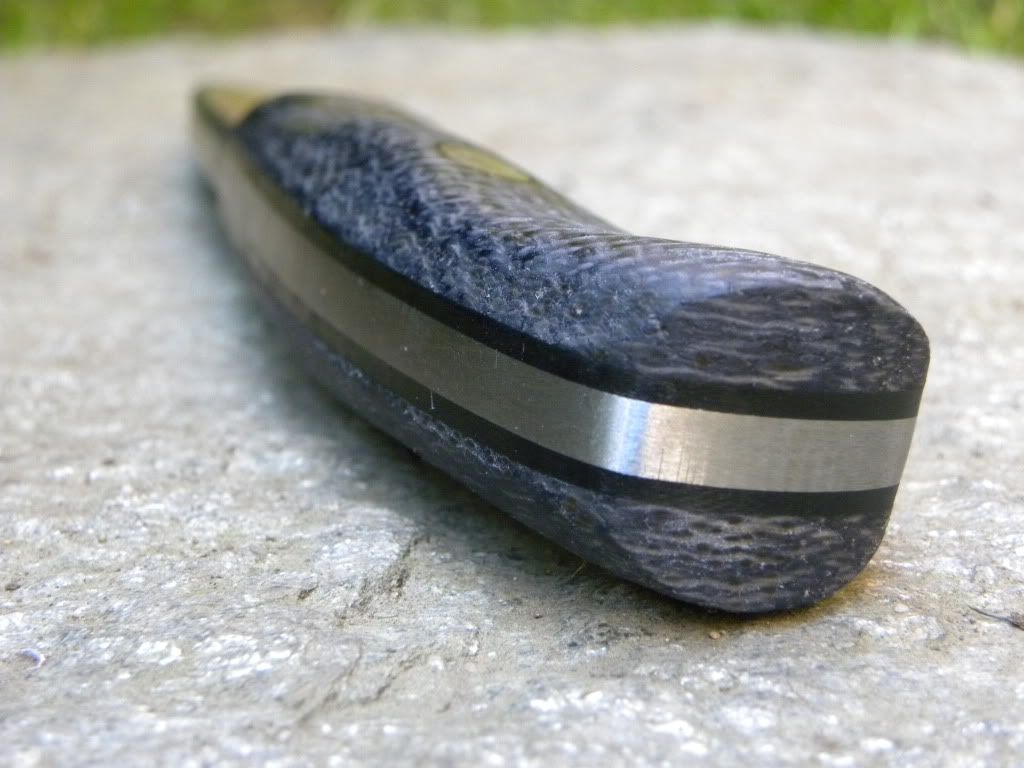
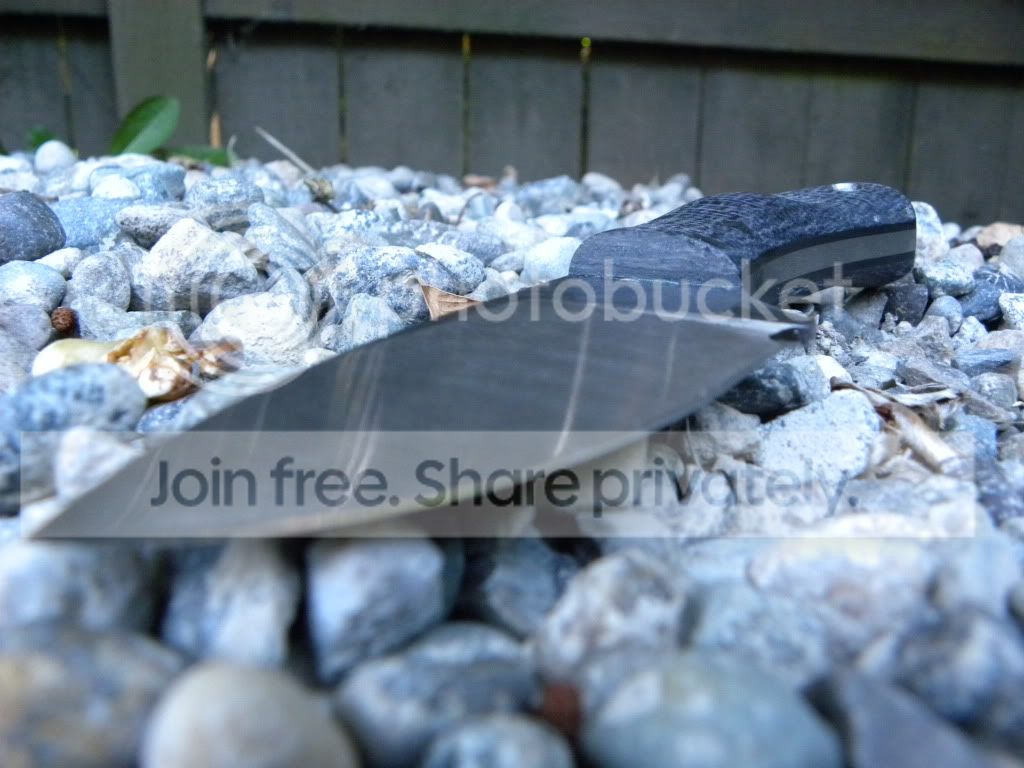
As I was finishing the handles, I kept dunking it in the water to keep the stainless rod and corbie cool. I was doing everything I could to prevent another knockdown, drag out fight with that damn corbie bolt. This was going on for awhile as I was really focused on the shape. Then I noticed that I had gotten it so wet that I was removing chunks. You can see a few spots around the micarta rods towards the front. It's look like hell. I don't have any black epoxy or pigment. My question is what would you use to fill those small voids? Black wood putty?
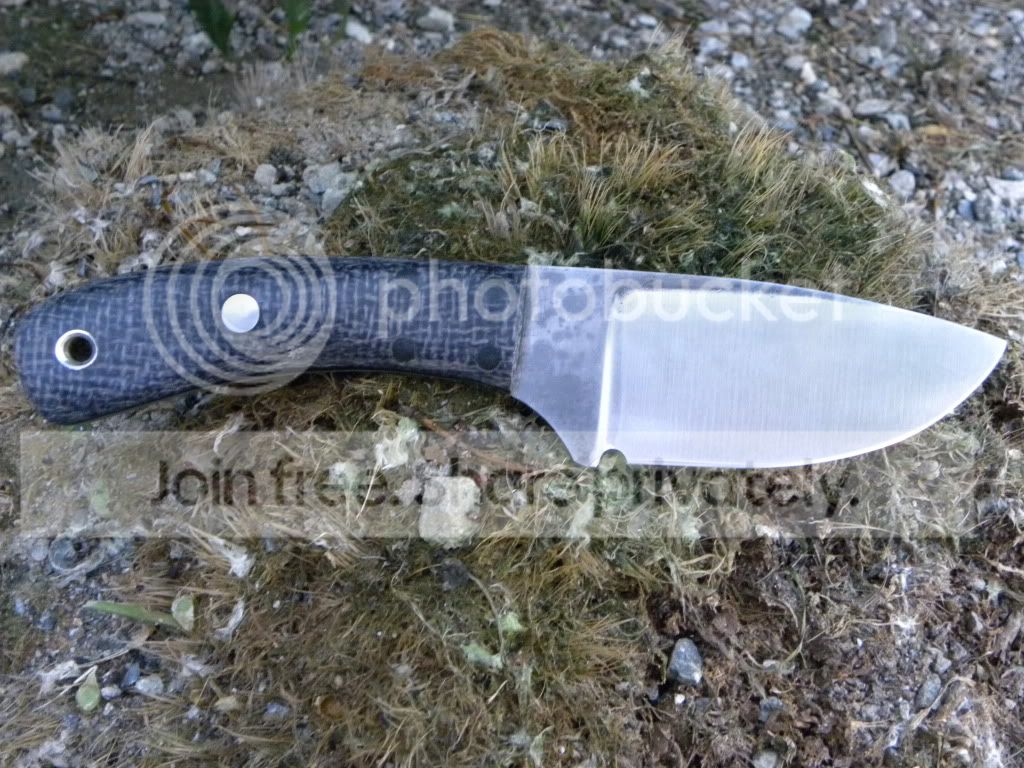
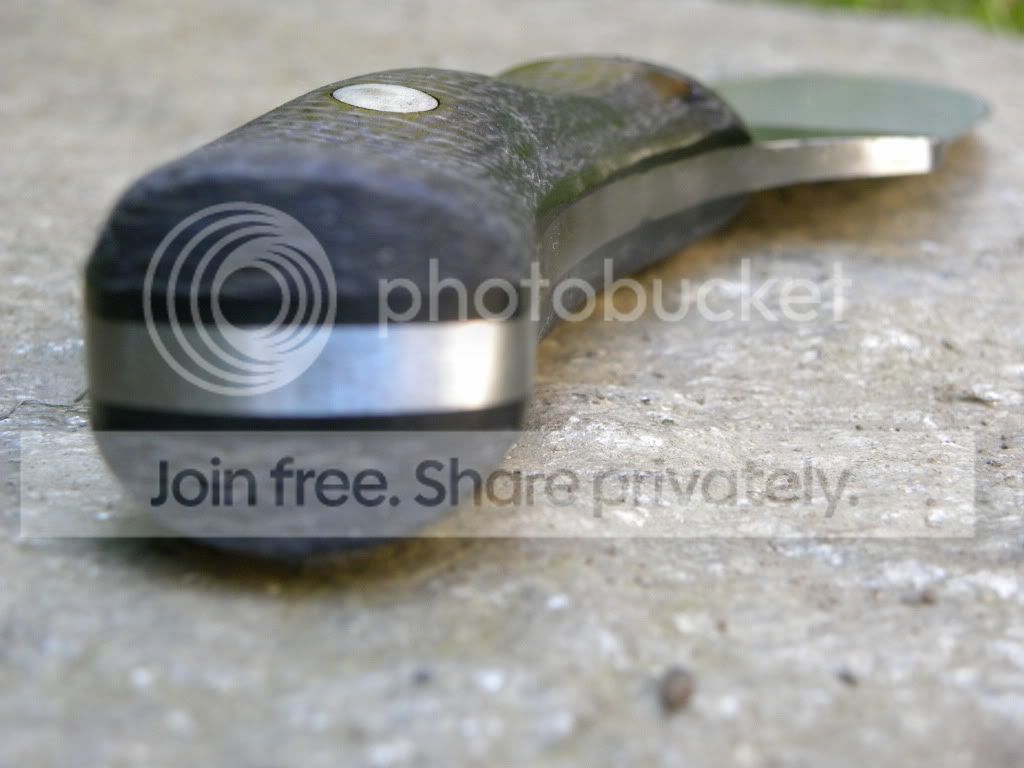
DSCN2245.jpg


DSCN2225.jpg


DSCN2226.jpg


DSCN2227.jpg


DSCN2239.jpg


DSCN2243.jpg
 
Last edited:
That's kind of where I am. I know it was something I was doing. If it wasn't the water, then maybe I was running the grinder too fast? Which is another problem since I use a Craftsman and it's only one speed. I was going from the grinder, to files, to a sanding drum. And it was really wet. It had a different feel to it. Somewhere along the line I did something wrong.
 
What happened with the previous Corby bolt you mentioned? What are you using to shape the handle that it is heating things up so badly that you need to dunk it in water? and how did the dunking in water create holes in the scales?... I know more questions than answers. I am having a hard time seeing holes in your photos.

The handle shape looks really comfy. Typically when I find "Small" Voids in handles I use CA, the clearness takes on the scale color as long as the voids are "Small" as you state.
 
The burlap might have absorbed water and expanded enough to over stress the resin. You can mix powdered graphite with epoxy to get a black. You can also try a clear substance like super glue to fill the holes.

Wayne Suhrbier
 
What happened with the previous Corby bolt you mentioned? What are you using to shape the handle that it is heating things up so badly that you need to dunk it in water? and how did the dunking in water create holes in the scales?... I know more questions than answers. I am having a hard time seeing holes in your photos.

The handle shape looks really comfy. Typically when I find "Small" Voids in handles I use CA, the clearness takes on the scale color as long as the voids are "Small" as you state.

My last knife, the corbie and I went a few rounds with the corbie coming out on top with a TKO. I heated it up so bad it burnt the wood. One of those rookie mistakes that you learn from doing it. Here is the link to that one. LINK

I just explained the process in the thread above, so I won't get into it again. I just know it's something I was doing. Shadetree's micarta is my favorite material but this time around I did everything different because of my last episode.
 
Quote: "...I did everything different because of my last episode."

Well there's your problem, you keep trying. If you would just give up already then you'd stop making mistakes! ;-)

There. Now wasn't that solution easy?

PS
I'm not sure I see the holes you're talking about either.

- Paul Meske
 
Last edited:
It was the file I was using. I went into the garage and took one of the pieces I cut off and went through everything I did on the scales. The file I was using was too aggressive and dull and it's pulling off chunks. Another lesson learned.

I'm pleased with the handle contours. The grind is thin and contoured and is very sharp, but I still need to work on my plunge. I am still unable to achieve that nice circular look from the grind to the plunge.
 
Good looking knife! Depending on the size of the missing chunks,you may be able to super glue micarta dust into it and at least hide it.
 
Only time I have seen something like that is when I over-flared a tube fastener and it blew epoxy out of the G10 scale. Did it only happen around the pin hole(s) or on other spots on the grip?
 
Justin, that's exactly where it happened. I took the pieces I had left over in the garage and kept trying to reproduce it. I drilled a hole and jammed a piece of micarta rod and there and put in on the grinder. Nothing. Then as I went over it with that old file, it yanked a chunk right off the edge of the hole, and looked exactly like what I had on my scales. Once again, I just need to slow down and take it easy.

I mixed up some epoxy and graphite and filled the small holes. The guy who I'm giving it to loves it, and I learned some more, so I guess thats all that matters.
 
Michael,

I like this handle a lot. Nice contour all the way around. You'll notice there is not a huge difference between this handle shape and the last one; but just a very small amount can make a huge difference. As your skills improve I think you will find this is measured in 32nd and 64's of an inch.
You can dye epoxies in most any color google it.
The only suggestion I would make is with a knife of this size thin down or go with a thinner stock. Doing this will allow you to reduce the height of the blade at the ricasso a little; this will make the whole knife more proportional.

If you feel you learned something on this one, make a quick repair and move on to your next project. If there is something I could go back and redo when starting out, that is what it would be. Don't spend a huge amount of time trying to fix the early knives. There are far better ones coming very soon.

I hope you do not regret the invite, Fred:D
 
Fred, you're right, the overall shape of handles between this one and the last one if almost identica, but different enough to be noticeable. As I mentioned in our conversation, I like a "flare" at the ricasso, but as you mentioned, it should be narrower at the ricasso. So with this one I really tried to get that narrow contour at the ricasso but still keep the flare that I prefer. I think it turned out much better. I also focused more on achieving a palm swell and more curves. I learned a lot from that last one.

I hear what you're saying on the thickness. My first 3 were from 1/4" stock. This last batch is from 3/16" stock. The next batch is going to be from 5/32". I don't know why I got so stuck on the "thicker must be better", especially since the first 5 were done with a file.
 
I hear what you're saying on the thickness. My first 3 were from 1/4" stock. This last batch is from 3/16" stock. The next batch is going to be from 5/32". I don't know why I got so stuck on the "thicker must be better", especially since the first 5 were done with a file.


This made me smile :D

Fred
 
I'm not a knife maker, but I am an accomplished wood finisher. I'd fill whatever holes you see with something clear and hard.
 
HERE,HERE Fred!! Michael, Fred is on the money. Don't dawdle. I think we can all agree that you're in it to stay. Take what you learned and go. I'm told you figure it all out by the 100th knife you make. We tend to hyper concentrate on what we are doing forgetting about the rest of the knife. That goes away!...eventually.
 
Michael,
Nice looking knife! The handle shape looks really nice, I imagine it would fit the hand really well. Don't quit you have talent and a great eye.

Mix up a little epoxy and add a bit of the grindings that came off the handle as you sanded. That should give you a really nice color matched patch.

Huauqui
 
You could try finding some brass stock that fit into those black holes. Drill out the damaged area with a drill bit the same diamiter of the brass stock and press in pieces of brass on a vise with a bit of epoxy, but only a bit or the brass will want to pop back out. Once the brass has been pressed in simply grind it down to the handle surface then polish.
 
Back
Top