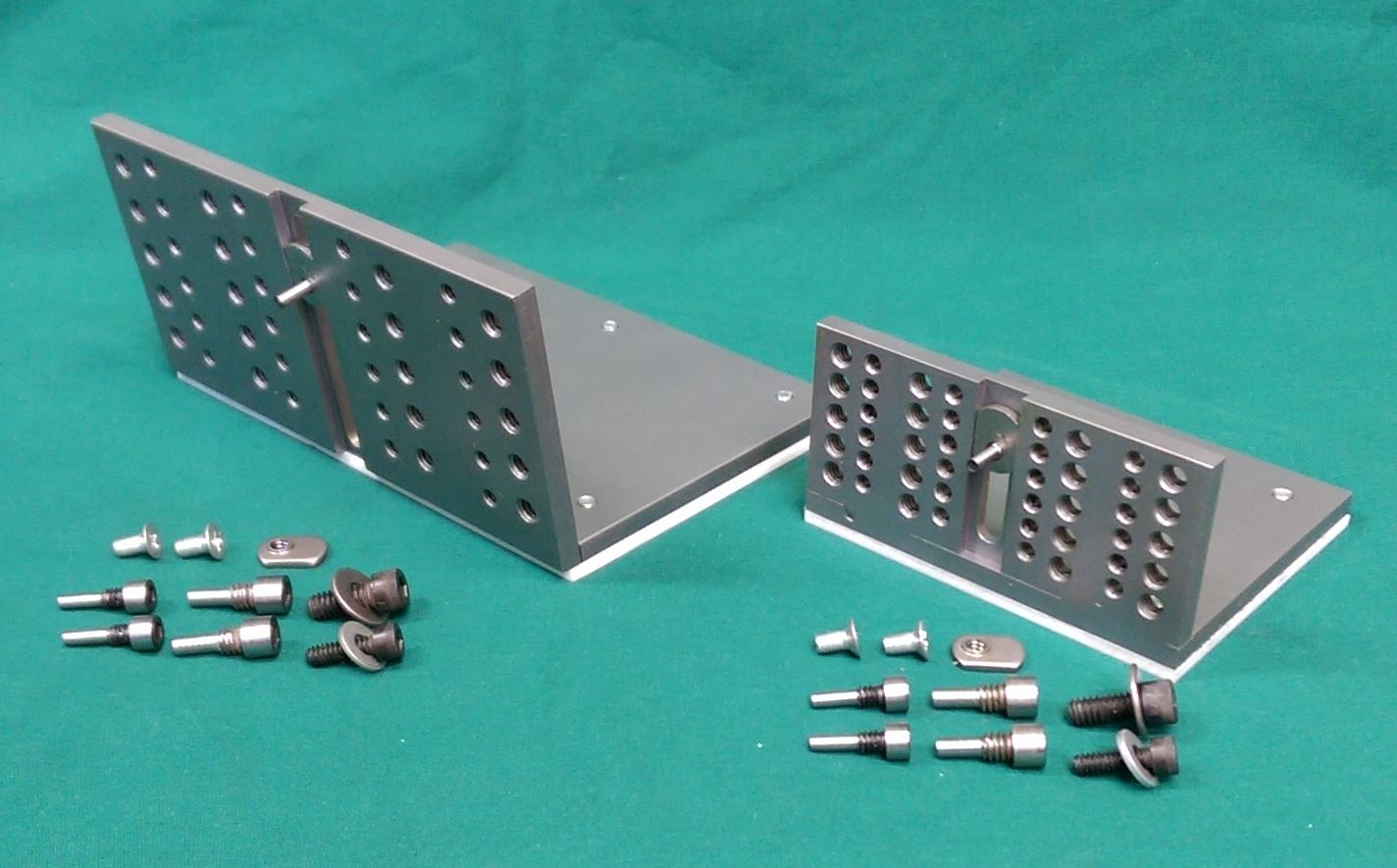
I need help getting my bevels even.

Joined
Dec 30, 2014
Messages
11
I'm having a lot of trouble getting my bevels even on both sides and I don't know what I'm doing wrong. I have a 2"x72" variable speed angle pro grinder and a tool rest for both my wheel and flat platen. I started free hand and After about 15 ruined knives decided to start with a jig. I have the DD Grinding Jig and just haven't had any good results with my set up. I have tried to make sure my rest is level with my wheel and platen but every time I grind a knife my bevels are off. Everything looks level and even to my but obviously I'm doing something wrong.

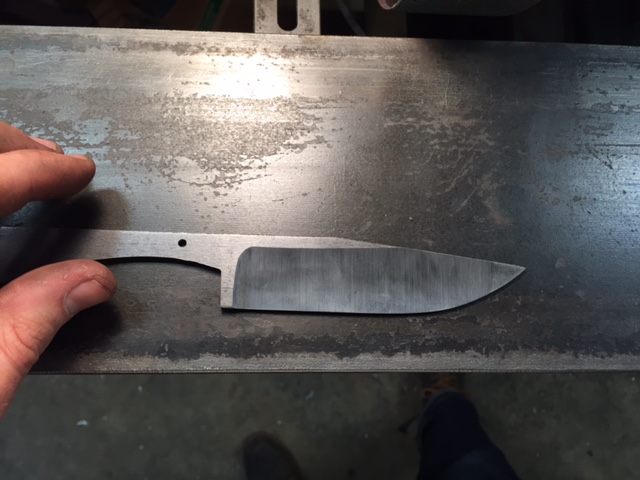
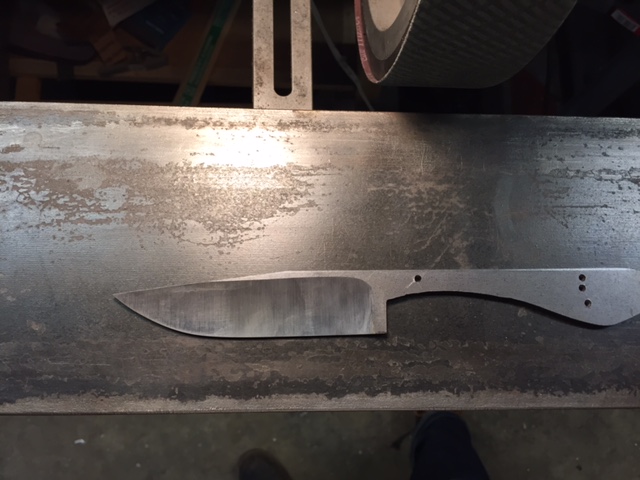
You can see in this picture the one bevel goes out further and comes up higher, the other side is thicker and doesn't go out as far on the blade. I have made equal passes on each side so I don't think that's the problem.
UmB0wMx.jpg


s1EFIpF.jpg


Any help would be greatly appreciated. I feel like I'm missing something very simple but I'm out of ideas.:mad:
 
What is the DD Grinding Jig and can you post a pic? I grind with a jig and it took more than a few knives to get something extremely even. It has to do with pressure and angle of the blade in relation to the contact surface. I really try to follow the center line scribe on the cutting edge to keep it totally even on both sides. I like that blade shape BTW.
 
as someone who is exploring this myself...., I would say you are not far from where you want to be. I think it takes about 20-30 blades before it clicks.
I've been using a work rest along with a push stick and that's what I would suggest you try.
I would also suggest you pause and just practice bevel making on scrap or mild steel, then go back to making a knife after you are where you want to be.
Also are you scribing lines thru dykem to guide you? or using a marker of some sort?

here's a sample of my practice bevel, just mild steel flat bar, no pressure to make a knife, just learning how the belt, pressure and the grinder works in response to my inputs,
It takes awhile to understand how you apply pressure and make a certain move across the belt and the result it yields.
You have to learn to assess what is happening on the belt.

298D3641-38AE-4D23-91A0-0EBD27F73BE5_zpsbx8dwp6b.jpg


see the scribed lines to guide me

72DF0F7A-BF43-4F28-ADC0-11CD2228D719_zpskukwrxyh.jpg


i'm no expert, just sharing that I understand what you are going through. I really think there is no substitute for many hours in front of the grinder doing about 20-30 bevels
 
Last edited:
If your steel isn't straight & flat this will happen.I use a carbide grinding guide along with the bubble jig and can compensate for this problem (cheat the bubble).Plus my plunges stay pretty even.I sometimes use the guide like a sled jig that rides over a couple pieces of scap kydex glued to work rest.Your grinds look hollow and look pretty good to me(I can't do it to save my life) Good luck. Lu
 
2 things...

a - your steel isn't flat

b - grinds uneven - try to scribe a center line on the blade edge and a line on each shoulder... grind to each. This takes practice but the lines will give you a good reference point.
 

The problem I think you have is push force control, you are probably right handed and you push a little harder on the bottom pic with your right hand than the top pic.

When a newbie knifemaker asks me about bevels I always tell them the same: you learn by making bevels not knives, otherwise you learn to correct bad bevels...


Pablo
 
The problem I think you have is push force control, you are probably right handed and you push a little harder on the bottom pic with your right hand than the top pic.

When a newbie knifemaker asks me about bevels I always tell them the same: you learn by making bevels not knives, otherwise you learn to correct bad bevels...


Pablo

I remember your saying well. :-) I think it's some of the best advice for someone new learning. :-)
 
It looks like its hollow ground, is your contact wheel flat and how worn out is your belt when you get where you want to be in your grind?
 
I believe he is referring to your blade steel. You should flatten it on the flat platen before grinding bevels to make sure both sides are flat. If both sides are different, they will grind different. Use new, sharp belts and take your time. Hollow grinding takes time to learn. You will get it.
Do you mean my work rest? Any ideas on getting in flat?
 
^ Yes I was referring to the steel. Thanks for catching that!

Most steel is just rolled out and can have an uneven thickness or warp. You can straighten a warp and grind to even thickness.

Precision ground steel costs more but will be a pretty even thickness. Steel that isn't hardened can warp easily, for example just by knocking the end of your shipping tube.

I had to grind a lot of knives before I could get my bevels even straight off of the grinder. I stuck to flat grinds and would draw file them clean to even everything up. I still push myself very hard on the grinds and find myself refining them even more now as I approach knife number 1000.

That jig is cool by the way! One thing is to keep it dead parallel to the platen until you need the grind to swoop upwards then angle the pommel away and tip in. With a jig you may want to lay in the grind then force in more distal taper, etc by hand to line things up the way you want them.
 
All advice given so far is great!

To me it looks like your grinds are very close, and that you are possibly thinking that the jig is supposed to do all the work for you. Its all about where pressure is applied. A push stick is a good idea even (or especially) with a jig, because the steel can flex when putting pressure on the jig as opposed to the blade itself. Try using your jig with a push stick in the middle of the platen, or wheel, and just slide the jig with one arm, while applying pressure with the push stick with the other arm. And it does take some time getting used to how to "come off" of the belt in the tip area.. usually you need to slightly pull back on the end of the tang area on the knife a little bit while sliding along the belly to tip area on the belt in order to get the bevel to match your blade profile.

Here is a good example of a push stick being using in the manner I'm describing, execpt without the jig.. Watch how and where he applies pressure against the belt with it:

[video=youtube;ysiwX47h2MU]https://www.youtube.com/watch?v=ysiwX47h2MU[/video]

~Paul

My YT Channel Lsubslimed
 
Last edited:
I'm having a lot of trouble getting my bevels even on both sides and I don't know what I'm doing wrong. I have a 2"x72" variable speed angle pro grinder and a tool rest for both my wheel and flat platen. I started free hand and After about 15 ruined knives decided to start with a jig. I have the DD Grinding Jig and just haven't had any good results with my set up. I have tried to make sure my rest is level with my wheel and platen but every time I grind a knife my bevels are off. Everything looks level and even to my but obviously I'm doing something wrong.

You can see in this picture the one bevel goes out further and comes up higher, the other side is thicker and doesn't go out as far on the blade. I have made equal passes on each side so I don't think that's the problem.

Any help would be greatly appreciated. I feel like I'm missing something very simple but I'm out of ideas.:mad:

I'm a rookie too, but it looks to me like you just went too deep on one side. With a wheel it's not going to climb up as quickly as a platen, so easier to go too deep. Are you scribing two center lines on the blade edge?

Too bad you gave up the free-hand. You were probably only 5 or so blades from getting it. I can tell you at blade 15 I was getting pretty frustrated, but by 20 it suddenly started to feel like I had a handle on it (NPI).
Mine aren't perfect yet, but they are close enough that I want to put a handle on them, and I look forward to my next grinding session. Just gotta keep learning.
Hang in there!
 
The bevel will climb where you apply pressure. Try understanding the geometry of what you are doing. Pick a piece of wood and exaggerate the movements to see what happens and tune your process accordingly.
Take your time, go through the process and the results will come :thumbup:
 
Back
Top