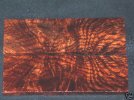
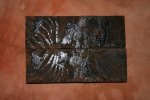
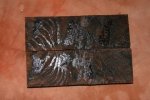
Just to clarify what we are looking at;
Many woods when stabilized will take in more resin in the softer parts , and not absorb it in the harder or more resinous parts. Woods with oily resins, like rosewoods, thuya, desert ironwood, some redwoods,etc. don't stabilize well because the oil will weep out as a thick goo for quite a while after stabilizing. Resinous woods that are not fully dry will also do this.
With such wood, after getting it stabilized, the first order of business is to scrape away as much excess resin as possible. Then sand down the surfaces. This will clog belts fast, and they will need constant wire brushing to un-clog them. Once the wood is smooth and the surface is clean, things usually look a lot different. There may be a tendency for the wood to feel sticky for a long time, so the wood may need to sit for a year or two.
A you can see ,this isn't a desirable situation, so these woods are rarely stabilized. Add to this problem the fact that the word "Stabilized" is used to describe everything from dunking in Nelsonite, to Minxax wood hardener, to catalyzed resins. Some of these types of treatment will make the wood more waterproof, but the stabilizing agent used does not harden, but merely dries. This isn't what we really want in wood for knife handles.
I think your scales would clean up and look like the photo, but it will take some work. I personally would not use or purchase scales from anyone who uses a home brew stabilizing mix. The use of 90C and other catalyzed stabilants is a well established process, and the industry pros , like WSSI, use it with the proper technology to make it work.
Stacy