I love brass on knives. Gives me an excuse to polish them every month or so. As already said WD40 and a Q tip will clean out and slow down the verdigris on the pins. I have never had any verdigris on knives stored over a long period as long as they weren't in leather. I have seen brass cartridges get practically glued into leather loops by it. I also an old S&W break top that had been loaded for a looong time where the bullets had to be pried out due to verdigris.

-
The BladeForums.com 2024 Traditional Knife is available! Price is $250 ea (shipped within CONUS).
Order here: https://www.bladeforums.com/help/2024-traditional/
You are using an out of date browser. It may not display this or other websites correctly.
You should upgrade or use an alternative browser.
You should upgrade or use an alternative browser.
I really hate brass sometimes.
- Thread starter kamagong
- Start date

- Joined
- Jan 18, 2007
- Messages
- 34,160
Brass may look OK, often provides a pleasant contrast, but it certainly doesn't smell OK, it reeks:barf::barf:
I've often complained about carbon bladed knives imparting a taste on raw foods that I dislike, no amount of 'patina' seems to improve it. But I suspect it is the food acids reacting with the carbon steel AND the brass to give a funky cocktail
As for brass only reacting with Stag, think on. Take a look inside a brass lined knife that you haven't used for a good while, not only will there be that whiff of brass oxidation but very likely some 'brass-bleed' and verdigris, nice little lumps of greenery needing removal. Yes, Stag it particularly favours, leeching around pins but it fancies bone too, especially light smooth bone! Some of my GEC Ivory Bones display it despite minimal use and careful storing. A lot must depend on the actual composition of the brass, some examples tarnish really quickly and pit others less so. NS or White Brass does not seem to have this smell, I'm ignorant in chemistry so I know not why. I'd always opt for a knife with NS liners or better,polished stainless in preference to yellow peril brass. I really dislike any knife with brass bolsters, guarantee to make your hands stink, blacken stuff etc it's foul:grumpy: Use metal polish to clean the back of brass lined knives and the pins too, this will keep the verdigris at bay, but it's an endless task, turn your back and little green monsters can pop up
I've often complained about carbon bladed knives imparting a taste on raw foods that I dislike, no amount of 'patina' seems to improve it. But I suspect it is the food acids reacting with the carbon steel AND the brass to give a funky cocktail
As for brass only reacting with Stag, think on. Take a look inside a brass lined knife that you haven't used for a good while, not only will there be that whiff of brass oxidation but very likely some 'brass-bleed' and verdigris, nice little lumps of greenery needing removal. Yes, Stag it particularly favours, leeching around pins but it fancies bone too, especially light smooth bone! Some of my GEC Ivory Bones display it despite minimal use and careful storing. A lot must depend on the actual composition of the brass, some examples tarnish really quickly and pit others less so. NS or White Brass does not seem to have this smell, I'm ignorant in chemistry so I know not why. I'd always opt for a knife with NS liners or better,polished stainless in preference to yellow peril brass. I really dislike any knife with brass bolsters, guarantee to make your hands stink, blacken stuff etc it's foul:grumpy: Use metal polish to clean the back of brass lined knives and the pins too, this will keep the verdigris at bay, but it's an endless task, turn your back and little green monsters can pop up

- Joined
- Dec 2, 2005
- Messages
- 73,783
The brass on all my other old fixed blades, just looks dull, but I don't know what it is about the Frosts Lapplander knives I have, I noticed it as soon as I got them, within a couple of days of being cleaned, they go a heavy brown, almost like they've rusted, and the deposit can become quite heavy. I'm not too bothered about the brass guards on my other fixed blades, but I have to clean these virtually every time I carry them.
Are there different grades of brass? I just spent an hour cleaning the thick brown deposit off 2 of these knives, and the brass still looks pretty grotty in places!
By contrast, my 30-odd year old Wostenholm knives, which have brass bolsters, and just get cleaned in the sink, are just dull, but they polish up fine.I stored my 110 some time too long in a my toolbox ... It had that green stuff on it that smelled very "unique". I asked a gunsmith as I thought he might know how to handle and take care of brass. He told me, use an old toothbrush and toothpaste to remove it.
I'll give that a try Andi :thumbup:
Nickel silver, aka "white brass" will definitly show a verdigris just like yellow brass, sometimes takes
a bit longer to show it though.
I picked up an old William Rodgers Jack the other day, and all four NS bolsters, and most of the rest of the knife are green!
I like brass. I think of it as an "old" metal- at least as far as manufacturing goes. I like that it changes over time, just like a nice patina, or the "mellowing" of stag- and that it needs some care occasionally, as if it were organic. Here's one of the pins on a recent 23 already turning the stag. I love the effects of age and time on things, the wrinkles on the skin, the smell of a good whisky...
 [/URL][/IMG]
- Joined
- Jan 18, 2007
- Messages
- 34,160
Fine shot there roseskunk:thumbup: As I wrote earlier, brass can look very nice and it's legit Traditional material, no question there. Not sure about the parallel with Whiskey though I certainly like to smell and taste that stuff The American sort mind, never liked the variant from Scotland or Ireland at all (now THAT might have a brass reek come to think of it)
Jack I've been brooding about the very different behaviour of brass in the same environment, I suppose that since it's a mixture/alloy of things then it must depend on the sources of copper et al.the degree of heating, impurities that can enter etc etc. But it certainly does seem to behave markedly differently. Odd. Oh yes, don't you have an expression from t' North about "Where there's muck, there's brass!"
I certainly like to smell and taste that stuff The American sort mind, never liked the variant from Scotland or Ireland at all (now THAT might have a brass reek come to think of it)Jack I've been brooding about the very different behaviour of brass in the same environment, I suppose that since it's a mixture/alloy of things then it must depend on the sources of copper et al.the degree of heating, impurities that can enter etc etc. But it certainly does seem to behave markedly differently. Odd. Oh yes, don't you have an expression from t' North about "Where there's muck, there's brass!"
- Joined
- Dec 2, 2005
- Messages
- 73,783
Jack I've been brooding about the very different behaviour of brass in the same environment, I suppose that since it's a mixture/alloy of things then it must depend on the sources of copper et al.the degree of heating, impurities that can enter etc etc. But it certainly does seem to behave markedly differently. Odd. Oh yes, don't you have an expression from t' North about "Where there's muck, there's brass!"
Yes indeed my friend!
Thanks for your thoughts :thumbup: I remember noticing it straight away with those Lapplander knives, which came straight from the factory, and all of the original four I had were the same. I've never come across any other brass like it, it certainly is mucky! 
It strikes me that there are those who just don't like brass because of its smell, tarnish, personal skin chemistry, whatever. And there those that don't mind it.
I'm in the latter camp, but I approach all this with the frame of mind that "every knife is a user knife" no shelf/closet/safe queens with me. So if a knife picks up some green or brown over weeks or months of use, I don't care much. If it's thick and virulent green verdigris, grown in (improper) storage, then yes, I'll remove it. But a light green tinge? Meh. No biggie. It's just a sign of use for me.
To put this into perspective, I'm the kind of guy who's happy to get the first scratch or two on a new car. Hey, the universe hates perfection: entropy is proof of this, as is toast landing butter-side down.
I'm in the latter camp, but I approach all this with the frame of mind that "every knife is a user knife" no shelf/closet/safe queens with me. So if a knife picks up some green or brown over weeks or months of use, I don't care much. If it's thick and virulent green verdigris, grown in (improper) storage, then yes, I'll remove it. But a light green tinge? Meh. No biggie. It's just a sign of use for me.
To put this into perspective, I'm the kind of guy who's happy to get the first scratch or two on a new car. Hey, the universe hates perfection: entropy is proof of this, as is toast landing butter-side down.

- Joined
- Jul 10, 2013
- Messages
- 1,123
I love brass when it's done right and easy to maintain. I have a polishing cloth with a little Flitz on it I'll rub down the NS and brass on my daily carries to get rid of the fingerprints. I guess the army drilled a love for shiny metal into me. As for the smell, my nose doesn't work, so that doesn't bother me.
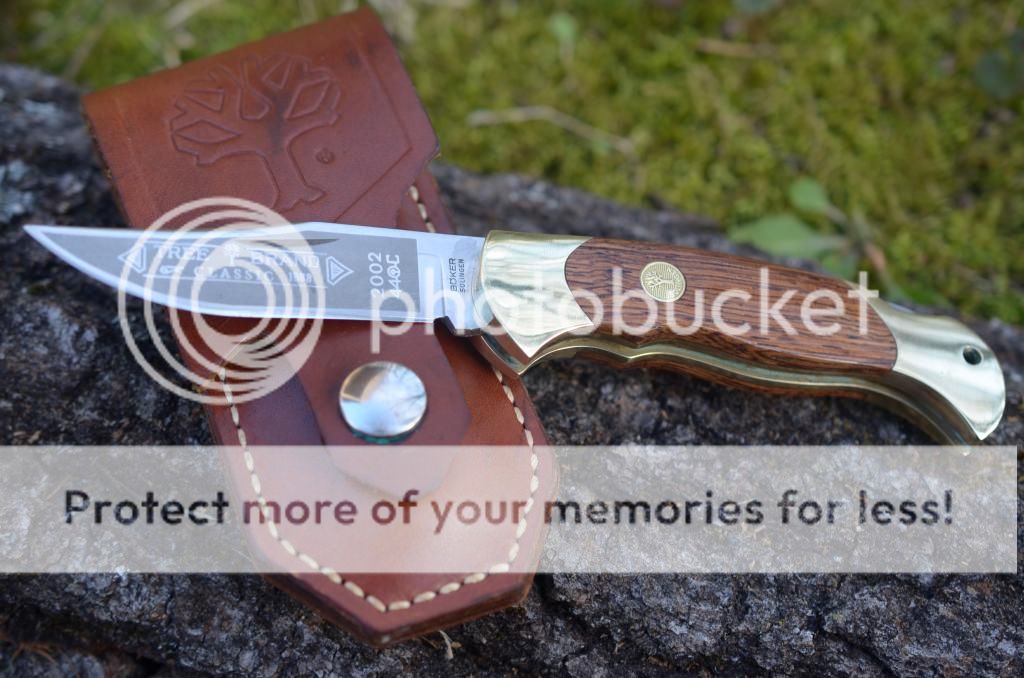
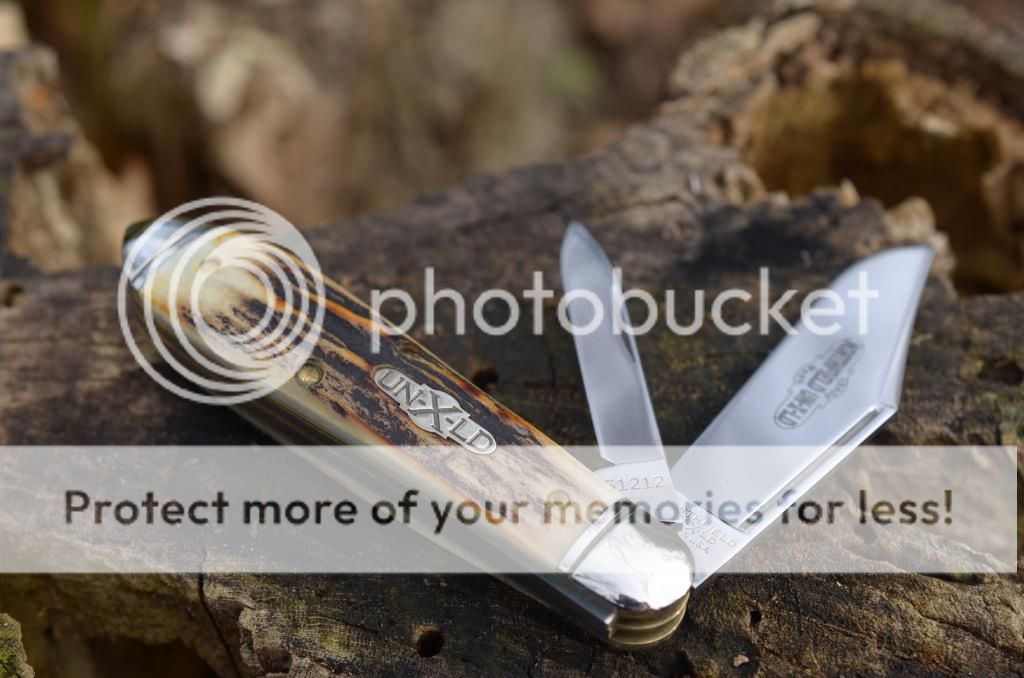
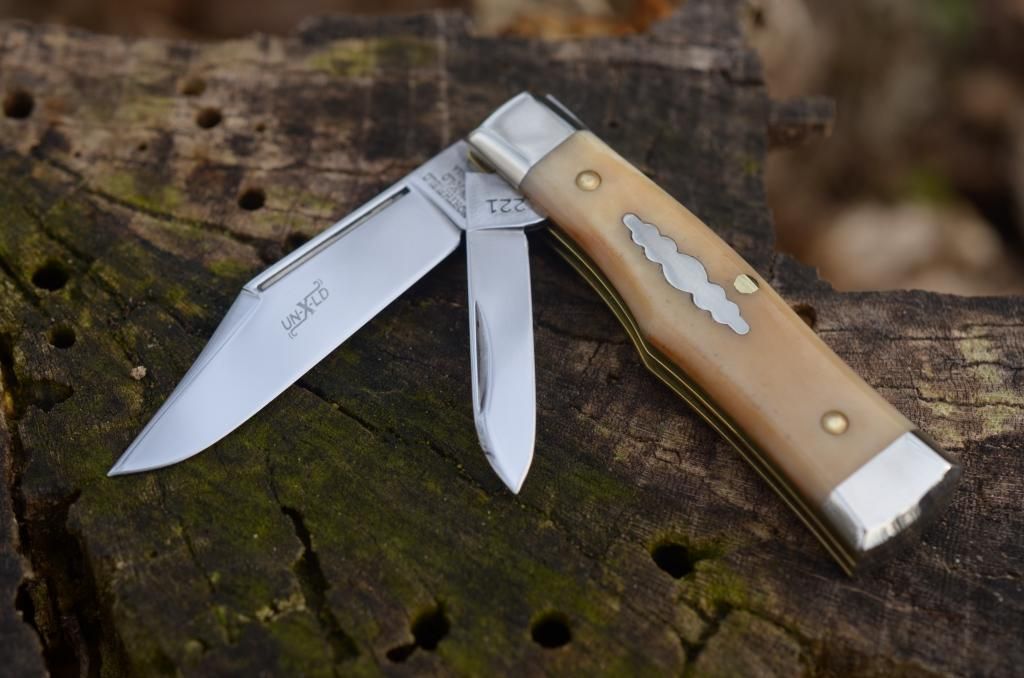


- Joined
- Dec 2, 2005
- Messages
- 73,783
toast landing butter-side down.
Now that's a lot worse than brass!
Now that's a lot worse than brass!
Well, when toast lands butter-side down, console yourself in the neat rocket-physics demo it gives. It's simple matter of center-of-gravity vs. center-of-aerodynamic-pressure. When you butter one side of a piece of toast, you offset the toast's center of gravity closer to the surface of the buttered side.
Then as the toast falls, the unbuttered side acts like the fins on a classic rocket to turn the nose of the rocket (or in this case, the heavier buttered side) upwind. Unfortunately, because the toast is falling, the wind it feels is moving upward, thus the heavier side turns downward and splat.
Now to bring this back on-thread: maybe someone can experiment how well a thin coating of butter keeps verdigris off brass parts..?

- Joined
- Feb 17, 2013
- Messages
- 6,181
How rapidly the brass on a particular object tarnishes/corrodes will vary by the elemental composition of the brass in use.
The following chart shows the various composition ratios of the various types of brass produced by a single company. Even within a category, the percentages will vary.
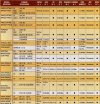
The following chart shows the various composition ratios of the various types of brass produced by a single company. Even within a category, the percentages will vary.
Last edited:
Funny... I'd never noticed any problems with brass and actually prefer it over all steel, but after reading this thread I pulled out a Buck 55 that's been sitting. No green on the surface but there's a bit between the bolster and the wood. I normally carry one knife for a few years then move on. Guess the pocket keeps them clean.
Hey, no longer a lurker
Hey, no longer a lurker
- Joined
- Dec 2, 2005
- Messages
- 73,783
Well, when toast lands butter-side down, console yourself in the neat rocket-physics demo it gives. It's simple matter of center-of-gravity vs. center-of-aerodynamic-pressure. When you butter one side of a piece of toast, you offset the toast's center of gravity closer to the surface of the buttered side.
Then as the toast falls, the unbuttered side acts like the fins on a classic rocket to turn the nose of the rocket (or in this case, the heavier buttered side) upwind. Unfortunately, because the toast is falling, the wind it feels is moving upward, thus the heavier side turns downward and splat.
I'll ponder that the next time it happens!
:thumbup:How rapidly the brass on a particular object will vary by the elemental composition of the brass in use.
The following chart shows the various composition ratios of the various types of brass produced by a single company. Even within a category, the percentages will vary.
View attachment 511444
That's very interesting :thumbup:
Hey, no longer a lurker
Welcome aboard Bluedave :thumbup:

silenthunterstudios
Slipjoint Addict
- Joined
- Feb 2, 2005
- Messages
- 20,039
THAT made me laugh. "Hey Ed, take a whiff of these bolsters...I can't stop."
Now you've done it, Murphy is going to send a few customers your way that return their knives because they don't smell right
.I can hear it now,
"Derrick, can you look over a knife for me? Now, could you uh, smell it for me?"


glocktenman
Gold Member
- Joined
- Jul 20, 2008
- Messages
- 2,041
No smelling or licking going on here but I do like the look of brass liners and even bolsters at times.
View attachment 511831View attachment 511832View attachment 511836View attachment 511839
View attachment 511831View attachment 511832View attachment 511836View attachment 511839