Ideal blade length for a main fixed blade for camping/surival/all-purpose?

I have owned a Becker BK2 , but found it pretty heavy . I now have a Busse basic 6 . The Basic 6 is a larger knife but because it uses their Resperene-c handle and has a full flat grind , it's actually lighter than the BK2 by a fair amount and it very well ballanced . I would suggest you look at the Scrap Yard knives site and check out their SYKCO 511 that is for sale right now . Great price , Resperene handle(so it's light) , unconditional lifetime warrantee and they have excellent customer service . I bought one of these and it's a great all around size .


HOLD MY BEER AND WATCH THIS !
 
Last edited:
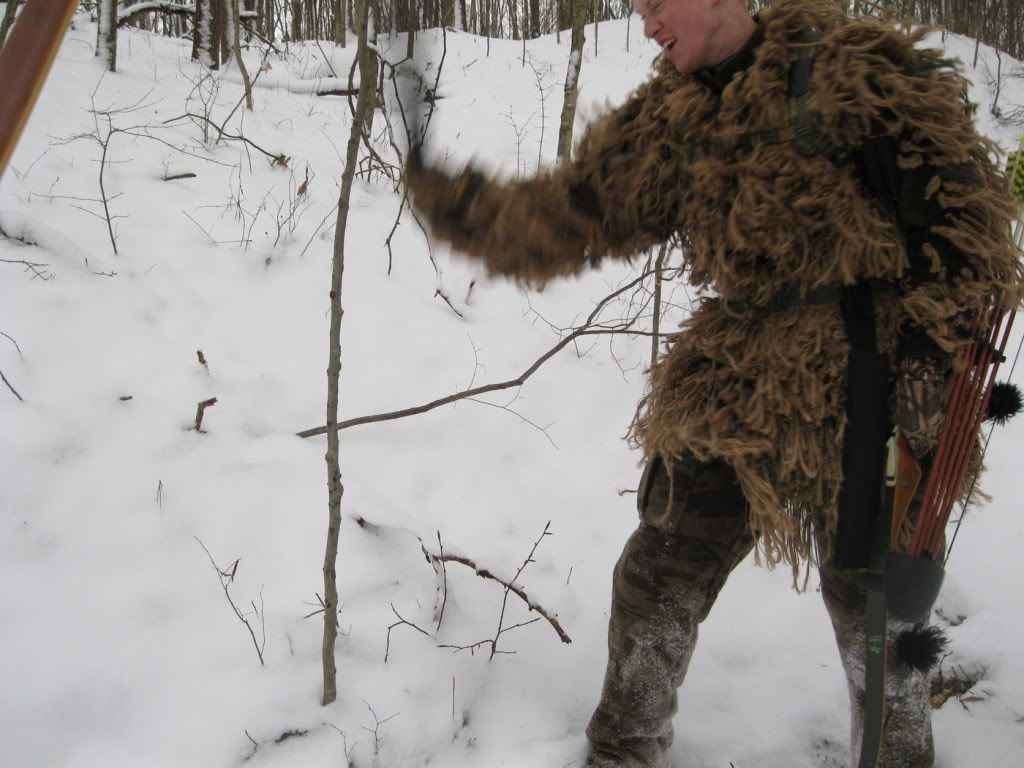
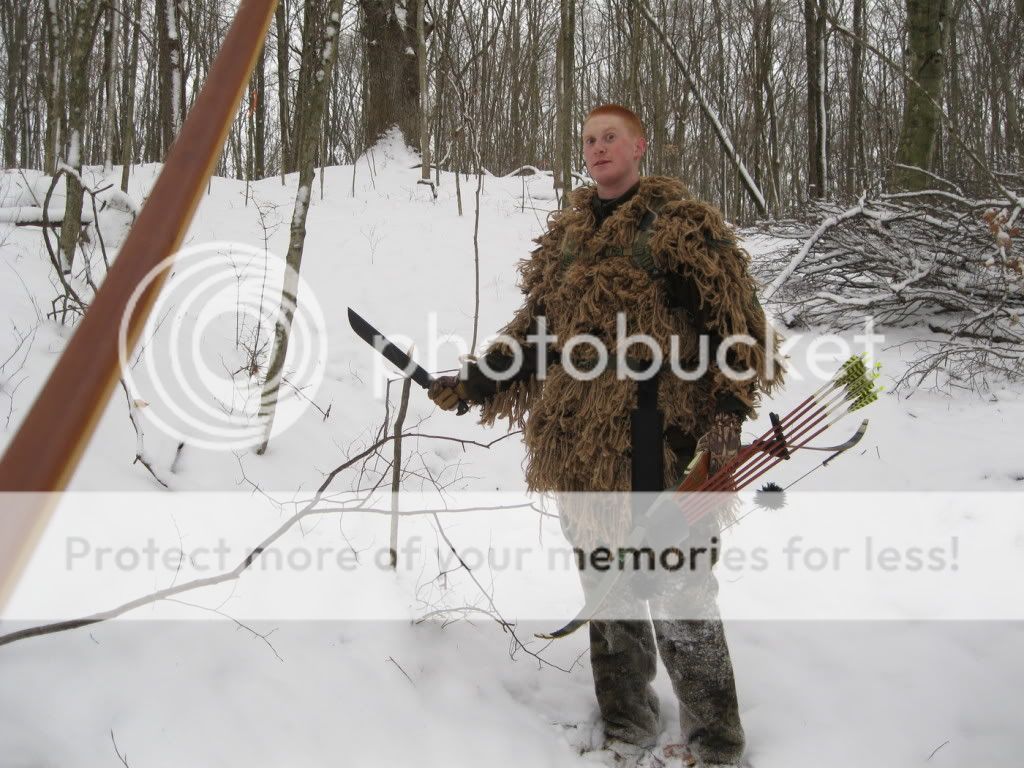
Love my 2 also but I'm leaning more toward machetes for the brush chopping these days. :)

So's my son. :D

20120114_ac_0010.jpg


20120114_ac_0011.jpg


Nothing wrong with machetes. They're neato too.

---

Beckerhead #42
 
For my 'go-to' knife, it's whatever i've brought with me....for now it's usually my Cold Steel Trailmaster with a 9 1/2" blade.

That said, my preference is a medium sized blade in the 5"-7" range with ~6" in the sweet spot. I have a design submitted to Breeden Knives with a 6 1/8" blade length and a 5 1/8" handle length. It will be out of 1/4" 0-1 and blade width is ~ 1 7/8" with a Sabre grind. It's gonna be a big, solid knife that won't fail under tough use conditions, but given Mr. Breeden's skill, it should slice and dice with aplomb.

My Cold Steel Trailmaster with it's 9 1/2" blade @ 5/16" thick - is a *big* knife. I can do alot with it, but honestly, it's more length than i like carrying. I learned survival skills with a smaller blade and rarely (*never*) chop down trees so the TM's added reach is not as useful for me. Whereas a 6" blade i feel really comfortable with - like i'm somehow closer to whatever i'm working on. Whether it be notch making, whittling, and especially batoning - though i must admit the TM is a batoning *machine* - a blade in the 6" length somehow just feels 'right'.

A shorter blade (3"-4") can feel super nimble for carving, food-prep and so many other tasks in outdoors use and if that's all i was doing i could be OK with something in that length. However, i prefer the added reach a 6" blade provides and still has a high level of dexterity for me.
 
Knife I've been using the most lately is a Becker BK 7.

It can do just about anything well. Fine enough tip for small work. Thin enough to slice. Big enough to batton or clear. But, not so big as to be
as to be heavy or in the way.

As most folks say (and I agree) it's about personel preference. And what works for you.

I tend to pair things up with a small hatchet, folding saw and a SAK. ESEE 4 or BHK Bushcrafter are the ones fighting for time right now (lol)

But for one knife that's a good general user, the BK 7 works well. And is a heck of a value too.


Pic of BK 7, ESEE 4, BHK, and Benchmade Pardue Rant (or size comparisons)

DSCF6059.jpg


This is one of my favorite combos - Husqvarna hatchet, Corona folding saw, ESEE 4 (the BHK has been stealing more time lately)
Along with a SAK - not much you can't do.

DSCF4748.jpg
 
4" knife and a machete.

This.
I carry a 3.8" long .195" thick blade about everyday, a Bark River Custom Highland Special in CPM S35VN. I can sit down with it on my belt, if I need to chop or baton, the machete pics up where the knife falls short. I prefer a 12" heavy machete for my AO, Ontario 12" Cutlass can chop or baton anything I need. Sometimes I go with my even thicker Culberson 12" Bolok.
 
three to four inches in length will do most anything you need on the trail or in camp. They make 'choppers', machetes and axes for the big chores. :D
 
Well, the Swedish Army believes the perfect size for a survival knife is 6.3 inches and I agree. That's why I bought the Fallkniven A1.

a12r.jpg
 
Well, the Swedish Army believes the perfect size for a survival knife is 6.3 inches and I agree. That's why I bought the Fallkniven A1.
I have one of those. (Isn't... purple?, tho.) Fine knife. Terrific knife. If I was going out on combat maneuvers or a survival mission, that would be my knife, you can bet your bottom dollar. But as an all-around camping/survival/all-purpose knife, it's too much, IMHO. (And I do mean the "H" part. I spend very, very little time in the wilderness and I do not hunt.) That's why I'm currently in the market for something more in the 4" blade length range. And that's my thinking: For a general purpose hiking/bushcraft/camping/all-around sheath knife: 3-3/4" to 4-1/4" is probably about where you want to be, for weight, comfort and all-round utility.

Jim
 
Swamp Rat RMD and or Busse Boss Jack for camping/ survival/ all purpose and are light enough to carry all day. Also the Esee-6
 
Buck 119 at 6" blade length is a very versatile size and shape for general camp use, and affordable.
 
Lots of fascinating answers here. The thing that impresses me is not that there's a single right answer to the blade length question, but that guys find different ways to get things done with a different mix of tools. Some want the one-size-does all knife, and for that, many seem to settle on something in the 5" to 7" range. Another common strategy seems like going with a smaller knife 3" to 4", plus something larger for larger jobs (large knife, hatchet, or machete).

Currently for my camping/backpacking when I have the luxury of choosing what I bring along but wanting to stay light and not haul 4 pounds worth of cutting tools (!), I bring along my 4.5" stainless fixed Doug Ritter MK3 as a primary camp knife (weight: 9oz with sheath), a Leatherman Charge Ti multitool (weight: 8oz), and a folding Silky Saw (weight: 9oz). So for just over 1.5 pounds total, I have 2 saws and 3 blades, I can't chop much but can process a lot of firewood in a hurry, and all for about the weight of a single GB wildlife axe!!! If I'm going to an area where I'll need to do serious chopping or brush clearing, I can stick my Junglas or my machete into my pack, although I try to avoid that as you're talking about 2 pounds of added weight to bring either one of them when you include the sheath.

Like mentioned earlier, I am considering bumping my main fixed blade from the Doug Ritter (which is a nice 4.5" length and FFG profile, but only about 0.140" thick) up to a more beefy profile, say the Swamp Rat RatMandu. The RMD would give me a 5", 3/16 thick blade, with LIGHT chopping ability, greater overall toughness, and the ability to split larger wood pieces. Also I think the RMD would be more useful in a true bug-out situation, where perhaps all I could carry would the RMD and maybe a multitool.
 
Say Heah Maximus 83, Absolutly, I love my RatManDu, Infact I have (2) in the INFI Steel, Anyhow, I find there's good weight and bad weight, here's what I mean, If I just go with a 1knife option and I could handle a 7 1/2" blade a 1/4" thick with no problemo, I do like going lite too, my RatManDu or my Rodent 5 you know you could plug in the blank. I got the idea here on B F a guy had his Rodent 6 modified, he had the top gaurd taken off. But for what I use my knives for, I like a little thinner blade, but upto 1/4" thick. Anyhow I also had it thinned down, to my advantage it also came out with a higher saver grind that I convexed and it became one of my Fav's. We all know weight equals better chopper. The two most important things I look for survival is a knife that could baton in a emergency it might be Ness are and the ability to be a good chopper so weight in this case is good. They do great work at the Custom Shop infact if you didn't know what to look for, You probably wouldn't be able tell it was a Rodent 6. I could carry it with my 2Hawks Double Bit Hatchet and the Combo Wicked Tough Saw and a Necessity Pouch and I could add a Canteen and still be comfortable on my Survival Belt, But I usually bring some small pack anyhow.
 
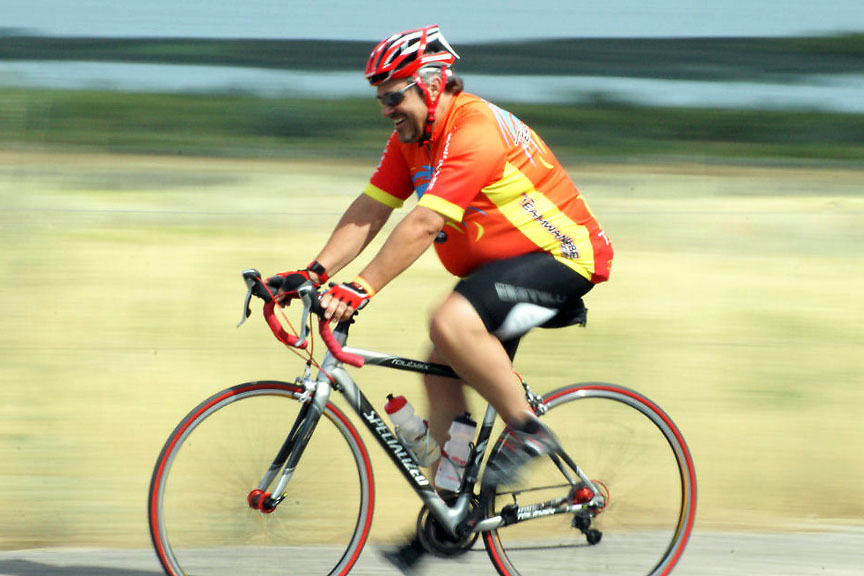
Old thread, but interesting non the less. I love it when people bring up the weight issue. Most people can loose more weight than they are complaining about. Reminds me of the cyclist on the super light weight carbon racing bike and he has a big gut. It is one of those STFU you keyboard commando moments.

original.jpg


Big knives can do little jobs. Little knives can't do big jobs.
 
Old thread, but interesting non the less. I love it when people bring up the weight issue. Most people can loose more weight than they are complaining about. Reminds me of the cyclist on the super light weight carbon racing bike and he has a big gut. It is one of those STFU you keyboard commando moments.

original.jpg


Big knives can do little jobs. Little knives can't do big jobs.

It really depends. If you're backpacking and on the move most of the day, every ounce counts. Needless to say, you should be in shape before doing such things.
 
While this is an old thread, its interesting to me, because I posted in this thread not long after I joined here (just a few months after). And its interesting to see how my choices/preferences have changed.

I haven't used my BK2 in well over a year, and my Mora is my most used outdoors knife at the moment. I have found that a BK9, Mora, and folding saw will do everything I need for most camping I do, and while I still wouldn't particularly love having ONLY a Mora (I'd miss the saw :(), I'd feel much more comfortable with it than I was before.

I think if I had to say what is my "ideal general outdoors knife" at the moment, I'd say something close to the Becker BK16. Robust enough to handle moderate "abuse" easily, while still fairly light (6.xoz without the sheath IIRC), in a length that is "just right". It even has a very comfortable handle shape, and a nice flat grind keeping it relatively slicey.

Also, as someone who enjoys cycling, that image makes me laugh, as for what is possibly a large percentage of people, that will be true to an extent.

I always get a chuckle out of people who obsess about the weight of their bike, particularly when they're just casual riders. As long as you're riding for health reasons/general fitness, then IMO you need not worry tons about weight (racing or specific distance goals are a different issue, where it can make sense regardless of body weight). My father rides an incredibly old incredibly heavy old bike with big knobbies that are slightly underinflated. It gives him better "cardio per mile" :p.
 
Nessmuk and Kephart both favored a 4 to 5 inch fixed blade, with a bit of flex. Their reasoning: Long enough for food prep and processing fish and game. For fine work (carving a spoon or bowl, for example) they used a trapper or moose pattern.
We do not know what E.H. Kreps preferred, since he never mentions his knife or knives in his writings. Apparently, he did not consider them important enough to mention. (the axe on the other hand, he talks quite a bit about that.)

Note that none of these gentlemen ever battoned their knife. They used an axe or hatchet for firewood. (the proper tool for the job). Nessmuk preferred a double bit axe, Kephart a single bit.

Get ypurself a "Nessmuk Trio" and you will be set to cover all your cutting and chopping/splitting requirements.
 
1. I use my Scrapyard Deregulator and Becker BK9 for most outdoors tasks. I find that a blade length of 7-9" is always with me, but paired with a smaller knife. But I guess if I had to choose smaller versus larger I would go larger, so 7-9".

2. I prefer this blade length because it allows me lots of span for batoning, the blades are large enough to do light chopping if necessary, and as the late Ron Hood said "You can do small jobs with a big knife, but not big jobs with a small knife."

Pretty much what I think, though I find 10" do a bit better than 9" depending on design. One thing easily overlooked is that as general purpose knife, few big knives are outstanding slicers, and survival is by definition not task specific: One knife that combines both chopping and slicing is the Randall Model 12. Not many other do that well doing both things.

Gaston
 
Back
Top