I'm about to shoot laser beams from my eyeballs and lava from my ears...

Joined
Aug 16, 2008
Messages
222
So, I have once again reinforced that haste makes waste... I had 2 ground out. They were pretty, and I mean pretty. It was getting late and I said to myself "Self, you should hang it up for the night and heat treat in the morning." Well, I didn't listen to me and flipped the oven on, threw the blades in, dusted with anti-scale once they would melt it, and let the thing ramp to 1480. Waited 15 minutes after it reached 1480°, pulled them one at a time and quenched. Now, that isn't my normal procedure. See, normally I let the oven heat, THEN throw the blades in. I always kniew that given the small size of my oven and the placement of my thermocouple that there was significant potential for the temperature to severely overrun, so I never put anything in until the whole thing had set at equilibrium for 5 or 10 minutes. Once the oven gets hot, the relay bumps for about 1 second every 2 seconds to maintain temp. On initial heatup, it hits abut 1470°, shuts off, and doesn't bump again for 5 minutes or so, but the temp never shows above 1490°

Well, let me tell you something about anti-scale... Anti scale compound is composed of at least some portion of boric acid. Boric acid gets EXTREMELY corrosive on steel above about 1650°. So guess what... when my oven overran with the blades in it, apparently it was by AT LEAST 170°. Honestly, knowing what I know about chemistry (chemical engineer), I would bet that it overran by more like 500°, and for how long I don't know, but at least 5 minutes. So, what does (and I'm rounding here) 2000° boric acid do to a blade? It eats about .015" off of everywhere it touches.

I knew something was wrong when I pulled the blades... something just didn't look right. My suspicions were confirmed when I got them out of the quench... they were jet black, not perfectly silver like normal. They were also warped. Now, call it hubris if you want, but I pride myself on never having an O-1 blade warp in quench. Well, can't say that any more... both bowed, and one went cup shaped. Never had a chance to get them straightened out before they started hardening.

I'll get some pictures in the morning and show you the carnage, and I'll get some grain pics from the break test. Moral of the story... slow down; there's never enough time to do it right, but there's always enough time to do it over.:grumpy:
 
There's never enough time to do it right, but there's always enough time to do it over.

+1 (a thousand times)

Sorry to hear about your bummer, but appreciate your sharing it with us. Good going on that score!
 
that really sucks man. we all make sacrifices to the knife gods, we might not like it but magically it makes us wiser. when i use the large heat treat oven at work i turn it on at the start of the day and then heat treat at night so it has like 5 or more hrs to settle down. once it does it runs like a champ to like one deg.
 
that really sucks man. we all make sacrifices to the knife gods, we might not like it but magically it makes us wiser. when i use the large heat treat oven at work i turn it on at the start of the day and then heat treat at night so it has like 5 or more hrs to settle down. once it does it runs like a champ to like one deg.

Why does it take so long to even out? Does it have a lot of mass? Seems like a lot of extra energy, no?
 
Why does it take so long to even out? Does it have a lot of mass? Seems like a lot of extra energy, no?

its a real big oven but it actualy can be up to 2000 in a little over an hr. guess thats the advantage of 3 phase ;). i do a lot of heat treating for the shop and so i usley start her up when i get in and turn her off when i leave. i have a video of me quenching a chunk of 17-4 round stock that is 20 inches lonk and over 3" wide. it was at 2000 deg, well actualy 1925. i was resetting it to contetion A so we could reheat treat it to H900. i have thousands of pound of this material i have to heat threa like this so its an every day thing for me. but hay its fun :D i will see if i can find the video on my phone.
 
OKZJ: I too am an engineer and I know from personal experience how much a technical foul up scars the soul of an engineer. I honestly believe that we are somehow selected to be especially vulnerable to the wiles and ways of Colonel, the Reverend, Doctor, al Haji Murphy, PE, PhD. Making a mistake - Herbert Hoover (one of only two engineer presidents - Jimmy Carter was the other) summed it up best in his book - The Years of Adventure. "These", says Hoover, "are the phantasmagoria that dog his days and haunt his dreams". I am sort of blessed in that I was also a US Army paratrooper and a combat veteran and as a young Staff Sergeant I was once gently counseled by my First Sergeant: "Suck it up Sarn't Jasper - take a salt tablet and drive on!!"

I doubt seriously if these words will give you much surcease from sorrow but I can give you, in all sincerity, this US Air Force toast to combat fighter pilots: "May the skin of your ass never be stretched over the head of a banjo and if it is may it only play Rock 'n Roll music". Nicholas Jasper, PE
 
OKZJ: I too am an engineer and I know from personal experience how much a technical foul up scars the soul of an engineer. I honestly believe that we are somehow selected to be especially vulnerable to the wiles and ways of Colonel, the Reverend, Doctor, al Haji Murphy, PE, PhD. Making a mistake - Herbert Hoover (one of only two engineer presidents - Jimmy Carter was the other) summed it up best in his book - The Years of Adventure. "These", says Hoover, "are the phantasmagoria that dog his days and haunt his dreams". I am sort of blessed in that I was also a US Army paratrooper and a combat veteran and as a young Staff Sergeant I was once gently counseled by my First Sergeant: "Suck it up Sarn't Jasper - take a salt tablet and drive on!!"

I doubt seriously if these words will give you much surcease from sorrow but I can give you, in all sincerity, this US Air Force toast to combat fighter pilots: "May the skin of your ass never be stretched over the head of a banjo and if it is may it only play Rock 'n Roll music". Nicholas Jasper, PE

That quote is priceless. :D

And Jimmy Carter is an engineer? Wow. I was expecting lawyer. Just seems too... I don't know... blood sucking... to be one of us.

Oh, and I'm not discouraged, just pissed. When I'm pissed I like to break stuff, and it just so happens in this particular case that breaking stuff is going to shed some light on what went wrong. That's why I love knifemaking.
 
Hmm, my oven has never overran it set point by more than 5 degrees. Come up to 1850 for D2 in about 15 minutes and I usually stick the envelopes in at room temp and turn it on. The PID does have a connection and a setting for an alarm. Probably be worth it for me to wire that in.

Sorry to hear about your bummer. Right after we start trusting equipment it fails
 
Analog controllers overrun by a considerable amount, and the reason for a long wait after it initially comes up to temperature is the fact that it still has to bring all of the thermal mass of the insulation up to temperature, that means a lot of energy in the coils which means a whole lot of infrared heating of the blade. Steel absorbs infrared really well.
A well trained PID controller will start to back off as the kiln approaches temp so it coasts up to the setpoint rather than hitting it hard and overshooting.
I always let my kiln hit equilibrium, and I have installed thin refractory infrared shields as a muffle between the coils and the thermacouple/blade chamber

-Page
 
I learned a long time ago flying free flight models that any action that starts with the thought, "just one more," or "perhaps I should do this tomorrow," will never end well. Getting an airplane lost in a boomer or destroying it because you're tired and miss a setting will teach you to ignore the "just one more" demon.

Sorry to hear about losing the blades, I'm pretty sure we've all been there and if you haven't then you will one day.
 
At some point as a young machinist I finally learned the behavior of just systematically always setting stuff down for a while when you're nearly done with it. Always make it a habit to walk away from things for a little while when you're nearly finished with them. They always finish up nicer after a break and there is always something else you could be doing with your time. Prevents the natural urge to hurry up and risk short cuts when you're nearly done. Go muck a sump or something.
 
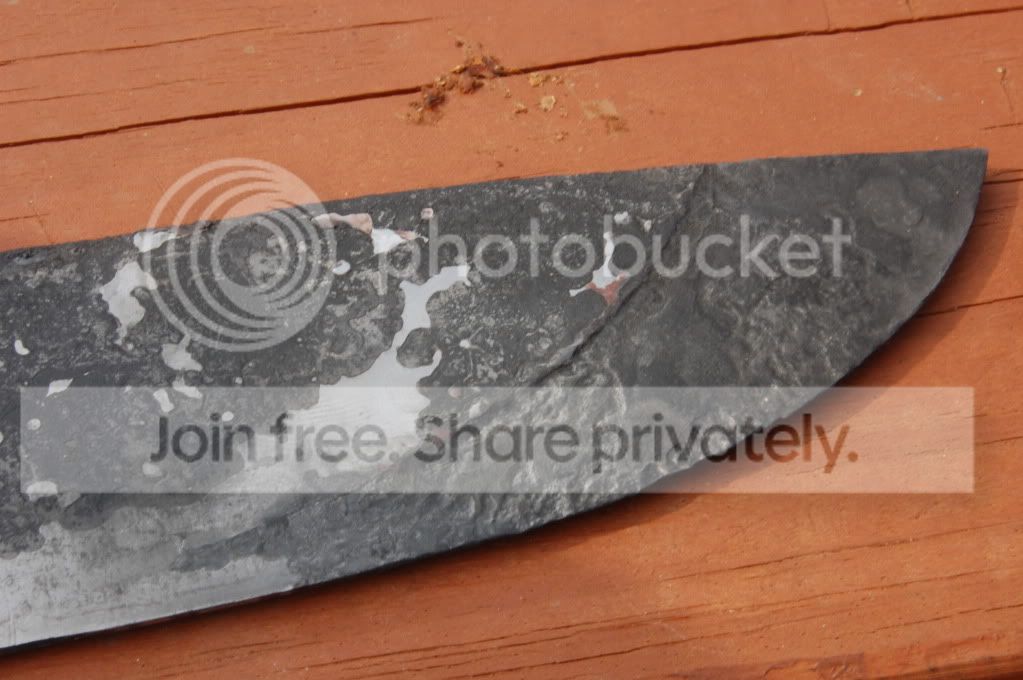
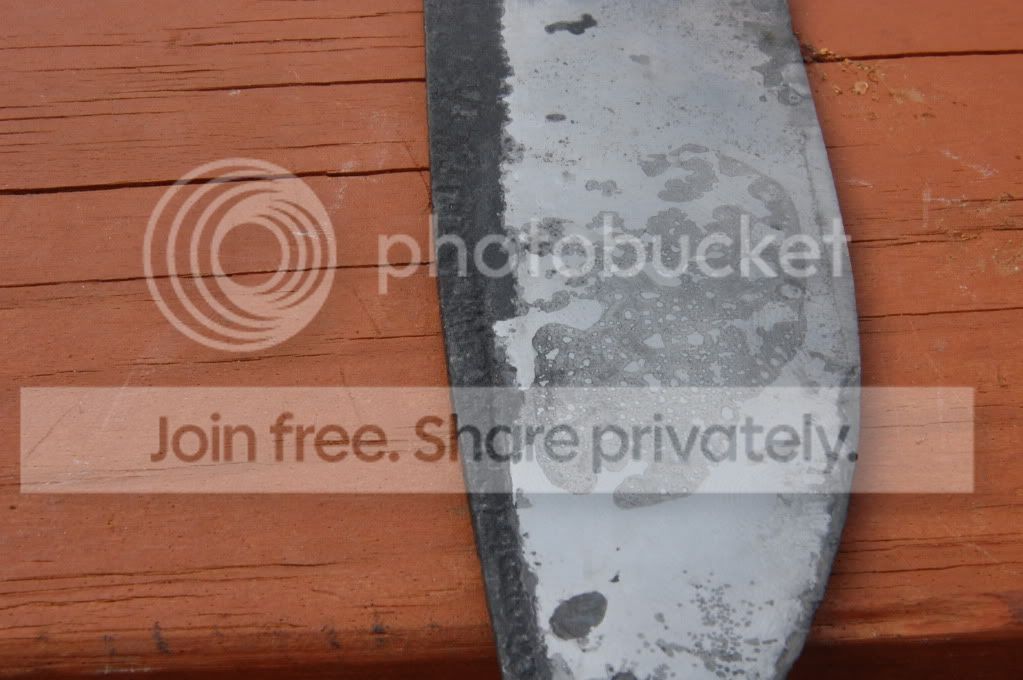
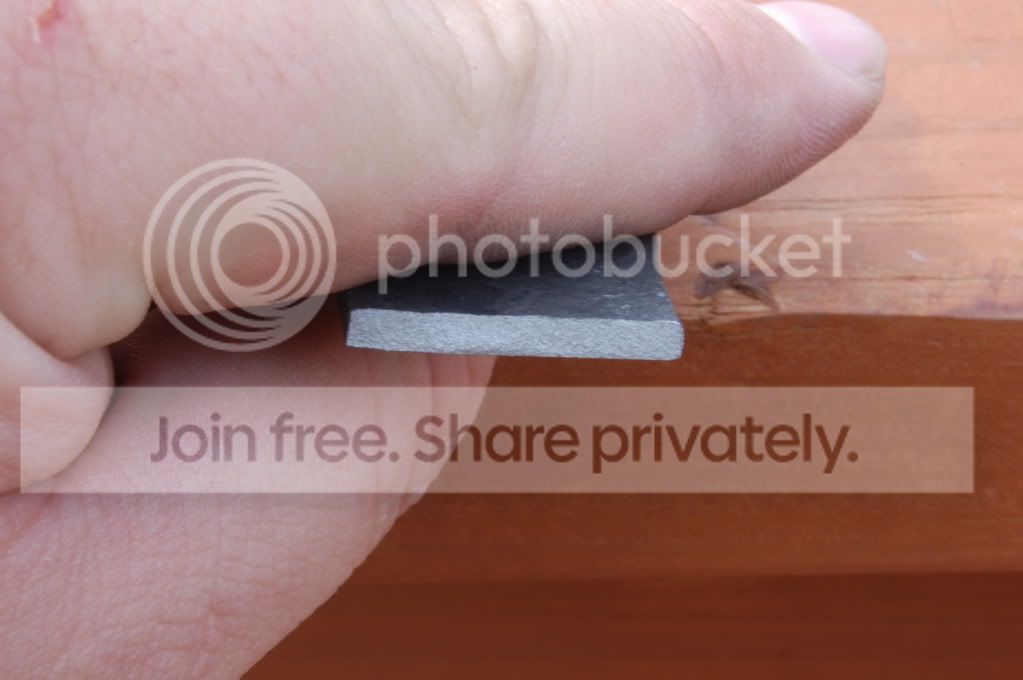
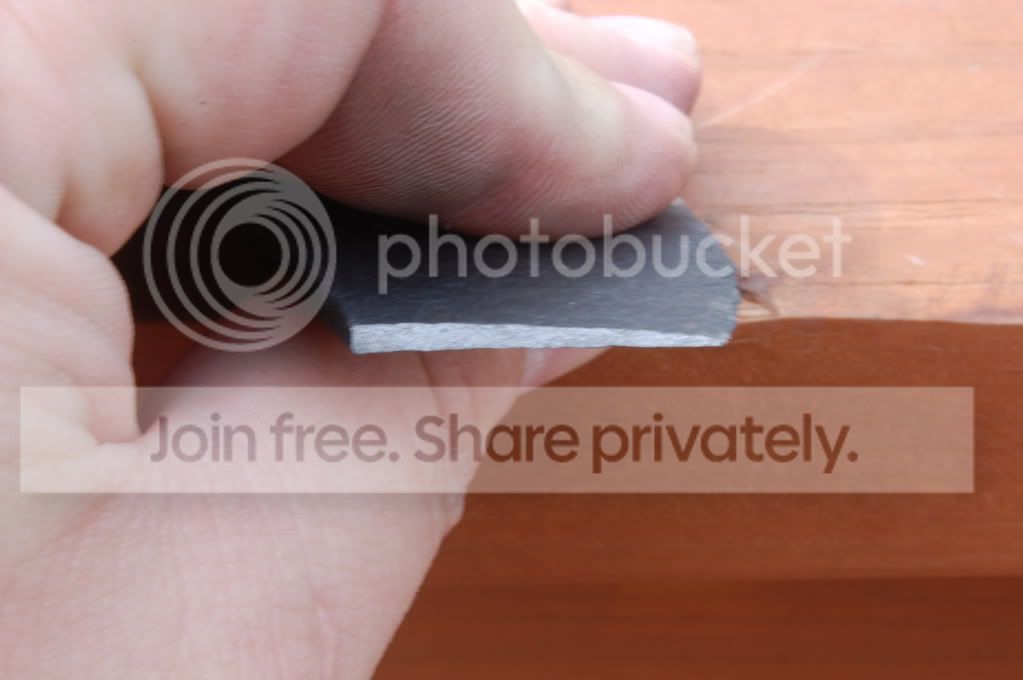
OK, here are some pics.

DSC_0158.jpg


DSC_0162.jpg


DSC_0166.jpg


DSC_0169.jpg


DSC_0172.jpg


DSC_0173.jpg


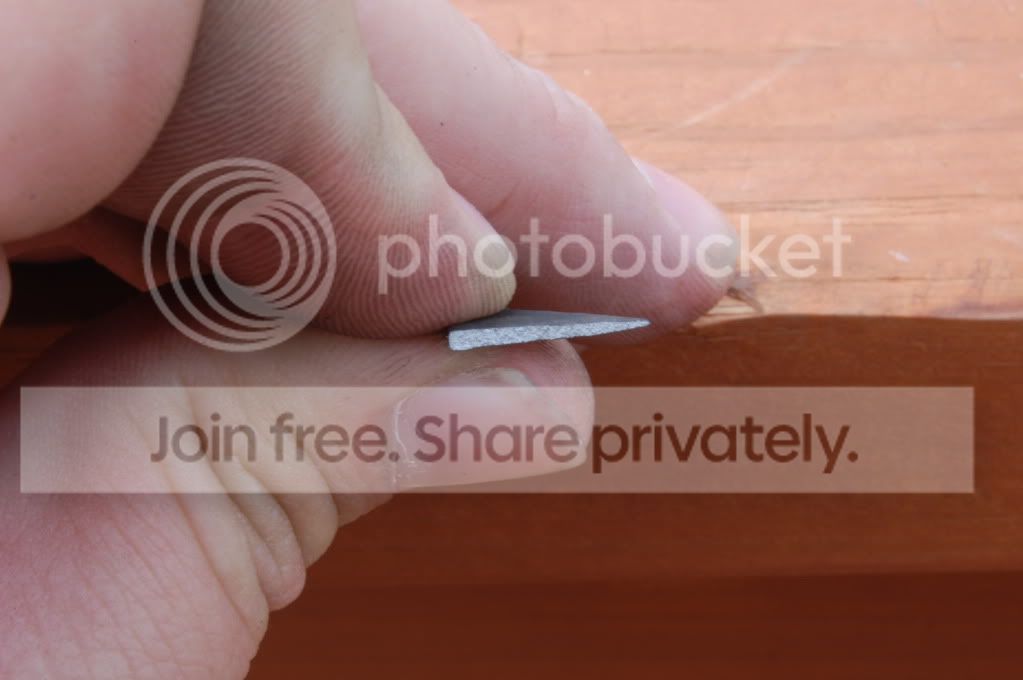
You can see where the blade is eaten away, and the grain size is MUCH larger than I'm used to.
Obviously the whole thing wasn't eaten up, so it didn't all get too hot. That to me screams radiative (infrared) heating. I wish I had a pic of my oven. The thermocouple is in the floor in a trench. I had it covered with a piece of firebrick, and it is ceramic sheathed, so it is by and large proteced from radiative heating. The blades, not so much. Like I said, not a problem when everything reaches equilibrium, but a huge problem on heatup. My chamber is about 11" long, 3" wide, and 4" deep. It has 120" of Kanthal coil in it, operating on 240VAC. I get from room temp to 1500° indicated in 8 min, with a piece of firebrick covering the thermocouple.

What ticks me off is that I KNEW I shouldn't have let them heat up in the oven. I KNEW that the boric acid eats steel above 1650. I just didn't put it together.
 
Hmm, my oven has never overran it set point by more than 5 degrees. Come up to 1850 for D2 in about 15 minutes and I usually stick the envelopes in at room temp and turn it on. The PID does have a connection and a setting for an alarm. Probably be worth it for me to wire that in.

Sorry to hear about your bummer. Right after we start trusting equipment it fails

If you're using foil you have a reflective protective layer between the coils and blade that reflect IR... it helps. I just don't use foil. Maybe I should start.

Ah hell, something has to go wrong for us to learn something about what doen't work, right?
 
Analog controllers overrun by a considerable amount, and the reason for a long wait after it initially comes up to temperature is the fact that it still has to bring all of the thermal mass of the insulation up to temperature, that means a lot of energy in the coils which means a whole lot of infrared heating of the blade. Steel absorbs infrared really well.
A well trained PID controller will start to back off as the kiln approaches temp so it coasts up to the setpoint rather than hitting it hard and overshooting.
I always let my kiln hit equilibrium, and I have installed thin refractory infrared shields as a muffle between the coils and the thermacouple/blade chamber

-Page

Yup. Mine's a PID. I think the problem is that I ran the autotune with the thermocouple exposed and just haven't run it since. I know better than to tune and change a process variable and keep the same tuning. Heck, that's part of my job. I had just masked all of my problems by not putting in the blades until it was hot.

Sounds like you've had some experience with IR.
 
Okzj, thanks for sharing your mistake with us.
In my heat treat oven, I am concerned with radiant heating (overheating). So in the rack I made to hold the blades I place a piece of thin steel in the two outer positions. That way the blade can never be exposed directly to the heating element. The racks are strips of soft firebrick with a row of framing nails coming up from the bottom.
It would be interesting to see how hot the steel gets when exposed to the heating elements, even when the air temperature isn't seriously overrun.
Thanks again.
Alden
 
Back
Top