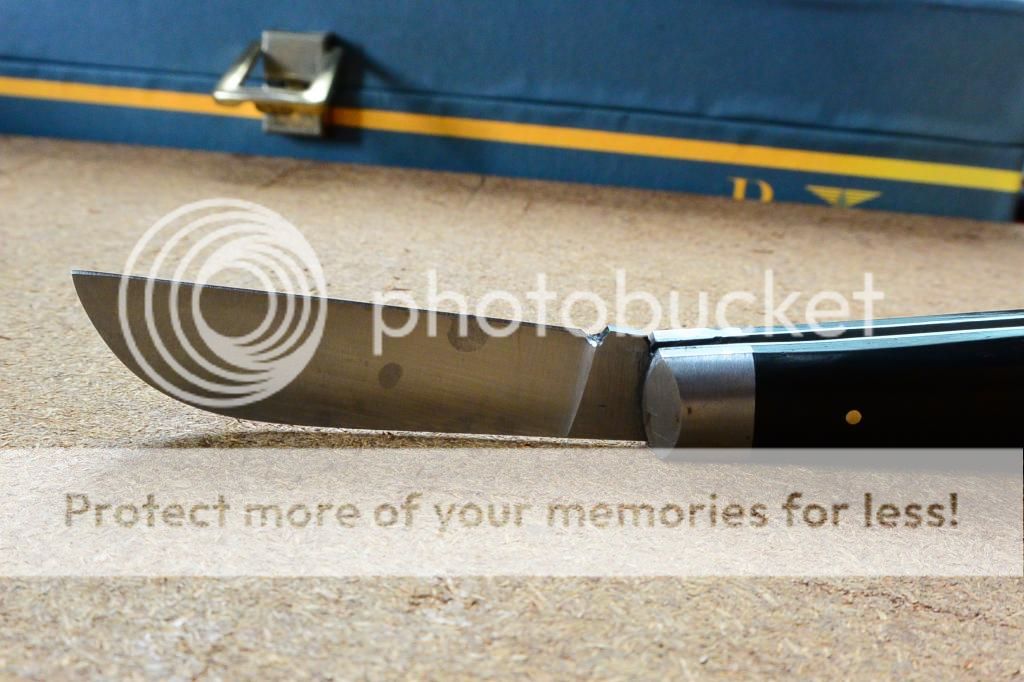
Is this normal/acceptable (pls see pics)

Joined
Apr 4, 2014
Messages
680
I've got a couple of knives that have a strange characteristic. When fully opened, the spine of the blade is not "square" with the backspring. So the blade looks kinda like it's 95% opened but in actual fact it can't go any further. In the pic below, the bottom knife is the guilty one. Compared with the top one where the blade spine is straight and flat with the backspring.
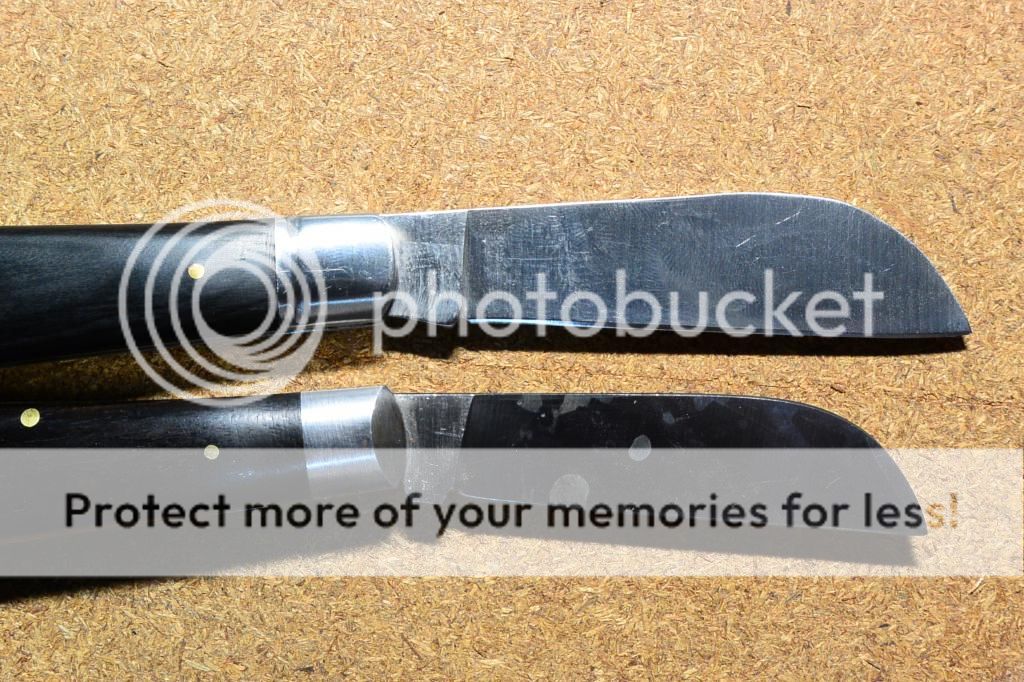
DSC_4039_zpsc3f6bec4.jpg


When I lay that bottom knife edge up on a flat surface, the spine of the blade does not touch the tabletop at all.
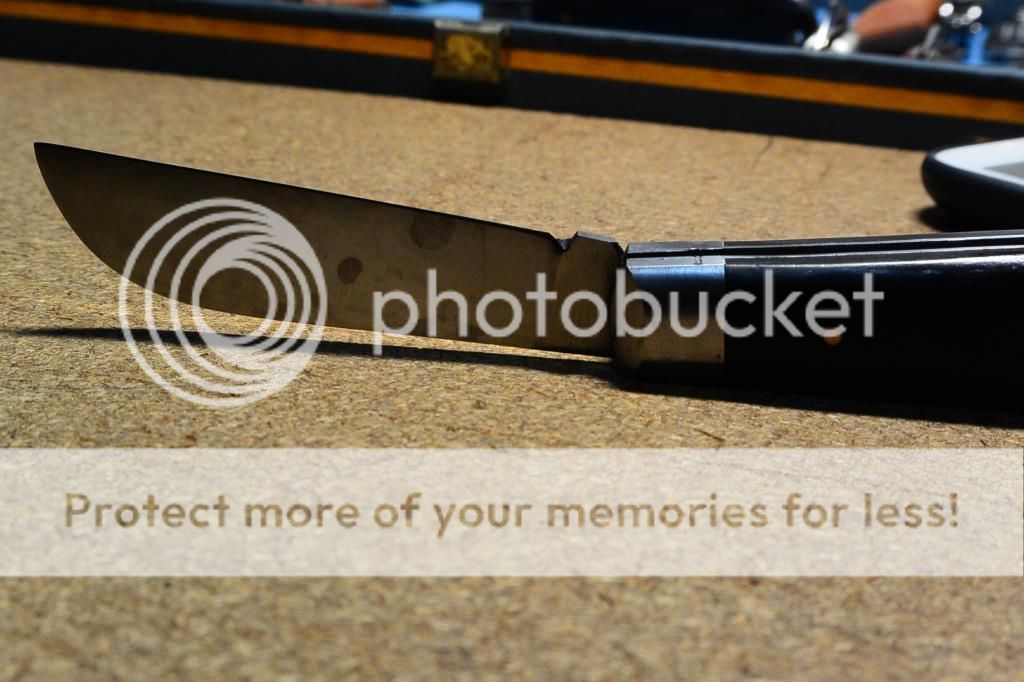
DSC_4041_zps6d690e54.jpg


So is this normal and acceptable. It does not affect the usage of the knife except that the blade is tilted down more than usual. Is there any way I can "straighten" it without sending it back to the manufacturer?

Sorry I don't know the proper terms to describe this but a web search did not help.

Cheers
Linus
 
Looks like the back spring or the notch on the tang is too long. File the spine of the blade where it contacts the back spring and that should take care of it.
 
You would have to ask the original engineer if this was intentional or not. Many blades are left south of parallel on purpose; thus I would not just assume there was a defect on an entire run of knives. Since these are stamped out, there is no real stock removal on the tang or backspring during production - thus that is how he wanted them.
 
Thanks for explaining Mike. I did not think it was a defect although it did bug me to see the blade askew of the backspring. This particular knife is from a reputable Solingen maker so I guess they must have their reasons for making it like this.

Linus
 
Totally normal. If you have a production slipjoint where the spine lines up perfectly with the spring consider yourself lucky. You usually see that only on customs.

- Christian
 
I have seen other knives like this, so I suppose it's somewhat normal, but only you can determine if it's acceptable. It appears that the knife has seen some use, so I'd guess it's not returnable, though.
 
I have seen other knives like this, so I suppose it's somewhat normal, but only you can determine if it's acceptable. It appears that the knife has seen some use, so I'd guess it's not returnable, though.

Nah. Never intended to return it. Just wanted to know if I should send it in for some "tuning"/repair or maybe attempt to do it myself if it's not too difficult.
Linus
 
I see this a lot on TL-29's. The QC is not always good on mass-produced knives, and they don't always fit flush. To me, it looks like they go for the backspring fitting flush in the open position, and when it does, they are done, wherever the blade ends. I have also seen it where they leave it slightly long, knowing that the spring end will get mashed and flattened with use, and will allow the blade to sit level. However, yours seems quite pronounced.

What you do with it depends on the hassle of sending it back. Did it cost a lot (in your opinion)? If so, then you may want to send it back. If it's not worth it to send back, and the look of the blade open bothers you, here's what you could do. You could file the front face of the spring that makes contact with the blade. That will allow the blade to extend a little more and sit more level. Keep in mind, though, that allowing the blade to sit more flat may affect how the spring sits in relation to the back of the liners. It may cause the spring to sit below the liners now.

Just my opinion, if I had purchased that from a dealer or store, I would send it back for replacement or refund.


Glenn
 
Glenn, thanks for taking the time to explain things. As I said above, I never intended to return it. Not a matter of the cost as I did not pay too much for it but it's no Rough Rider either. I'm in Singapore so returning anything either to the US dealer or to the German manufacturer is not gonna be worth the hassle. Just one of the problems of being a knife nut in Asia :) I might try your suggestion to file the spring. Currently it does not bug me that much so I might leave well alone.

Linus
 
Not underblading, as that is when the maker leaves the run-up of the tang below the backspring. Again an engineering decision, but not the same.

He is talking about the blade spine itself not running parallel with the backspring. The are blades in which I can imaging a real functional use for not leaving them perfectly lateral. For example, a coping blade seems like it would have advantages to being a little cupped. That way the testicular cord (whatever the name is) would not have a lateral path off the edge in case your blade dulls during work. With a little uphill travel during the stroke, the blade would cut better with the resistance in a more dull state than normal.

I have seen some older models that sit at about 20-25 degrees from parallel.
 
Interesting that you mention the coping blade Mike. The two knives in my modest collection that are not parallel with the backspring both have sheepsfoot blades which are almost identical to coping blades. I guess your initial assessment that this "design" was intentional may be correct.

Linus
 
Interesting that this post came up, I just received Carl Schlieper Sodbuster(99jr) and it too does not have a blade that sits parallel with the back spring. I've always assumed it a flaw, interesting to read that there may be a purpose to this feature and it that it may be intentional. Kind of changes my out look. Also, Mike, if you are referring to testicular tubes, as in male anatomy, that would be the Vas Deferens, those college anatomy finally paid off... :D
 
Not underblading, as that is when the maker leaves the run-up of the tang below the backspring. Again an engineering decision, but not the same.

He is talking about the blade spine itself not running parallel with the backspring. The are blades in which I can imaging a real functional use for not leaving them perfectly lateral. For example, a coping blade seems like it would have advantages to being a little cupped. That way the testicular cord (whatever the name is) would not have a lateral path off the edge in case your blade dulls during work. With a little uphill travel during the stroke, the blade would cut better with the resistance in a more dull state than normal.

I have seen some older models that sit at about 20-25 degrees from parallel.

Thanks for the correction Mike. I didn't see it. I reread the OP's post and get it now.
 
So is this normal and acceptable. It does not affect the usage of the knife except that the blade is tilted down more than usual. Is there any way I can "straighten" it without sending it back to the manufacturer?

Linus,

As others have noted, I believe it can be "normal and acceptable," and more characteristic of some makers than others.

I have no idea if the following might apply to anything you have in front of you, and lack the knowledge of whether or not to recommend anyone else try this, BUT---

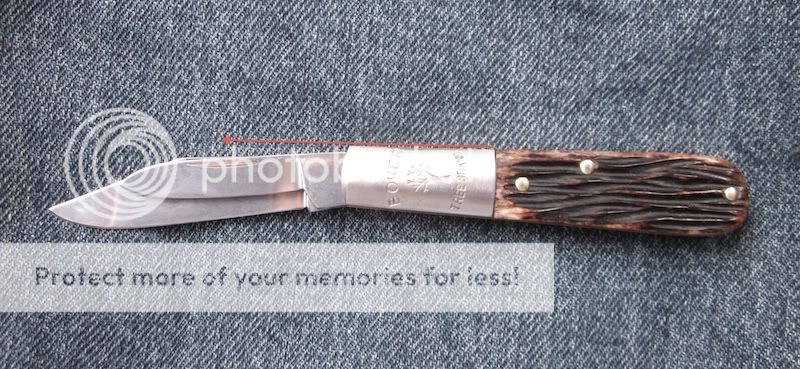
On this particular knife, "normal" or not, this bugged me:

Barlowopenbladeangle.jpg~original


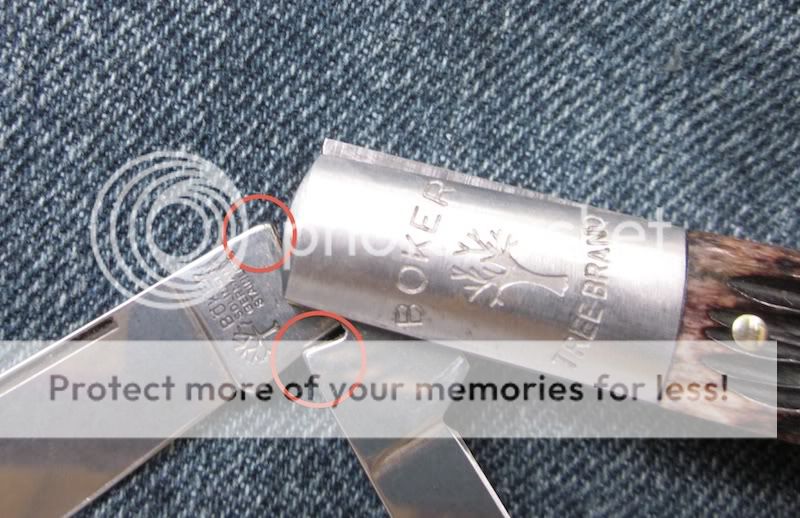
I carefully sanded away material from the tang areas circled here, going slowly and checking things frequently...

Here.jpg~original


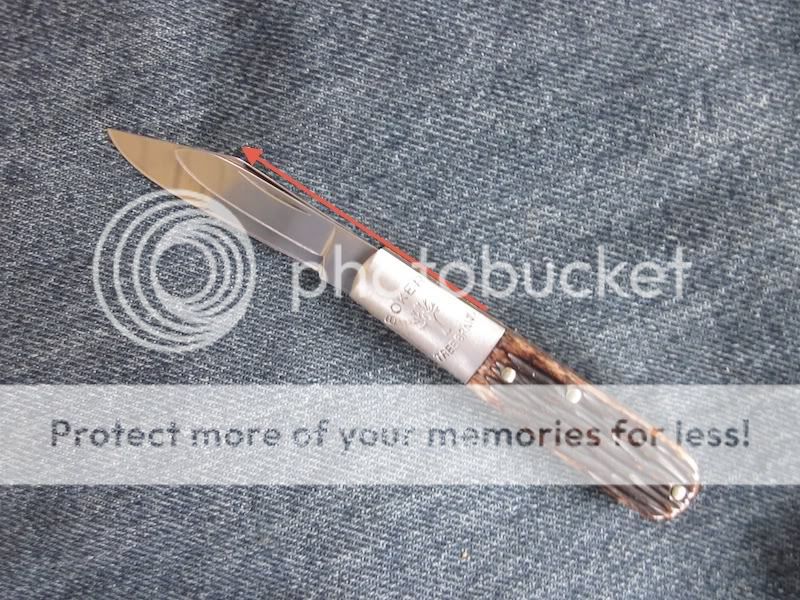
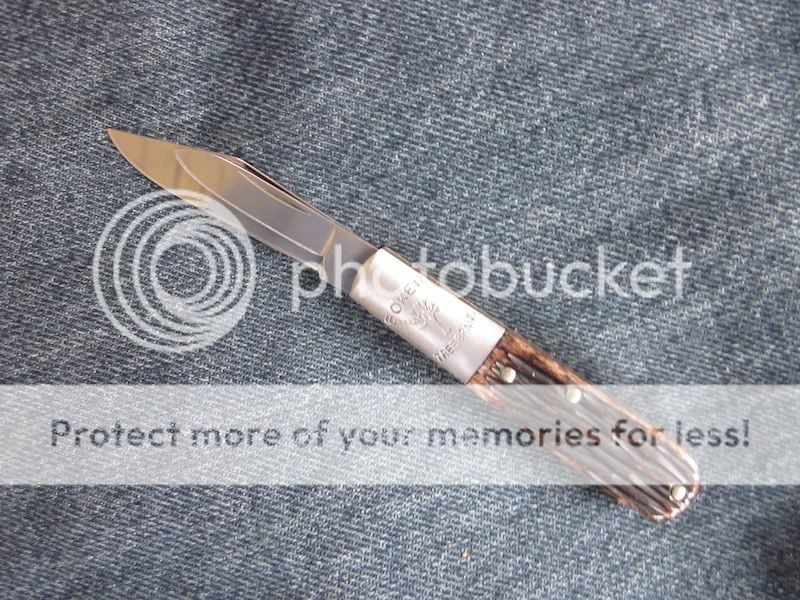
... bringing the blades more in line with the handle/springs when open:

Better.jpg~original


IMG_3610.jpg~original


I have not noticed any negative change in the knife's action or other characteristics, and think it looks much better now.

~ P.
 
Hi Sarah! Thanks for the pics. Good to know I'm not the only one bugged by this "characteristic". Looks like I might just have to break out the small files and have a go at it. Mine is after all a not-very-expensive user knife so I'm not afraid of marring it. And I do love to tinker so this might be an ideal project.
Linus
 
Didn't read the whole thread, but I have a couple older knives like that and I don't mind/kinda like it.
 
After re-reading pertinux's post above and staring at the pictures she so kindly posted, I said to myself "Aw heck! I don't care what the original knife designer intended. That's not how I want MY knives to look." So out came the tiny files and I got to work. I took away some material from the blade tang area as shown circled in P's second photo above as well as from the face of the backspring as suggested by Mike (Knifeswapper). I used masking tape to cover the blade and to protect the areas that I did not want to get scratched. I worked slowly as instructed and checked often. I started out with this :
DSC_4041_zps6d690e54.jpg


and 45 minutes later. I ended up with this :
DSC_4043_zpsb117696c.jpg


More "normal" looking in my eye. I love it. And as pertinux mentioned above, I too did not notice any other negatives in the knife after doing the filing. Walk, talk and snap etc are the same as before. No more "crooked" knife for me!

Linus
 
where do you get a file small enough for this minute type of work?

Is there a name for this type of file?
 
I don't know if there's a name for them. I just happen to have a set of small files I bought sometime back from the local hardware store. They are not top quality but they get the job done.
Here's a pic of the set of 5 with a toothpick for comparison.
DSC_4046_zps1f1e0b4e.jpg

Linus
 
Back
Top