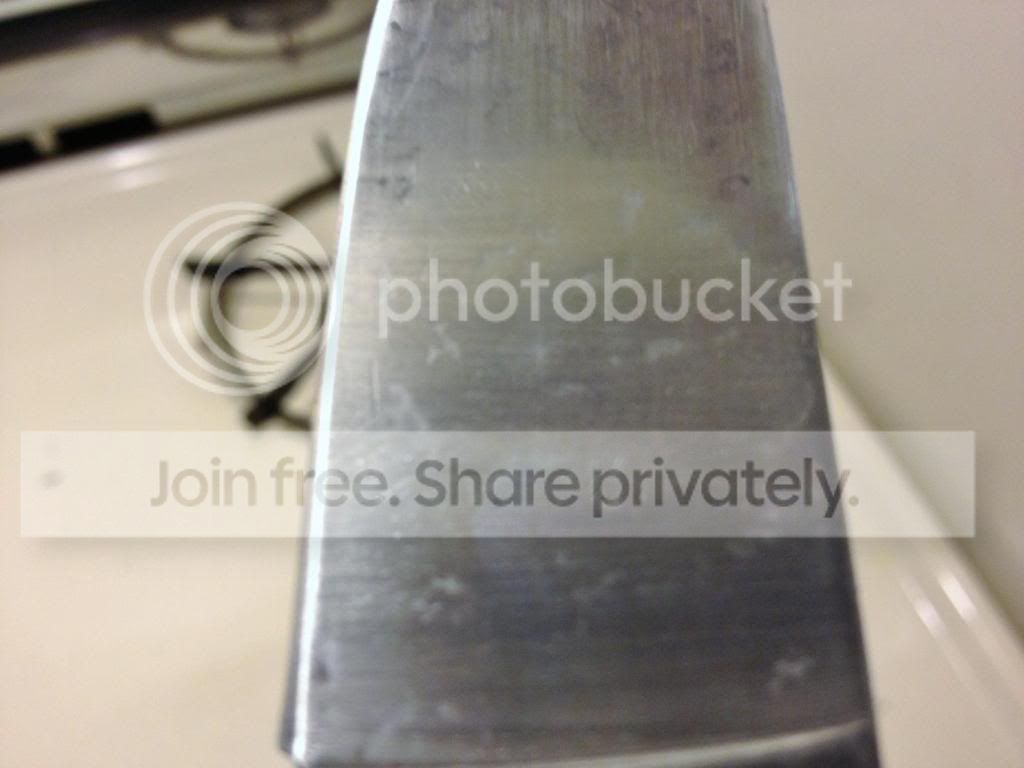
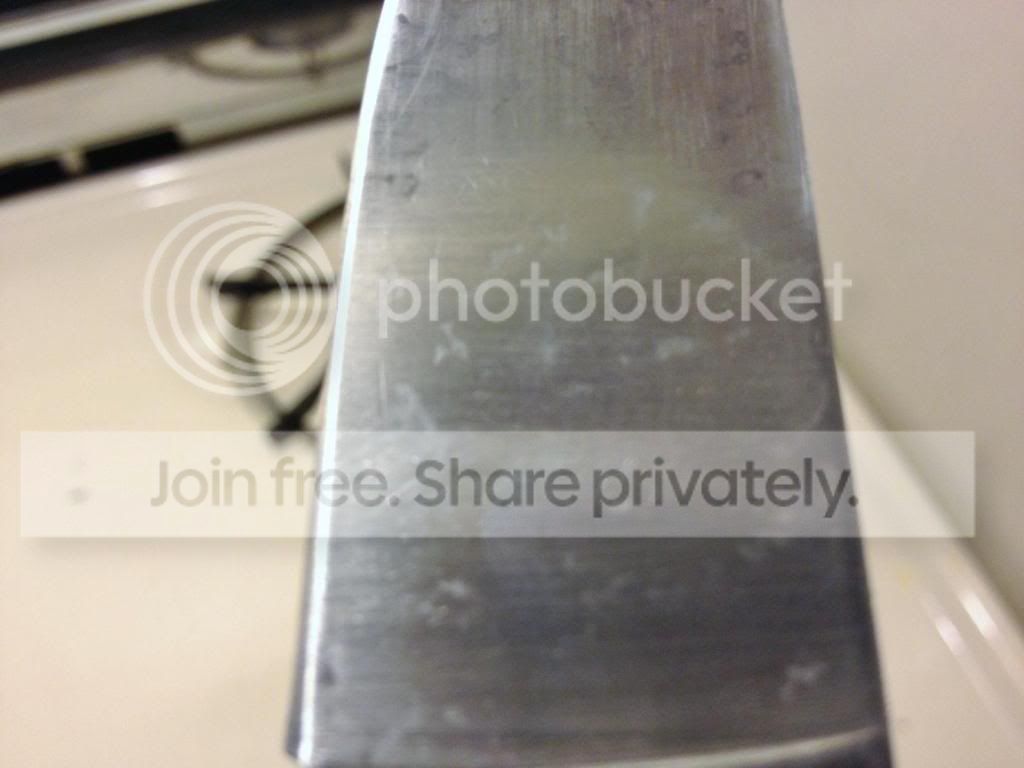
is this normal on the bk14?

Joined
Apr 12, 2006
Messages
272
hey guys and gals. so i put a patina on my 14 with mustard and vinegar and after a while decided to strip it again. now the steel looks like it has deep pits on it and i can't get them out by hand rubbing with sandpaper. check it out below. is this normal? if not, would this be something that would be covered under warranty? Its not that big of a deal but it just sort of limits how i can personalize it. i was gonna put a nice even patina on it. anyway, thanks in advance.

kyle
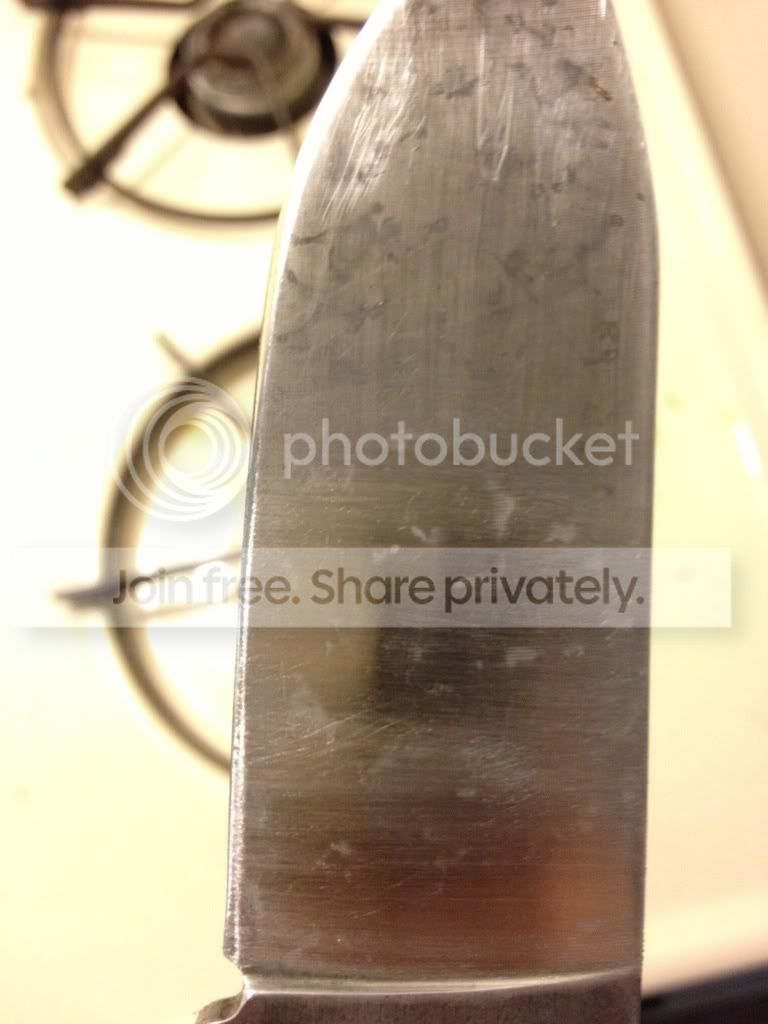


Umm I didn't see any deep pits. Looks fine to me. Just sand her down and put a patina on her if that's the look you're after
 
I'd say no. It's not normal. But I seriously doubt that it would be covered by the warranty. The warranty covers manufacturers defects. This seems to have been caused by your attempt to modify the knife.

I wouldn't worry about it too much. It almost certainly won't effect the knife's utility or life span.

If you want to mod it in a way that will not be bothered by the pitting, try cliching it.
 
I actually have been trying to sand it down to no avail. I'm curious what could have caused the pitting. I've patinaed several knives with mustard and vinegar and this has never happened. Forgive me if I sound like an idiot, but could the steel be soft?
 
okay, let's do science!

you stripped it

there was no pitting

you did things to it for a patina

you did other things

you stripped it

pits

unfortunately, i would call this "not covered under warranty"; first off, you removed all factory protection. that's okay. it was still fine. you subjected the knife to "stuff" and environment. stuff happens. pits.

sorry, but that's the way i see it.

sand it. bring it up to mirror. blue it. or paint it. or something. because there's nothing soft, or wrong, with your knife.
 
you coated it in corrosive materials in an uneven pattern and left them in varying concentrations for a period of time -- I'm impressed that the pits are that minimal.
 
I actually have been trying to sand it down to no avail. I'm curious what could have caused the pitting. I've patinaed several knives with mustard and vinegar and this has never happened. Forgive me if I sound like an idiot, but could the steel be soft?

Start sanding with something more coarse than work your way up and it should remove all of the pits.
 
How funny.Puh-teena indeed.Better be careful it will also make your apples taste funny.
 
Did you do anything to block the activeness of your acids after patina attempt or did you just let the steel sit in caustic material and clean it off allowing the reaction to continue?
 
I don't see any pits on the pics, I only see some discoloration of the steel? Might be me though. Anyway, the pits won't affect the performance of your knife.
 
Stvpourciau: I'm not exactly sure what you mean.
My guess is that's why you have pitting in your blade.

Your playing with acids when you corrode steel using vinegar and other solutions. So, you need a base to neutralize the acid after you've achieved your desired result.

Just because you clean the blade up doesnt mean that a reaction isn't still occuring on a chemical level, the most common method of preserving carbon kitchen knives is giving them a scrub with Baking Soda (a base) after use.

I recommend you try coating/lightly scrubbing/sitting in some baking soda after your next forced patina.

Oil has no ph level and is not considered either acidic or basic (though natural oils technically tend to be acidic on account of containing fatty acids) and will not play a part in nuetralizing the reaction occured when soaking your steel in vinegar/mustard.

Best of luck with your next attempt!

I've personally never really minded a little pitting but it's not a defect in the blade.

P.S. I have no intention of coming off harshly, just layin down the info. Hope you find it helpful.
 
Last edited:
Rather than mess with perfection, I would have waited for KB to come out with a real stainless 154CM or better model, and then apply Sculpt Nouveau universal patinas to get where you want to go.
 
My guess is that's why you have pitting in your blade.

Your playing with acids when you corrode steel using vinegar and other solutions. So, you need a base to neutralize the acid after you've achieved your desired result.

Just because you clean the blade up doesnt mean that a reaction isn't still occuring on a chemical level, the most common method of preserving carbon kitchen knives is giving them a scrub with Baking Soda (a base) after use.

I recommend you try coating/lightly scrubbing/sitting in some baking soda after your next forced patina.

Oil has no ph level and is not considered either acidic or basic (though natural oils technically tend to be acidic on account of containing fatty acids) and will not play a part in nuetralizing the reaction occured when soaking your steel in vinegar/mustard.

Best of luck with your next attempt!

I've personally never really minded a little pitting but it's not a defect in the blade.

P.S. I have no intention of coming off harshly, just layin down the info. Hope you find it helpful.

I have seen numerous threads about putting a pitina on your blade but they almost always seem to forget the important information on what to do after you put the patina on the blade like how to stop it.

Good post and I hope it helps people and it didn't come across harshly, just informative
 
you're in for a lot of sanding on on hardened steel, which is an exercise in carpal tunnel insanity.
I'd recommend you decide you like the pits and patina it again.
(and don't forget the baking soda this time)

-Daizee
 
dish soap is basic -- soap and water wash after patina is done and no real need for baking soda. (unless you want to -- it's not like it'll hurt anything)
 
Stv is right about the chemical process continuing after exposure. I cut up some fruit with my 14 and forgot to clean it good. Well, the patina really set it after that, LOL
 
Back
Top