Issue with grinding kitchen knives "Hour glass grind"

Joined
Dec 27, 2013
Messages
2,696
HEy Guys, ive been trying to make more knives but i keep running into an issue. I make kitchen knives, mainly santokus and gyutos. But every time the thickness at the edge devolps something of an hourglass shape.

That is to say the edge thickness at the butt is thick, then about an inch or so infront of the butt is the thinnest part, often too thin, and then the steel thickness out past that area.

ill try to get photos, but does anyone know what im doing wrong?

Wrong pressure while grinding? Am i twisting my hands and pushing the bar in not parallel to the platen?
 
There's pretty much two possibilities that I can think of off hand. You're applying uneven pressure, or the belt is in contact longer at a certain area of the blade, than on other areas. I had a similar issue happening when I was just getting started making knives.

When I had the issue, it tended to happen near the plunge for me. So, what worked for me was to start grinding about and in or so in front of the plunge, and then backtrack into the plunge and then move from there, back towards the tip of the blade. Use layout dye and, check the blade after each pass. Also, you can just grind the areas with more meat on them that are uneven. Just don't grind on the thinner section until they're all even. Then blend the transitions together so the entire blade/edge is even.
 
where do you start the grind ? to get an hourglass shape you would have to grind away mostly in the middle of the blade. i try to start the grind at the edge, going 1/3 up the blade toward the spine. once i am close to my centerline edge scribes, and 1/3 up the blade, i start to work the grind toward the spine keeping the edge just touching or riding on the belt, and apply pressure toward the spine to remove that material.
 
To minimize this problem I try to grind at different angles. Most of my kitchen knives are plungeless and I use Butch Harner's method for the most part. I will start the grind perpendicular and then every so often grind the blade at a 45 degree angle and even vertically to try and keep the blade bevel and edge flat. I will also use the disc sander to help keep things flat. Once the edge is at around 0.015" I finish up with the rotary platen to convex down to 0.005" or so.
 
It's called "2 inch stripe". It is caused by the belt passing over the area a couple inches from the ricasso more than does at the ricasso. Uneven pressure, delaying as you try to get the plunge right, and the direction of the blade moving across the belt all add to the problem. It is best to start by sweeping the blade in one direction across the belt and lifting off, ten repeating. If you go back and forth, you are likely to remove more in the middle.
 
When it's happened to me it's just like Stacy said. I never start a grinding pass right at the plunge, or right at the tip, I start away from the plunge, back into the plunge and then continue across the blade to the tip for the most part. Inevitably this means the middle of the blade was in contact with the belt longer than the other areas, just like spraying paint by waving back and forth with the trigger down puts more paint at the ends of each pass than in the middle.

I get away from it by using uneven pressure or angle at the plunge to keep the middle of the blade off the belt, and by slowing down the pass on the tip end, or starting some passes on the tip side right where the hourglass ends.

I had to get over the idea I had originally which was that to have a good grind, I needed to make consistent passes from plunge to tip every time.
 
I have had this same issue. I would say for me, it wasn't so much pausing at that point, but I was not making full pressure contact with the plunge area when i was at that end of the grind. So not so much that the 2" area was thin, at first, but in trying to make the (thicker than the rest of the blade) plunge area thinner, I would continue to not press the plunge area hard enough and i would thin out the 2" area. Once I realized that was my issue, I have been able to correct it. I also think that I was keeping in the back of mind that I didn't want to bring the grind up so high as it was crossing into the handle area. That made me timid about getting good solid contact at the plunge. ( I liken this to a golf shot that you are trying to keep out of the water, that then ends up on the other side of the fairway, in the woods...) Hope that helps.
 
The 2" curse is caused by making full contact of the blade on a 2" platen. The blade should not be touching at the side of the platen opposite of the plunge. It should be held a couple hairs off and make contact platen on the side close to the plunge.

Once the grind is established you can then make full contact but only with a moving pass, do not sit still or the 2" curse will come back.

Knife making video of Harvey Dean and Steve Johnson are excellent in learning about this and how to avoid it. Until you see an expert explaining it while grinding you may not fully grasp what is going on.
 
The 2" curse is caused by making full contact of the blade on a 2" platen. The blade should not be touching at the side of the platen opposite of the plunge. It should be held a couple hairs off and make contact platen on the side close to the plunge.

Once the grind is established you can then make full contact but only with a moving pass, do not sit still or the 2" curse will come back.

Knife making video of Harvey Dean and Steve Johnson are excellent in learning about this and how to avoid it. Until you see an expert explaining it while grinding you may not fully grasp what is going on.

This is basically what I figured out by trial and error that I was getting much better grinds when not using the entire 2" of the platen and just using the plunge side and lift the tip side ever so slightly.
 
whoops, i think i misinterpreted the problem :D i thought he meant his spine and edge were thick, and the center of the blade was thin. great tips guys !
 
whoops, i think i misinterpreted the problem :D i thought he meant his spine and edge were thick, and the center of the blade was thin. great tips guys !

That's not a problem, that's a feature! Distal taper is the past. Proximal taper is the future. :cool:
 
The 2" curse is caused by making full contact of the blade on a 2" platen. The blade should not be touching at the side of the platen opposite of the plunge. It should be held a couple hairs off and make contact platen on the side close to the plunge.

Once the grind is established you can then make full contact but only with a moving pass, do not sit still or the 2" curse will come back.

Knife making video of Harvey Dean and Steve Johnson are excellent in learning about this and how to avoid it. Until you see an expert explaining it while grinding you may not fully grasp what is going on.


Are these videos free or are the tutorial DVDs?
 
To minimize this problem I try to grind at different angles. Most of my kitchen knives are plungeless and I use Butch Harner's method for the most part. I will start the grind perpendicular and then every so often grind the blade at a 45 degree angle and even vertically to try and keep the blade bevel and edge flat. I will also use the disc sander to help keep things flat. Once the edge is at around 0.015" I finish up with the rotary platen to convex down to 0.005" or so.

Have you got a link to the butch video?
 
It's called "2 inch stripe". It is caused by the belt passing over the area a couple inches from the ricasso more than does at the ricasso. Uneven pressure, delaying as you try to get the plunge right, and the direction of the blade moving across the belt all add to the problem. It is best to start by sweeping the blade in one direction across the belt and lifting off, ten repeating. If you go back and forth, you are likely to remove more in the middle.

I get the not going back and forth, i also understand not waiting at the plunge. But what do you mean sweeping the blade across? Be moving into the stroke before the blade makes contact and follow through as it were?
 
I was waiting to see if Nick Wheeler was going to comment before I said anything. He just posted a video on Instagram the other day of grinding a filet knife. Because of the thin blade he takes a block of wood with some rare earth magnets to attach the blade to. Once the blade has some sturdy backing the thin blade doesn't flex as much and gives you more control to get an even grind. I think if you tried this it would help
 
I was waiting to see if Nick Wheeler was going to comment before I said anything. He just posted a video on Instagram the other day of grinding a filet knife. Because of the thin blade he takes a block of wood with some rare earth magnets to attach the blade to. Once the blade has some sturdy backing the thin blade doesn't flex as much and gives you more control to get an even grind. I think if you tried this it would help

I think Nick is a little to busy with people throwing money at him.

But that's an interesting idea. I'll try that. Thank!
 
I was waiting to see if Nick Wheeler was going to comment before I said anything. He just posted a video on Instagram the other day of grinding a filet knife. Because of the thin blade he takes a block of wood with some rare earth magnets to attach the blade to. Once the blade has some sturdy backing the thin blade doesn't flex as much and gives you more control to get an even grind. I think if you tried this it would help
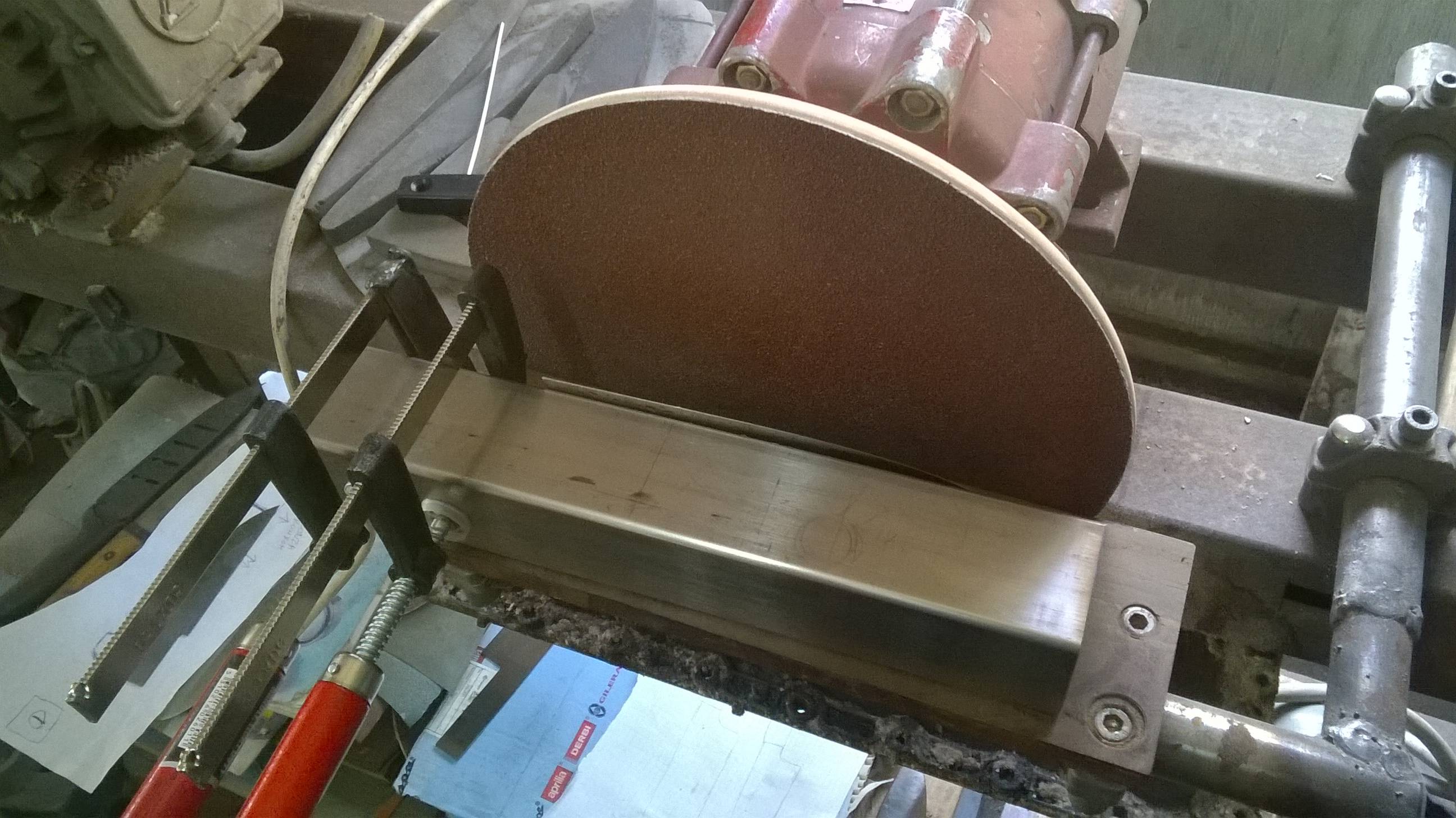
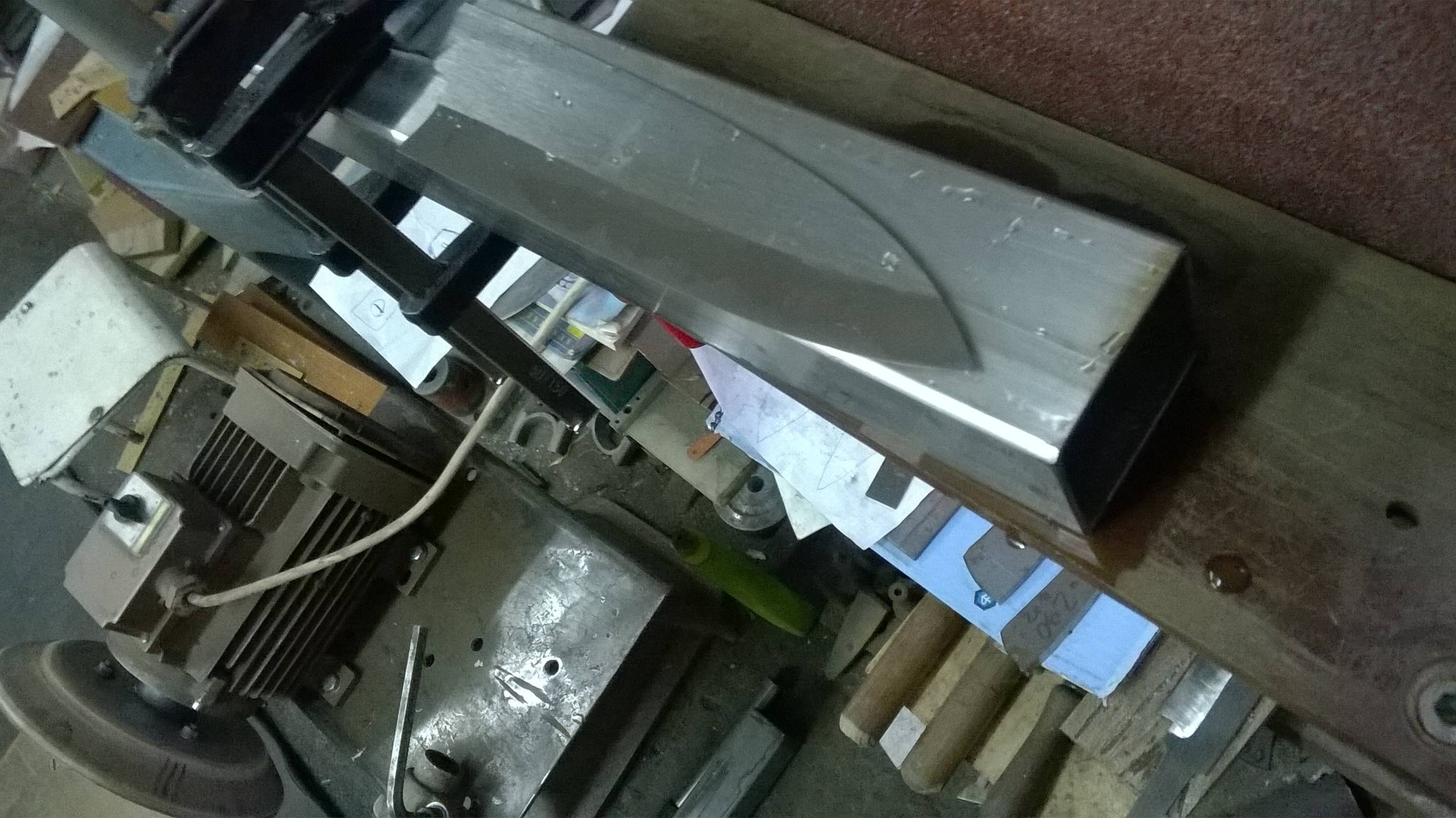
I found that / for me at least / is easy to grind thin blade on disk sander , not on belt grinder .On picture is 64hrc , 1.5mm thick 1.2519 steel .I use this square stainless tube as jig to hold this thin steel . .. . .

n8FB4mA.jpg

UDJgK4R.jpg
 
Last edited:
Ben, I think many of us have a natural hesitance to bear down when we get close to the heel or point. The bugaboos that I have seen, especially on thin blades like kitchen knives, is to be too thick at the heel and sometimes too thin right behind the point. Since i do plunge less grinds on kitchen knives, some of that may be because I am "rolling" down to the heel.
 
Back
Top