- Joined
- Aug 15, 2005
- Messages
- 710
I bought a brand new Pana Mill from John Leblanc, he was the guy that helped me build my first inter-frame lock-back.
It has been on a shelve covered for about 6 to 7 months, so I really look at what I using and what I was not and moved some stuff around to squeeze. yet another machine onto a bench that held 2 machines.
But the trade off was the old HF lathe went under the bench and the mill got moved over by all its friends, I have not used that lathe all to much at all it just sits there because I lack tooling and good knowledge to really use it.
My mind was a bit foggy and cold when I decided to make it happen, once the move was complete I started on some milling fixtures.
I made a template that I can cut the lock notch on the blade with a perfect finish to boot, it took a little work with a file on the pattern to get the part just right. Not to mention I had forgot how to spot my holes on the work plates but after some more coffee was able to succeed.
Now I can scribe my lines mark my hole's, drill, cut most of the material out of the notch area grind it close to the line. Place it in the fixture cut the area with the .133 stylus then drop down to the .125 stylus and make a quick zip and I am done with that part of the knife.
I need to have a friend with a good lathe make me some more stylus.
Next I will use the same fixture to build the frame cutout and the template for the inlay so I will keep posting in this thread as I move along.
It works well, what do you guys think?
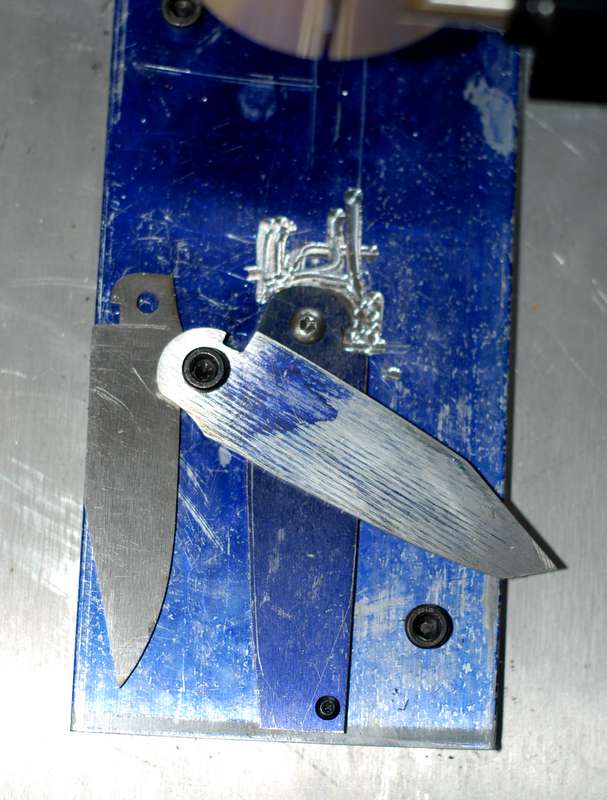
and yes those 2 blade are working as a hold down on the cutting side....I blew the lock area on some other methods for perfecting this step.
Thanks
Spencer
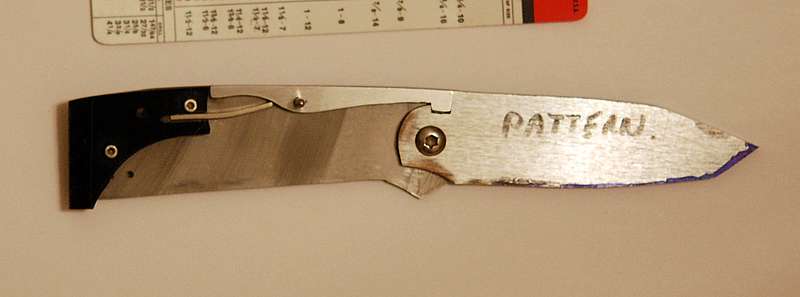
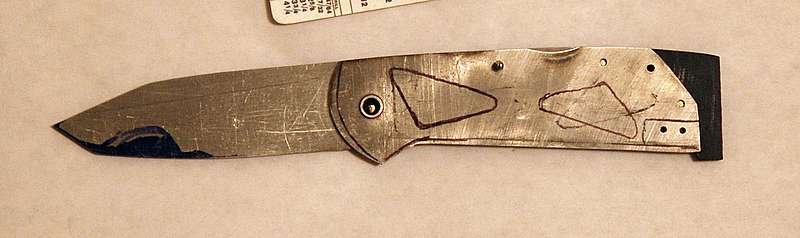
The pattern I made today, I am still working and grinding on this one to really nail it down on the part
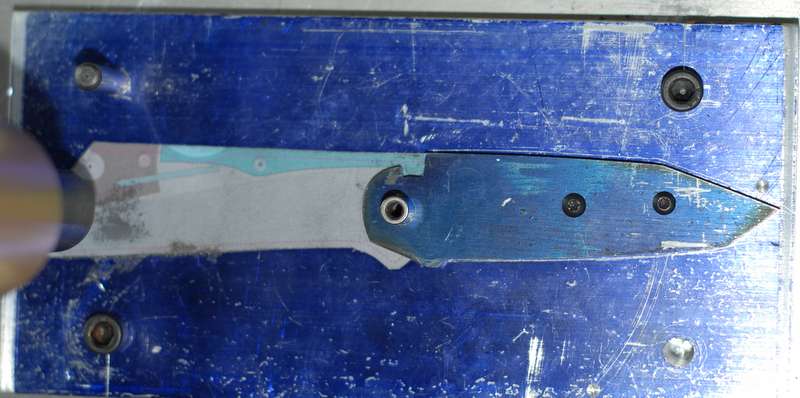
The first part to cut from it which will get heat treated and become my template. I will give you guys some better pics of the cut area tomorrow, so you can see how good it finish's.
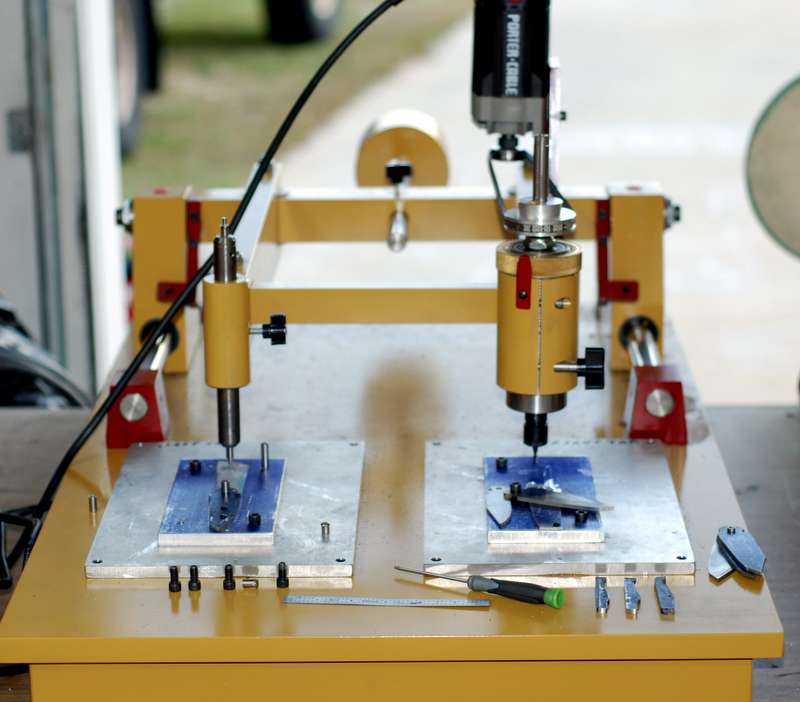
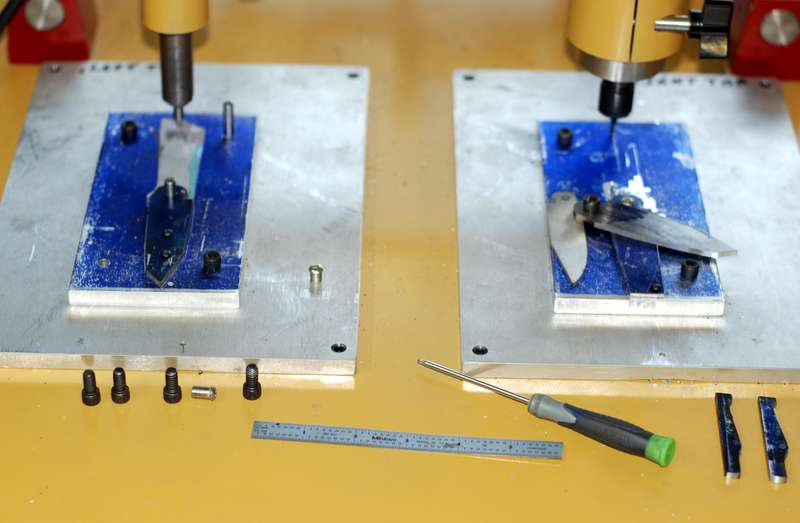
Just a good shot of the work tables
It has been on a shelve covered for about 6 to 7 months, so I really look at what I using and what I was not and moved some stuff around to squeeze. yet another machine onto a bench that held 2 machines.
But the trade off was the old HF lathe went under the bench and the mill got moved over by all its friends, I have not used that lathe all to much at all it just sits there because I lack tooling and good knowledge to really use it.
My mind was a bit foggy and cold when I decided to make it happen, once the move was complete I started on some milling fixtures.
I made a template that I can cut the lock notch on the blade with a perfect finish to boot, it took a little work with a file on the pattern to get the part just right. Not to mention I had forgot how to spot my holes on the work plates but after some more coffee was able to succeed.
Now I can scribe my lines mark my hole's, drill, cut most of the material out of the notch area grind it close to the line. Place it in the fixture cut the area with the .133 stylus then drop down to the .125 stylus and make a quick zip and I am done with that part of the knife.
I need to have a friend with a good lathe make me some more stylus.
Next I will use the same fixture to build the frame cutout and the template for the inlay so I will keep posting in this thread as I move along.
It works well, what do you guys think?
and yes those 2 blade are working as a hold down on the cutting side....I blew the lock area on some other methods for perfecting this step.
Thanks
Spencer
The pattern I made today, I am still working and grinding on this one to really nail it down on the part
The first part to cut from it which will get heat treated and become my template. I will give you guys some better pics of the cut area tomorrow, so you can see how good it finish's.
Just a good shot of the work tables

 One thing you might find handy will be a cutter grinder and a good supply of 1/16" - 1/4" solid carbide tool blanks. Having the ability to make up your own single fluted tools with whatever nose radius you need on the flute will inevitably save you tons of $$$$ and you'll always have exactly the tool needed for a given job. Sharp ones !!
  Having sharp, free cutting tools on deckel/pana-mill makes a big difference in the ease and outcome of the machining.

 have you used a Deckel ????