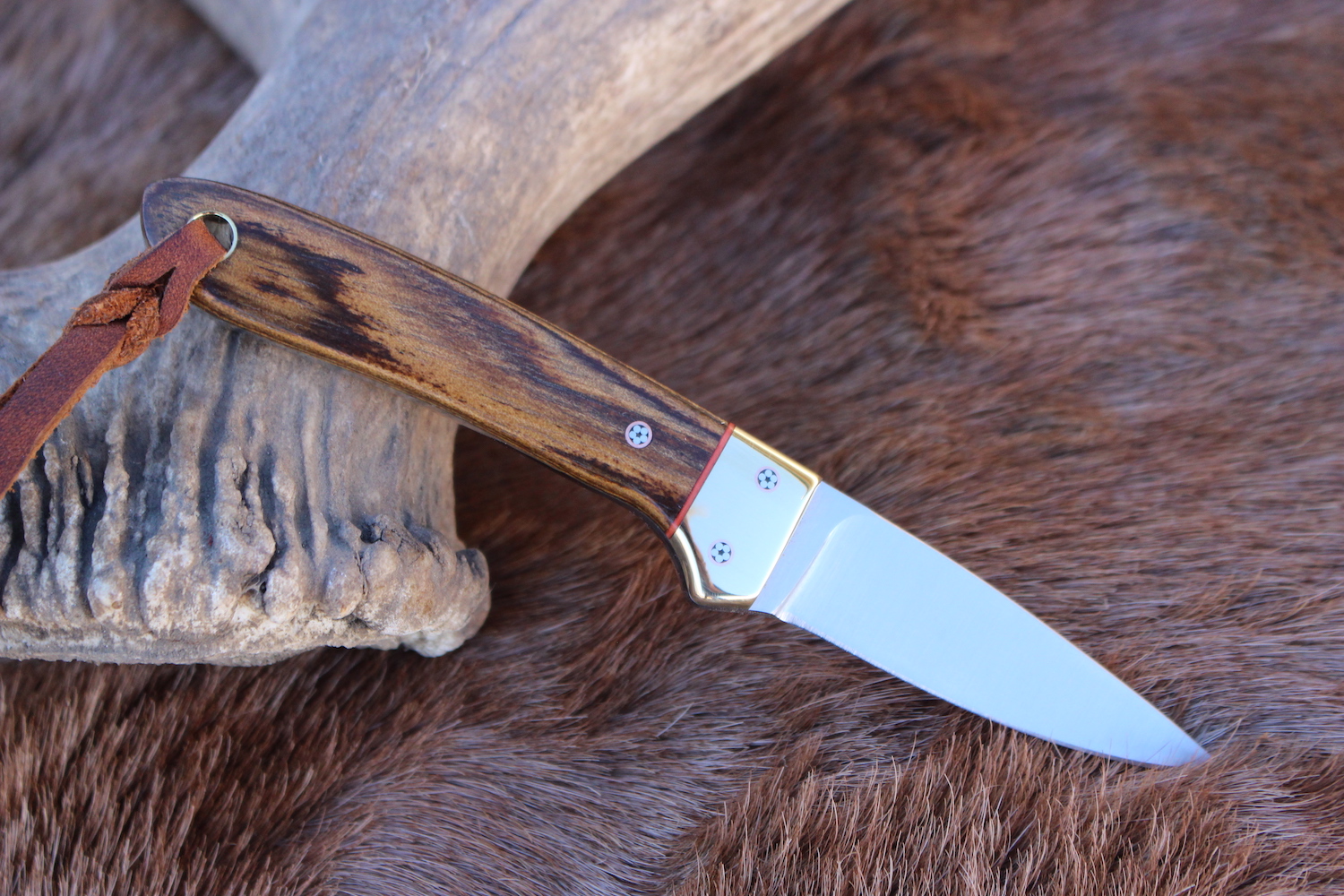
Woods on knife handles are really kind of unique. I worked in a high end furniture shop for a few years, and out normal finish was a marine grade poly, a spary on lacquer or oil varnish blend. But all those are meant for more typical woods that NEED protection, things like oak, walnut and maple. They dont have the oil content, the hardness, or the stability to be used bare.
The finish I make was something I originally came up with for a client who did guitars. He wanted a way to get a finish finer than gunstock finish, but not the shiny plastic film of a shellac or lacquer coating. he was using woods that many knife makers use, things like snakewood, Cocobolo and Koa. I messed around with several recipes and finally got one he liked. After, once i got more into knives I started tinkering with it again and came up with what I know use to finish my knives.
The thing to remember is that in a knife handle, the wood is almost defiantly going to be strong and stable. Dry cocobolo, all stabilized woods, Desert ironwood, African blackwood, these are all woods that are strong, hard and stable. The main point of a the wood finish is not sealing. Your wood should already be bone dry, its part of the reason all my rosewood have been in the country since at least the 50's.
The main point is beauty. You also dont want to obscure the wood. The guitar maker who I made this for didnt like the fact that when he touched his instrument, it felt like he was touching plastic. he wanted to feel the slightest hint of wood grain. There was also the whole issue that knives are so often used near food, so I was somewhat limited in my choice of ingredients "there were a few polymerizing agents I really wanted to use, but they are not the healthiest." I have a video somewhere of me eating a piece of my wood finish.