- Joined
- Oct 27, 2010
- Messages
- 8,721
Hey everyone, well I got some work done on the Skyline today, but before I post that, if you missed the first mod on this knife you can find it HERE.
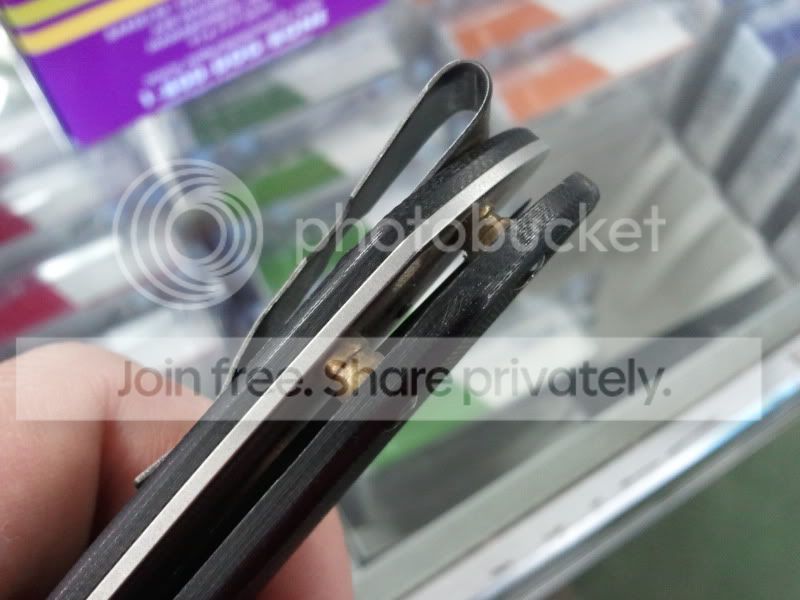
This is the second mod to my Kershaw Skyline. I had it taken down last week for cleaning and noticed a ton of pocket lint gathers inside the frame at the back spacer, partly due to the fact that i carry tip down, and mostly because the back spacer is such a large obstruction. Well in the spirit of mod'ing with what you have, i decided this just wouldnt do! Here is how i replaced the plastic back spacer with brass ones.
Here is the knife with stock back spacer. Not ugly, not nice either.

First step is to disassemble the knife. I took mine apart including the pivot, which is not necesary. If you remove the two T-6 screws the scale will pivot on the blade pivot.
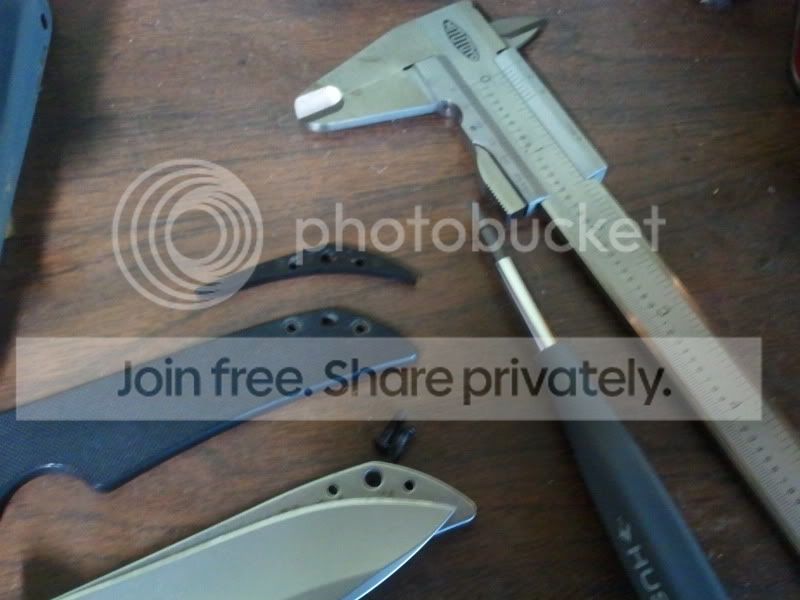
I used some 3/16" brass rod i had for pin stock from making knives. I dont have a lathe, or any training in machine processes, so all procedures were done with normal garage tools. Drill press, bench grinder, dremel tool, and various files.
First up is to match the size of hole, i found 5/64 was close enough and is included in most hardware store available drill bit kits. Now i dont have a drill press vise, so i had to do my best with the bench vise and dremel.
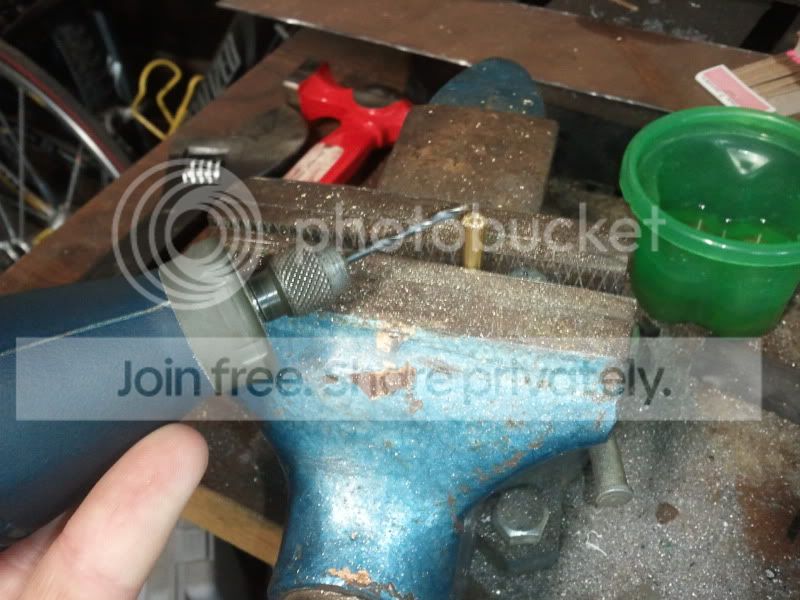
Because i dont have the accuracy of a drill press, and the hole is now off axis i had to bring the side walls in line with the hole. I took the same bit i drilled with and passed it through the hole so the rod would spin and held it to the bench grinder. Let it spin against the stone while applying light pressure. Check it often. When you just start to no longer see the original finish anymore stop. You want to leave some for when you clean it up.
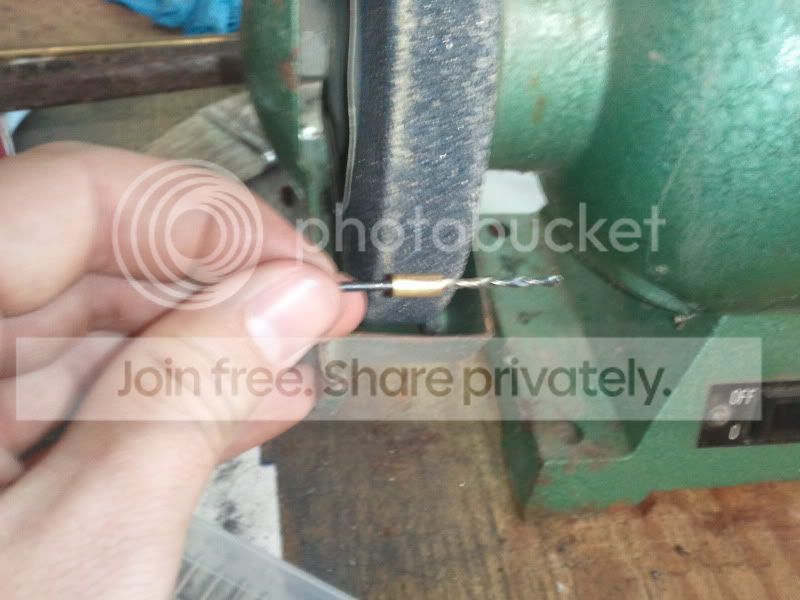
We now have a nice cylinder with a coaxial hole in it! Take your piece, chuck it in the drill press and use a second or fine cut file lightly against it to clean the sides up. Take it out, flip it end for end and repeat. Follow this up with sand paper to about 600 to 800 grit. Dress the ends up square with the file while in the drill, but dont use the sand paper, it will round the edges.
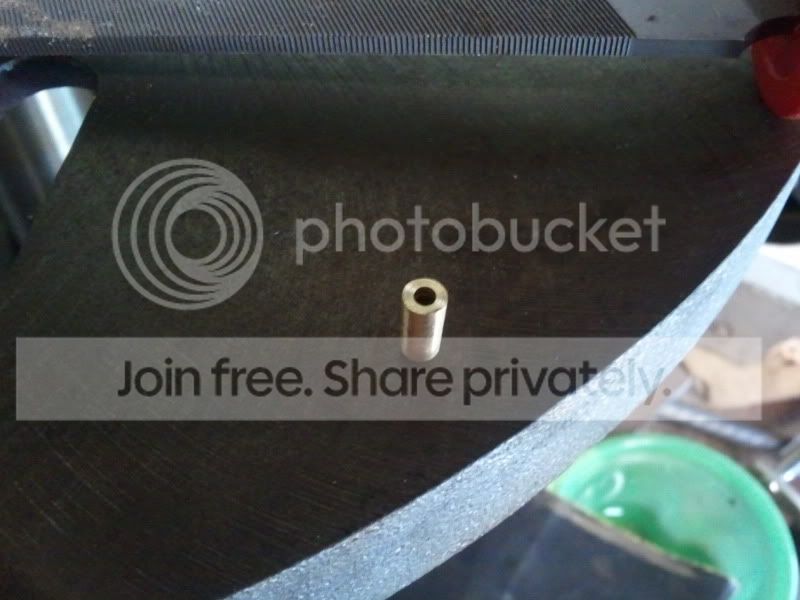
Now we have to split the piece in two. Measure your original back spacer, mine came out to .118". We need our pieces to be a bit over that to leave room to clean and polish. I just measured my piece and cut it in half, then dressed it down to within ~.025". To cut it i took an old hacksaw blade out of the frame and used the last inch on either end where the teeth are still good, with the part in the press i held the blade to it and let the part spin against the teeth. This ensures a clean straight cut.
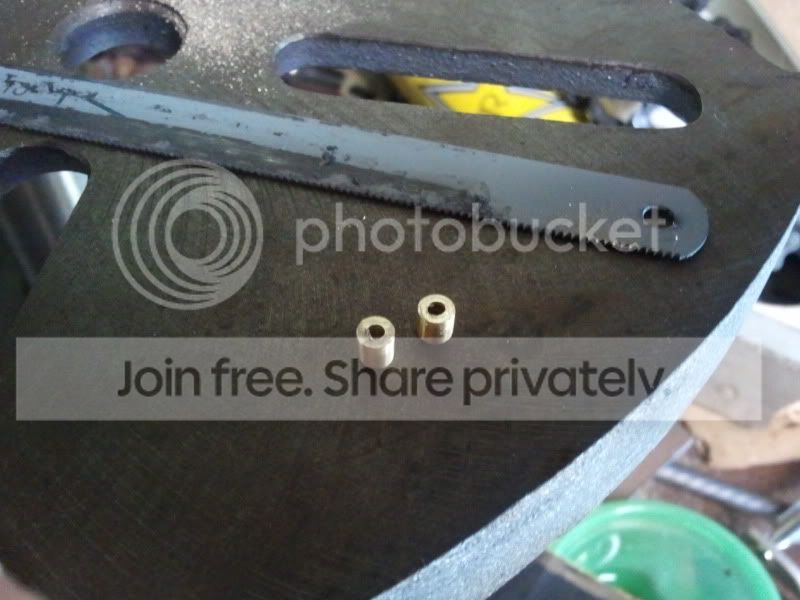
Now if you look at your original back spacer, you notice how close the hole is to the blade side edge. This is to keep the tip from contacting the spacer and dulling it. The spacers we have made are now to thick. You need to create a step in the middle to clear the blade edge. Find and mark the middle of each piece, chuck it carefully in your drill press as these are getting small now. Take your same hack saw blade and run it in the middle of each spacer checking your measurments often. Take your dimension from the original spacer hole to blade side, double it and add the hole diameter you drilled (5/64") and that is what you shold be close to in the middle of your new spacer. There is some room for error on the fat side here, but be sure to try and make it look good as well as centered.
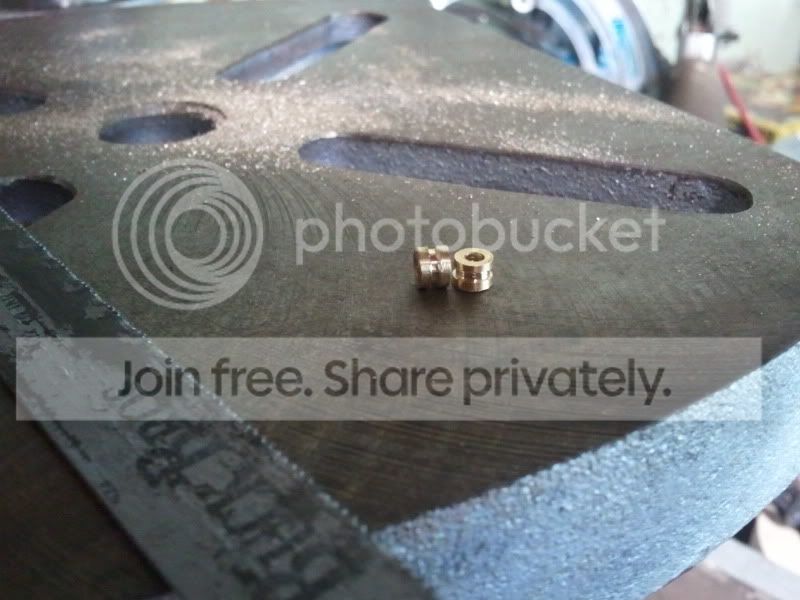
Ok i admit i was not paying attention and forgot to take pics of the sanding and finishing, but here is the description on how i did it. Once you are done we can now move back into the house for some finish work and a beer! Get a piece of glass, granite counter top, marble tile, or whatever you use for flat sanding and starting with 800 grit work the ends to smooth but not remove too much material. For doing the sides i found that if you take a T-7 bit and press it into the hole it holds the piece nicely. Take your paper and wrap it around the sides and spin it a couple of turns. Move to some clean paper. Once you have an even finish, go to the next higher grit. When satisfied with the sides, finish up the ends on your flat sanding surface. Be careful here as these little buggers like to flip over and ding up the sides. I found placing my finger on it and dragging it in one direction worked well.
Take the sanding as far as you want, i did mine to 1500. I figure that anything higher is mostly polishing, and with a few little mistakes i made i dont see the need to go any higher.
Now time for the test fit! Hopefully you have been checking your spacer height often so they dont end up too small, as this will cause all kinds of issues with the knife, and you dnt really want to have to start all over again now.
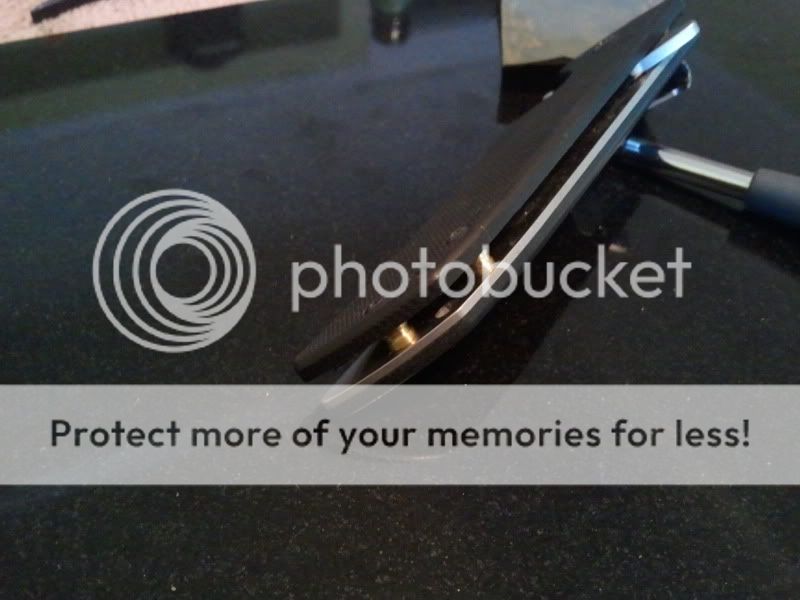
Mine came out within .005" of the original and only required a few more passes on the flat sanding surface. Back on the knife and properly torqued down they sure to look good! No more pocket lint, dirt, blood and guts getting caught behind the spacer! A quick check of the gap from blade edge to the spacers looks good as well!
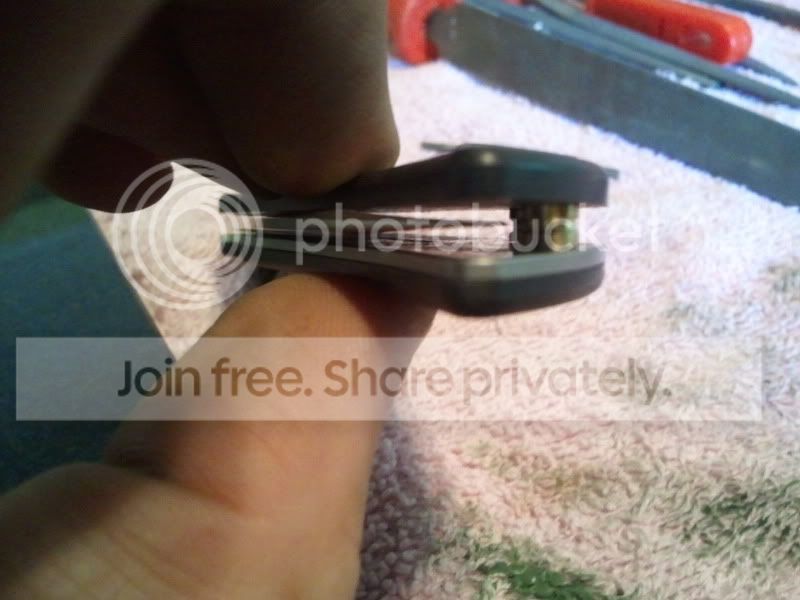
I am not 100% satified with how the finish turned out on mine, but that is mostly because of some mistakes i made during the making. I learned quite a bit about how to make these and next time i will do it a little differently. Some of the steps are out of order from how it should be done according to hind sight, but this is how i did it this time.
All work on the drill press was performed at 620 rpm which gives about .5 fps surface speed, if my math is right (which may easily be wrong). This is slow enough to keep a small mistake from becoming a disaster, but fast enough to not take forever. Brass rod is pretty soft and marrs easily, so do pay attention when handling these. All power tools should be used properly and all safety precautions taken. If you hurt yourself, dont blame me.
I hope you enjoyed following along this write up and i encurage you to try mod'ing your knife yourself sometime. This project took me only about 2 hours, with much of that time taking notes and pictures. I had all materials and tools on hand, so the out of pocket cost was $ZERO! Even if you have to buy a 3' brass rod at the hardware store, they arent that expensive (<$5), and you can ruin a hundred and still have some left over.
Thanx for following along.
Get creative and mod a knife yourself!
-Xander
This is the second mod to my Kershaw Skyline. I had it taken down last week for cleaning and noticed a ton of pocket lint gathers inside the frame at the back spacer, partly due to the fact that i carry tip down, and mostly because the back spacer is such a large obstruction. Well in the spirit of mod'ing with what you have, i decided this just wouldnt do! Here is how i replaced the plastic back spacer with brass ones.
Here is the knife with stock back spacer. Not ugly, not nice either.
First step is to disassemble the knife. I took mine apart including the pivot, which is not necesary. If you remove the two T-6 screws the scale will pivot on the blade pivot.
I used some 3/16" brass rod i had for pin stock from making knives. I dont have a lathe, or any training in machine processes, so all procedures were done with normal garage tools. Drill press, bench grinder, dremel tool, and various files.
First up is to match the size of hole, i found 5/64 was close enough and is included in most hardware store available drill bit kits. Now i dont have a drill press vise, so i had to do my best with the bench vise and dremel.
Because i dont have the accuracy of a drill press, and the hole is now off axis i had to bring the side walls in line with the hole. I took the same bit i drilled with and passed it through the hole so the rod would spin and held it to the bench grinder. Let it spin against the stone while applying light pressure. Check it often. When you just start to no longer see the original finish anymore stop. You want to leave some for when you clean it up.
We now have a nice cylinder with a coaxial hole in it! Take your piece, chuck it in the drill press and use a second or fine cut file lightly against it to clean the sides up. Take it out, flip it end for end and repeat. Follow this up with sand paper to about 600 to 800 grit. Dress the ends up square with the file while in the drill, but dont use the sand paper, it will round the edges.
Now we have to split the piece in two. Measure your original back spacer, mine came out to .118". We need our pieces to be a bit over that to leave room to clean and polish. I just measured my piece and cut it in half, then dressed it down to within ~.025". To cut it i took an old hacksaw blade out of the frame and used the last inch on either end where the teeth are still good, with the part in the press i held the blade to it and let the part spin against the teeth. This ensures a clean straight cut.
Now if you look at your original back spacer, you notice how close the hole is to the blade side edge. This is to keep the tip from contacting the spacer and dulling it. The spacers we have made are now to thick. You need to create a step in the middle to clear the blade edge. Find and mark the middle of each piece, chuck it carefully in your drill press as these are getting small now. Take your same hack saw blade and run it in the middle of each spacer checking your measurments often. Take your dimension from the original spacer hole to blade side, double it and add the hole diameter you drilled (5/64") and that is what you shold be close to in the middle of your new spacer. There is some room for error on the fat side here, but be sure to try and make it look good as well as centered.
Ok i admit i was not paying attention and forgot to take pics of the sanding and finishing, but here is the description on how i did it. Once you are done we can now move back into the house for some finish work and a beer! Get a piece of glass, granite counter top, marble tile, or whatever you use for flat sanding and starting with 800 grit work the ends to smooth but not remove too much material. For doing the sides i found that if you take a T-7 bit and press it into the hole it holds the piece nicely. Take your paper and wrap it around the sides and spin it a couple of turns. Move to some clean paper. Once you have an even finish, go to the next higher grit. When satisfied with the sides, finish up the ends on your flat sanding surface. Be careful here as these little buggers like to flip over and ding up the sides. I found placing my finger on it and dragging it in one direction worked well.
Take the sanding as far as you want, i did mine to 1500. I figure that anything higher is mostly polishing, and with a few little mistakes i made i dont see the need to go any higher.
Now time for the test fit! Hopefully you have been checking your spacer height often so they dont end up too small, as this will cause all kinds of issues with the knife, and you dnt really want to have to start all over again now.
Mine came out within .005" of the original and only required a few more passes on the flat sanding surface. Back on the knife and properly torqued down they sure to look good! No more pocket lint, dirt, blood and guts getting caught behind the spacer! A quick check of the gap from blade edge to the spacers looks good as well!
I am not 100% satified with how the finish turned out on mine, but that is mostly because of some mistakes i made during the making. I learned quite a bit about how to make these and next time i will do it a little differently. Some of the steps are out of order from how it should be done according to hind sight, but this is how i did it this time.
All work on the drill press was performed at 620 rpm which gives about .5 fps surface speed, if my math is right (which may easily be wrong). This is slow enough to keep a small mistake from becoming a disaster, but fast enough to not take forever. Brass rod is pretty soft and marrs easily, so do pay attention when handling these. All power tools should be used properly and all safety precautions taken. If you hurt yourself, dont blame me.
I hope you enjoyed following along this write up and i encurage you to try mod'ing your knife yourself sometime. This project took me only about 2 hours, with much of that time taking notes and pictures. I had all materials and tools on hand, so the out of pocket cost was $ZERO! Even if you have to buy a 3' brass rod at the hardware store, they arent that expensive (<$5), and you can ruin a hundred and still have some left over.
Thanx for following along.
Get creative and mod a knife yourself!
-Xander
Last edited: