
I've been collecting real custom knives for a long time, and I started noticing various places that sell preshaped blades and handle materials. I decided I could probably do that so I've assembled a few. Of course I'm careful to point out that I'm not a real knifemaker but doing this much is still fun for me. Also I have no plans to ever be selling knives, I'm happy making them for myself. I was making one for a friend, my seventh knife project so far, and I decided to take photos of the process in case there are a few people here that might be interested.
Here are the parts- blade, scale material and corby bolts:

I cut a pattern for the scales out of cardboard, positioned the scales where I thought the grain would work with the handle shape, and drilled and countersunk the bolt holes in the scales. Notice that I put tape and cardboard over the knife edge before doing any other work, so I don't cut something that bleeds:
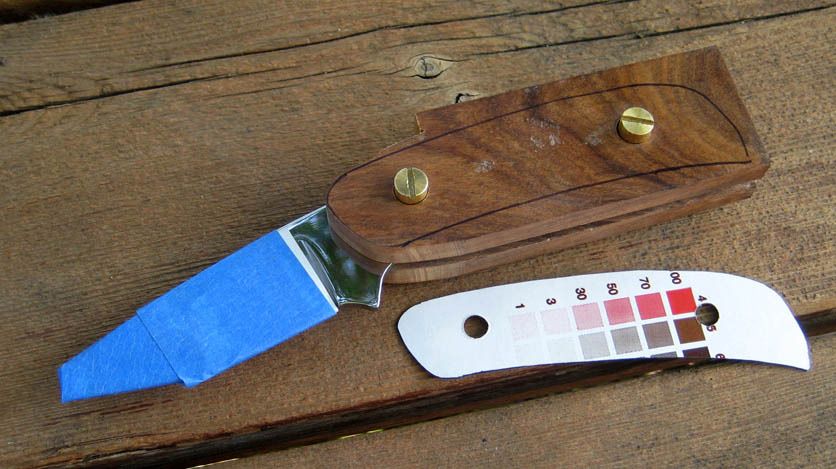
I preshape the front ends of the scales because this part is hard to reach after the scales are glued on:

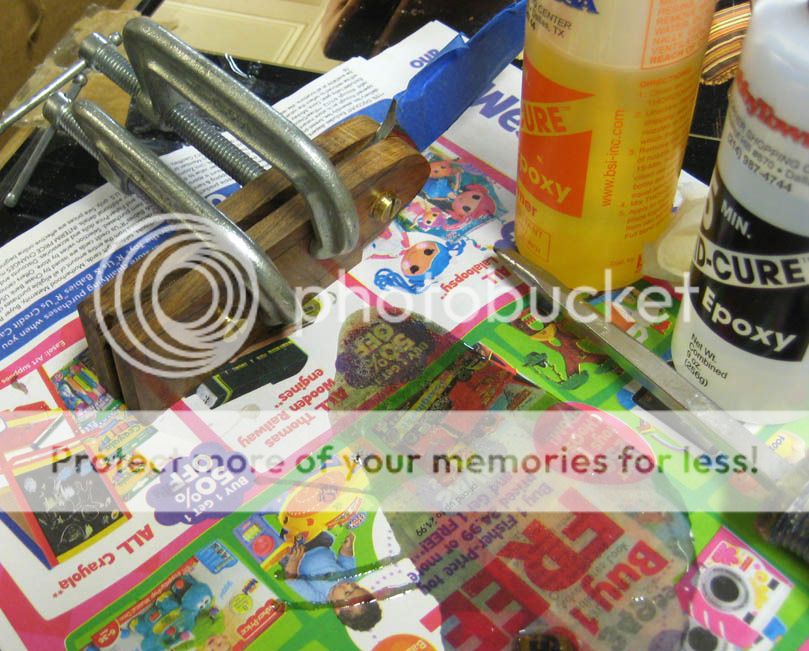
I mix up some epoxy and put the scales on, tighten up the bolts and add some clamps:
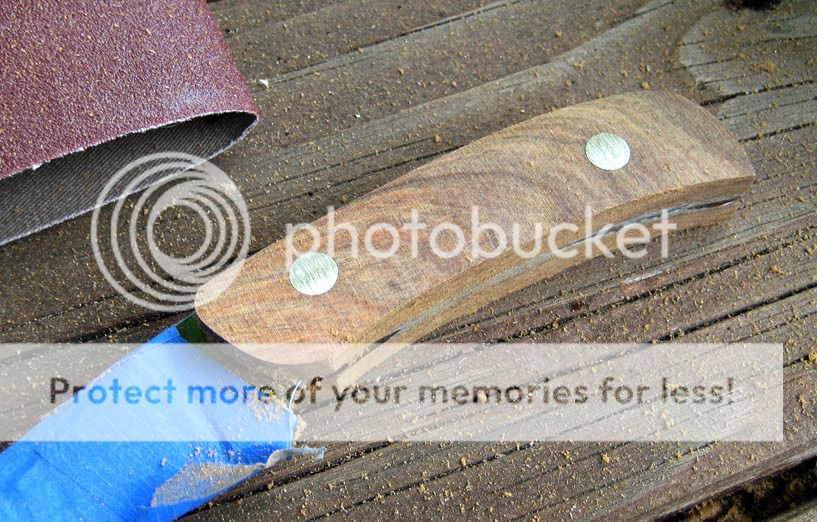
(A band saw would be handy but I don't have one.) I trimmed some of the excess wood off with a standard hack saw, then started working with the small belt sander:
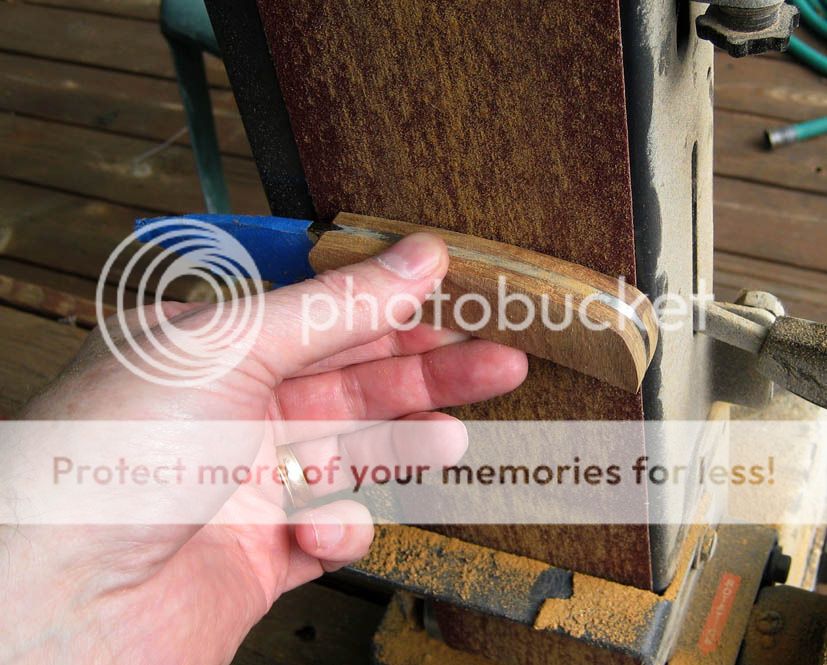
If you are careful you can shape the scales pretty easily with the belt sander, the "careful" part being important. I don't wear gloves for this and I've read pros and cons about it. I decided I didn't want to risk getting gloves caught in the moving machinery. (This is a posed photo and the machine is not running. I was holding the camera in one hand and the knife in the other for this photo.):
The band saw with a good belt will take the wood off pretty fast, as well as the exposed parts of the brass bolts and the steel tang when it gets down to that point so be careful and go slowly. I try not to get too many big scratches in the tang because they are had to get out with hand sanding. After working with the belt sander I switch to a sanding block and finer sand paper. The curves such as the underside of this handle are harder, I wrap the sandpaper around a piece of wooden broomstick or something similar. This part goes pretty slowly so patience helps. Don't sand along the edge of the tang by holding the sandpaper in your hand and don't use a soft sanding block because the wood will be removed faster than the metal and the metal will end up sticking out too much.
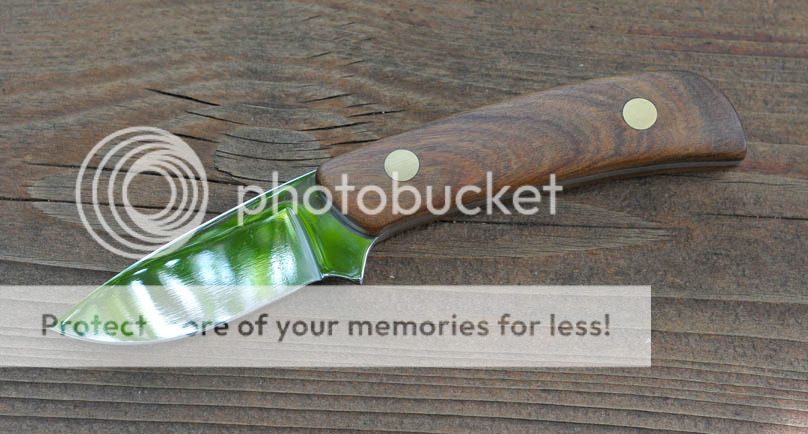
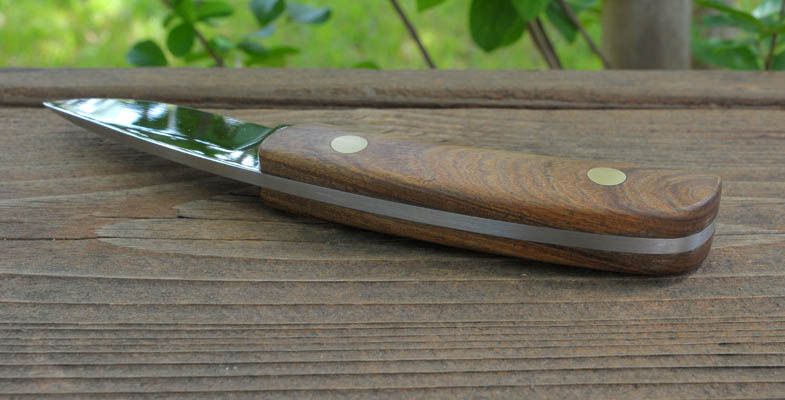
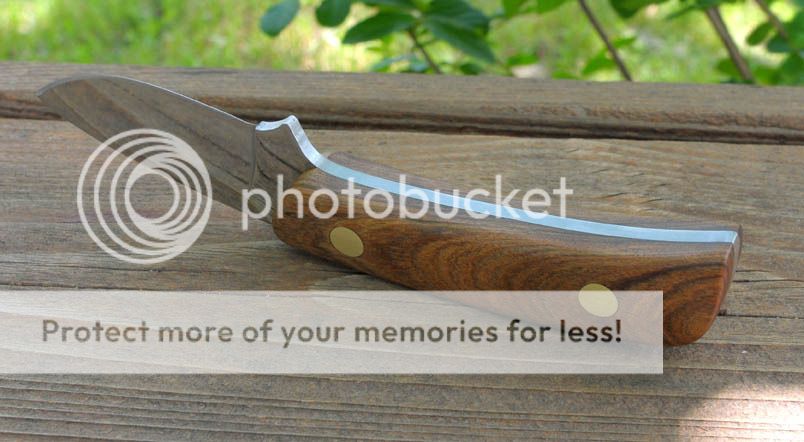
Here are the finished photos. This knife was intended to be a user so I didn't go to the real fine grades of sandpaper nor did I do any buffing:

Here are the parts- blade, scale material and corby bolts:
I cut a pattern for the scales out of cardboard, positioned the scales where I thought the grain would work with the handle shape, and drilled and countersunk the bolt holes in the scales. Notice that I put tape and cardboard over the knife edge before doing any other work, so I don't cut something that bleeds:
I preshape the front ends of the scales because this part is hard to reach after the scales are glued on:
I mix up some epoxy and put the scales on, tighten up the bolts and add some clamps:
(A band saw would be handy but I don't have one.) I trimmed some of the excess wood off with a standard hack saw, then started working with the small belt sander:
If you are careful you can shape the scales pretty easily with the belt sander, the "careful" part being important. I don't wear gloves for this and I've read pros and cons about it. I decided I didn't want to risk getting gloves caught in the moving machinery. (This is a posed photo and the machine is not running. I was holding the camera in one hand and the knife in the other for this photo.):
The band saw with a good belt will take the wood off pretty fast, as well as the exposed parts of the brass bolts and the steel tang when it gets down to that point so be careful and go slowly. I try not to get too many big scratches in the tang because they are had to get out with hand sanding. After working with the belt sander I switch to a sanding block and finer sand paper. The curves such as the underside of this handle are harder, I wrap the sandpaper around a piece of wooden broomstick or something similar. This part goes pretty slowly so patience helps. Don't sand along the edge of the tang by holding the sandpaper in your hand and don't use a soft sanding block because the wood will be removed faster than the metal and the metal will end up sticking out too much.
Here are the finished photos. This knife was intended to be a user so I didn't go to the real fine grades of sandpaper nor did I do any buffing:


 lol 6 million dollars later...