- Joined
- Mar 14, 2009
- Messages
- 1,679
Just FYI, I started this thread because of some survival expert's article. Previously I'd only ever heard one school of thought: "The bigger the knife, the bigger the fool." The guy said, however, that a smaller knife -- the 4"-5" people generally recommend -- is limiting unless you have an ax for heavy duty stuff, and that its' better to have a big knife and a small neck knife.
I can totally see the practicality in this, so I went with it. I live in NYC, where almost all knives can't be sold, bought, and carried, so it's a bit time-consuming, costly, and inconvenient to really test out all these different setups. Gotta start somewhere, though!
People with military background tend to go the big knife route (survivalist) because of the 7" issue bayonet or ka-bar utility knife. A soldier has to carry tons of other more important gear, so he can't usually afford to carry an axe. This works for him because the military rarely needs to process a lot of wood for fire or shelter. His setup would be augmented by a folding knife or multitool for fine work.
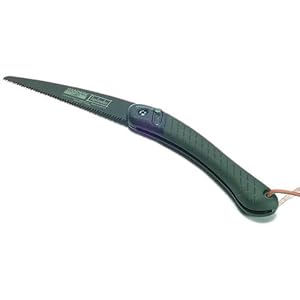
A day hiker who does not need to process a lot of wood (if any) can do just fine with a large knife. If your fire comes from a portable stove, the knife is there as a "just in case" or "emergency/survival only". Toss in a light folding saw or manual chain saw, and he can even tackle largish dead trees in a pinch.
Hunters / trappers / bushcrafters stay in the woods for extended periods. They need to maximize material from the environment, so they need a setup that can process a lot of wood in the most efficient manner. That means an axe. Because they have an axe there is no need for a large knife, especially since a medium/small knife is more appropriate for skinning and trap making.
I tell you what, buy that ESEE-6. If you find it to be dead weight, you can sell it here on the forum with only a little loss.