Knife Handling - your tips and lessons learned

Joined
Sep 2, 2008
Messages
7,702
I never really had anyone teach me how to properly use a knife in the safest and most efficient manner. I've sort of had to learn by observation and figuring it out as I go along. Some of you may scoff, but I actually learned a decent bit from that knife handling section in Kochanski's "Bushcraft." I thought it was a good primer for a newbie.

I know it's not rocket science, but I'm sure there are things I'm missing or have not learned yet simply because I'm relatively inexperienced. For example: How do you properly hold a knife (really basic...but you never know...)? How do you make certain types of cuts? In what specific types of tasks do the various grips excel? How do you grip and hold a knife to prevent fatigue or hotspots? I know much of this depends on the knife, task at hand, and other factors, but I'm just looking for general tips or things I should watch for.

So, what are your top 3-5 tips for safe and efficient knife use, and what were the lessons you learned from your mistakes (if any)? Pictures to illustrate your point are most welcome as well :thumbup:

Thanks!
 
Last edited:
1. Hold the knife by the less shiny end.

2. Don't slice food while its resting on your leg.

3. Knives don't really make good toothpicks.

4. Close a folder BEFORE you put it in your pocket.

5. Don't try to clean straight-edge razors by licking them.
 
i like to use a knife in the typical scandinavian carving style. you end up cutting yourself alot in the learning process, but it is very efficient.
 
5. Don't try to clean straight-edge razors by licking them.

Nonsense! Just lick FROM the spine TO the edge. :D

Cut away from yourself, keep it clean and sharp, don't lay it down somewhere stupid so you can step or sit on it later, don't use a knife when you're drunk or pissed off... that should keep you out of trouble.

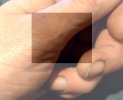
Oh yeah, don't whittle and watch TV at the same time. The scar's pretty faded (20+ years old) but you can see where my Buck 110 slid right along my thumb, nearly to the bone. At least I didn't cut any tendons, just meat and skin. Sorry about the dirty fingernails, I was in the shop all afternoon ;)

Here's another: let a falling knife drop. Just step back and let it fall.
 

Attachments

  • lobster scar.jpg
    lobster scar.jpg
    28.6 KB · Views: 108
Last edited:
Try to avoid using high force on a knife--it is dangerous. Often it is said that a dull knife is dangerous, but some of that is due to the fact that you are likely to push hard on a knife that is dull. You are also likely to push hard when you are trying to push a knife through a hard or stiff material. In that case you may be even more at risk with a sharp knife than a dull knife. The problem is the wound up energy you have in your weight or tensed muscles behind the knife. When something gives you can't control it and things in the way of your edge will get cut whether that is a good thing or not. If you have to push hard be extra aware of where the blade may go beyond where you want it traveling.

Understand that the stored energy is a function of force times distance. If you apply a lot of force with your whole arm it stores a lot more energy than some force you apply using just your thumbs with your hand braced against something. It is best to set your grip and flex your hand to cut that hard knot. It is better to slip the tip of your blade inverted under a cable tie and lever the edge upwards rather than to try and slash your way through.

A knife that is partially sharp and partially dull is maximally dangerous. You start pushing hard on something to cut it using your favorite blade region (which is dull by now) and slide over to a sharp portion of edge and the blade zings through out of control. The inconsistency of the edge is a hazard. Another hazard is the inconsistency of the consistency of the material that you are cutting. When I have people helping cut up food in the local soup kitchen they often cut themselves while working on apples. The problem is that the skin of the apple is relatively tough while the inside of the apple is very weak. Even with a sharp knife they build up some extra energy trying to push through the skin and the knife zips ahead through the soft apple once the skin ruptures. So be aware of the consistency of your edge sharpness and the structure of the material you are cutting.

When in doubt use light slicing motions and shallow cuts when you are working with a knife. When you get all manly and try and muscle your way through too much material with an overly thick or overly long knife you put your hide in jeopardy. It is usually safer to use a light slicing motion rather than driving the tip of a long blade into a tough material. Using the tip of an overly long knife puts you at a mechanical disadvantage. Your grip is only about 4 inches across so anything pushing crosswise at the tip of a 10 inch blade has roughly a 10/4 leverage advantage over your grip. I have seen a kid put himself in the hospital opening a 10# tube of ground beef with the tip of a 12-inch chefs knife instead of a 3 inch paring knife.

Using a cutting board can save you many cuts. It not only lets you line up a lot of material it hurts a lot less when your blade goes astray. When you try and cut things they often roll. If your edge or point rolls into a cutting board it is only an irritation, not a trauma. You can still end up with the blade rolling the wrong way and into the hand holding something to your cutting board. So beware of cutting objects that can turn or roll in your grasp like a judo expert. Think of where the blade will end up if the object rolls on its normal axis. Don't put your fingers there or be careful how you cut. If you are cutting a rolley object use light pressure and a long drawing slicing motion. Don't use a high pressure push cut. Maybe your best bet is to first cut off one side of the object and roll it flat-side-down where it won't roll anymore. When cutting one of those tough-skinned rolley-poley apples I like to trim the base first.
 
Clearing:

If you want to clear small diameter trees, bushes or branches, don't just swing away at them with your machete, brush axe or chopping knife. If you can, bend the trunk or branch over to the nearest large tree trunk and hold it tight against it. Then one good chop where they meet will go clean through because it was braced from behind.
 
Nonsense! Just lick FROM the spine TO the edge. :D
I found that if you put sugar on your tongue first, you can hone it too! :D


Here's another: let a falling knife drop. Just step back and let it fall.
Yep. I've drilled this one into my kids too. Back up and yell "LET IT GO!" ;)

I've learned to not just cut away from myself, but try and push cut away from myself. Slicing cuts have gotten away from me. Know what a knuckle joint looks like? I do... :barf:
 
1) Don't forget to examine your edge frequently, and always before going out in the field or undertaking any hard-use task. This preventative step helps keep you from ever running into a "dull blade + hard pressure" mishap.

A conversation I often have with customers when they have me sharpen their knives...

Me: (holding knife under a bright light with edge up) You see that edge?
Customer: Yeah, why?
Me: You shouldn't be able to. ;)

2) Become familiar with a wide variety of holds and grips and under what circumstances to use them. The more ways you know how to approach a challenge, the less likely you are to do something boneheaded--oh, and it makes you more efficient, too. :)

3) ALWAYS act as though the knife wants to bite you! As we all know, knives are always hungry and they don't discriminate. You must always think ahead of what mistakes could occur and how to prevent them before making your cuts.

4)Try EVERYTHING! You never know what knife features you really enjoy until you give everything a fair chance. From $5.00 junkers to thousand-dollar customs, every knife has its place and its purpose--even if it's not a knife for you. :D
 
Some good stuff so far :thumbup: Thanks guys. Like I said, I know most of it is pretty common sense, I just wanted to know if there are things or techniques I'm missing because I had no one teach me first-hand.
 
Oh yeah, don't whittle and watch TV at the same time. The scar's pretty faded (20+ years old) but you can see where my Buck 110 slid right along my thumb, nearly to the bone. At least I didn't cut any tendons, just meat and skin.

I almost did that this morning when this really attractive girl walked by...that would have been smooth...:rolleyes::)
 
I think about knives the same way I think about guns. Guns are always loaded, they can always hurt or kill you or someone else if care isn't used. Knives should always be handled carefully, which would seem obvious, but so easily forgotten.

So, I usually visualize what I'm about to do with the knife, and check while doing so that I'm not going to be parting one part of myself from the main part.

I actually look to see where my hands and fingers and etc. are before carrying on with whatever. And I try to be familiar with what type of knife I'm using, in case certain holds or positions might be problematic.

Andy
 
I almost did that this morning when this really attractive girl walked by...that would have been smooth...:rolleyes::)

But it might have ignited her nurturing instincts! You could have had a pretty woman oohing and ahhhing over you, and ya blew it :D

I worked in a splinter factory one summer. The safety guy told us that very few people have an accident in their first year on the job... it's after they get so used to it, that they "forget" how dangerous it can be and get careless. Those of us that enjoy very sharp knives on a daily basis need to keep this in mind.
 
I learned this one by experience.

Always make sure that a person unfamiliar with your knife knows which side is the sharp side.

I handed a Koster K5 to a friend in its kydex sheath. Looking at the sheath he assumed the sharp edge was the curved edge. Not knowing that it was a wharncliffe, he had his thumb in the wrong position when taking the knife from the sheath.

Wrapping his hand around the sheath he pulled the knife out and opened up his thumb. I felt like a complete dunce for not catching him before cut himself. :o Of course it was a little bit past razor sharp.

He's an outdoorsman and experienced so I felt comfortable letting him use the knife.

After that, any knife I hand to another is out of the sheath and handed over edge up and handle first.

cs
 
When I'm making fuzz sticks or doing anything with that same motion, I try to have the handle side a little lower then the tip, so that just in case my hand slips, it won't slide into the edge.

I think a really important knife handling tip that is often overlooked is how to properly hand somebody a knife. Check out this video of Ray Mears, go to 1:30.

[youtube]UcfkKmlKZJM[/youtube]
 
I think about knives the same way I think about guns.

I do the same thing, and teach the same thing. "Know what is beyond your target." Lots of cuts happen when you slice through something you weren't expecting to get through. Treat it with respect, develop a sixth sense about where your blade/edge are and what's near them. If you're not using it, put it back in it's sheath.
 
I think a really important knife handling tip that is often overlooked is how to properly hand somebody a knife. Check out this video of Ray Mears, go to 1:30.

Yep. That's the video that that taught me the correct way to hand a knife over. Before seeing that I'd pinch the blade edge down and hand the knife to someone assuming they knew which edge was the business edge. Ray's way is much safer and lets both parties know where the edge is. :thumbup:
 
Yep. That's the video that that taught me the correct way to hand a knife over. Before seeing that I'd pinch the blade edge down and hand the knife to someone assuming they knew which edge was the business edge. Ray's way is much safer and lets both parties know where the edge is. :thumbup:

Unless you use a pikal (reverse edge), which I EDC. ;) I alway warn people the edge is on top, but most people naturally rest their thumb on the edge anyway, so I'm very careful about handing over my pikal.
 
Last edited:
Back
Top