Knife shop: Growing a shop

Joined
May 20, 2013
Messages
5
Hi,

My name is Dennis - 22 years old, from the Netherlands - and about year ago I decided to make knives. So all I needed was a shop. 15 months later, and still no single knife build :) Having fun learning stuff, and things!

First step was to aquire a space close and cheap enough.
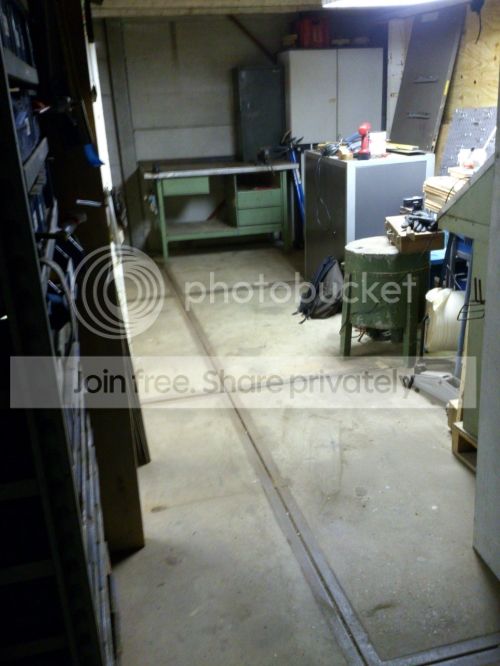
After a few weeks of cleaning (long story):
c836799a-e580-43f7-8d1a-5f2a448a4f71.jpg


Bulding some walls to stay warm in winter, and painting them:
95d6aaac-e24b-43f5-a7c8-7cdbc5ac1a14.jpg


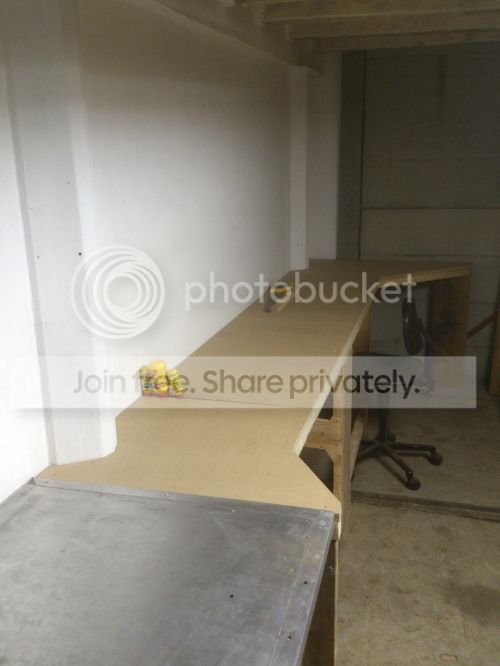
Building a workbench:
DSC_1082.jpg


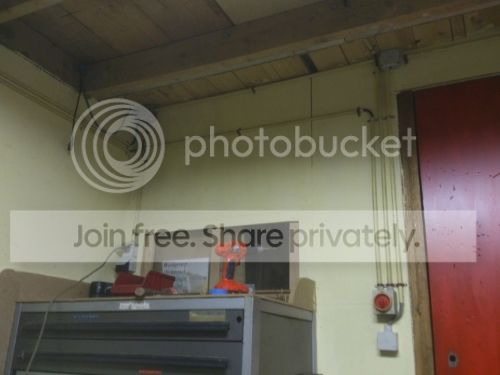
Some wiring:
DSC_1152.jpg


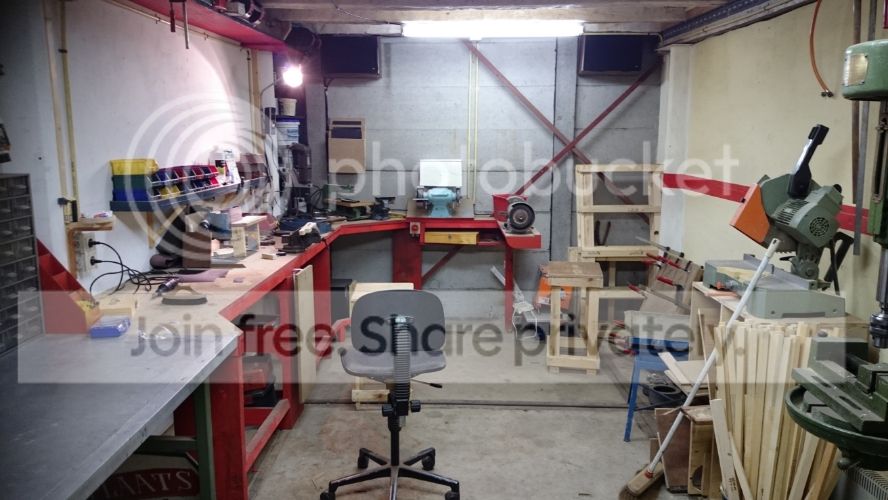
And after about a year:
DSC_0001.jpg


To be continued...

Dennis
 
Last edited:
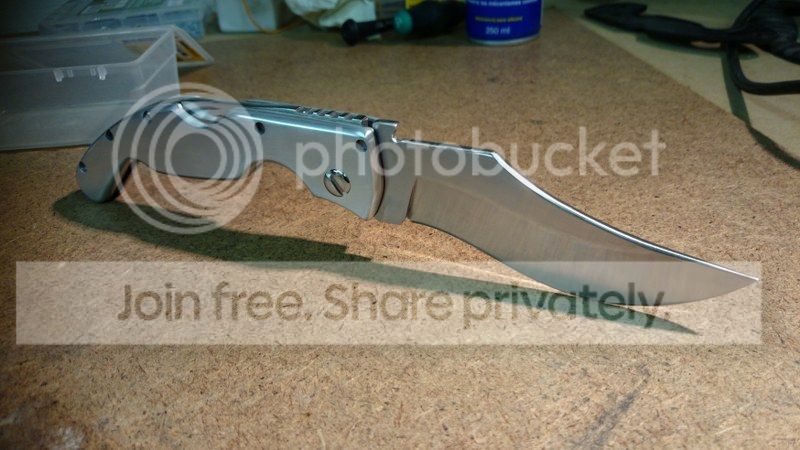
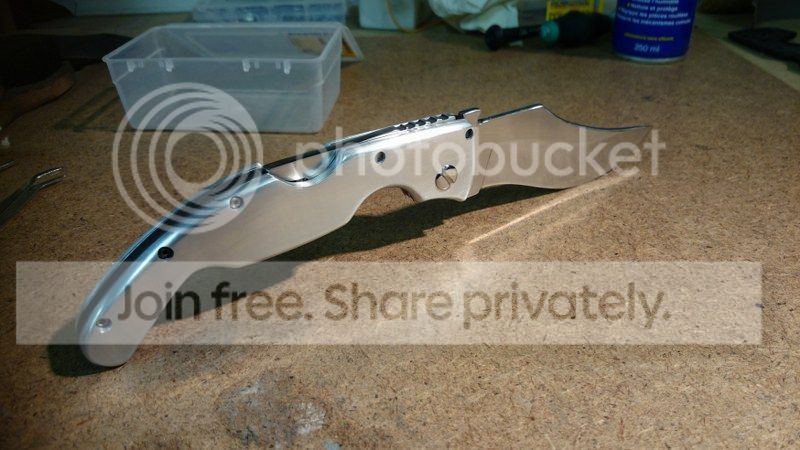
So after all this time, I wanted to do something knife related, therefore I modified my Cold Steel Spartan using the basic tools I had:
DSC_0003_800x450.jpg

DSC_0002_800x450.jpg


Having finished at least one project, I knew I had to have some more tools to really get into knife making

With a very low budget and little experience in the processing of metal, I started researching how to make a belt grinder. Luckily I have acces to a welder, a drill press and a metal circular saw, plus loads of scrap metal, lots of hand tools and small electrical tools, miscellaneous parts, round stock, some flat stock etc... basically forming a big pile (due to the precious owner)

I will try to explain my methods here and there. I hope some of you will find this useful.


My design was based on the No Weld Belt Grinder plans I bought on USAKnifemaker. This is what I used for getting the proportions and measurements right so belts would fit, but I made countless changes to the design by basically designing as I got along (when I got the hang of it).

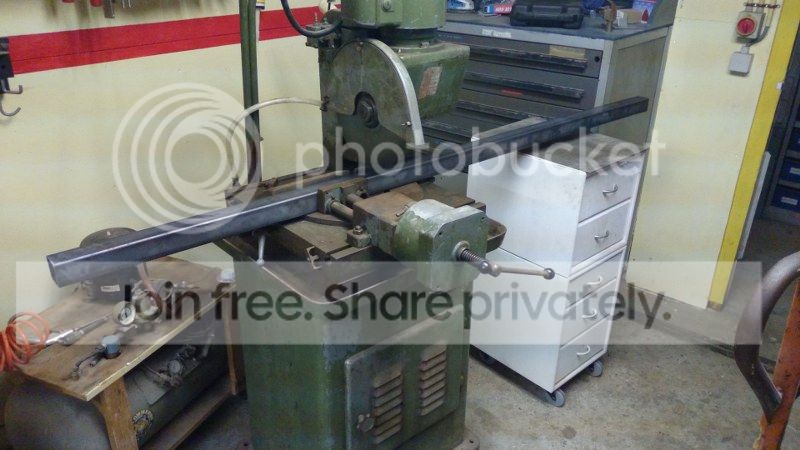
First of all, I bought the steel I didn't already have. Some square tubing, flat stock etc. After measuring I cut all the different parts with the saw in the picture below. I had to replace the wiring partly because the insulation had been destroyed. If I wouldn't have been able to fix this, I would have used my angle grinder but this way is easy to make sure it is square.
DSC_000002_800x450.jpg


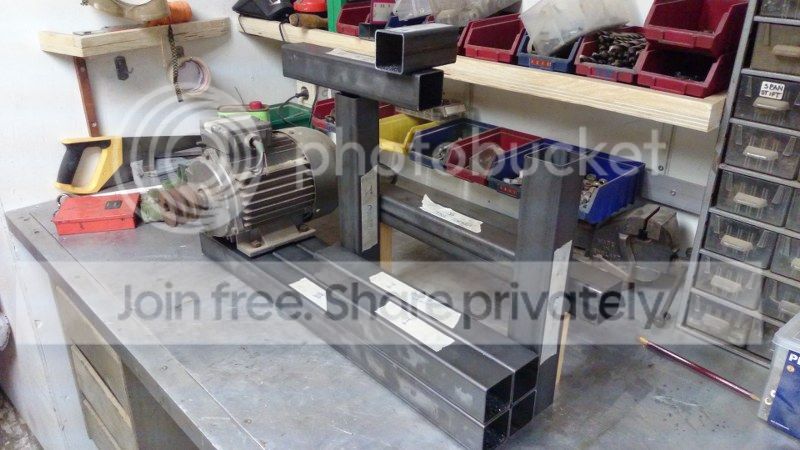
Then I piled them together, along with some labels to ensure I don't weld them together incorrectly. I found and tested the motor a few months earlier, which was buried under a layer of car parts. It's 3-phase running on 400V with an output of 1.1kW.
DSC_000001_800x450.jpg


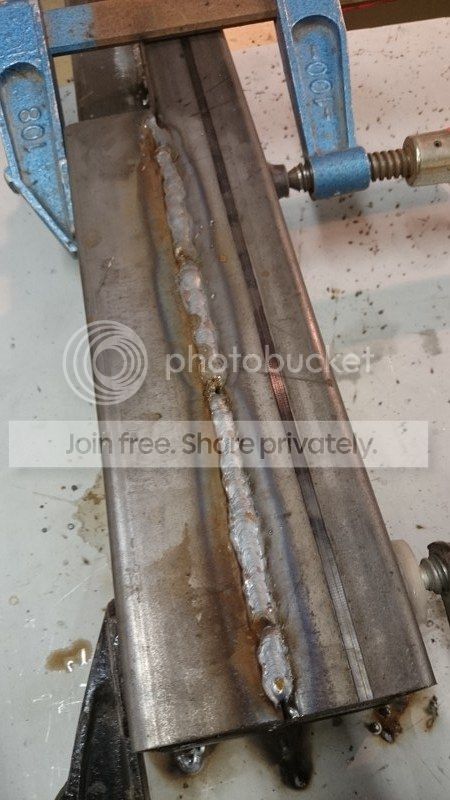
I had done some welding before, but it was a long time ago and someone else knew how to operate the welder. This time it was just me but with a piece of scrapmetal to test the settings and some patience I managed to do some satisfactory welding. If you're doing this for the first time like I did, I recommend to go easy on the buttons. Turning knobs just a little bit made huge differences. (I use a MIG welder)
DSC_0042_800x450.jpg

One big mistake I made was welding first, and drilling later. Luckily I have a large drill press so my whole construction could fit underneath.

Then, using the angle grinder I ground some of my welds flat.
DSC_0045_800x450.jpg


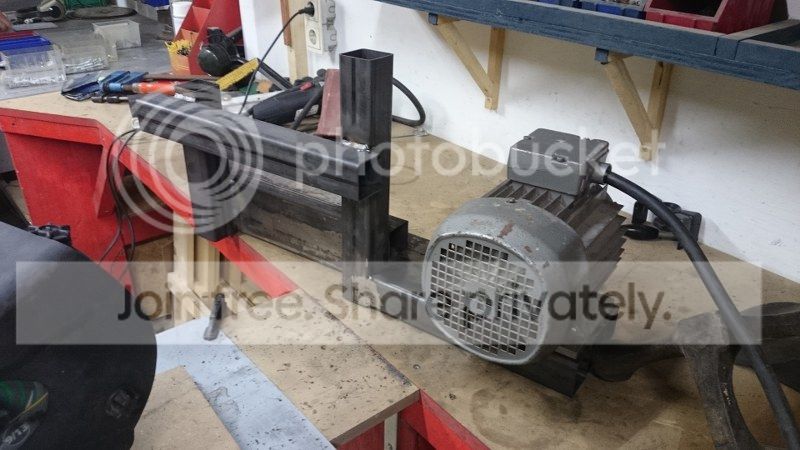
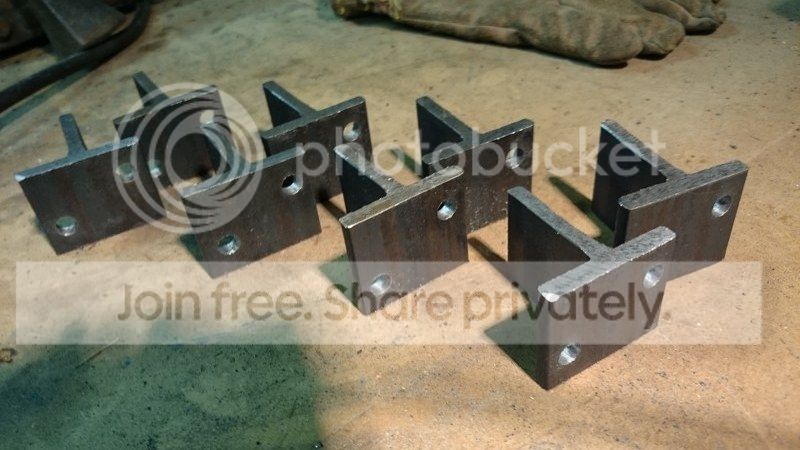
I wanted my grinder to be able to flip 90 degrees, this is the reason why the motor is located on the grinder itself, and why I built these:
DSC_0048_800x450.jpg


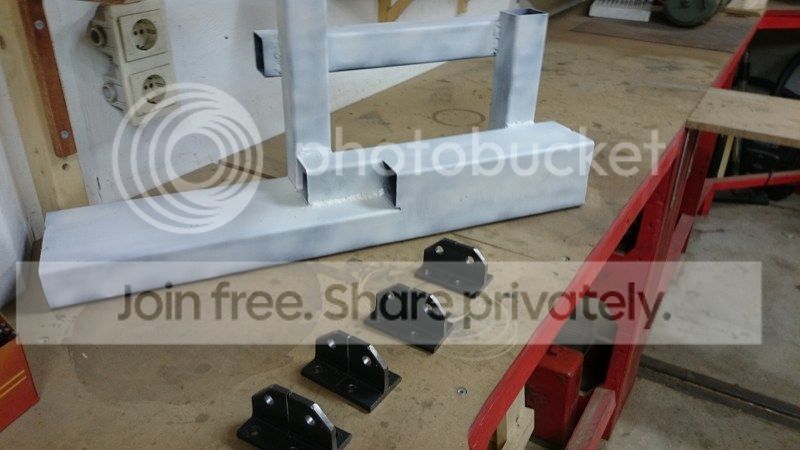
And for some reason, I already painted the frame (primer)..
DSC_0050_800x450.jpg


To be continued...

Feedback and questions are welcome

 
Last edited:
Its always cool seeing how things are done in other countries. With that being said, the 2 knobs on your welder are voltage and wire feed speed. Voltage spreads the puddle (bead) out. It looks like you could use a little tiny bit more voltage. Usually a good place to start for both settings is at about 10%. So if you use 19.5 volts, start your wire speed at about 195 I.P.M. then you can fine tune from there.
 
Its always cool seeing how things are done in other countries. With that being said, the 2 knobs on your welder are voltage and wire feed speed. Voltage spreads the puddle (bead) out. It looks like you could use a little tiny bit more voltage. Usually a good place to start for both settings is at about 10%. So if you use 19.5 volts, start your wire speed at about 195 I.P.M. then you can fine tune from there.

Thanks for the tips, I will have a look at which is which :)


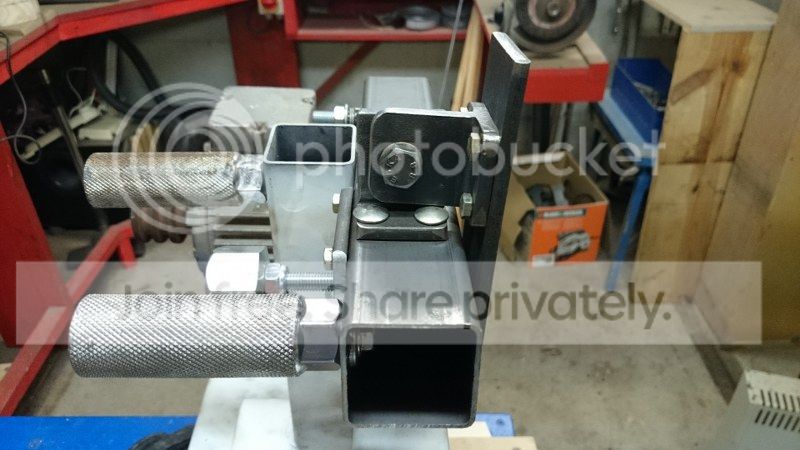
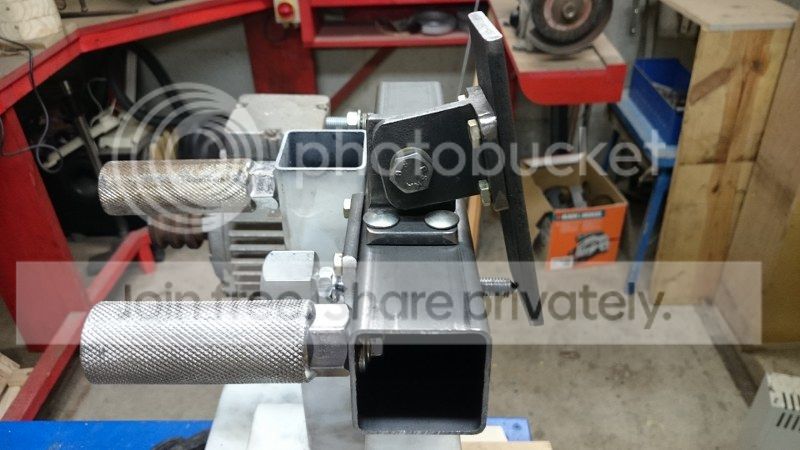
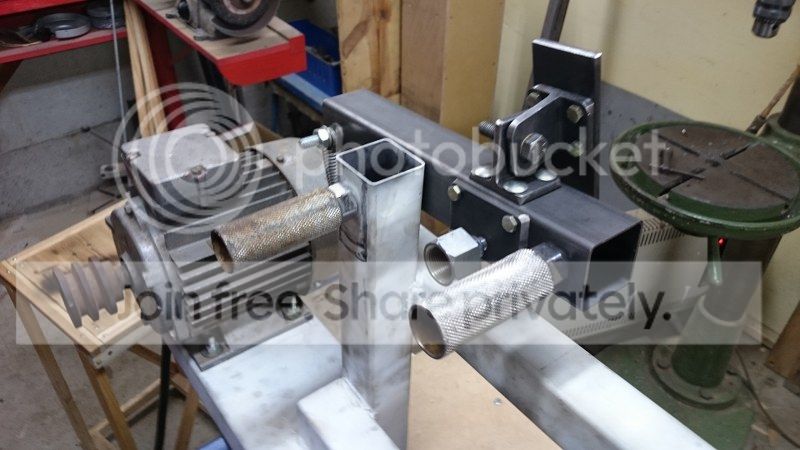
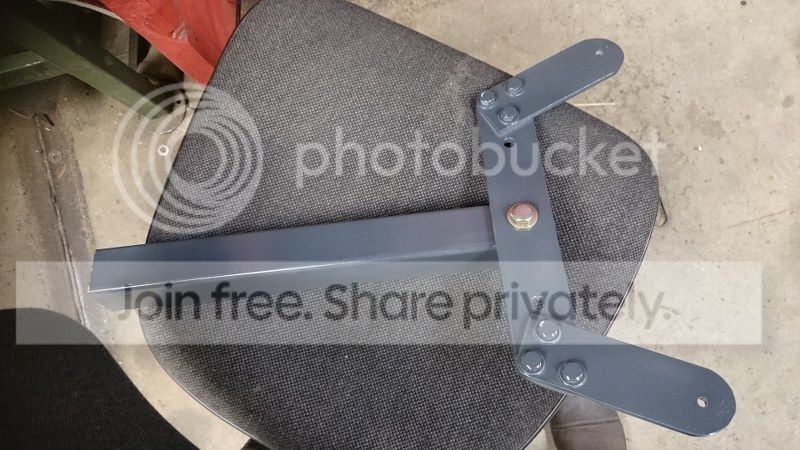
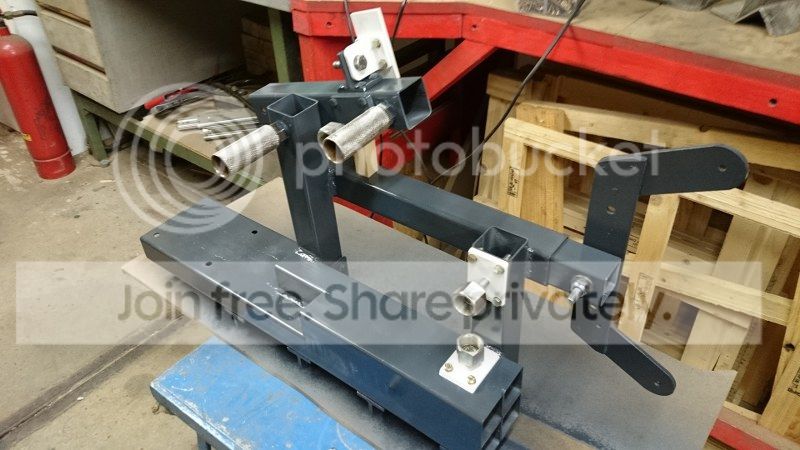
The tension and tracking adjustment assembly
DSC_0062_800x450.jpg

DSC_0061_800x450.jpg

DSC_0057_800x450.jpg


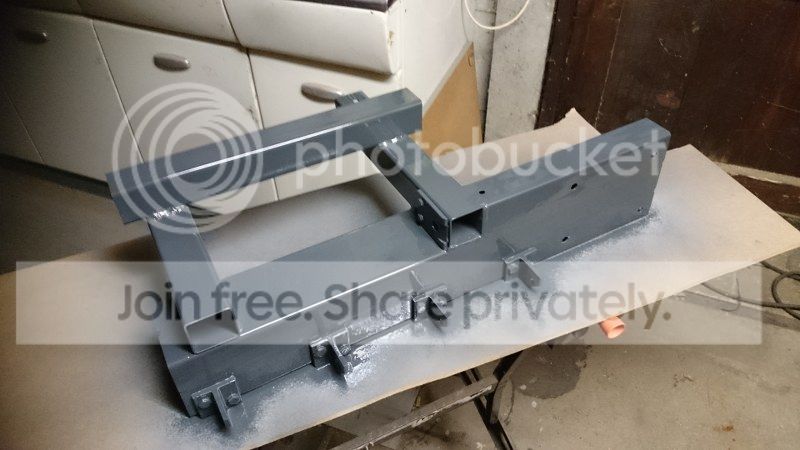
Spray painting:
DSC_0094_800x450.jpg


Then I build a slack belt tool arm, just because this was the simplest and cheapest of them all.
DSC_0092_800x450.jpg


So far so good
DSC_0098_800x450.jpg


DSC_0101_800x450.jpg


Questions welcome!

Dennis
 
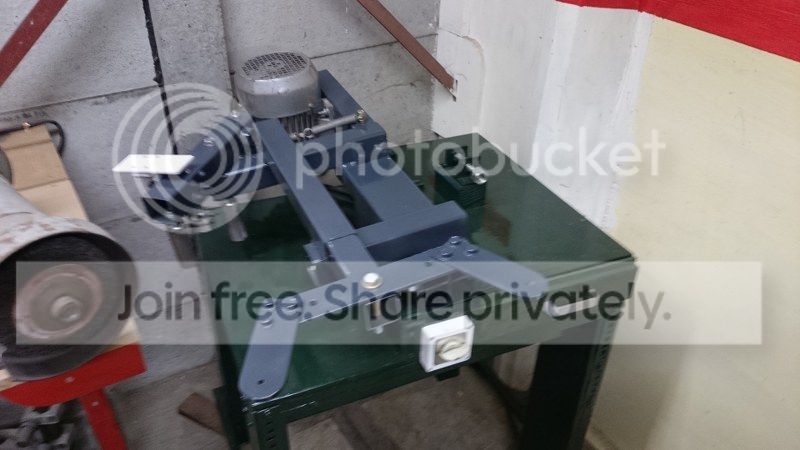
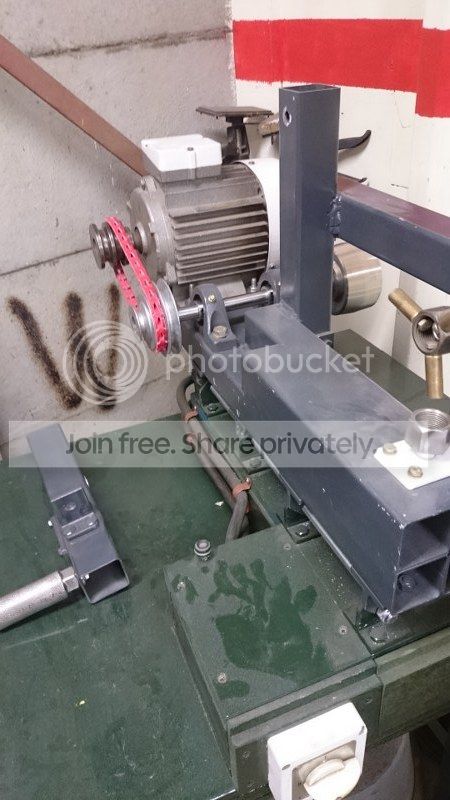
is the motor on backwards in the last pic? or do you plan on running step pulleys from the opposite side? tilting is nice, but that ones going to be heavy. nice use of bicycle pegs btw.
 
if you manage to build a shop like that, I am looking forewards to seeing the knives you'll make
 
Building a workrest
DSC_0105_800x450.jpg

DSC_0113_800x450.jpg

This workrest is also able to rotate 90 degrees for when you flip the grinder.


is the motor on backwards in the last pic? or do you plan on running step pulleys from the opposite side? tilting is nice, but that ones going to be heavy. nice use of bicycle pegs btw.

Just like you said, the step pulleys on the motor still need to be replaced but this works for now. And yes, it's kind of heavy but I don't really mind the weight, and it has a lock when it's up straight.
DSC_0164_800x450.jpg


DSC_0169_800x450.jpg


DSC_0173_800x450.jpg


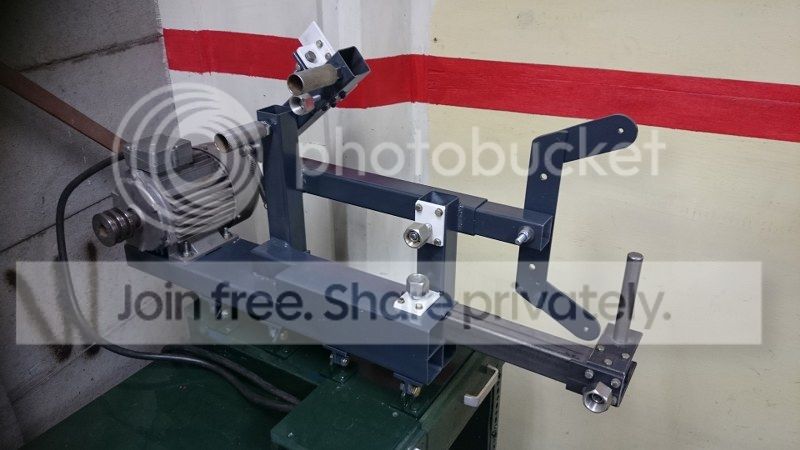
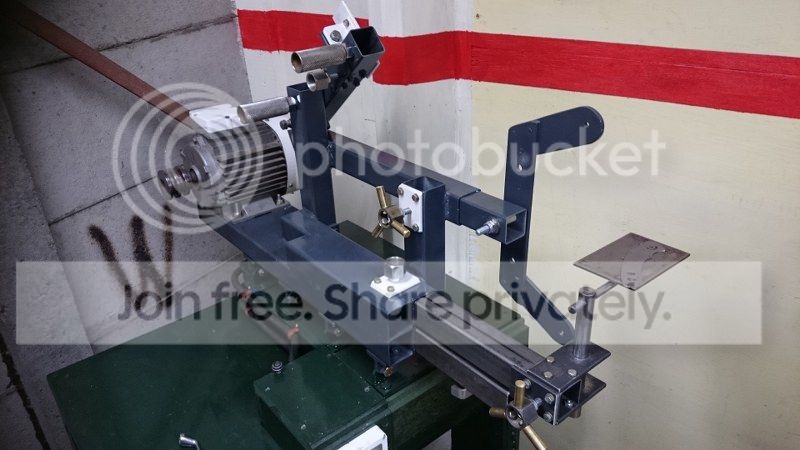
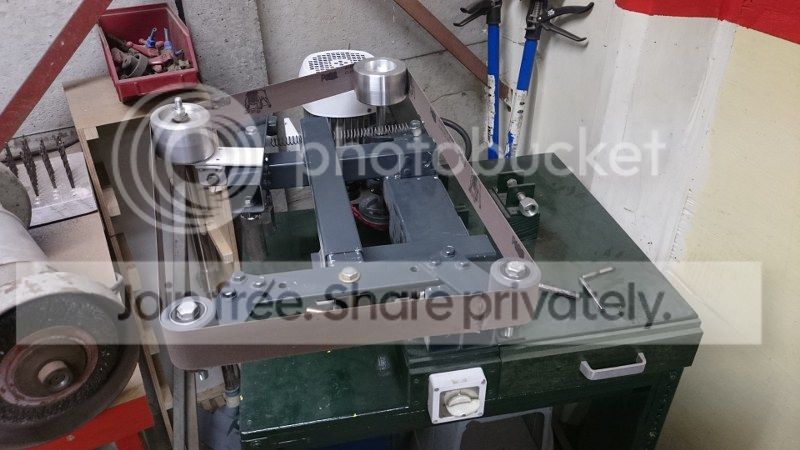
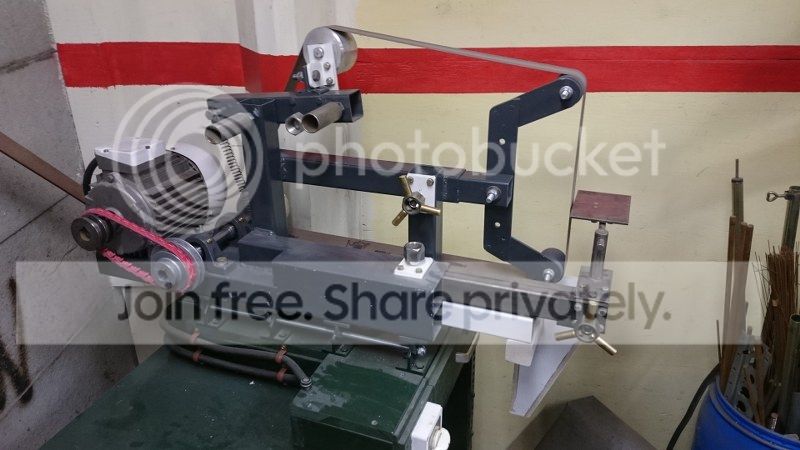
So this is what it looks like right now. I still need to build all the other attachments. I also want to install a switch to reverse the direction of rotation of the motor. As well as a pneumatically operated tension arm, as soon as the compressor is fixed (It hasn't run in at least 5 years)

The belt that's on there is one I made myself, just to check if it fitted. It's 2000x50mm but I can easily fit 2500x50 belts on there.

The linked v-belt is very good by the way!


So while waiting for some belts and the new pulleys I ordered, I started building a propane forge.


To be continued...
 
Cool thread. I think that you will want to plan on making a flat platen for grinding. A slack belt is useful in some situations, but bevels are done primarily with a flat platen or a wheel.
 
...continueing

At this point a mate joined me and brought an anvil as a contribution.
16547877899_9376326448_c.jpg


The metal sheet in the background was something I had laying around and this was supposed to become our forge. It's thickness is 4.5mm which I thought would be sufficient.
We measured our firebricks and roughed out the sides with an angle grinder, and welded them together.
16732910652_3d2d45918c_c.jpg


And here is the result, ready for the first test:
16732782601_1595d8f5a9_c.jpg


Here is a video of the very first test:
[video=youtube;ZDUynrjSv08]https://www.youtube.com/watch?v=ZDUynrjSv08[/video]


to be continued...
 
Back
Top