Know this little guy

Joined
Sep 22, 2003
Messages
13,182
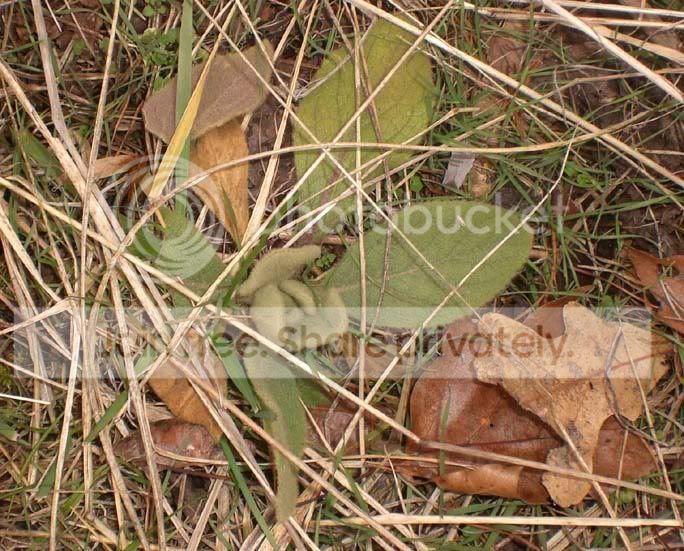
Just pokin his head out for the year:thumbup:

Know what he/she is good for?

Wanna guess at the partial leaf there?

ml1.jpg
 
Mullein. Makes good medicine for asthma when you lightly inhale the smoke.
 
AKA Toilet paper plant.

+1 on the respiratory benefits of inhaling the smoke. FDR was treated with Mullein during his time at the warm springs.
 
Thanks Hollowdweller, I am really into the plants right now...one of my hiking friend and I have bought between us about 5 books on trees and edible plants...I am finding that unless there is color photo's,,,its a pain in the arse to figure what some doctor is talking about...unless of course its an obvios plant or tree...in which case, what would I need the book for. Thanks for a great thread. Gene
 
Gene,

You point out the problem with many books out there, misrepresentation or bad illustrations. Some books only show a plant in its full maturity. In the case of milkweed, this is far too late to be edible as the pods have too much latex in them.

Other times, the author draws the plant in black and white from his or her perspective. Sometimes the plant can appear differently to different people. Pictures can be decieving so be careful and cross reference your plants in at least 3 books.

Your best bet is to find a book that shows a plant during all seasons or better yet, find someone with plant knowledge to walk you through plants to ensure you are being safe.


Kev
 
Kev,

Exactly what we talked about on the phone tonight. I was telling another person that real ability to I.D. safe plants and distinguish from their poisonous lookalikes is a 5-senses job. Feel, smell, look, etc are all involved. That's why books are inadequate: it's best to train in person with someone. Kevin is an instructor at Marty Simon's school (http://www.weteachu.com) and Marty is one of the top experts on Northeast and Eastern edible and medicinal plants. He teaches a plant course once a year: I highly recommend anyone sign up for it. I'll be there!

~B.
 
what partial leaf?the dried up half a leaf? if so im thinking white oak
 
One of the good points of Mors Kochanski's plant walk vids. They DO show the plants from various angles and at various stages of growth. The vids remind me a lot of my old dendrology classes the way they are set up.
 
Man, I love this stuff. Plants will keep you alive until you kill some real food.;)
 
Mullein is a great medicinal herb to know, it is easy to ID and grows nearly everywhere. It doesn't have much caloric value but it is full of vitamins and stuff. It used for all kinds of stuff and supposed to even fight TB. It makes good wicks/torches too.
For plant ID I bring along my wife, she has had several university plant taxonomy classes. Real plant ID books don't have many pictures, they use a "key" of physical characteristics. You need to know some hefty vocabulary to use them, there are about 10 different words just to describe the hairs that grow on plants!
I have never used it, but supposedly it can be a skin irritant if you use it as TP.
 
The flower spikes, once they dry are excellent spears. C'mon, tell me you guys didn't play with them when you were growing up. Many a mighty mastodon was slain with mullein spears during my childhood. We didn't even know what their official name was -- they were just the 'spear plants'.
 
I have never used it, but supposedly it can be a skin irritant if you use it as TP.[/QUOTE]

In my 50+ years of studying wild plants I have never come across any info that Mullein could cause skin irritations. I don't doubt that there is someone alergic to anything but Mullien has always been listed as hypoallergenic. If you find that source that said it was a possible skin irritant I would like to see it. Thanks,
Marty Simon
 
oldman/Marty
I admit I saw it on the interweb, so I looked in several of my wife's herb books.
Euell Gibbons, "Stalking the Healthful Herbs"- reports that the new leaves acted as a rubefaciant but did not cause discomfort.
He gives one of the common names as Tinder Plant-another good use.
Gregory Tilford, "Edible and Medicinal Plants of the West"- gives a warning that the seeds contain rotenone and are poisonous. Also claims that this property was exploited by Indians as a paralytic poison to catch fish, but of course doesn't give directions.

I forgot how many uses this plant has. I would put it at the top of the list of medicinal plants to learn about.

I think I will put the TP use to the test the next time I get a chance, just to see for myself.
 
"- gives a warning that the seeds contain rotenone and are poisonous. Also claims that this property was exploited by Indians as a paralytic poison to catch fish, but of course doesn't give directions.

I forgot how many uses this plant has. I would put it at the top of the list of medicinal plants to learn about.

I think I will put the TP use to the test the next time I get a chance, just to see for myself.[/QUOTE]
blazink,
The mullein plant does contain a rotenone type of poison that will kill fish. The way to use it is simple, get an area where the water does run fast, crush up a whole mess of the whole plant and dump it in the water and wait. Any fish entering the area will quickly (deoending on the strength) slow down and start to come to the top to get air. Eventually they will die. The poison will prevent fish from obtaining oxygen from the water. It will in no way harm humans. I and many students and friends have eaten a ton of fish using this method. Also if you take the fish out and place them in a trap with fresh water, they will quickly recover and you can have a fresh supply of fish. Remember that this technique is illegal in every state so be careful. It should be used in a survival situation only.
Oldman/Marty Simon

 
"- gives a warning that the seeds contain rotenone and are poisonous. Also claims that this property was exploited by Indians as a paralytic poison to catch fish, but of course doesn't give directions.

I forgot how many uses this plant has. I would put it at the top of the list of medicinal plants to learn about.

I think I will put the TP use to the test the next time I get a chance, just to see for myself.[/QUOTE]
blazink,
The mullein plant does contain a rotenone type of poison that will kill fish. The way to use it is simple, get an area where the water does run fast, crush up a whole mess of the whole plant and dump it in the water and wait. Any fish entering the area will quickly (depending on the strength) slow down and start to come to the top to get air. Eventually they will die. The poison will prevent fish from obtaining oxygen from the water. It will in no way harm humans. I and many students and friends have eaten a ton of fish using this method. Also if you take the fish out and place them in a trap with fresh water, they will quickly recover and you can have a fresh supply of fish. Remember that this technique is illegal in every state so be careful. It should be used in a survival situation only.
Oldman/Marty Simon
 
Back
Top