

- Joined
- Jul 27, 2003
- Messages
- 5,686
This is for my good friend, Larry Bailey. RIP. He had been after me to make a frame handle knife.
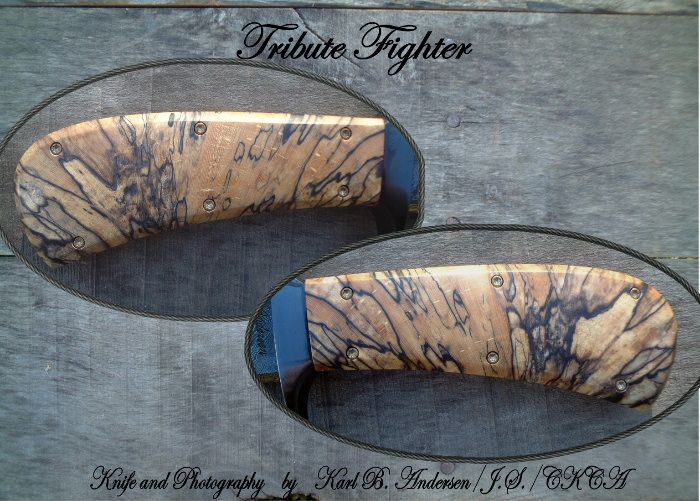
As well, he had, for a few years, been producing some of the most outrageous end-grain spalted maple know to Man.
I only had two blocks left, and this is the last one I will sell.
The last one is for my own knife.
I hope he's watching!
The actual seed for this creation happened at the Blade Show this last year. Chuck Gedraitus is one of my close knife makin' buddies and he had a fabulous frame handled push dagger that just JUMPED! off of his table before I got a chance to see what made it tick.
But, Chuck shared his construction method with me.
Now, what I designed here is NOT exactly what he did, but it's the result of the ideas he planted in my wittle head.
If this is used by others, I'm simply not aware of it. Can't imagine that it's not.
I'm a take-down freak.
But! With a stipulation! That take-down assembly must be as strong as any other method, and I have proven again and again that the way I do it is damn near bullet proof.
And it's just got to be simple.
As is this.
I swear, I did everything but stick this knife in a vise to try to get it to flex.
So, I came up with this analogy - think of the tires on your car!
You have the FLAT surface of your hub.
To this you mount the FLAT surface back of your drum or rotor.
To this you bolt the FLAT back surface of your rim and tighten everything together with lug nuts.
That assembly allows you to spin doughnuts without things falling apart! And get away from the cops as well.
Those FLAT surfaces all stacked up together are overwhelmingly strong.
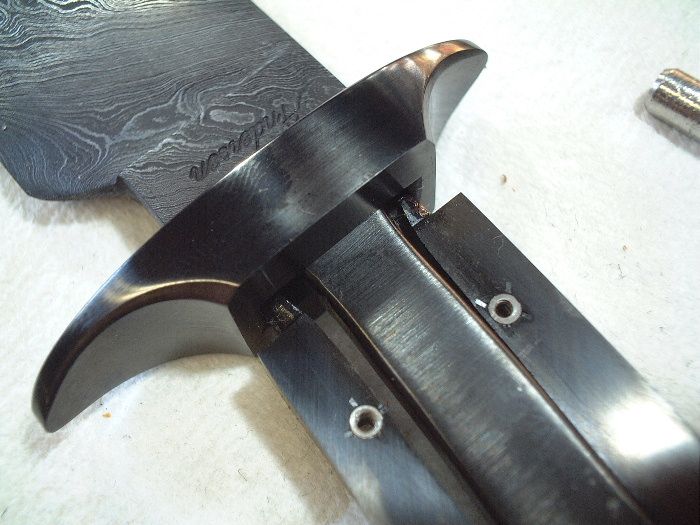
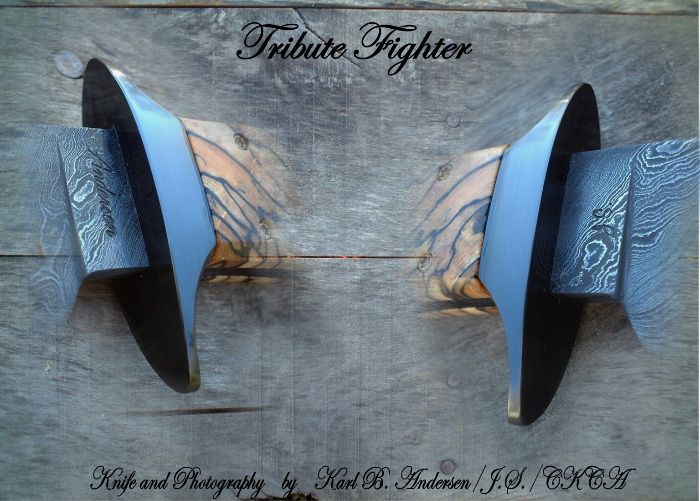
Here, the "hub" is the back of my guard shoulders.
The "rotor/drum" is the face of the guard.
The "rim" is the face of the frame.
And the lug nuts are the threaded tang.
that's where my buddy Chuck comes in.
He had this idea for an internal assembly, being quite strong, yet completely within the frame and nothing sticking out.
My kind of knife!
I took that a step further and came up with what I dubbed the "Andersen Frame". That's what I call it around here, you call it whatever you like.
After I got this knife together, I put it through lateral stresses that I would expect a full tang knife to survive!
Nothing moved.
It's so tough, in fact, I do believe I will use one for my MS performance test.
I used one of my take-downs for my JS test.
So, here are a few progress photos:
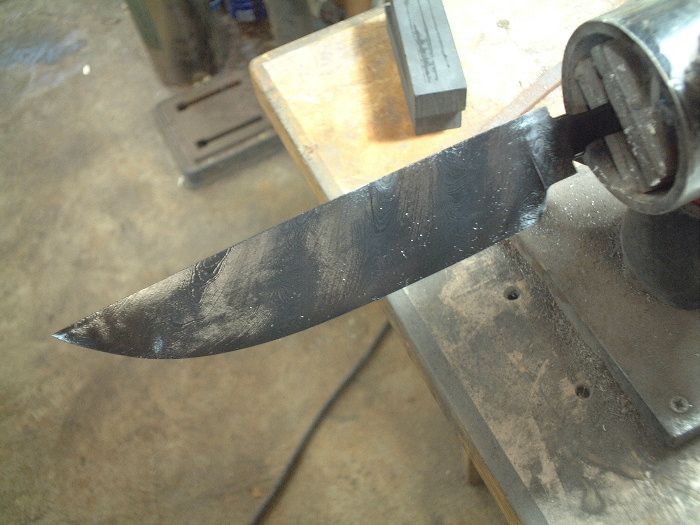
The 7" 1095/15N20 single twist blade out of the hot-bluing tank:
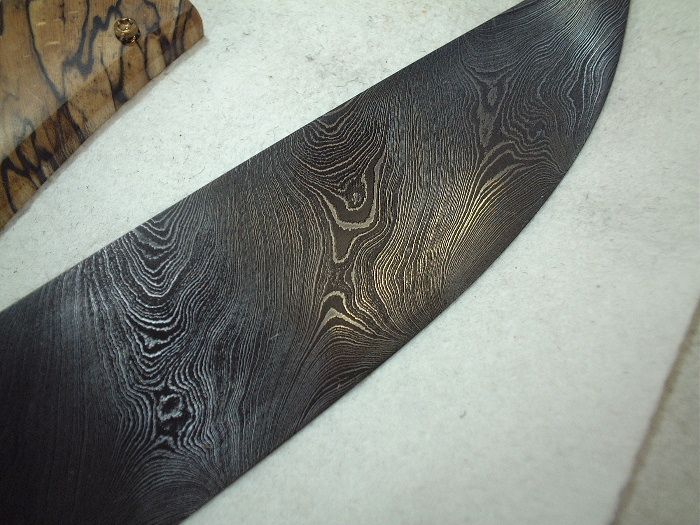
After some 3000 grit sanding to remove the bluing from the 15N20:
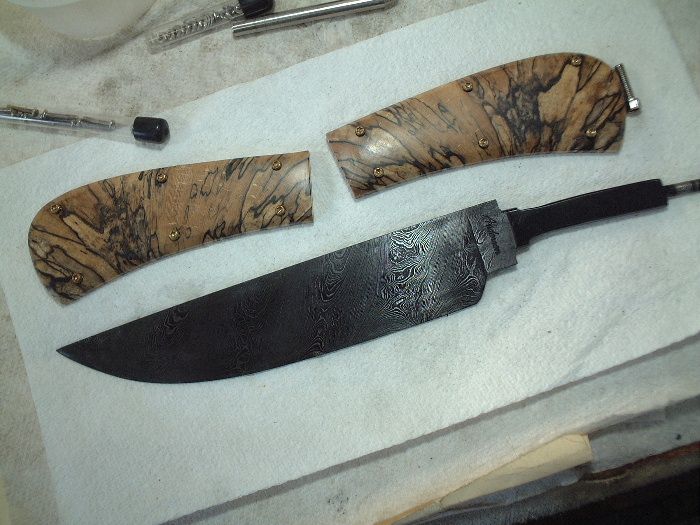
The blade with some of Larry's spalted maple:
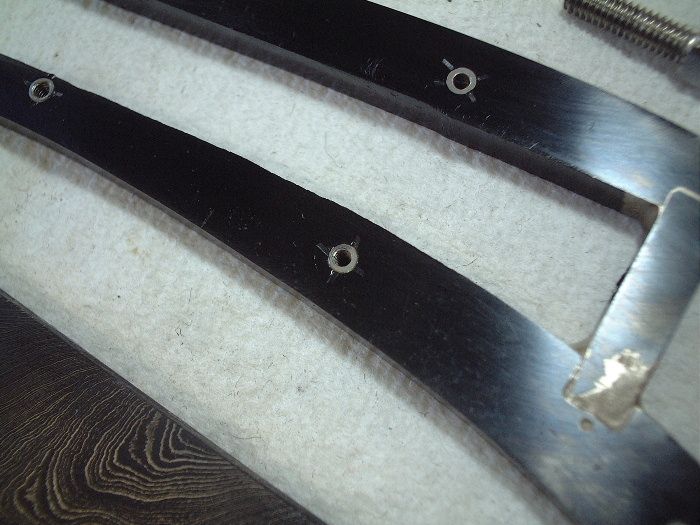
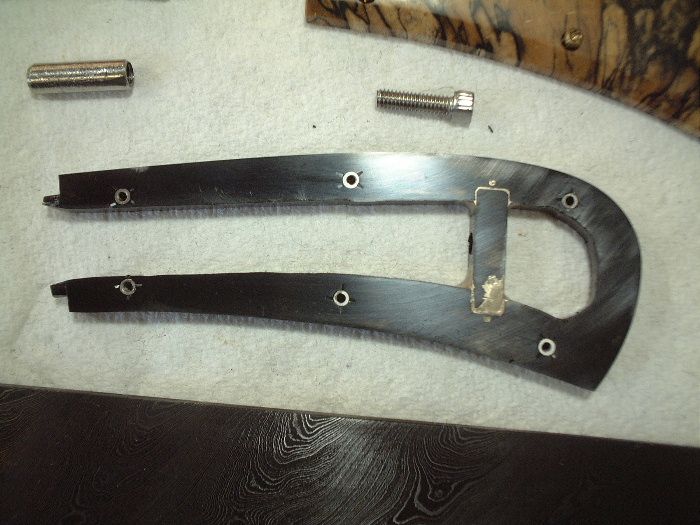
Here's the blued frame showing the threaded 416 inserts I made for the screws. I did NOT want a broken tap in a hole in the frame, so I made these to "key" into the frame:
The entire frame:
How it locks into the guard - thanks to Bruce Bumps WIP:
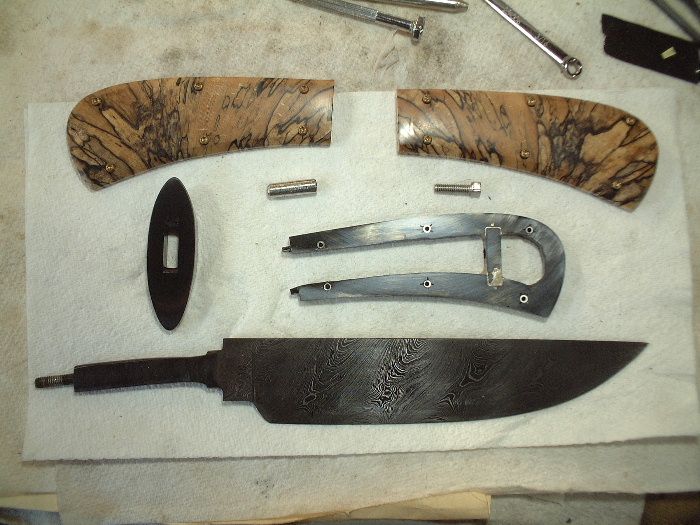
All of the components:
Assembly showing the "Andersen Bridge" silver brazed into place doing what it does.
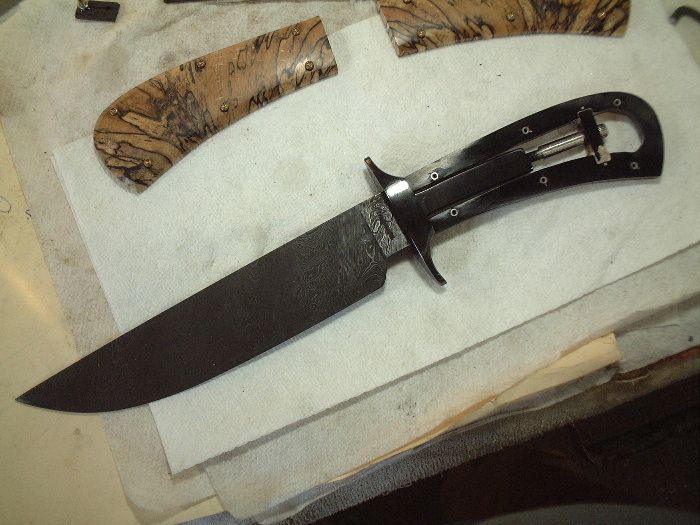
And finally, the knife, with what is the next to last piece of Spalted Maple I have from Larry.

As well, he had, for a few years, been producing some of the most outrageous end-grain spalted maple know to Man.
I only had two blocks left, and this is the last one I will sell.
The last one is for my own knife.
I hope he's watching!
The actual seed for this creation happened at the Blade Show this last year. Chuck Gedraitus is one of my close knife makin' buddies and he had a fabulous frame handled push dagger that just JUMPED! off of his table before I got a chance to see what made it tick.
But, Chuck shared his construction method with me.
Now, what I designed here is NOT exactly what he did, but it's the result of the ideas he planted in my wittle head.
If this is used by others, I'm simply not aware of it. Can't imagine that it's not.
I'm a take-down freak.
But! With a stipulation! That take-down assembly must be as strong as any other method, and I have proven again and again that the way I do it is damn near bullet proof.
And it's just got to be simple.
As is this.
I swear, I did everything but stick this knife in a vise to try to get it to flex.
So, I came up with this analogy - think of the tires on your car!
You have the FLAT surface of your hub.
To this you mount the FLAT surface back of your drum or rotor.
To this you bolt the FLAT back surface of your rim and tighten everything together with lug nuts.
That assembly allows you to spin doughnuts without things falling apart! And get away from the cops as well.
Those FLAT surfaces all stacked up together are overwhelmingly strong.
Here, the "hub" is the back of my guard shoulders.
The "rotor/drum" is the face of the guard.
The "rim" is the face of the frame.
And the lug nuts are the threaded tang.
that's where my buddy Chuck comes in.
He had this idea for an internal assembly, being quite strong, yet completely within the frame and nothing sticking out.
My kind of knife!
I took that a step further and came up with what I dubbed the "Andersen Frame". That's what I call it around here, you call it whatever you like.
After I got this knife together, I put it through lateral stresses that I would expect a full tang knife to survive!
Nothing moved.
It's so tough, in fact, I do believe I will use one for my MS performance test.
I used one of my take-downs for my JS test.
So, here are a few progress photos:
The 7" 1095/15N20 single twist blade out of the hot-bluing tank:
After some 3000 grit sanding to remove the bluing from the 15N20:
The blade with some of Larry's spalted maple:
Here's the blued frame showing the threaded 416 inserts I made for the screws. I did NOT want a broken tap in a hole in the frame, so I made these to "key" into the frame:
The entire frame:
How it locks into the guard - thanks to Bruce Bumps WIP:
All of the components:
Assembly showing the "Andersen Bridge" silver brazed into place doing what it does.
And finally, the knife, with what is the next to last piece of Spalted Maple I have from Larry.


