Late Summer Wander In South-East Tennessee

Back in the sixties and early seventies, "flower children" wandered around behind the animals trying this and that. In certain pastures, cattle fed grain sprouted a mushroom that found favor among them (the "Fungusamongus"). Some tried chewing the seeds of the jimson weed in lieu of LSD. Few tried it more than once. It was definitely a bum trip, man. In the immortal words of the MC on the Grand Funk Live album, "Don't take it man... don't take it!"
 
Back in the sixties and early seventies, "flower children" wandered around behind the animals trying this and that. In certain pastures, cattle fed grain sprouted a mushroom that found favor among them (the "Fungusamongus"). Some tried chewing the seeds of the jimson weed in lieu of LSD. Few tried it more than once. It was definitely a bum trip, man. In the immortal words of the MC on the Grand Funk Live album, "Don't take it man... don't take it!"

Yeah, I've had friends that gathered the "magic mushrooms" from the pastures and ate them or made a tea from them. Watching their behavior afterwards was enough to tell me that it wasn't for me, and some of them never completely returned from their trips. I'll not be eating any night shade of ant variety, nor any magic mushrooms intentionally :)
 
Nice pictures mist. We don't have any poison sumac around here, just the staghorn variety, so no comment on the ones you posted. The one you said looks like a toxic one looks pretty much similar to our staghorn.

I have only been seriously studying sumac for about a year...maybe a little less...so I am not sure. I am thinking the non-toxic one is either Stag-horn or Winged Sumac. The leaves of the other one sure looks like the poison variety. I've been trying to figure out who I could use as a test subject. I'll go harvest leaves if you want to test it for me :)

.
 
Thanks for sharing your walk!
Really love those small creatures and wild fruit!

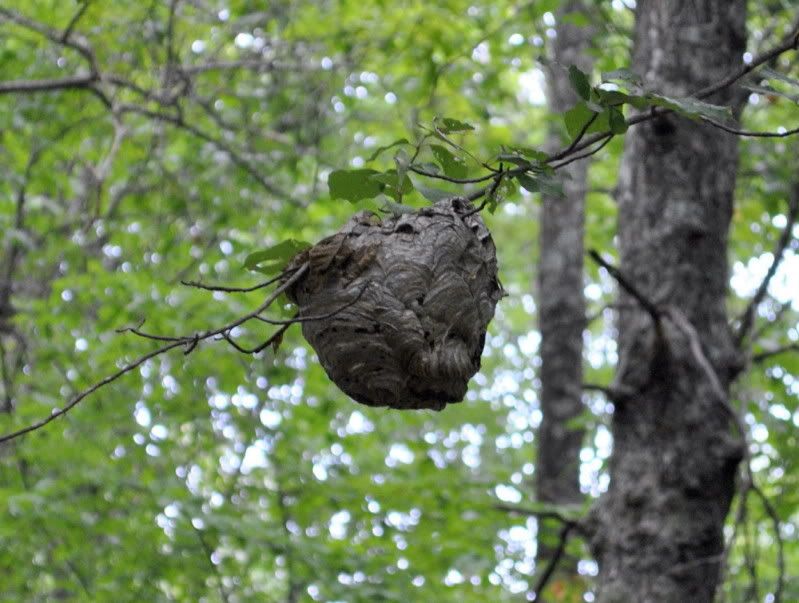
How large is that hornet nest? Are they dangerous as those found in Japan?
Here we have more than twenty people die because of hornets, which is several times larger number
than the death of snake bite.

Also quite interesting to see the height of nest is the sign of the snow depth.
We have similar saying but in our case it's mantis' egg.
I've read a study concerning this traditional knowledge and it concluded that
the height of mantis egg is actually related to the depth of snow!
But not the depth of that particular year, but to the depth of that particular place,
which means mantis laying egg of heavy snow place tends to choose higher position.
 
Love the pics MW.
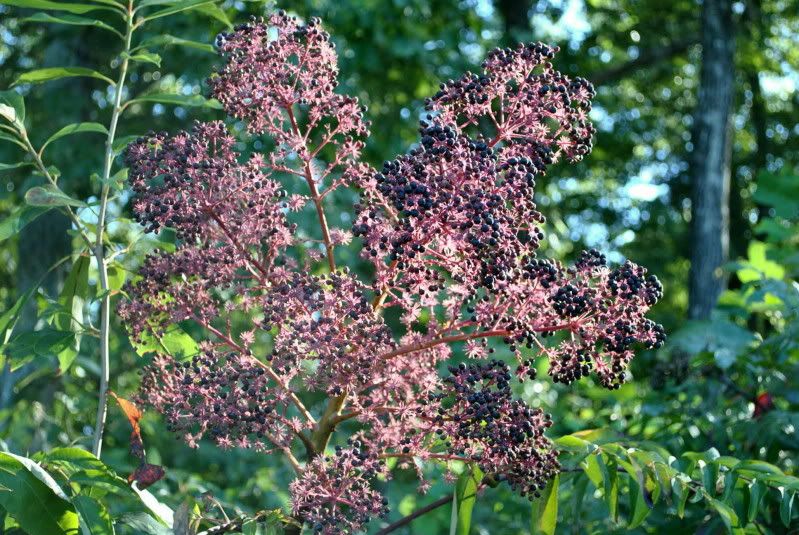
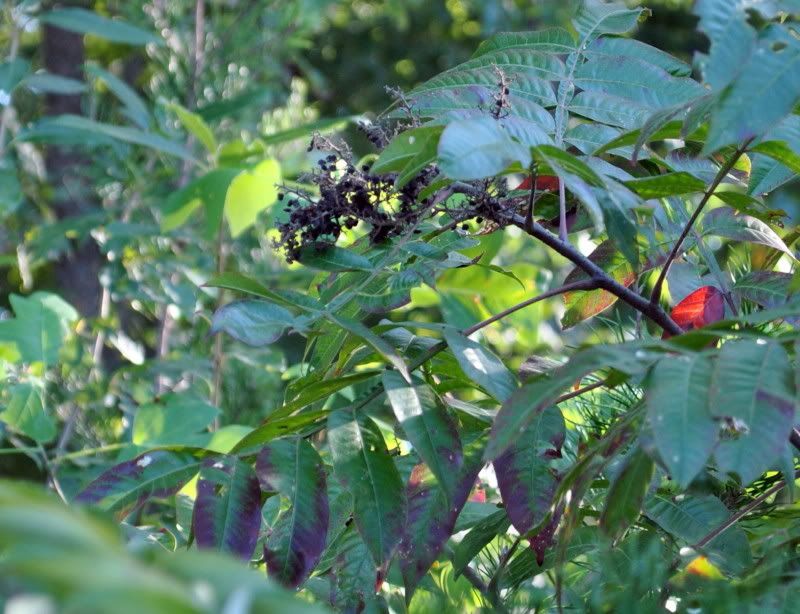
But, what you thought was a form of edible Sumac looks more like Elderberries to these eyes.
I was trying to think of the Jimsonweed's name but was drawing a blank for some reason.

The way to tell Poison Sumac from edible Sumac is that Poison Sumac has white berries. Edible Sumac has red berries (which are bitter as hell).
 
Thanks for sharing your walk!
Really love those small creatures and wild fruit!

How large is that hornet nest? Are they dangerous as those found in Japan?
Here we have more than twenty people die because of hornets, which is several times larger number
than the death of snake bite.

Also quite interesting to see the height of nest is the sign of the snow depth.
We have similar saying but in our case it's mantis' egg.
I've read a study concerning this traditional knowledge and it concluded that
the height of mantis egg is actually related to the depth of snow!
But not the depth of that particular year, but to the depth of that particular place,
which means mantis laying egg of heavy snow place tends to choose higher position.


Thanks Fujita, I'm glad you enjoyed the photos. Observing the natural world around me is one of my favorite things to do...and why I always look forward to your posts as well. If only I could have had a digital SLR in my younger days...

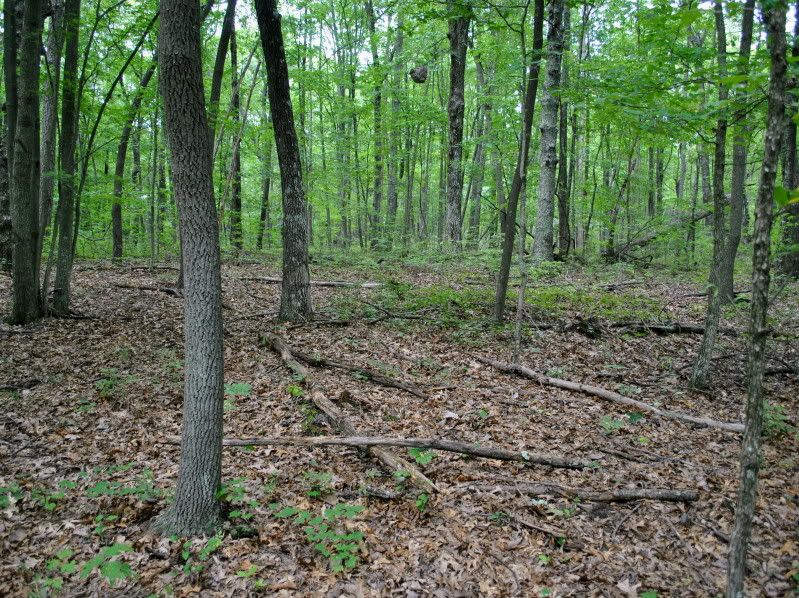
That hornets nest is about 20inches/50centimeters high and about 12inches/30centimeters in diameter at the widest point and only about 4inches/10centimeters off of the ground. Found on top of a rise on top of the ridge.


But this one I found on another hike was only about 12inches/30centimeters tall, 12inches/30centimeters in diameter about 10 feet/3 meters off of the ground. Found in a hollow down on the west side of the ridge.

DSC_1763.jpg


DSC_1766.jpg


However it is two different types of hornets...I just can't get them to be still long enough to take their picture :)

The hornets I saw near the larger nest had yellow and black stripes and were about 3inches/7.5centimeters long, while those around the smaller nest were a darker grey color and only about 1.5inches/4centimeters long.

We don't typically get a lot of snow down this far south, no more than a few inches at a time the last several years. Although we did 23inches/58centimeters in the spring of 1993 but that only happens about once every hundred years. I think it is supposed to be more about how low the temps will get and how bad the cold winds will be. But since it is two different types of hornets I don't have enough information yet, I have to look for more nests.

Interesting note on the mantis, thanks! We don't have a lot of Mantis here, though I have seen more this year than in recent years.


Love the pics MW.
But, what you thought was a form of edible Sumac looks more like Elderberries to these eyes.
I was trying to think of the Jimsonweed's name but was drawing a blank for some reason.

The way to tell Poison Sumac from edible Sumac is that Poison Sumac has white berries. Edible Sumac has red berries (which are bitter as hell).

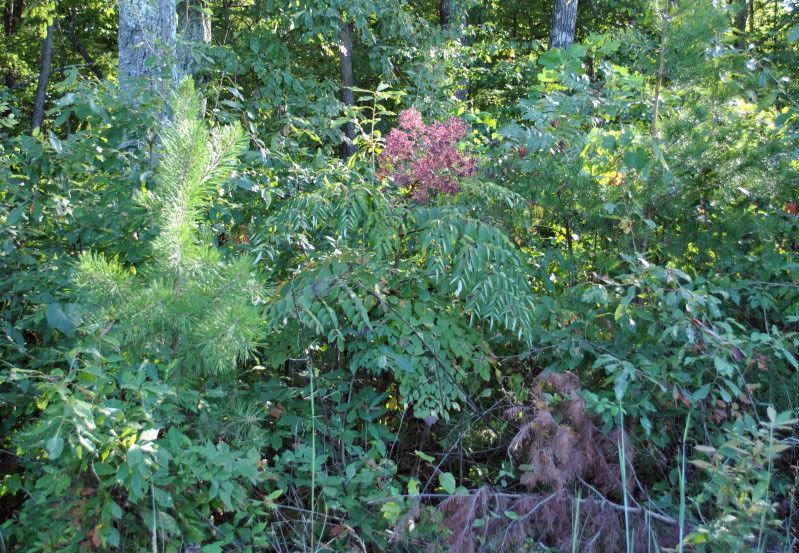
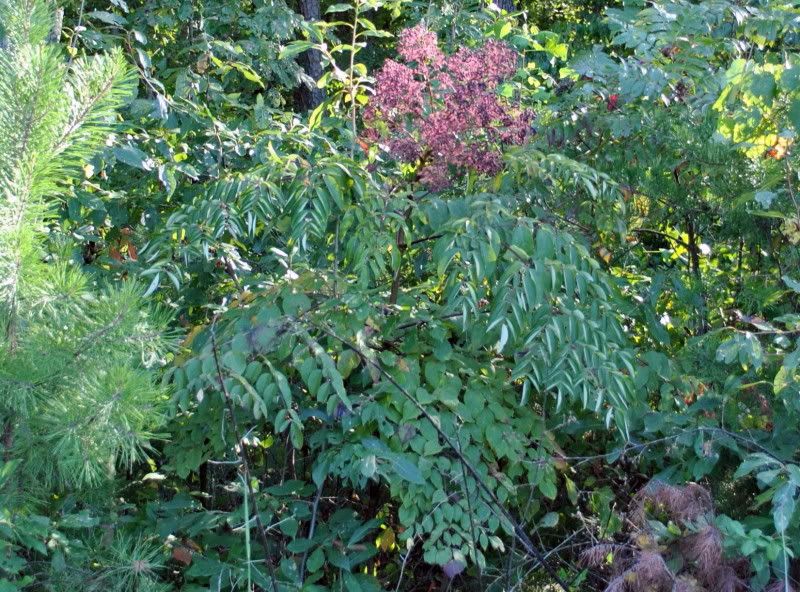
Thanks man, glad you enjoyed them. You are not the first to mention the Elderberry thoughts. I'm pretty sure they are not Elderberry. I wish I had something or someone in the pics to give a better perspective on height, but maybe these other shots will be better.

DSC_2846.jpg


DSC_2846cropped.jpg


DSC_2840.jpg


and then a close-up of a plant behind and to the right of the above plant.

DSC_2844.jpg


.
 
The reason I say Elderberry is because of the way the clusters are and the berries look smooth-skinned. Sumac berries (other than the white ones on the Poison Sumac) are generally covered with a thin, bristly fuzz; and the leaves of the bush are usually have a toothed edge, these don't seem to have that either.
If the berries have a scar on the bottom (something like a Blueberry, it's a holdover from where it used to be a flower) that's a dead giveaway that it's Elderberry and not Sumac.
 
The reason I say Elderberry is because of the way the clusters are and the berries look smooth-skinned. Sumac berries (other than the white ones on the Poison Sumac) are generally covered with a thin, bristly fuzz; and the leaves of the bush are usually have a toothed edge, these don't seem to have that either.
If the berries have a scar on the bottom (something like a Blueberry, it's a holdover from where it used to be a flower) that's a dead giveaway that it's Elderberry and not Sumac.

Oh, I'd love to prove my theory wrong and find out it is elderberry...but from what I understand of elderberry they put out berries in clusters from the branches and have shorter leaves. These plants are only putting off the tufts at the top of the plant, not seeing any berries at all...but I could have already missed them.

I'll try to take Alayna on a hike up there tomorrow and see if I can get some better pictures of that plant and of the others in the area (I always love having an excuse to hit the woods :D ). I was going to try yesterday morning but I ran out of juice in the battery and really didn't have time to wait for the right lighting either.
 
Back
Top