
-
The BladeForums.com 2024 Traditional Knife is available! Price is $250 ea (shipped within CONUS).
Order here: https://www.bladeforums.com/help/2024-traditional/
You are using an out of date browser. It may not display this or other websites correctly.
You should upgrade or use an alternative browser.
You should upgrade or use an alternative browser.
Liner lock question
- Thread starter Lo/Rez
- Start date

- Joined
- Aug 12, 2006
- Messages
- 1,302
The main question you asked is purely subjective as there is no right answer. A short backspacer will work just fine as long as the blade doesn't make contact.
It looks like the screw near the blade tip doesn't have enough room and you may have to grind down the blade some.
It looks like the screw near the blade tip doesn't have enough room and you may have to grind down the blade some.
- Joined
- Sep 10, 2000
- Messages
- 4,786
Lo/Rez
To avoid the possibility of wasting material and to make it easier to fit why not make a hard pattern?
Frank
To avoid the possibility of wasting material and to make it easier to fit why not make a hard pattern?
Frank
- Joined
- Aug 12, 2006
- Messages
- 1,302
+10 to Frank. Acrylic is so easy to work with so can make a mockup in 15 minutes.

- Joined
- Dec 5, 2013
- Messages
- 1,180
Your workflow is going to cause you issues. I highly recommend you put your stop pin holes in when you do your pivot holes then, use the stop pin hole in the liner to locate your stops on the blade. As to backspacers, I like full length and they extend to the front edge of the stop pin.
Bob
Bob
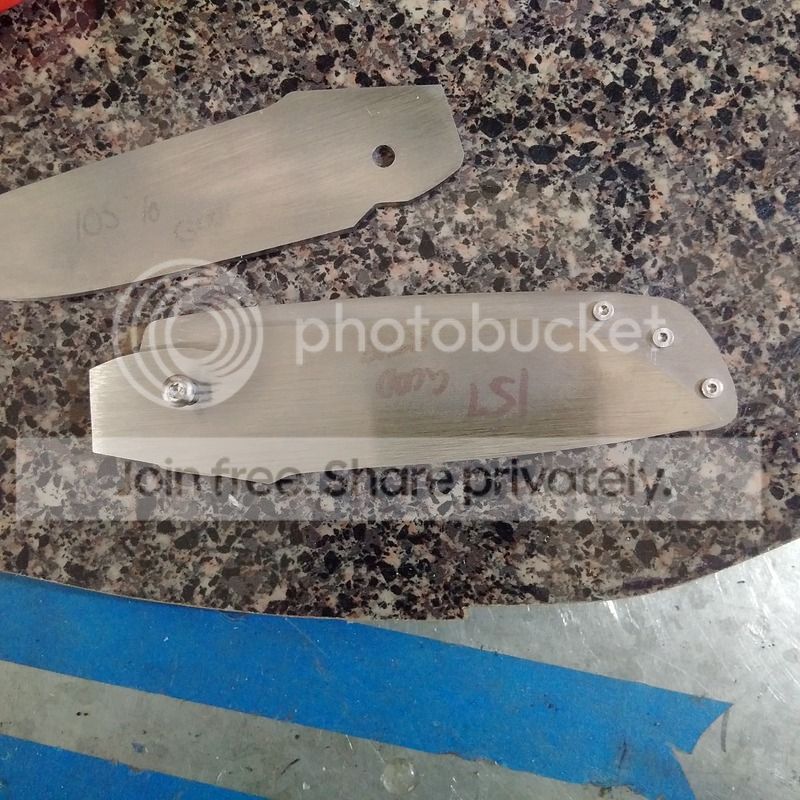
Thanks for all the advice. Assuming I leave a good portion of the back open....what is the minimum distance I should have between the blade edge and the spine? This one is sitting at 3/16" which I think is way too much.

I had made some mock ups for the knife. I wanted to leave the tang long to facilitate grinding with my jig.
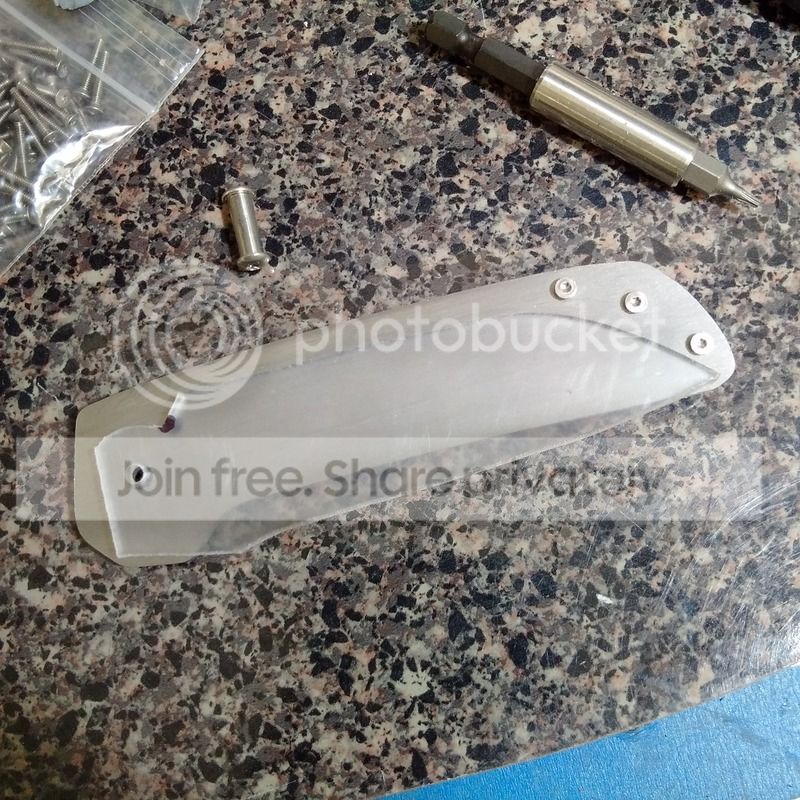
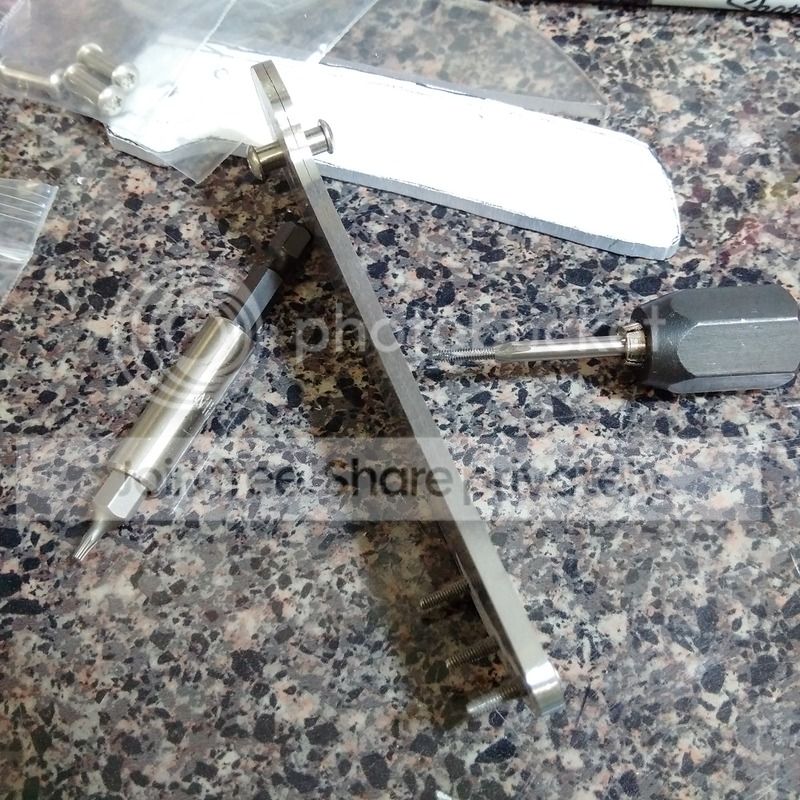
Is this enough clearance for the thumb stud?
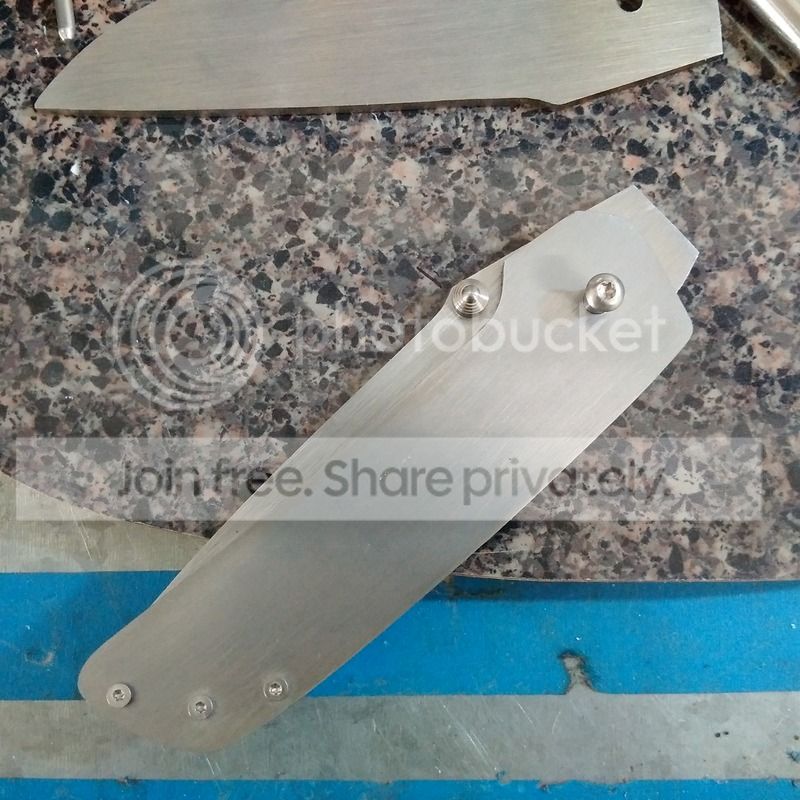
I had made some mock ups for the knife. I wanted to leave the tang long to facilitate grinding with my jig.
Is this enough clearance for the thumb stud?
- Joined
- Sep 10, 2000
- Messages
- 4,786
If the blade can close then there is enough room. My thumb studs are almost always thin in diameter for just this reason. Longer however may be necessary. And the back bar thing, well mine are made to stop the blade without the stop pin. That way i don't need a cut out in the bottom of the blade. I do this on both very small folders and very large. Your work looks neat and tidy and the fact you immediately try ideas you are given, will help you move ahead. I don't have a surface grinder or milling machine. I wish I did at times. I have a variable speed magnetic disc and of course the old reliable granite plate. Mine is huge and was given to me by a friend in the counter top business. It's a cut out double sink top I am told that a lot of these places will give these away. Take granite if you can; marble is a bit soft and may suffer some wear over a few years. You can bring to within almost zero the blade back bar positioning. The blade should be within the frame so that there isn't a chance the tip can cause a problem being too long. I'f it's in there though, then that's enough.
Frank
Frank

Britt_Askew
Knifemaker / Craftsman / Service Provider
- Joined
- Dec 9, 2010
- Messages
- 1,218
I like a full length back spacer.
I like folders without pocket clips and keep them in the bottom of my pocket. A full length back spacer prevents coins from getting stuck in the knife.
I like folders without pocket clips and keep them in the bottom of my pocket. A full length back spacer prevents coins from getting stuck in the knife.

- Joined
- Jan 10, 2011
- Messages
- 1,448
I would drill the stop pin before you drill the spacer holes. I had a frame I had to toss because I relied on tolerances of the screws. This is the case especially if one side of the frame has a pass thru hole. I drill in this order...
Spot drill all holes, drill pivot (us), ream pivot (us),lap pivot till it's hand fitted. I put the pivot in both parts of the frame then into a pre-drilled hole in the G10 jig I made for that model.
The next part really depends on what type of stop pin you use. I usually use a floating stop in a liner lock, so I would use basically the same steps as above. Then I would put in the stop pin which goes into the hole in my jig.
Drill the spacer holes with a .074 for 50% threads on a 2-56 screw.
Take it all apart and then drill your clearance holes.
This is just my way of doing it. Not saying you have to do it this way. But one thing you should also do is call up AKS and order some jade G10 to make some jigs.
BTW Frank has the right idea about getting a disc and a surface plate. You will be able to tell by the grindlines when it's flat. (us) << Means undersized
Nick
Spot drill all holes, drill pivot (us), ream pivot (us),lap pivot till it's hand fitted. I put the pivot in both parts of the frame then into a pre-drilled hole in the G10 jig I made for that model.
The next part really depends on what type of stop pin you use. I usually use a floating stop in a liner lock, so I would use basically the same steps as above. Then I would put in the stop pin which goes into the hole in my jig.
Drill the spacer holes with a .074 for 50% threads on a 2-56 screw.
Take it all apart and then drill your clearance holes.
This is just my way of doing it. Not saying you have to do it this way. But one thing you should also do is call up AKS and order some jade G10 to make some jigs.
BTW Frank has the right idea about getting a disc and a surface plate. You will be able to tell by the grindlines when it's flat. (us) << Means undersized
Nick