Looking for some input about 1075 and my first knife build

Joined
Jan 19, 2015
Messages
46
I am looking to build my first knife and durability to me is more important that looks so with that said how can I assure I get good results? should I forge the steel first? Or just mill to desired thickness, cut shape, and be done with it?

I have on order and soon to arrive 1075 .25" x 2" x 36" description from Jantz says "cold rolled and annealed with a bright finish"

I understand that I need to build many knifes first to gain all the skills needed, but just wondering about the forging aspect of it at this point.

Thanks for any advice in advance!
 
1075 is a good choice. .25 is very thick unless you are making brush choppers. Some 1080 in 3/16 or 1/8 will be plenty thick and make your life easier.
 
1075 is a good choice. It is a low alloy eutectoid steel so it should be easy to get a good heat treat if you follow a good recipe. It is suitable for large and small blades. It makes a nice hamon as well if you're into that. Forging is not necessary. The act of forging in and of itself does not impart magical qualities to a blade. Forging can ruin a blade if you don't know what you're doing. If you are not an experienced forger you might want to do stock removal unless the forging experience is what you're after. 1/4" is a little thick for most knives but you can handle it. For a first knife though, make you're life easier and don't try to make a big knife. Start with something in the 3-4" range and concentrate on getting the technique right. The first few knives you make will be about learning the process. Don't expect great knives at this point. They will come later.
 
Yeah a little thick, I have a mini mill so I will take it down a bit. I might forget the forging process for now.

Any suggestions for a food grade oil or any advice for this type of steel? Since I have to use my cooking oven to do the annealing process I can't use a motor oil.

Thanks.

Timbear: Yeah I found the 1075 on Jantz web site by accident actually, and when I went back to double check I had trouble finding were it was again just because it is listed as mentioned in the 1095 section.
 
I now have 3 blades milled down to 5/32" thick and all sanded smooth. I am now ready to do the actual heat treatment and the temper but I am having trouble finding the specific temperatures and procedures. These are all small blades the cutting edges are 3" long. I am thinking heating to non magnetic temperature then quenching in canola oil but do I need this oil hot first? Also do I need to temper 1075? If so should I use 350 or 400 degrees?

I will post some pictures soon.
 
Hi, I'm a noob too, but I've been reading allot on here. You should heat, a shade or two past non-magnetic. Then quench in 130 degree canola. Make sure it's at least 2 gallons. Take it to the kitchen, clean of the oil and temper it in the oven at about 400 two times for 1 hour each.
I'm pretty sure that's the accepted practice at least. Some one more experience than I may come along and correct me though.
 
Thanks!

I am glad you mentioned the 2 gallons cause I was almost going to make a HUGE mistake and only use a small amount in a small steel bread pan.
 
Yes, have at least a gallon of canola oil, two is even better.
Warm the oil to 130F.
1075 has a slightly higher HT point than some of the higher carbon steels. Heat to about two shades brighter than non-magnetic, somewhere around 1500F.
Quench point first in the canola oil.
Keep submerged for at least 20 seconds.
Temper in the oven at 400F for an hour, cool off in running water, and temper a second hour.
 
Interesting, again I had no idea about the double temper process, thanks for the info.

Tonight I did a test peen on a 1/4" brass pin on some scrap hard wood, and sure enough I split the wood and the 1/4" brass pin was really HARD to peen down. So tomorrow I will cut another pin to size but anneal it first and then try it again.
 
I use 1075 a lot because it's easy to ht in my rugged setup. Literally a stack of firebricks and a mapp torch. I do pretty much what Stacey says. I use warm canola in a gallon paint can I bought at depot so I can close and reuse it. I have tried numerous times to get a hamon but end up with just a temper line. I just edge quenched one the other day and it came out different. I'm sure it's my hamon process that's wrong not the material. I'm still learning.
All 1075 blades
60FE18A1-E082-4DA7-AD80-F0B887C7D143_zpslvcuo3wq.jpg

6380DB93-6730-4246-B7B4-20473248FA46_zpsdthgpfmu.jpg

A3989704-1F2D-4D85-BF41-1E86ECB889CF_zpsafk7mdhr.jpg
 
I use 1075 a lot because it's easy to ht in my rugged setup. Literally a stack of firebricks and a mapp torch. I do pretty much what Stacey says. I use warm canola in a gallon paint can I bought at depot so I can close and reuse it. I have tried numerous times to get a hamon but end up with just a temper line. I just edge quenched one the other day and it came out different. I'm sure it's my hamon process that's wrong not the material. I'm still learning.
All 1075 blades
60FE18A1-E082-4DA7-AD80-F0B887C7D143_zpslvcuo3wq.jpg

6380DB93-6730-4246-B7B4-20473248FA46_zpsdthgpfmu.jpg

A3989704-1F2D-4D85-BF41-1E86ECB889CF_zpsafk7mdhr.jpg

Very nice work. I like that first one, and that clever has a pleasing look as well. Keep it up good Sir!
 
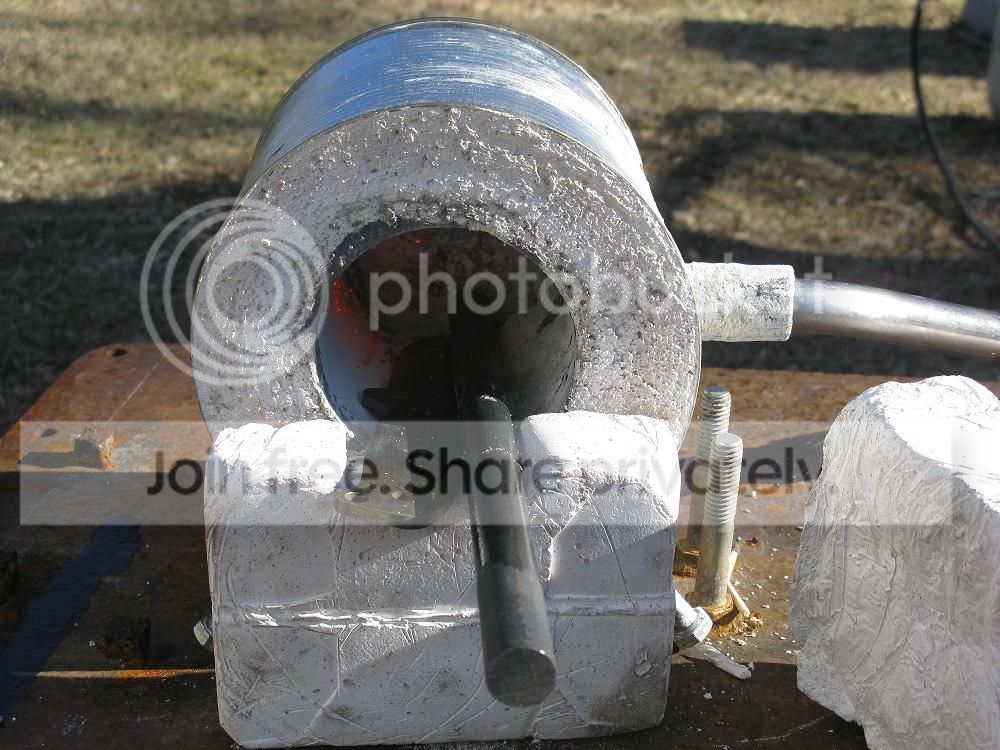
Nice job with the Hamon! I use a metal paint can also and here is my simple coffee can forge. I did the heat treating today and It seemed to go well. I am doing my second temper now. Hopefully soon I will have my first finished knife within the next week.

Thanks to you all for the advice given!

IMG_1183_zpskxee7pg0.jpg
 
Last edited:
Finished! Well almost, the edge needs more work but here it is my first knife.

my%20first%20knife%20build%20-%201075%20steel_zpsmojxisvd.jpg
 
Last edited:
Back
Top