Looking for Validation

Cory Hess

Basic Member
Joined
Jul 1, 2014
Messages
2,117
Hello Blade Forums,

I am brand spanking new to this forum. I have been lurking around for a couple of weeks, but have not posted before today. I am posting now because I believe I am ready to make my first purchase of a higher quality pocket knife and I am hoping for some feedback to make sure that I'm not making a mistake. Of all of the sites I have scoured, this one seems to have the most knowledgeable community. I'm going to take some time to tell my story with the hopes that some of the members that are more experienced than myself (read: every single one of you) might offer some insight on my future plans based on my past experiences. I understand that a large part of choosing a knife is preference based, and that everybody has their own opinions. However, I know from computer work that while I can't tell somebody what they should definitely buy I can look at their intended usage and tell them which ones they should probably steer clear of. I'm hoping for something like that here.

My Knife Wielding Background: My father owned a computer company. I grew up learning about hard drives and patch cables. I didn't grow up in a house where pocket knives were a common item, therefore I have very limited experience on the subject. About 7 years ago I got a new job working in a warehouse setting. I had to carry a knife with me daily to cut strapping and break down boxes. Most of the guys carried utility knives, but I figured I'd go with something with a little more class, so I went to the local sporting goods store and picked up a Winchester 2.5" Brass Folder. It was cheap, small enough to easily fit in my pocket and up to the task of handling my daily duties at work. The job didn't end up working out, but that little folding knife has been in my pocket every day for the last 7 years. It has held up reasonably well, and has been used for more tasks than I would have ever thought possible. As far as purchases go, it might be the most value I've ever gotten for my dollar.

The Problem: The problem I'm having is that I have come to rely on this blade for so many daily tasks. In the last week I've opened packaging, broken down cardboard boxes, whittled up some marshmallow sticks for the kids, made sandwiches, cut a steak, sliced fruit, cleaned my nails, and many more tasks with this single blade. This past Saturday my wife was watching me slice an apple with my knife with a horrified look on her face. She pointed out that I had done all these things with the same knife that I was now eating off of. Her point was not without merit. I also have been lackadaisical in my sharpening habits, and it seems that my knife is never as sharp as I'd like it to be.

The Solution: The solution that I have come up with is to buy a knife with multiple blades, so that I can dedicate one blade to food related uses. I am very comfortable with a clip-point, as that is what my Winchester has, so I began by looking at knives with that style as a main blade. I would like something a little larger than the Winchester, but still easy to slip into the pocket on my jeans. I have also decided to dedicate myself to learning how to properly sharpen a blade. Up to this point I have been using cheap pull through sharpeners that I picked up at big box stores. I have researched a bit and learned that these aren't the ideal tool for sharpening.

Tentative Purchasing Decision: I have seen a lot of positive and not much negative regarding the DMT Dia-Sharp stones. My plan is to get 6" versions of the course and fine stones and see how that worked, possibly adding a strop to the mix. Seeing as how I'll be investing $60+ into sharpening, it doesn't make much sense to use those stones on a $10 knife. Through my research, much of it here, I have seen that G.E.C. is pretty highly regarded and their quality control seems to be such that they put out a pretty consistent product. Looking through their models the two that stand out to me are the #81 and #82 stock knives. They both have the clip-point main, and are slightly longer than my Winchester. I was initially attracted to the #82, as it seems to have a pretty low profile when closed that would make it slide into my pocket more easily. My hesitation is that I'm accustomed to a wider blade (from edge to spine) than what that knife offers. The #81 has a wider main blade, but I'm having problems estimating how that will feel in my pocket. I have also read that many people feel that the spey blade on a stockman isn't very useful, so the drop point replacement on the #82 might be an upgrade for me, or maybe not. I'm kind of lost on that point.

My Questions: Given my experience and uses, do these knives make sense for me? I plan on just throwing this knife in my pocket and using and abusing it. Are these knives too "showy" and should I be looking at something less pricey? I'm a function over form guy that's not interested in collecting, but I'd like a knife to last a good long while. Is 1095 a good steel for me to be looking into? I know it doesn't keep an edge as long as D2 and some other steels. Will the blade wear down and make the knife unusable before I die of old age? Is D2 twice as hard to sharpen or just 5% harder to sharpen? Will 1095 hold a blade half as long or 95% as long? I have been trying to get a grip on handle materials (buh dum dump). I have read that natural materials can be more fickle than synthetics, so I have been looking at the #82 in micarta. However, the stag and bone are attractive to me. How much of a difference is there in longevity on these materials? Is bone going to last half as long as micarta or 95% as long? I know you can't give a definite on these things, but I have zero experience, and it's hard to gauge whether these differences are significant or if people are splitting hairs.

I know that this is a wall of text, and I apologize if this is an inappropriate amount of questions or if it's an inappropriate place to post this.

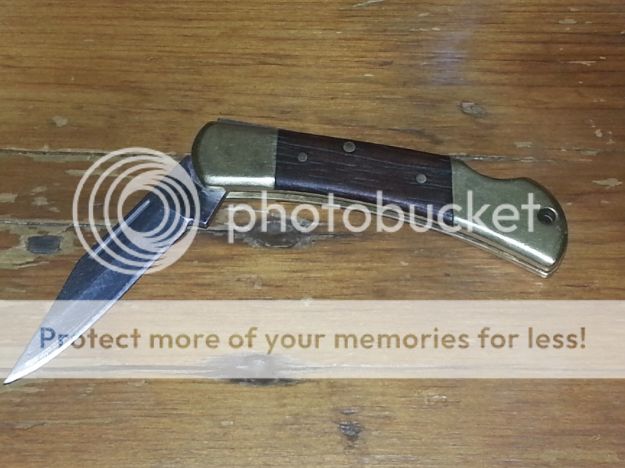
Here's a picture of my Winchester. I know it's not nearly as fancy as many that are posted here, but it has been in my pocket just about every day for the last seven years and has never failed me in any significant way.
4b0f900c-488c-409d-812d-96105b04c933.jpg
 
Actually, it makes perfect sense to use those new stones on a $10 knife. Such a knife needs to be sharp as well. As far as using the same knife for all the tasks you mentioned, there's nothing wrong with that providing you stay away from extremely toxic substances and clean your knife before you use it on food. It is also a great idea to have a separate knife or blade for food than you use for the "dirty" jobs.

Using the same knife for 7 years for every task is quite an accomplishment in which you can take some pride. I struggle to use the same knife for 3 months, but I have done it before and I could do it again. However, for me at least, using the same knife for 7 years would be a minor miracle as I'd probably lose it before that length of time if I carried it every day. None of this post should be in any way taken as trying to talk you out of getting a knife. I must warn you that hanging around this forum will cause new knives to show up on your desk and money to disappear from your wallet.

Welcome to our little corner of addiction.

Ed J
 
My favorite knife for the uses you outline is this GEC #48 trapper in 440C stainless steel with elk stag handles.

ElkTrapperMark.jpg~original


The long spey blade is excellent for food prep, and can be kept clean while you use the clip blade for all the rough work. It won't stain and patina like 1095 carbon steel would, so continues to look good and clean around other people at work or in public. Also, the light colored and classy handles don't look anything like "tactical," so comments from even non-knife people are quite positive.
 
The 81 or 82 are good choices. I have the 81 and carried it for months.
I usually carry 3 1/2 and was surprised how well the 81 felt in
The pocket( I wear deep pocket carpenter jeans) . I like the
Stockman for an all purpose knife. I'm not familiar with diamond
Stones. I use ceramic bench stones and finish with a strop. I really
Like 1095 and the results I get with my limited Sharpening skills .
 
Slightly off topic, but I bet your knife is probably cleaner than the knives we all use at restaurants.

Your winchester is fine for this forum, thanks for sharing it.
 
Good words from Ed (TLARbb), and I agree completely. After carrying the knife you have for as long as you have, I tip my hat to you. Your concerns over handle materials are nothing to worry about, you know how to care for a knife and whatever you pick will last you a lifetime. Pick whatever appeals to you the most, care for it as you have the one you've shown and all will be well.

GE is a great pick, and I'm very biased towards stockman/cattle knives of any stripe. The #82 is attractive to me because it has rounded bolsters (no corners to catch on the pockets) and a slim, low profile. I've one in African Blackwood that seriously threatens to replace my all-time favorite pattern from GE, the #53 stockman/cattle knife (I have a few in rotation). I think Jeff (Black Mamba) had a good point too, the #48 pattern might also suit you well.

DMT stones are a great pick in my opinion, I've three of their bench stones in course, fine, and extra-fine that have worked well for the last seven years with no sign of wearing out.

I'm sure other more knowledgeable members than myself will soon chime in with advice and opinions. Read them all and make your decision accordingly. With the help of the great people here you can't go wrong, and welcome to the fold!
 
Last edited:
A stockman is a good choice for a multiple blade slip joint. For my taste and my needs, I would go with the GEC # 82. That says nothing about your taste and needs, so I’ll explain why.

You’ll probably want to reserve the large clip blade for food use. That’s the area where a longer blade makes a difference. Slicing bread, spreading peanut butter, cutting a sandwich in half, all go better with a longer blade. I’m having a hard time imagining what advantage there is in a wider blade—spine to edge. Well, maybe for spreading mayonnaise. But for most purposes you probably won’t notice a difference.

The GEC # 81 features a secondary sheepsfoot. The # 92 features a Wharncliffe. For most purposes they are equivalent in function. The Wharncliffe is a bit better for precision cuts. It’s also a prettier blade, to my eyes. But I’d accept a stockman with either blade type.

The GEC # 81 has the spay blade. The spay has its uses, but most of them are obsolete. Few of us have harvesting prairie oysters is on our to-do list. They were also used as erasers, back in the days of Bartleby, the Scrivener. Today you can buy these lumps of rubber and erase with them. I always prefer a pen blade (= small spear point) or a drop point. It’s more useful. That’s an it-matter-in-real-life reason I’d pick the # 82.

I personally love stag. I’ve carried sheath knives and pocket knives with stag grips for years. The pocket knives go in my pockets along with the rest of the pocket clutter. Never had problems with them. It’s important to me that they more or less match. I hate having one scale pale stag and one scale dark. Or one scale rough and one scale smooth. Since you’re looking at Great Eastern knives from Knives Ship Free, you can examine both faces of the knife you’re considering. Pay attention.

1095 is a fine, workaday steel. Though the steel itself is only one factor. Blade shape and grind also matter. The most important variable is the heat treat. You can trust GEC for that. One advantage of 1095 is that it’s low maintenance. There are fancy modern steels that require a diamond sharpener. 1095 is not among them. It’s a steel you can sharpen on the bottom of a coffee cup.

Watch these videos and see:

http://www.youtube.com/watch?feature=player_embedded&v=SEMLu8e34ck

http://www.youtube.com/watch?feature=player_embedded&v=Twduvki8m90
 
Cory, you have some great information to consider so far. I would also add that many knives close to or even older than 100 years old with stag and bone covers still look great, see Old Knife sticky at top of forum. Also 1095 steel has been a staple in use for many years, it does require a little maintenance and will acquire patina. With proper heat treat it holds an edge well and accepts one easily, with practice. I prefer a combination of blades that has one with a straight edge, like a Sheep's foot or Wharncliff, and one with some belly, clip point, drop point or spear. This allows for all of my cutting tasks. I always clean the blade I use for food just prior to use and again after, if using carbon steel oil lightly after final clean to prevent rust.

Welcome to our little corner of the forums and addiction. Please visit often and post pics when you get a new knife.

Chris
 
Last edited:
You came to the right place, especially since you have a good feel for what a knife can do. Your Winchester is a copy of the Buck 110 Folding Hunter, one of the all-time great knife patterns.

Take a look through our Maintenance, Tinkering & Embellishment forum for ideas on sharpening: what it is, how to begin, what simple systems work best. I've had a lot of success with a DMT Double Sided Diafold Sharpener Fine / Coarse, paired with a Spyderco DoubleStuff. I can carry these as a compact travel kit.

The spey, or spay, blade was originally for castrating young animals. Some had "for flesh only" printed on them. Appropriately enough, they also make good skinning blades, as seen on the trapper pattern. In a stockman pattern, they are good to keep especially thin-edged and very sharp. The sheepsfoot can be kept more obtuse, used for heavier work. The clip will be your everyday, general purpose blade.
 
Last edited:
If you really, really like clip-point blades, you can go with a muskrat pattern knife. It's basically two large clip blades on a stockman's frame. I know Case makes them, and I'm sure others do as well.
 
I own and carry both an #81 & #82. The 81 is the heavier built of the two in the blade department due mostly to the blade shapes, the 82's blades almost seem dainty in comparison with all three blades having very thin grinds and very fine tips. The 82 is more pocketable due to the rounded bolsters and lower profile with the blades closed. For your described uses I think the blade selection and pocket-ability of the 82 would be my preference.

While there is no doubt that the micarta is the most durable cover choice, the others are more than worthy of consideration. Stag, bone or wood are all likely to outlast you with some basic care and common sense. Buy what catches your eye. Both mine are in bone as I really like that material

As far as 1095 vs D2, depends what you like. D2 is nearly stainless while 1095 will require some maintenance. I never noticed much difference between sharpening these two steels as long as I was just touching the edges up. The big difference is seen when reprofiling the edge to a more acute angle, it will take much longer with D2 if much metal needs to be removed. If you are just starting out learning to sharpen you will no doubt find it easier to get results on 1095. I would suggest buying an Opinel to use for sharpening practice. D2 will hold an edge considerably longer.

Good questions all and welcome to our forum.
 
Thank you all for your posts. I really do appreciate the input.

I have been mostly focused on 1095 blades because I like the idea of a patina. I'm assuming that it works similarly to my cast iron cookware, where it takes a bit of extra maintenance on clean metal, but after the patina builds up a quick wipe down and a little dab of grease/oil is all it needs. I take some pride in my cast iron because of the hard earned seasoning, and I would think that this would carry over to the patina on a knife blade. Am I understanding the nature of this metal correctly?

I am planning on practicing my sharpening on my Winchester. Is this a bad idea? Is there a high probability that I'm going to mess up my blade beyond repair during the learning curve? I have three kids that are rapidly approaching the pocket knife age and I'd like to have this knife around to hand down as a starter knife for them, so it doesn't need to be pristine but I'd probably be a little upset if I somehow "broke" it. How much steel can I expect to lose before I get it right?

Again, I really appreciate the welcoming environment here. I admit that I was a little intimidated to post my first message, but I'm really glad that I did.
 
Cory,

I’d be cautious about giving your Winchester as a child’s first knife. Not if you value it as a keepsake. The odds of a child losing his or her first knife is high. Save it until they are old enough to appreciate it and care for it.

It’s difficult to really mess up a knife through careless sharpening. (Unless you’re using power equipment.) At the worst you will end a session with a knife duller than you started. If you are concerned, get an Opinel or an Old Hickory and practice. You can cruise the Maintenance subforum for specialized help. http://www.bladeforums.com/forums/forumdisplay.php/794-Maintenance-Tinkering-amp-Embellishment

I carry a DMT credit card sharpener at a coarse grit in my wallet. That gives a toothy edge which is good for general purpose work. http://www2.knifecenter.com/item/DMTD3C/DMT-D3C-3-inch-Dia-Sharp-Sharpener-inchCredit-Card-inch-Coarse
 
Your Winchester needs sharpening, not reprofiling, so it won't take a lot of work to get it back in shape. Just take your time and stroke the blade gently against whichever sharpener you choose. You can always take off more metal, but putting it back if you overdo it is harder. :p

You understand patina correctly. It is actually a kind of slow oxidation -- rust -- but not the pitting, destructive kind, against which it will protect your blade.
 
Cory - the good news is that there are many, many good choices out there that will suit your needs just fine. The bad news is that there are many, many good choices, which makes narrowing it down to "the one" so difficult.

I will agree with Jeff and put in another vote for the #48 Trapper in 440C stainless as an option for you to consider. It is a slim carry but very useful at 3 7/8" closed length. I personally like full length spey secondary blades, but if you don't it's offered in a 1095 version with a Wharncliffe secondary. If I were doing a lot of food prep on the go, I'd actually prefer the clip/spey combo. I have them in both blade styles, and they are both great knives.

I don't own either of the two stockman patterns you are looking at but of the two, the #82 would be my choice. The #81 looks a bit chunkier and the 82, while a little longer, looks like it would be an easier carry.

I do need to use my DMT diamond stones to sharpen my one D2 knife. With 1095 and 420HC I do fine with my Spyderco Sharpmaker just using the stock ceramic stones.
 
Hi Cory or "Hesso" as I shall heretofore call you (its an aussie thing):)
I only got halfway through your original post before I started thinking 81 Abilene Stockman.
Its got everything I think you are looking for.
Although there is a pretty serious contender for the crown-I believe that is the 74 RanchHand.
20140703_164251_zps06b3dc55.jpg

The Moose will get you out of trouble too.
All things considered if you keep the blade clean it should be fine to use it for multiple tasks of a domestic nature.
Heeey wait a minute ...maybe you could have a whole selection of different knives.
PS I'm lucky if I carry the same knife for 7 hours let alone years.
cheers
and welcome aboard.
 
Cory, you've gotten a lot of great advice so far. I'll add to the chorus and confusion! Before I do, a) welcome to the forum, b) I dig your knife and c) if you carried it for 7 years and love it, you'll fit right in here!!

The questions you've asked all will generate differences of opinions and view points. Here are mine....

SANITATION - I've done a lot of backpacking type trips and with that, a fair bit of reading. The most common "injury" in the backcountry is intestinal distress that can be traced to poor hygiene, particularly in groups that share cooking items. The key is sanitation, both personally and with the tools. The good news is that a quick washing with soap and water will get rid of nearly all bad things.

My approach is to just wash my single blade folder before using it on food. Generally. I'll also make a judgement call. If the knife has only seen organic stuff like wood and dirt and it's just me eating, a rinse in water will do. If I'm with others, I'll make more of a show of it for everybody's peace of mind. The show helps.

I personally don't trust multiple blades as a solution. As I see it, if a blade is fouled, the tool is fouled. YMMV territory.

Another solution I use is to buy more traditional knives and put them in places were I can use them more dedicated. That way I have more knives (ahem) and worry less about contamination issues. My tool box has a dedicated knife. Opening bags of nasty chemicals is done by my non-traditional multi-tool. The kitchen drawer has several big traditionals in it and I use a lot and it's nice to see them and use them.

KNIFE STYLE - Most (not all, but most) traditionals fit into one of two camps: multi-blade slip joints or single blade lockers. (there are single blade slippies and multi-blade lockers but they aren't as common). The choice is highly, highly personal. Add to this that there are some very strong opinions on the decision between locking knives and slip joints. One school of thought is that locks make a knife more dangerous because the lock invites a sense of false security. There is actually very good evidence of this effect in other areas. It's called "risk compensation". Personally, I prefer locking folders and one of the places I strongly prefer them is when making plunge (stabbing) cuts like when opening clam shell packaging or cutting down cardboard. It can be done safely with a slip joint with good technique and I agree with those who will say you should learn that technique and use that technique even when using a locker. But on the 5th or 15th box, I want a locking knife.

All of this to say that if you are used to a locking folder and it's working for you, you are entertaining a non-trivial change in moving to slip joints. The purchasing enabler in my says, just get some slip joints and try em. I encourage people to try many (inexpensive) knives before settling on a style. They're different and actual use in hand trumps forum advice. In this vein, I would suggest getting a $20 slip joint and trying it for a bit before plunking down bigger dollars on a dream knife in a style you've never used.

Turning back to locking knives with clip points....That Remington is a knock off of the Buck 55, which is a miniature version of the Buck 110 and 112. You're knife has 2.5" blade. The Buck 112 has a 3" blade but it's a massively thick knife and hard to pocket carry. If you want a reasonably thin locking knife that's just a tick bigger, you might be looking in 2.75" length range. GEC 72/73 and Schrade LB5 come to mind.

Another alternative would be the Opinel #8. IMO, it's one of the most versatile knives out there and as much as I love lockbacks (Bucks), I carry the Opinel almost daily.

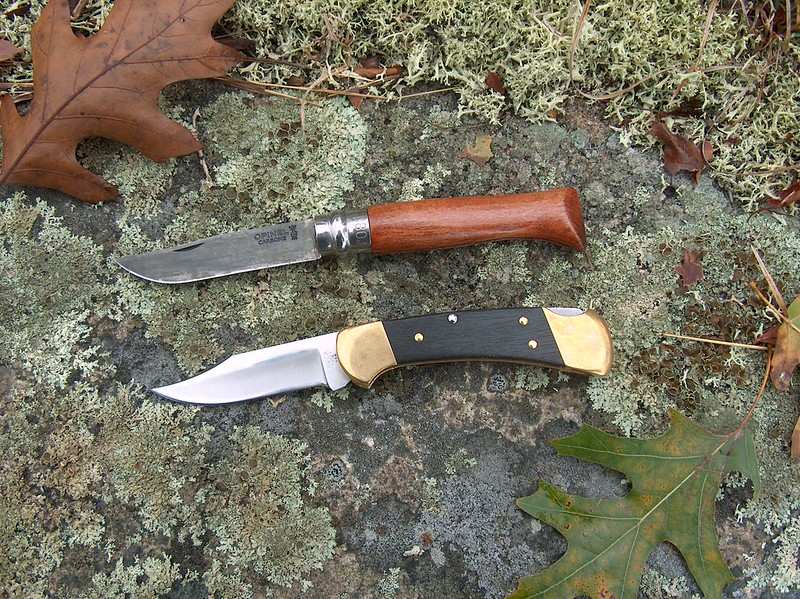
Here is a shot of an Opinel 8 next to a Buck 112. The 8 is an easy breezy pocket carry. The 112 is a brick. They are two of the most beautiful knives made imo.
Buck 112 & Opinel #8 by Pinnah, on Flickr


SHARPENING - I tried free hand sharpening for many years with no success. I friend loaned me his Lansky guided rod system and with some practice with that, I finally got the "feel" of creating a burr and honing an edge. I'm now able to get a passable edge freehand and I owe my better freehand skills to the "feel" I learned on the Lansky. Like others, I carry a DMT (I like the fine credit card) in my pack for quick touch ups. But for bigger resharpening jobs, I still use the Lansky and that is my recommendation for somebody starting out.

STEELS - IMO, the beer/ale or coffee/tea split in steels is not carbon/stainless. It is fine/course grain. Fine grain edges take very fine edges and are tougher while course grain steels are toothy but can chip. People who cut a lot of meat and rope often prefer course grain steels. People who do a lot of wood working often prefer fine grain steels.

Fine: carbon, 420HC (includes Case Tru-Sharp), Sandvik 12C27 (Opinel Inox), 440A, Aus 8
Course: 440C, D2, Sandvik 13C??

Big note... Knife manufacturers get their steel "raw", cut it to shape (usually stamp it) and then it is only after that do the blades get hardened by heat treatment. How a blade performs depends largely on heat treatment, so don't just go by blade material. You have to consider the knife maker and how good their heat treatment it. For example both Buck and Case use 420HC but Buck treats their blades several points higher than Case. I can tell the difference in use and very much prefer Buck's 420HC. Old USA Schrade + (used market) was 440A with very good heat treat.

There's no right answer on this anymore than there is between beer and ale. I prefer fine grain steels but that should mean nothing to you. As a group, they're easier to sharpen.

SCALE MATERIAL - In terms of durability, I think it's synthetic, wood, bone. I stick with synthetic or wood.

I hope something here helps.
 
Last edited:
Hi, and welcome!
You already got lots of different insights here...let me add my two cents.
I agree with Pinnah on sanitation: the best thing to do, is to keep your blades clean (or clean the "food" blade before using it). I carry a two bladed jackknife and I use the main blade for food and the smaller secondary blade for anything else...yet I clean my knife every time I use it. Another solution could be carrying two knives, one for food and one for "dirty" tasks (this is my choice when I go hiking/camping). The real advantage of carrying a multibladed slipjoint (in my opinion) is having blades of different shape/size that can suit better certain tasks.
As for using your stones on cheap knives, I'm not the best sharpener here, but I would be careful with diamond on softer stones; they could turn out to be too aggressive and make things difficult instead of easy (I have no idea of your sharpening skills :)). Sandpaper on a firm backing could be a good (and cheap) option.
As for which knife to buy...since you're just entering the world of multiblades (or thinking about it, at least) I would suggest that you get something that catches your eye and try out different blade shapes for a while. Many people, for example, tend to underestimate the utility of straight blades until they try one...so a stockman could be a good call. If you're not sure about it, you can get a used one (or cheaper than GEC 81) and see how it goes (plenty of knives in our sales subforum as well).
Then, of course, you can browse the longest thread on Bladeforums and get dizzy and drunk with images of every slipjoint pattern you can think of...and then choose :p
Anyway...here's the best advice I can give you: stick around here ;)

Fausto
:cool:
 
I started out prefering single blades as that is what nearly all modern folders are. I began my traditional knife journey with a GEC #55 and loved it (I still do), but over time I found myself trying two-blade GEC's and really liked those too actually (a #48 Trapper, #92 Eureka Jack to name a couple). These I found to be not noticeably more difficult to pocket than the single blades and I began to appreciate the ability to dedicate a blade to food and the other to utilitarian tasks.

Most recently I've discovered the Stockman pattern in my GEC #66 and I REALLY LIKE this one. The Clip main, the Spey and Sheepfoot secondary blades all come in handy. I've also been amazed to find that this 3-blade Stockman is only about 1-1.5mm wider that a 2-blade knife, so bulk is not a concern at all and I've noticed NO difference between a 2-blade and this 3-blade Stockman in day to day carry. Heft in hand or in the pocket has been no concern either.

I give my blade a quick wipe-down after each use if it's anything messy such as food or something I don't want stuck to my blade (adhesive packing tape glue for example). Before food use i might give the blade a cleaning with one of those handy-wipes and maybe once again afterwards depending on what I was cutting. This is easy to do and keeps the blade in great shape. I've not gone to any great measures to oil the blades other than on rare occasions when I'm really just looking for something to do. I've had no issues with rust at all, I simply keep it clean and dry. If you live in a humid climate or close to the sea shore you may find a bit more effort required, but I've not found 1095 steel to be any problem for EDC use. Some people's perspiration in the pocket is more corrosive than others, but no big problem, just wipe it down at the end of the day when you empty your pockets if this is necessary in your own case.

1095 patina is something I just let develop naturally. I don't force it, I just use the knife and keep it clean and dry. It will take on whatever character it will based on it's usage. Just relax and let it happen over time.

The #15 in 2-blade is a fantastic GEC pattern at 3.5" (closed). The 92 Eureka Jack is just a tiny it larger but is a great 2-blade companion. If you're OK with something full-sized the larger Stockman models are more robust and give a larger grip in hand.

Good luck in your search and share some pics when you find one. :)
 
Last edited:
Hi Corey and welcome to this forum. I think everyone has given you great advise on what would suit your needs. I just want to add that I personally like 1095 steel over stainless....just my preference and nothing more. With that said I like to put a forced patina on some of my blades using hot vinegar and then lightly rubbing the blade with 000 steel wool to give it a sheen.
I too have the DMT sharpening system and love it......I gave my old stones and sharpeners away after using the DMT.

Best of luck and post picks when you make your knife purchase.

Regards,
Mark
 
Back
Top