Machetes vs. Fallen Tree

MacHete

Hair Cropper & Chipmunk Wrangler
Joined
Apr 7, 2000
Messages
2,559
Yesterday afternoon, while taking Code for our customary walk before I went to work, I noticed that recent storms had toppled a 20-30' tulip poplar along the driveway leading to my Mother-in-law's and Brother-in-law's houses.

machetetests-tulippoplar004.jpg

Ordinarily, my BIL takes care of these things- he always does too much. So, I decided I would try to take care of this tree before he did. I had to go to work, and it wouldn't surprize me at all if he spent his Friday evening cleaning it up. But if he didn't, I knew I could beat him to it in the morning because my shift ends at 4:00 am. I could wait until the very crack of dawn and be up the hill before he thought about getting up.

I must admit, that in addition to lessening my BIL's burden, I also wanted a chance to try out some of my newer, untested machetes.
machetetests-tulippoplar002.jpg

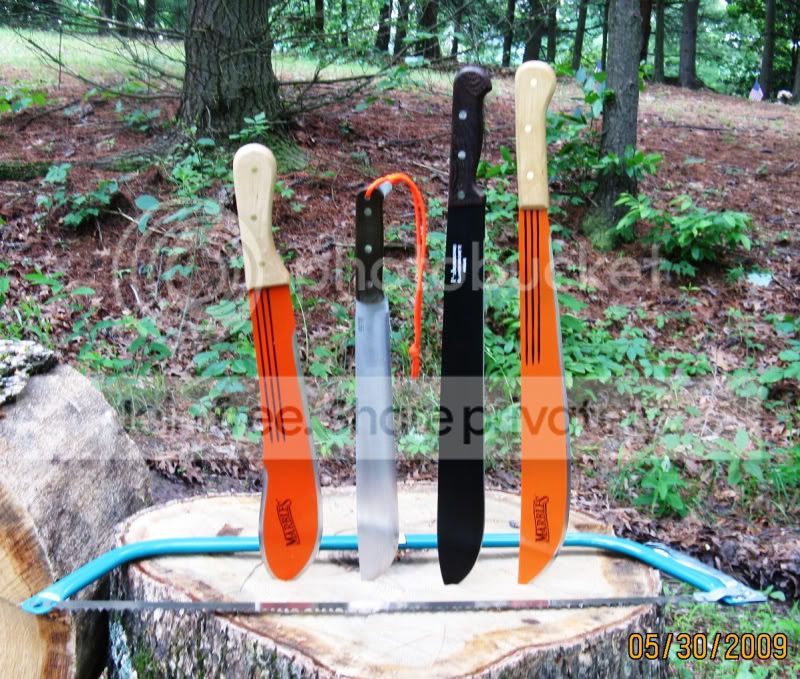
From L to R: Marble's Bolo, BRK&T KSF, Linder and Marble's machetes. The plan was to do the limbing with the KSF and the Marble's machete, and then see how much bucking I could do with the heavier Linder and Marble's bolo.

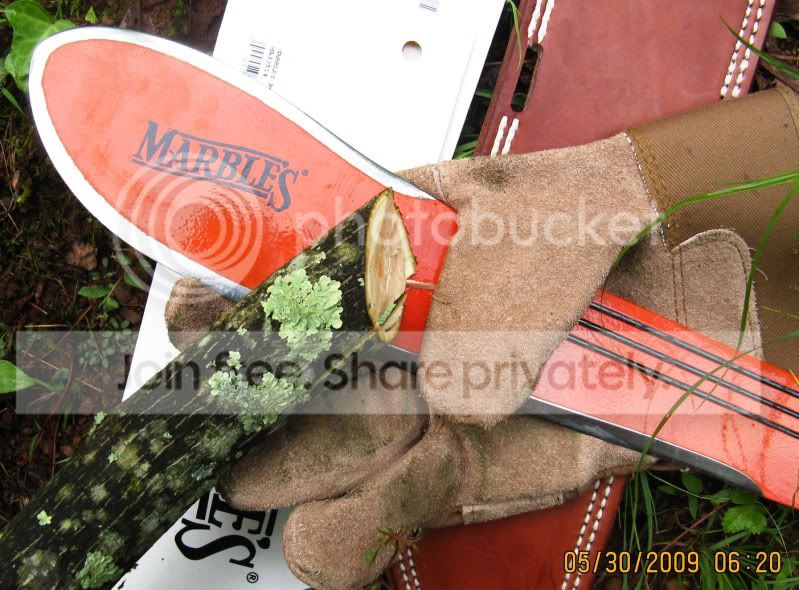
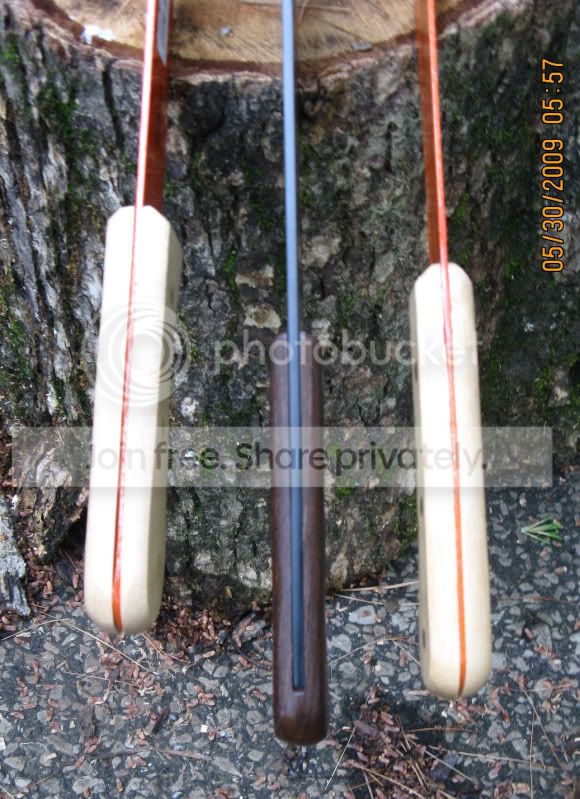
A quick word about grip-to-tang fit: I guess I understand why they do this. If you want to manufacture a blade with an applied finish, you cannot shape your handle to the tang without marring or removing that finish.
machetetests-tulippoplar007.jpg

Pro- you get steel that is somewhat protected from moisture getting under the scales and you save money. Con- you gotta wear gloves. It's sometimes hard to handle the fact that we, who love knives the most, are not the largest target demographic of manufacturers.

The Barkie of course had no such fit or finish issues. I got this one secondhand but "unused" from another forum member here. There was a very small ding on the edge near the sweet spot, but I didn't even bother fix it.
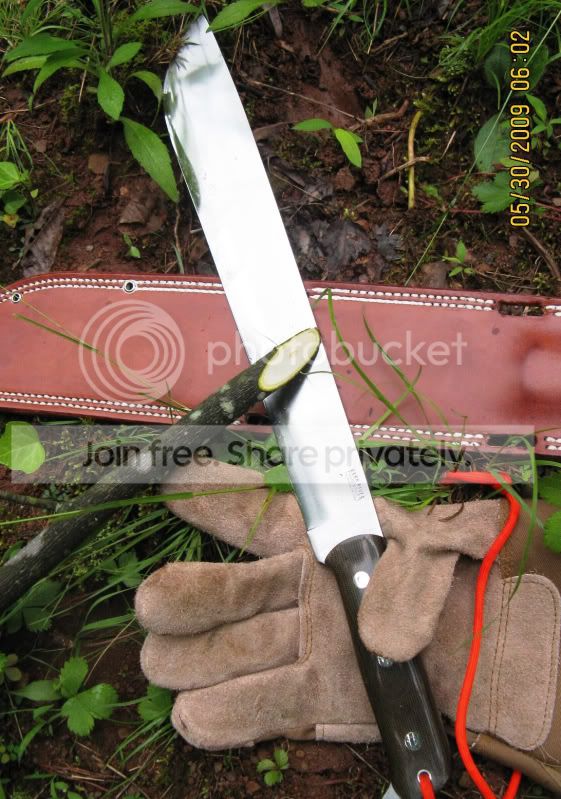
machetetests-tulippoplar008.jpg

-Didn't seem to matter. One smooth cut from the KSF.

I have never owned a Marble's knife. I do not doubt their quality and reputation, but as a matter of personal taste I do not like the looks of them. Yes, I know they are proven classics, but so is broccoli- and I hate it too. I also really hate orange. Yes, I know it's safer and makes it harder to lose your machete in the brush, but I am a subdued, earth-tones kinda guy. Apart from that, though- this was the sharpest out-of-the-cardboard-sleeve manufactured machete I have ever seen. It came with a shaving-sharp, nicely polished convex edge which performed admirably well.
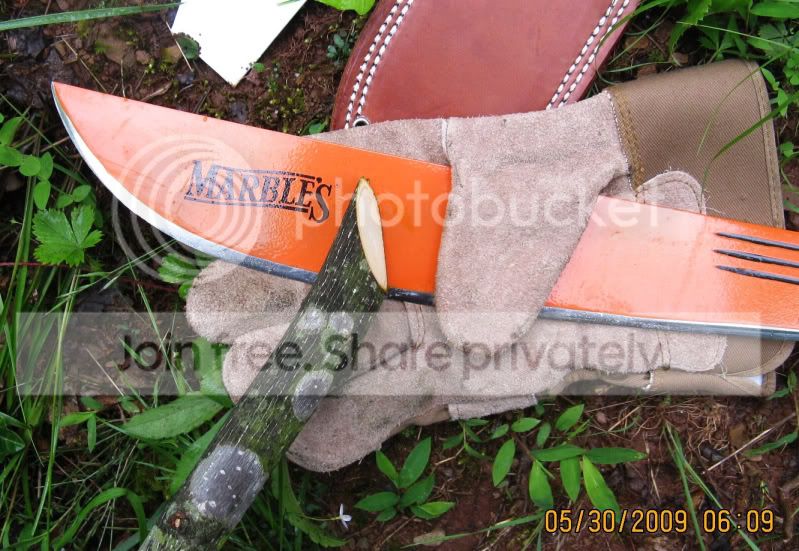
machetetests-tulippoplar010.jpg

Unfortunately, it didn't last. I'll get some pics after I've cleaned up the blade and have time to get some detail shots, but there were several dings and rolls on the edge- and it never hit anything but tree.
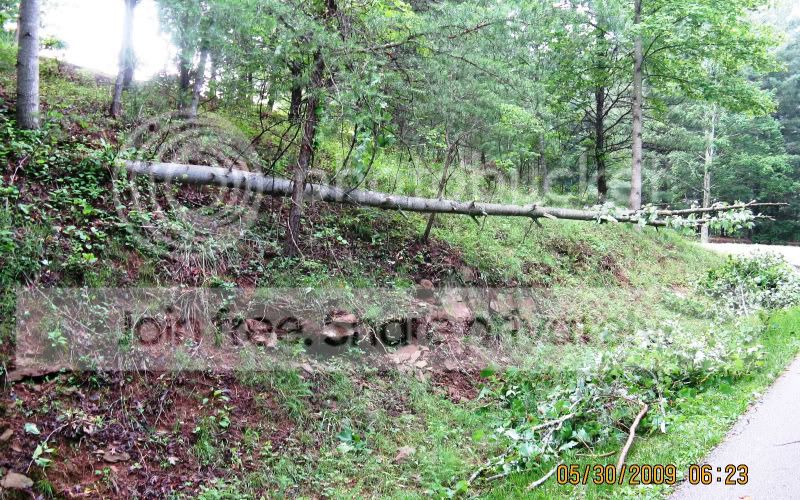
 
If you will look at the time stamp on the first photo and this one-
machetetests-tulippoplar012.jpg

-you'll notice that limbing took less than a half hour. Allow for the time I took getting pictures and scrambling up and down that slope, and you can see that the KSF and the Marble's machetes made very short work of kindling-sized branches.
machetetests-tulippoplar013.jpg

I did take the bolo to a couple of the larger limbs before I started trying to section the trunk.
machetetests-tulippoplar011.jpg

The results were quite satisfactory. Again I have to mention- this pattern works GREAT, but man do I hate the look of it. The beavertail pattern is the duckbill platypus of the machete world. The edge on the bolo held up somewhat better than that of the machete, but the bolo still didn't have enough "oomph" to buck the trunk without a lot of time and effort.

For that, I turned to the Linder-
machetetests-tulippoplar014.jpg

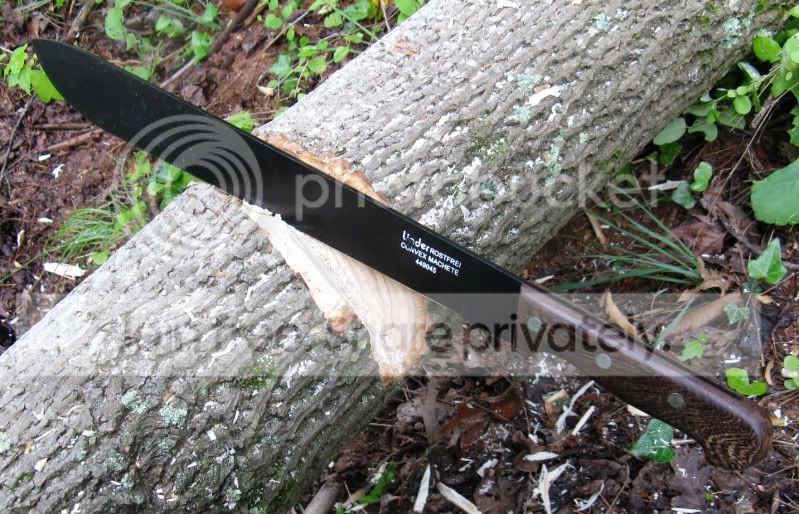
-which was pretty disappointing overall. It has a heavy, 1/4" convexed stainless blade and a very comfy grip for it's type. But, it was absolutely bouncing off of even small pine branches I was trying to get out of my way. The pitiful cleavage you see in the trunk above represents over 100 chops with the Linder. Closer examination of the edge showed me that it is simply too shallowly convexed and the edge bevel is way too wide. I believe that a good reprofile would benefit this blade greatly- and also give me another excuse to remove the coating.

Finally, a safety tip: When you go to wipe the tree guts off of your blades before returning them to their sheaths, don't use the front of your shorts.
machetetests-tulippoplar015.jpg

And please don't make fun of my pasty-white skin- remember, I work night shift. BTW- that was the KSF that got me. It stayed sharp. I was cutting the branches into smaller trimmings with it, and feeling like a swashbuckler slicing candles in those old movies. It was way cool.
 
Last edited:
Looks like you had some fun. Nice review. Time for some thicker shorts.
 
Maybe Kevlar shorts would work?

Nice review. I'm with you on the orange blades. I don't care how well they work, I'd have to strip 'em before I could use 'em.
 
Just a sapling as tulip [or tulip poplar] trees grow to about 125' .For those who don't know it's a soft hardwood similar to soft maple as apposed to hard maple.
 
Good review! I found the Marble's Jungle Cleaver to hold up very well chopping hard wood, which surprised me. It wasn't until I hit it on rocks and fence wire that I saw damage (couple strokes on the stones and she was as good as new!).. Maybe I got lucky with the heat treating of mine....
 
The Marble's machetes seem to be produced by Imacasa, the parent company of Condor. Unfortunately it seems as though the Marble's pieces are low-grade examples of what the Imacasa artisans are capable of producing (and what has made the Condor line so well-known.) But then again, they wanted a cheap machete so that's what the folks in El Salvador made them! :)
 
Great review! Thanks for sharing, as I have been looking into 3 of those four Lthumbup:
 
I have the KSF Machete. I was actually just using it outside before i popped on the forums to take a break. The geometry is about the most perfect a person could hope for. It bites deep, slices fast and has great ergo's for extended use.

As to the Linder, Bark River would do a complete overhaul and turn it into a blistering tool for a nominal cost...take the coating off too. Something to consider. They do stuff like that on other brands all the time. :thumbup:
 
I was going to mention that using a machete to try and 'chop' that trunk into sections isn't the intended purpose of the design. It's too light a blade, as you found out after 100 swings at it. Any time you have a sharp edge bouncing off what you're trying to cut, you need to rethink your ops IMO. Now if you were using one of the larger BM's or Randall's or such knives THEN I think that trunk would have been portioned too. I know you were testing the 'Chete's, and did a fine job of it with pics! Brian Andrews could also fix you up with aftermarket work...
 
great pics how do you like the brkt ksf machete ?
how does it preform?
how is the blade how does the edge hold up ?
how comfe is the handle ?
and is there any hot spots on the handle ?
 
great pics how do you like the brkt ksf machete ?
how does it preform?Way awesome!
how is the blade how does the edge hold up ?Exceptionally well, especially if stropped. The heat treat is great on it.
how comfe is the handle ? VERY!
and is there any hot spots on the handle ?A minor one on the first finger, underneath in front of the fist knuckle after about 15 minutes of continuous use. I think a lot of it has to do with stopping it in mid swing on grasses and light brush. If I am doing light chopping with it, it becomes a non issue.

Just my opinion on it. The machete is pricey compared to some, but is worth every bit when it comes to performance.:thumbup:
 
Just a sapling as tulip [or tulip poplar] trees grow to about 125'.
You got me curious so I went out and counted the rings. This particular specimen appears to have been 14 years old. You're right about their stately size- they grow fast and can live up to 300 years. Unfortunately (for trees, anyway) I live on some rocky, uneven ground with pretty shallow soil. When a tree gets too big around here- over she goes. There is one tulip here that is easily two feet DBH, which makes it as big around as any of the sycamores on the property, and puts it in the company of some of our larger oaks. If I still had my Biltmore stick (and could remember how to use it :confused:) I could get you a height estimate on it. I'm sure it is as tall as any other tree on the compound, if not taller.

The Marble's machetes seem to be produced by Imacasa, the parent company of Condor. Unfortunately it seems as though the Marble's pieces are low-grade examples of what the Imacasa artisans are capable of producing (and what has made the Condor line so well-known.) But then again, they wanted a cheap machete so that's what the folks in El Salvador made them! :)
I really wouldn't say the production value was low on these. As I mentioned above, the grinds were very even and nicely polished. I used all of these "out-of-the-box" as they came to me, without any additional edge work. Sometimes the edge temper can be annealed a little during final grind at the factory, so I am not going to write these off until after I've done a little work, removed a little material and tried them out again. :)

Great review! Thanks for sharing, as I have been looking into 3 of those four Lthumbup:
Which three? And which way did my results steer you?

I have 3 Linders, 2 short and 1 medium and none of them cut worth a damn with the factory edge.
Did you correct that, and how did they do afterwards if you did?

I was going to mention that using a machete to try and 'chop' that trunk into sections isn't the intended purpose of the design. It's too light a blade, as you found out after 100 swings at it. Any time you have a sharp edge bouncing off what you're trying to cut, you need to rethink your ops IMO. Now if you were using one of the larger BM's or Randall's or such knives THEN I think that trunk would have been portioned too. I know you were testing the 'Chete's, and did a fine job of it with pics! Brian Andrews could also fix you up with aftermarket work...
I've actually cut a lot of tree trunks with machetes- everything from elm to hickory to palm trees. I had an Ontario with a modded handle that was a great chopper, and I used to have a trio of Cornetas- two of which were miraculous at cutting wood. They were light enough that fatigue was slow to set in, and - if you kept the edge touched up- would hardly bind at all, even in wet wood. :thumbup:

great pics how do you like the brkt ksf machete ?
how does it preform?
how is the blade how does the edge hold up ?
how comfe is the handle ?
and is there any hot spots on the handle ?
I can echo TwinBlade's replies- except that, since I was switching off on the 'chetes, and the whole project was pretty dang short in duration- I am not qualified to comment on handle hotspots. I will say that the KSF was light and sturdy, nimble and comfy to use, and kept a wicked edge well past the point that the others "rolled over". :cool:
 
Last edited:
I really wouldn't say the production value was low on these. As I mentioned above, the grinds were very even and nicely polished. I used all of these "out-of-the-box" as they came to me, without any additional edge work. Sometimes the edge temper can be annealed a little during final grind at the factory, so I am not going to write these off until after I've done a little work, removed a little material and tried them out again.

I was mostly referring to the fit and finish of the handle, but the dinging of the edges was also rather surprising. I agree with you that the color choice is also a bit...obnoxious. I can enjoy orange as a handle color, but not so much when the whole blade is decked out to look like some kind of bladed tangerine. :D
 
Back
Top