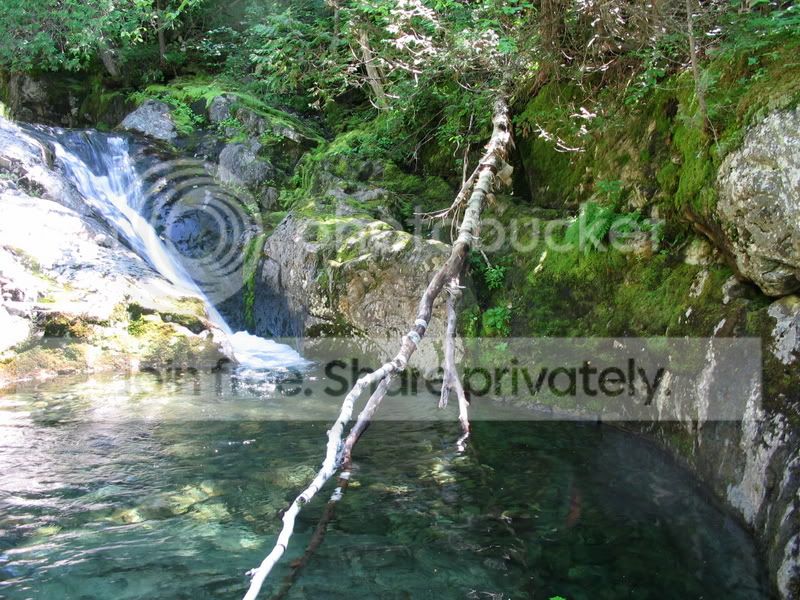
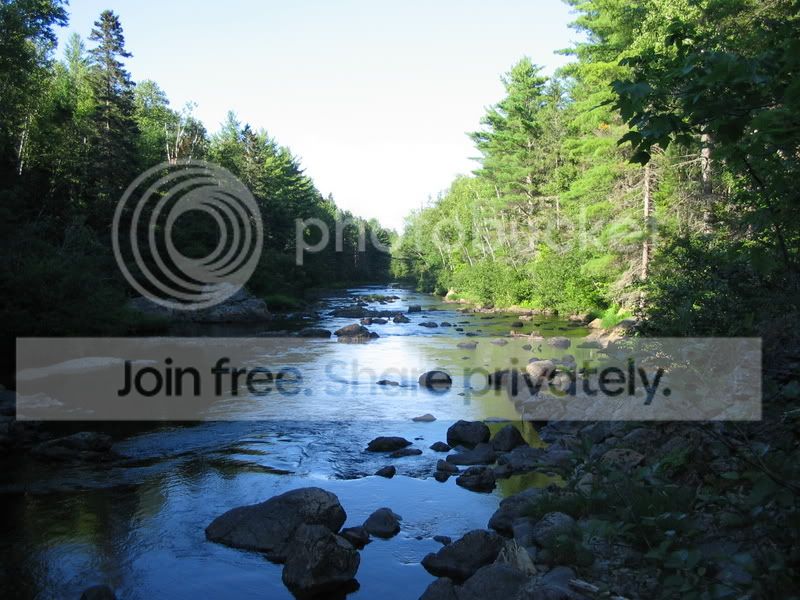
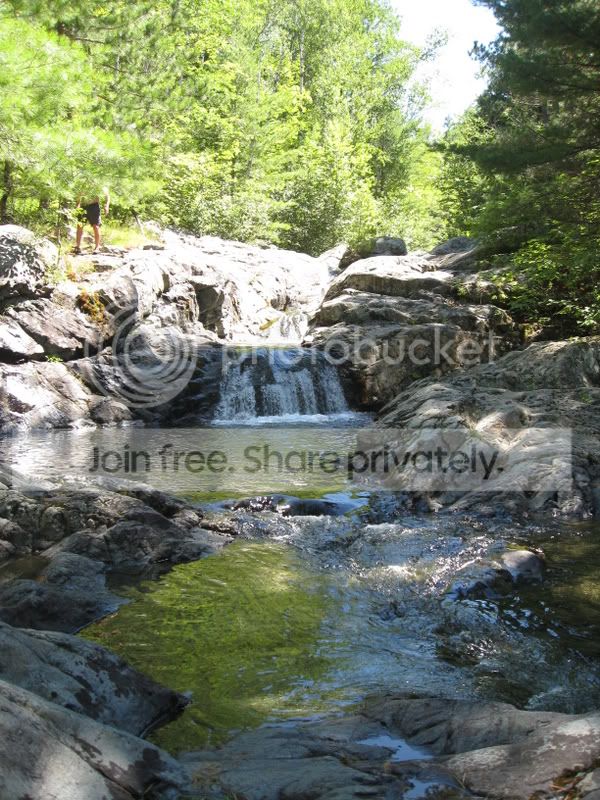
Howe Falls again:
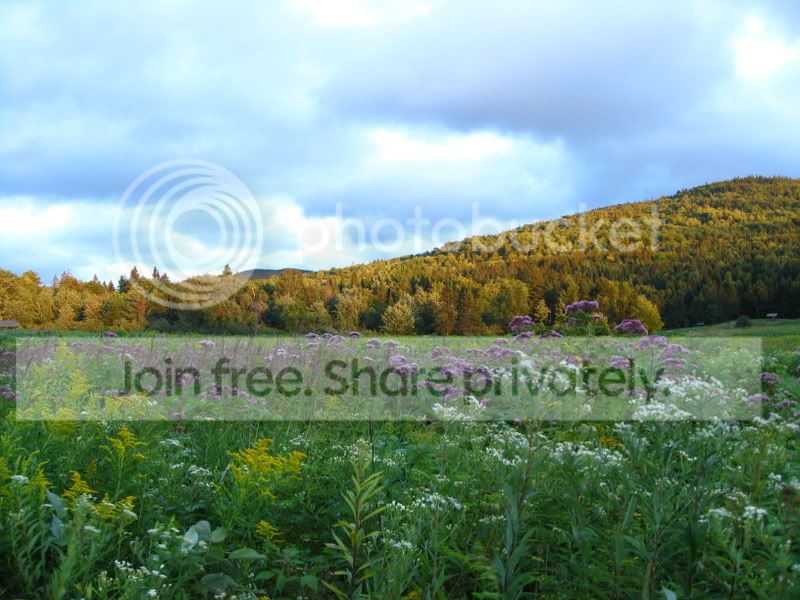
The field at the Trout Brook ranger station:
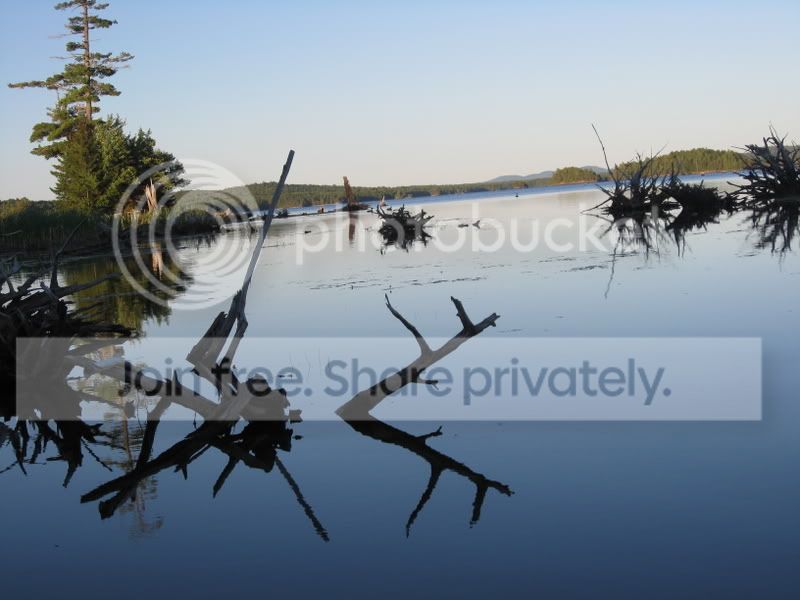
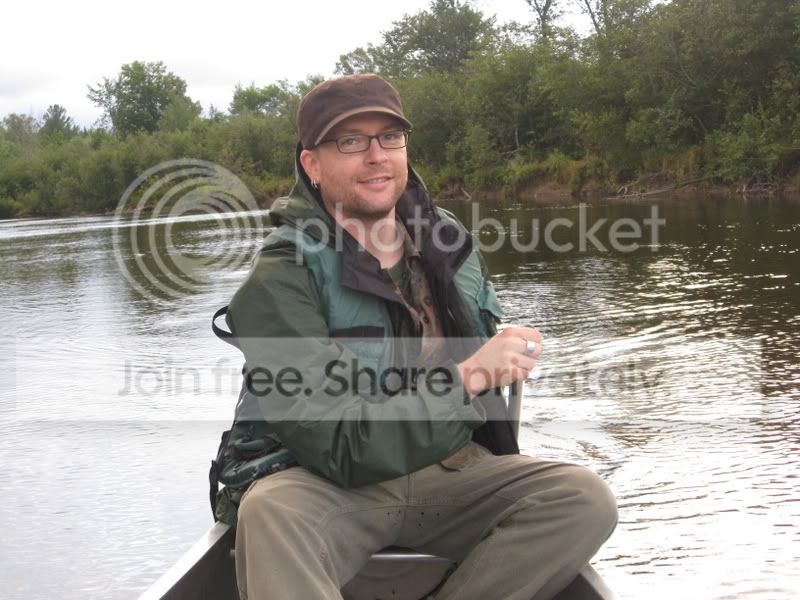
I'm always happy in a canoe  Overlooking Matagamon Lake:
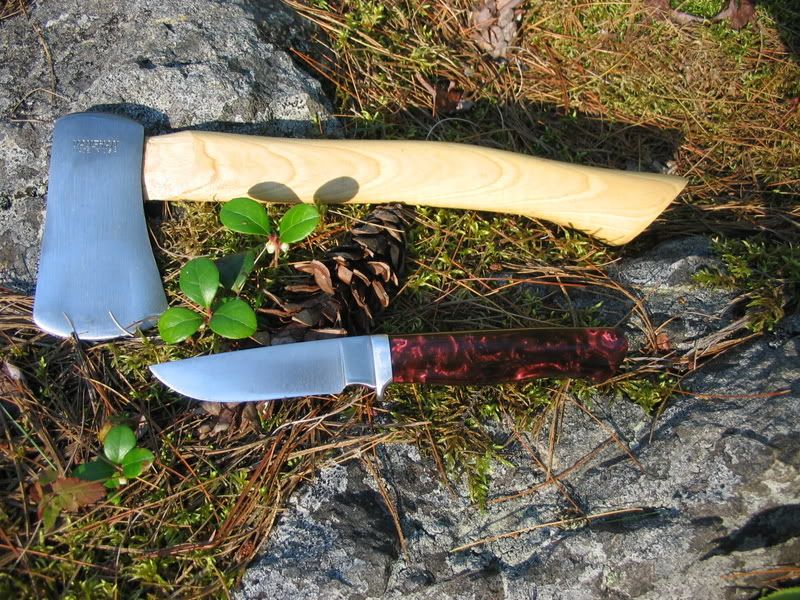
Kershaw Junkyard dog, BRKT Fieldsman, and CS Trailhawk:
So if you made it this far down the post, I've got a question. I bought a fishing license (for both myself and my wife) but didn't go fishing the entire week. After buying the license I discovered that eating freshwater fish in Maine isn't recommended for women of childbearing age (my wife's 3 months pregnant

) because Maine has some of the highest mercury levels in North America. I fish because I love to eat fish and I didn't want to leave my wife out of a meal of fresh caught trout. And honestly I didn't know how much I'd enjoy eating fish that I knew wasn't safe for my wife to eat. So I didn't fish.
After returning I did a little research:
In recent U.S. EPA tests of fish caught in Maine's lakes, every fish sample tested was contaminated with mercury and 89 percent contained mercury levels that exceed EPA's "safe" limit for women of childbearing age.
The state of Maine warns that "pregnant and nursing women, women who may get pregnant, and children under age 8 SHOULD NOT EAT any freshwater fish from Maine's inland waters. Except, for brook trout and landlocked salmon, 1 meal per month is safe."
"All other adults and children older than 8 CAN EAT 2 freshwater fish meals per month. For brook trout and landlocked salmon, the limit is 1 meal per week," according to the state of Maine.

So my question is -
Are mercury levels in fish a wilderness survival issue?
I think it is - if poachers were wiping out all the game, I'd say it's a wilderness survival issue because I expect to be able to hunt game if I need to in order to survive. So I'd say the poachers have got to be stopped before there's nothing left to hunt.
If coal-fired power plants are dusting the wilderness with mercury that's contaminating the fish, then it seems like it's a wilderness survival issue. I've got fish hooks and line in my PSK - and it's not for catching toxic fish that's going to effect the brains of me and my family. :barf:
Now if I'm starving to death, am I going to eat toxic fish? Of course. But would I give it to my pregnant wife or my young children? Yes, in small amounts on a very limited basis. But what if I'm forced to survive for months or years and fish are the most readily availabe source of protein for my family? The choice gets harder.

In ten, fifteen, twenty years who knows how toxic those fish will be. Catching fish may no longer be a very good wilderness survival option.
To me this isn't a political question and I hope any discussion doesn't turn it into one. Being able to go into the woods and eat just ain't political to me - it's simply life, the way life has been and way life should always be.