synthesist
So many knives so little time
- Joined
- Sep 14, 2004
- Messages
- 933
Many years ago, my father-in-law, Frank Mezzatesta ( an electrical engineer mind you ) designed, and made me, a DC motor controller. That device is still going strong today.
I thought I'd share the writeup and schematic here for the electrically experienced, or just plain adventurous, (and perhaps cash strapped) among you.
Here ya go:
DIY DC Variable Voltage Controller
This schematic doesn’t show specific values for any of the components because it is meant to serve a variety of purposes.
This is a typical circuit for converting a constant A.C. voltage to a variable D.C. voltage.
The variac and rectifier ratings are determined by the rating of load to be served.
This particular circuit was designed to operate a 125 V.D.C. SHUNT WOUND MOTOR.
The ratings of the main switch and fuse on the hot side of the line are also determined by the ratings of the load.
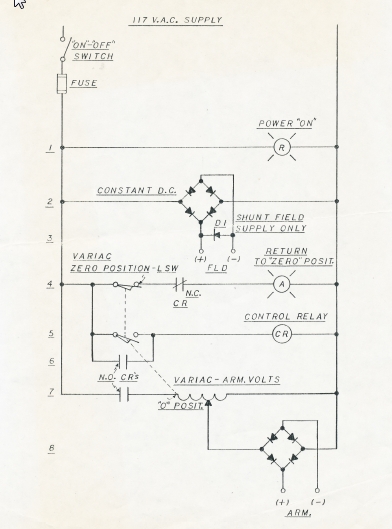
The red light on line 1 comes on whenever the main switch is closed, indicating that the system is energized and ready to operate.
Lines 2 and 3 of the schematic show a full wave rectifier and a field discharge diode (D1). The output of the rectifier is used to energize the motor’s shunt wound field with a fixed voltage which will allow the motor to operate at maximum torque at each speed level which is set by varying the armature voltage. Diode (D1) is used to discharge the motor field coil when power is removed. This prevents damage to the full wave rectifier. This part of the circuit is not needed if a series wound motor is used in place of shunt wound motor.
Line 4 shows a variac, zero position limit switch which is normally closed at all times, except when the variac is in the “off” position, at which time it is open. This is a safety switch which prevents the operator from inadvertently applying voltage to the motor armature when he turns on the main switch, and the variac happens to be in the “run” position.
When the variac on line 7 is in the “0” position, the LSW element on line 4 is forced open, while the LSW element on line 5 is forced closed which allows Control Relay (CR) to pick up. The normally open (N.O.) CR contacts on line 6 will close and seal in CR. At the same time, the normally closed (N.C.) CR contacts on line 4 will open, and will remain open until the CR is dropped out of the circuit by opening the main switch. The amber light will be extinguished, indicating that the system is now functional, because the (N.O.) CR contacts on line 7 also closed when CR picked up.
By adjusting the variac on line 7, the operator can vary the voltage output to the full wave rectifier on line 8.
This D.C. output is applied to the armature leads of a shunt wound motor/or the leads of a series motor.
Note: When a series wound motor is used the D.C. power supply on line 2 isn’t needed.
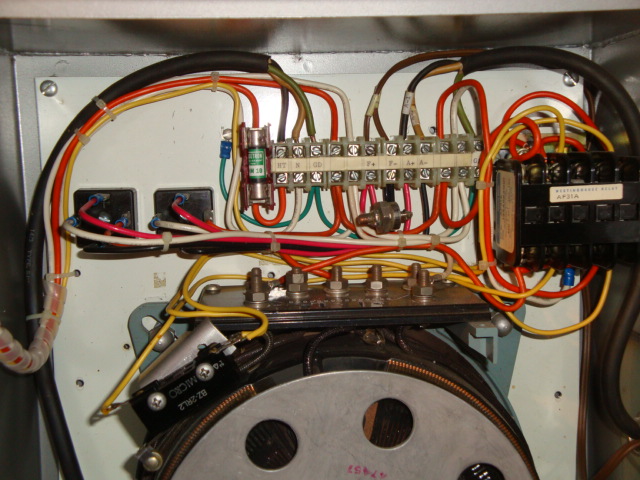
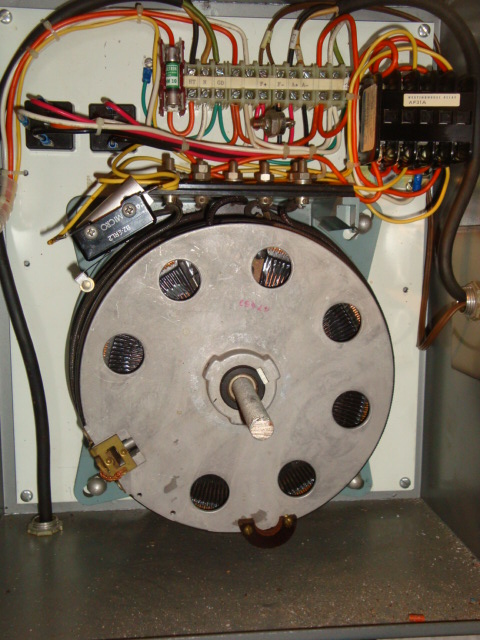
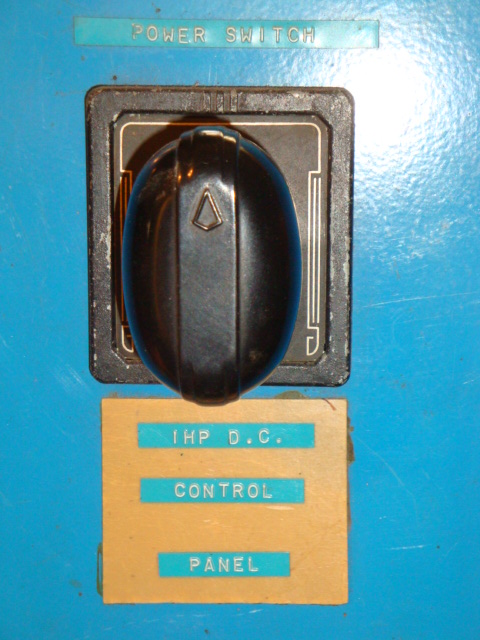
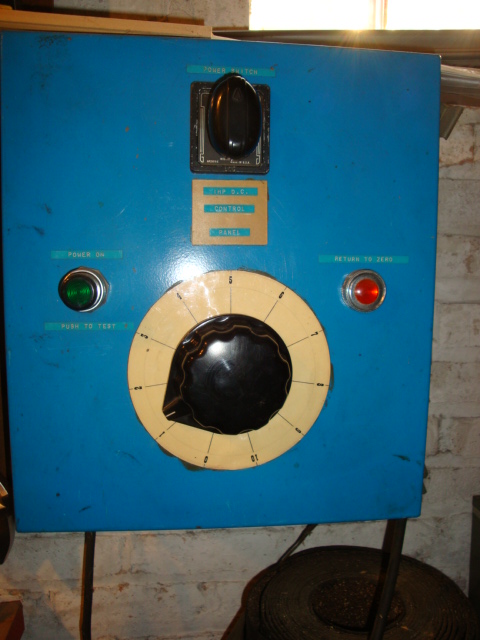
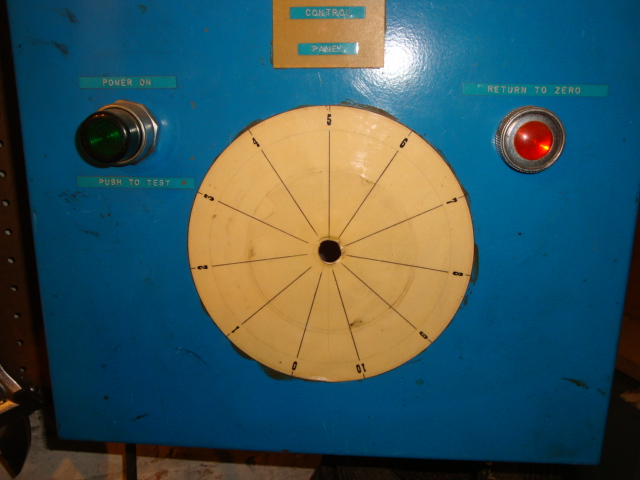
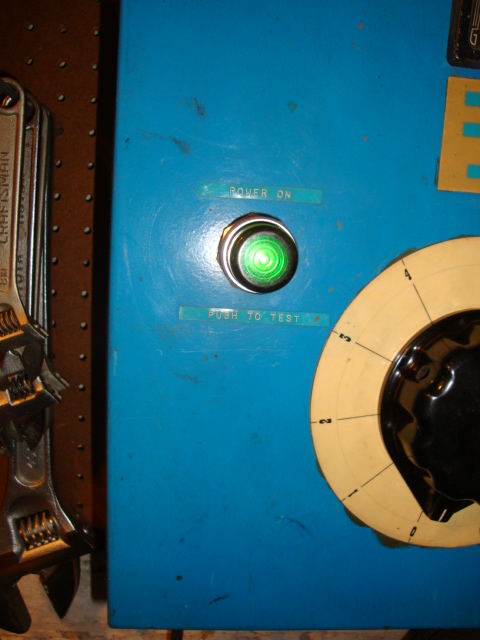
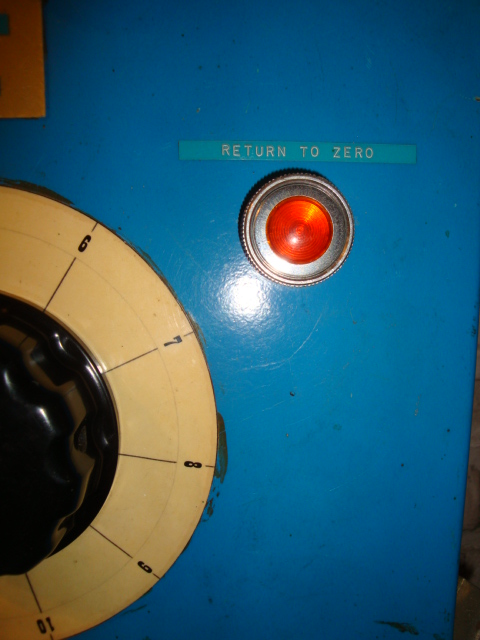
I'm no electrical engineer myself so I can't become technical support for this although I can shoot some pics of the one hanging on the wall in my garage if someone asks for them.
Corey "synthesist" Gimbel
I thought I'd share the writeup and schematic here for the electrically experienced, or just plain adventurous, (and perhaps cash strapped) among you.
Here ya go:
DIY DC Variable Voltage Controller
This schematic doesn’t show specific values for any of the components because it is meant to serve a variety of purposes.
This is a typical circuit for converting a constant A.C. voltage to a variable D.C. voltage.
The variac and rectifier ratings are determined by the rating of load to be served.
This particular circuit was designed to operate a 125 V.D.C. SHUNT WOUND MOTOR.
The ratings of the main switch and fuse on the hot side of the line are also determined by the ratings of the load.
The red light on line 1 comes on whenever the main switch is closed, indicating that the system is energized and ready to operate.
Lines 2 and 3 of the schematic show a full wave rectifier and a field discharge diode (D1). The output of the rectifier is used to energize the motor’s shunt wound field with a fixed voltage which will allow the motor to operate at maximum torque at each speed level which is set by varying the armature voltage. Diode (D1) is used to discharge the motor field coil when power is removed. This prevents damage to the full wave rectifier. This part of the circuit is not needed if a series wound motor is used in place of shunt wound motor.
Line 4 shows a variac, zero position limit switch which is normally closed at all times, except when the variac is in the “off” position, at which time it is open. This is a safety switch which prevents the operator from inadvertently applying voltage to the motor armature when he turns on the main switch, and the variac happens to be in the “run” position.
When the variac on line 7 is in the “0” position, the LSW element on line 4 is forced open, while the LSW element on line 5 is forced closed which allows Control Relay (CR) to pick up. The normally open (N.O.) CR contacts on line 6 will close and seal in CR. At the same time, the normally closed (N.C.) CR contacts on line 4 will open, and will remain open until the CR is dropped out of the circuit by opening the main switch. The amber light will be extinguished, indicating that the system is now functional, because the (N.O.) CR contacts on line 7 also closed when CR picked up.
By adjusting the variac on line 7, the operator can vary the voltage output to the full wave rectifier on line 8.
This D.C. output is applied to the armature leads of a shunt wound motor/or the leads of a series motor.
Note: When a series wound motor is used the D.C. power supply on line 2 isn’t needed.
I'm no electrical engineer myself so I can't become technical support for this although I can shoot some pics of the one hanging on the wall in my garage if someone asks for them.
Corey "synthesist" Gimbel
Last edited: