Making a fully stainless damascus spoon - WIP - Lots of pictures

Joined
Mar 26, 2004
Messages
1,617
I took pictures of the process of making this spoon, as it was an interesting challenge to make.

First six pictures are from another Tutorial I've made: Forging Stainless 304 and Stainless 420 MV
http://www.aescustomknives.com/docs/tutorial16.htm

Since it's exactly the same process, I didn't see the point in taking new pics of this step. Only difference is that for this spoon, the cannister is 8" long -twice as the one pictured. Cannister is 40x40mm and the thickness is 2mm.


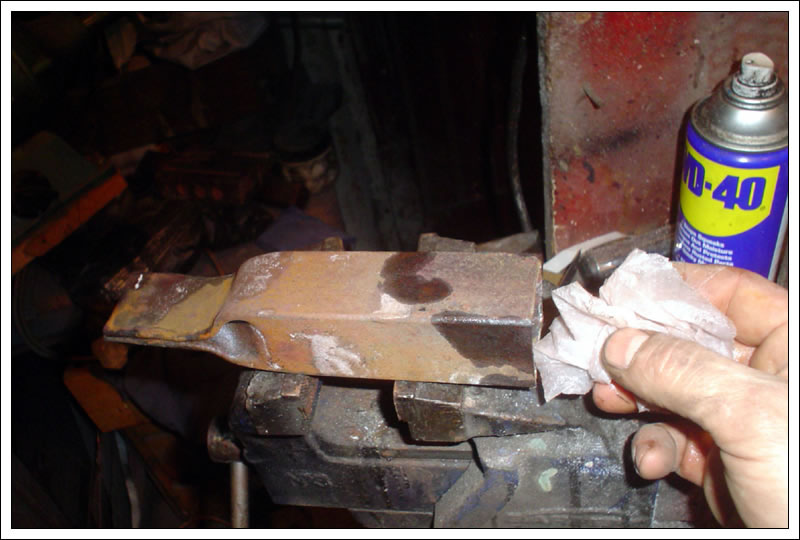
After making the canister, I put some kitchen paper soaked in WD40 inside. This will burn and consume the O2 inside the can, creating the reduced atmosphere needed for the welding of stainless steels.
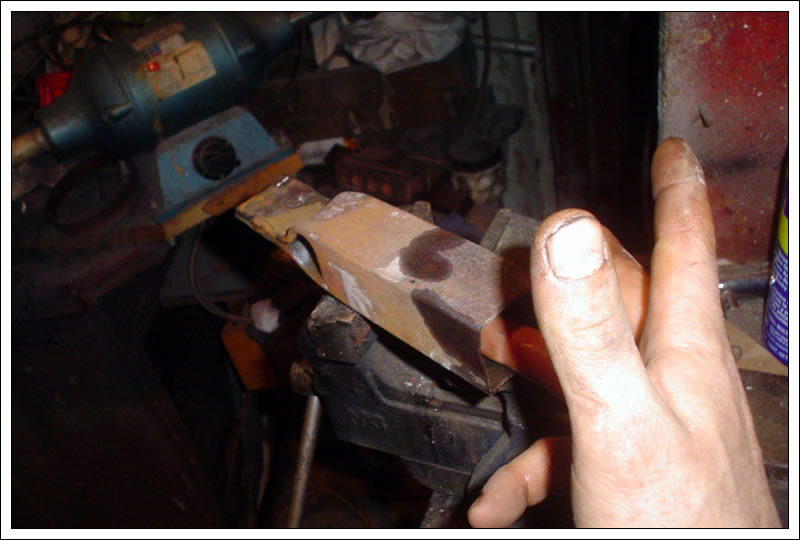
ssclawmaking1.jpg


ssclawmaking2.jpg


Can filled with alternated sheets of 304 (0.3mm) and 420 MV -420 with added Molibdenum Vanadium- (0.7mm)
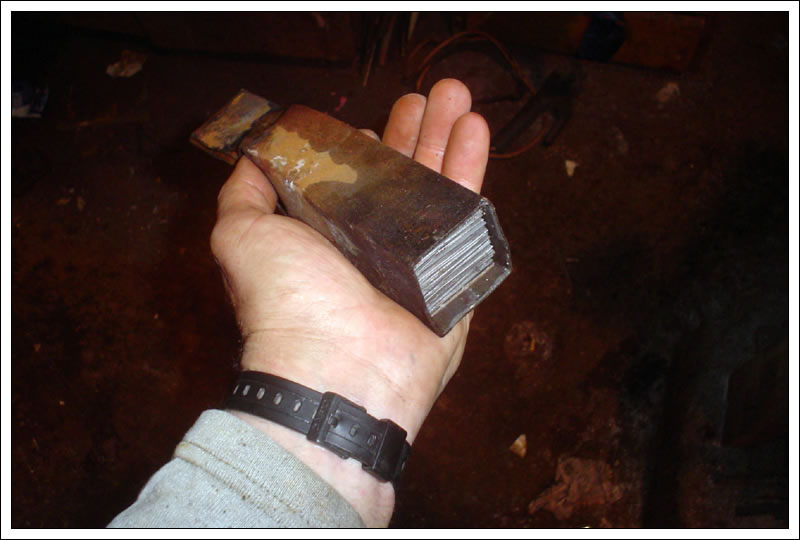
ssclawmaking3.jpg


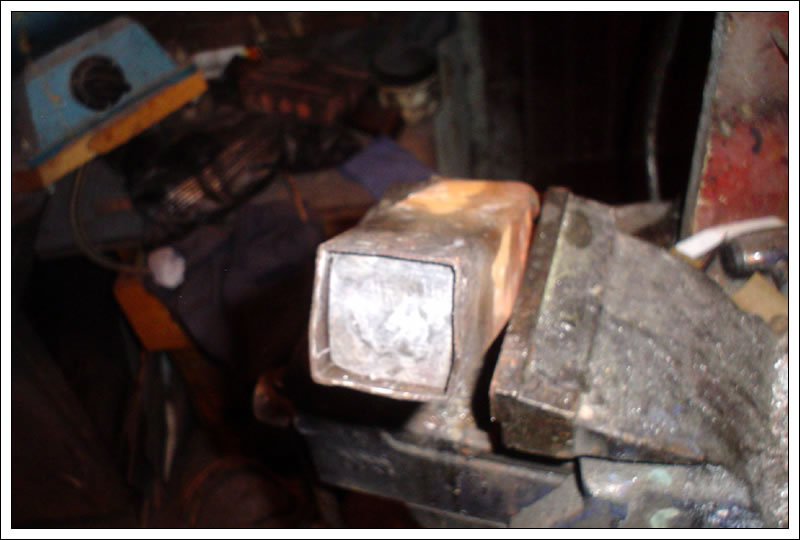
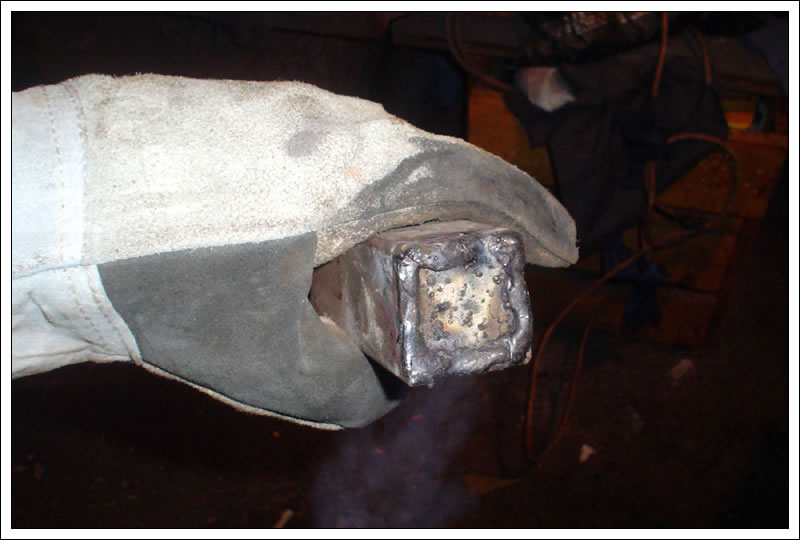
Then I gotta weld it closed so no extra O2 gets inside.
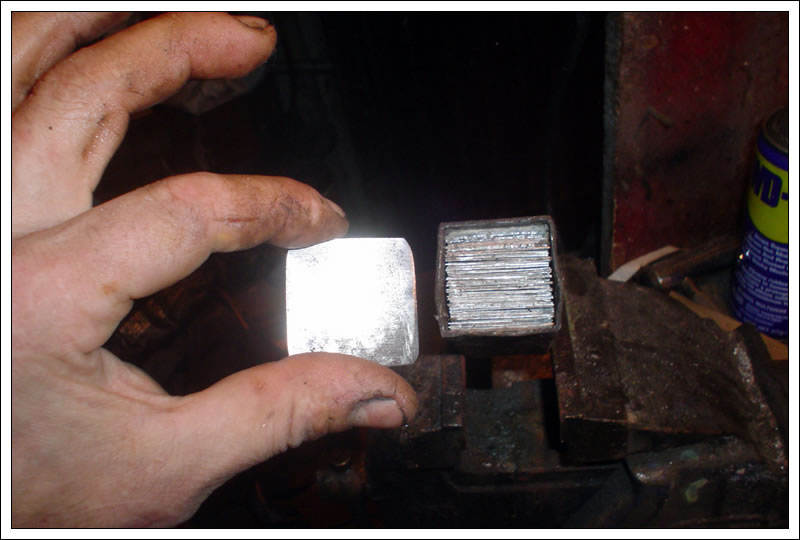
ssclawmaking4.jpg


ssclawmaking5.jpg


ssclawmaking6.jpg


From now on, pictures are of the actual spoon making process.

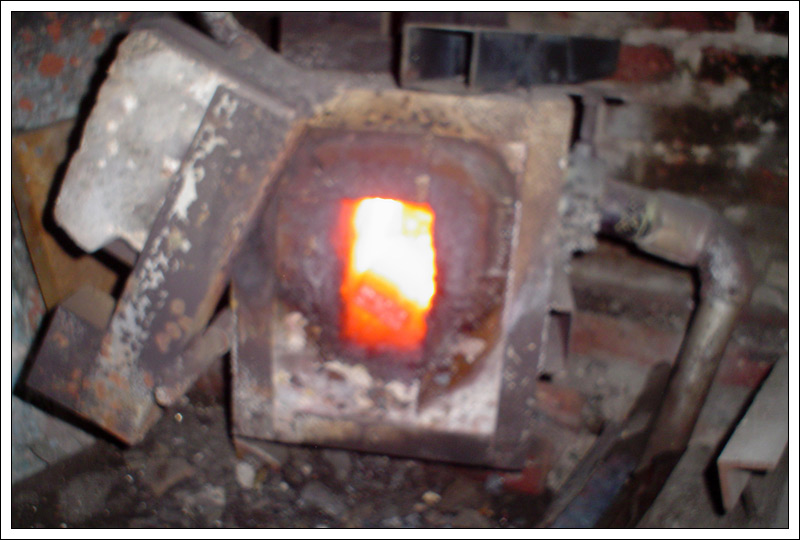
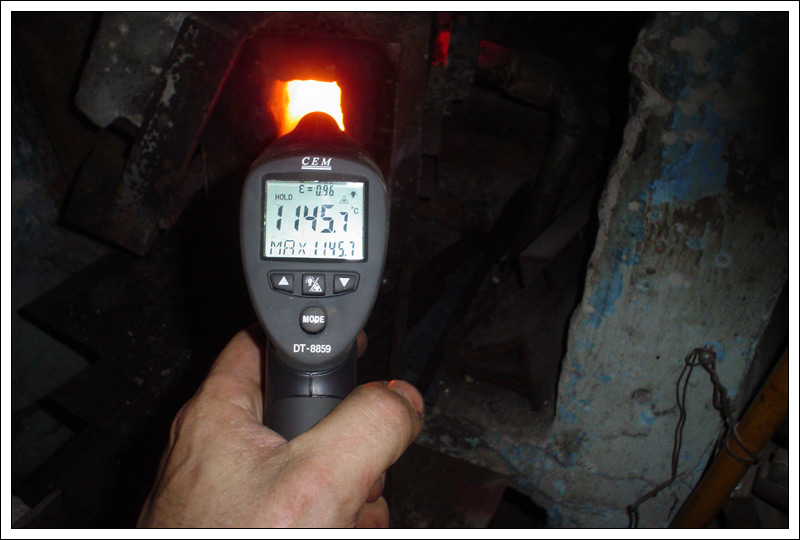
Oven at welding temperature, ready to receive the canned steels.
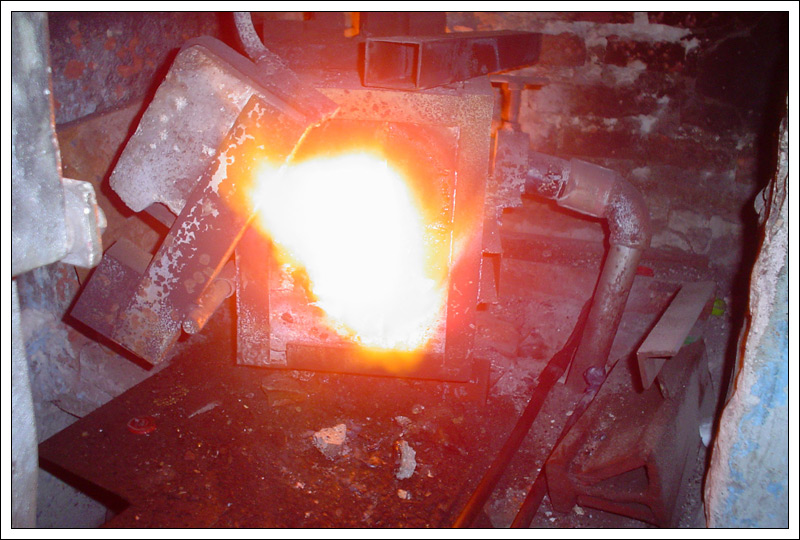
stainlessspoonmaking7.jpg


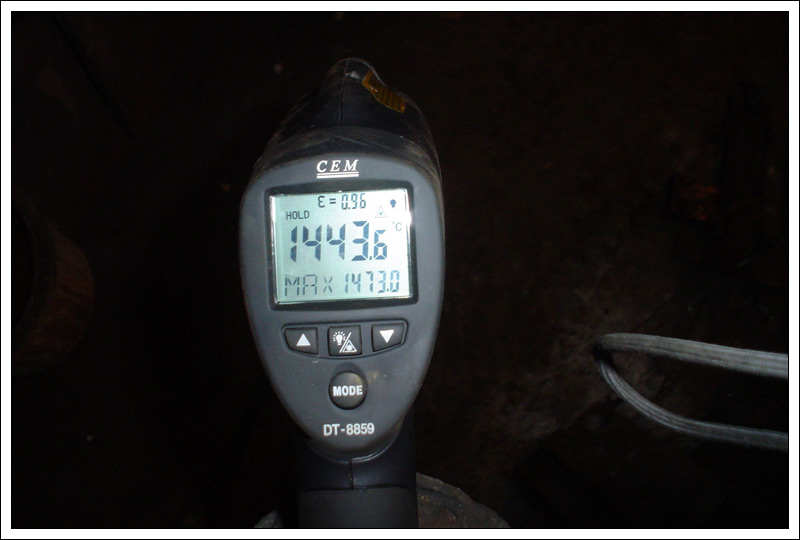
Welding temperature.

stainlessspoonmaking8.jpg


After I flaten it with the press, I get rid of the cannister by grinding it off.
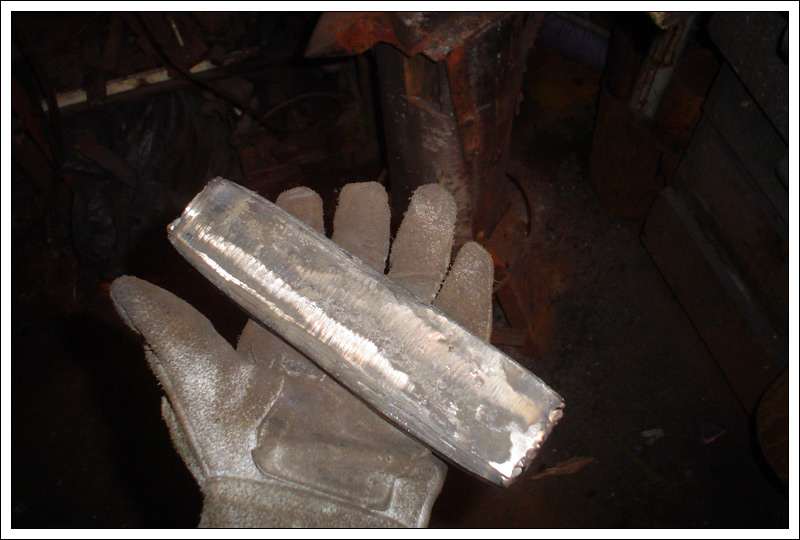
stainlessspoonmaking9.jpg


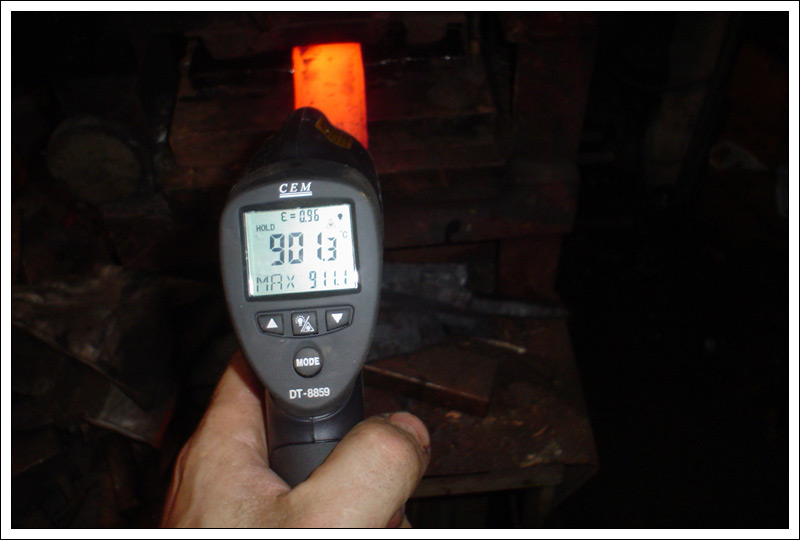
Oven at forging temperature.
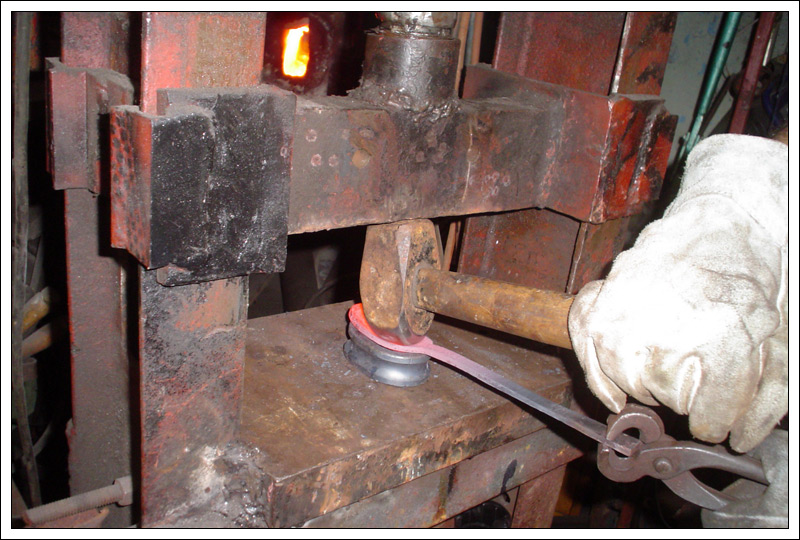
stainlessspoonmaking10.jpg
 
Stainless forging temperature range. 900C - 1150C

stainlessspoonmaking11.jpg


stainlessspoonmaking12.jpg


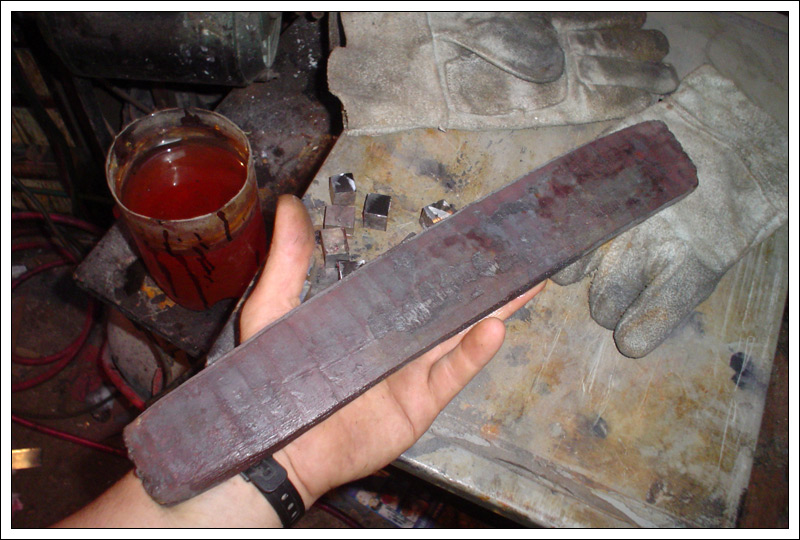
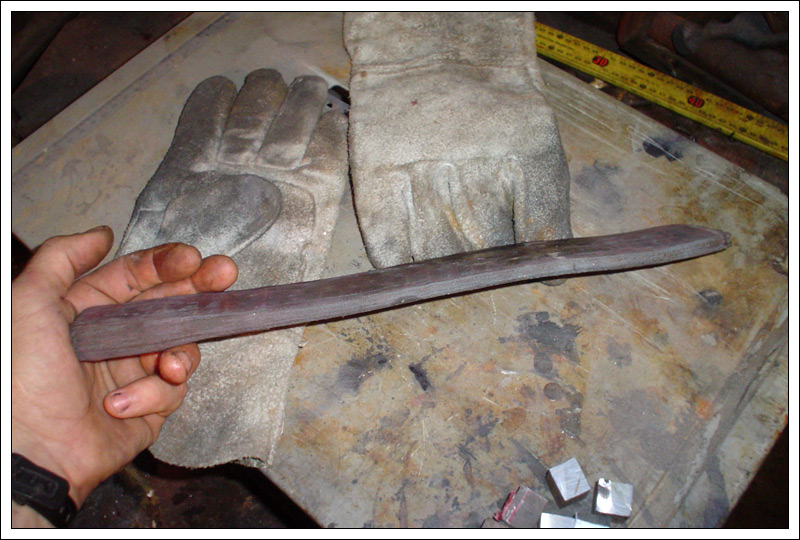
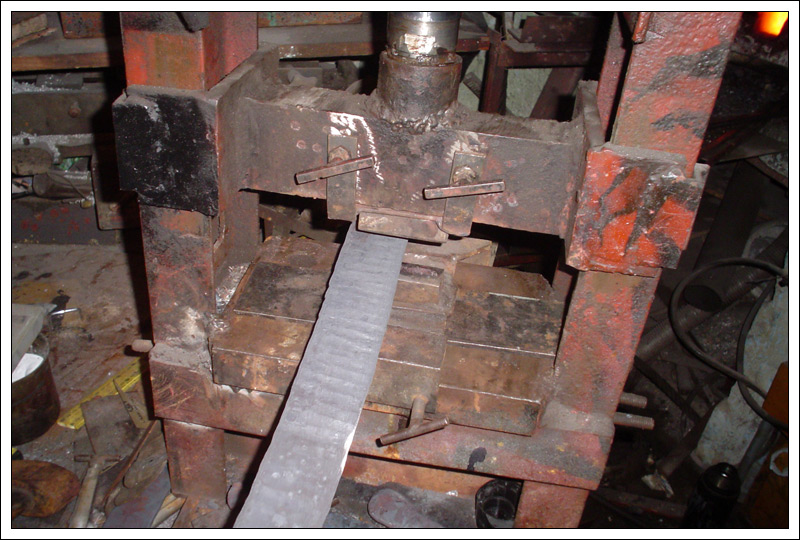
Stretched sheet of damascus.

stainlessspoonmaking13.jpg


Thicker, about 10mm, in the area where I'll make the spoon head.

stainlessspoonmaking14.jpg


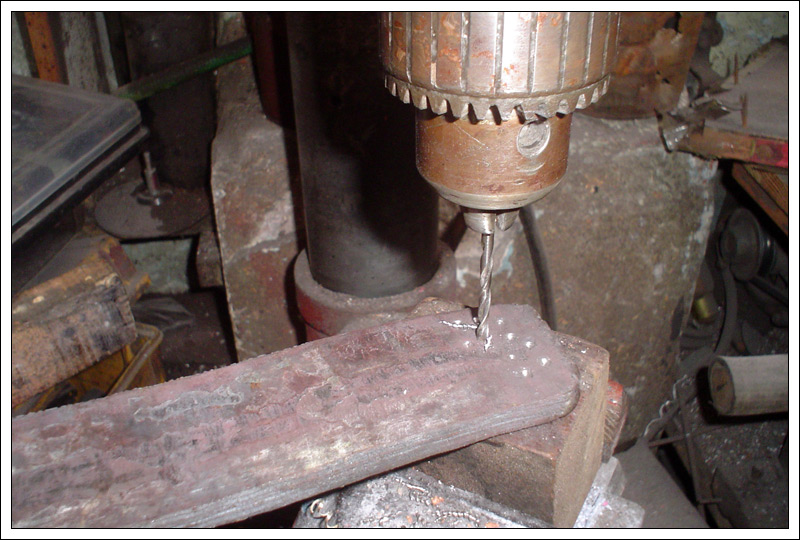
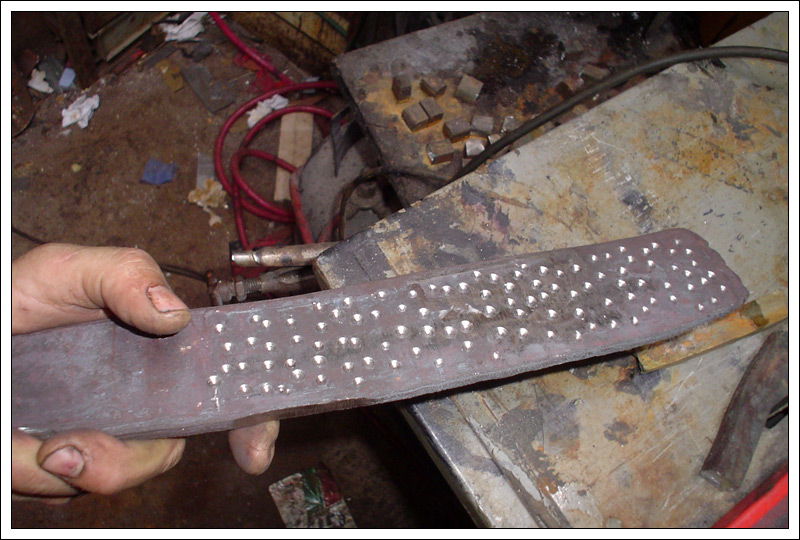
Drilling the damascus sheet to get the desired pattern (4mm drill bit, 2mm deep)

stainlessspoonmaking15.jpg


Almost done.

stainlessspoonmaking16.jpg


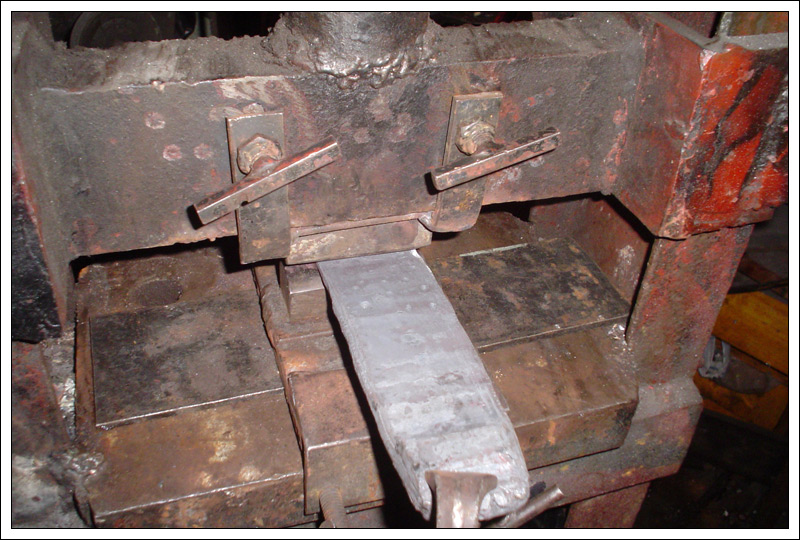
I keep heating to forge tempertature and flattening the piece until I reach a 4mm thickness.

stainlessspoonmaking17.jpg


stainlessspoonmaking18.jpg


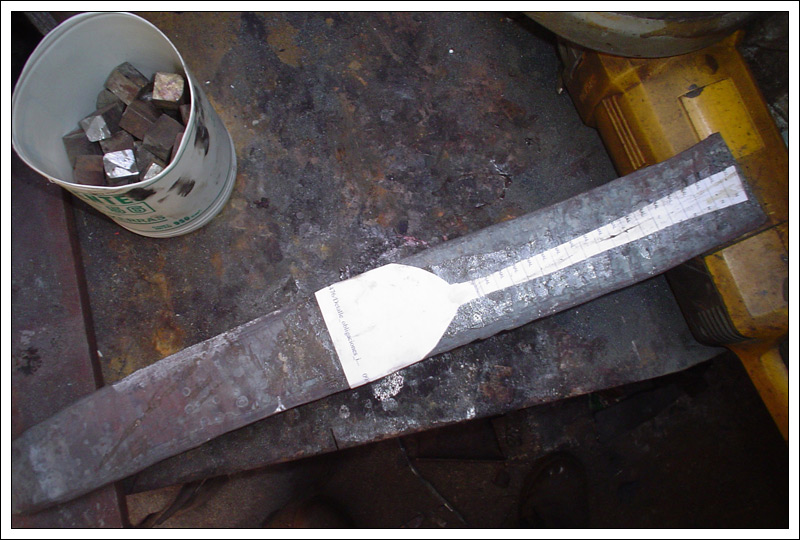
I glue a template for the spoon shape on the damascus piece.

stainlessspoonmaking19.jpg


And then cut it.

stainlessspoonmaking20.jpg
 
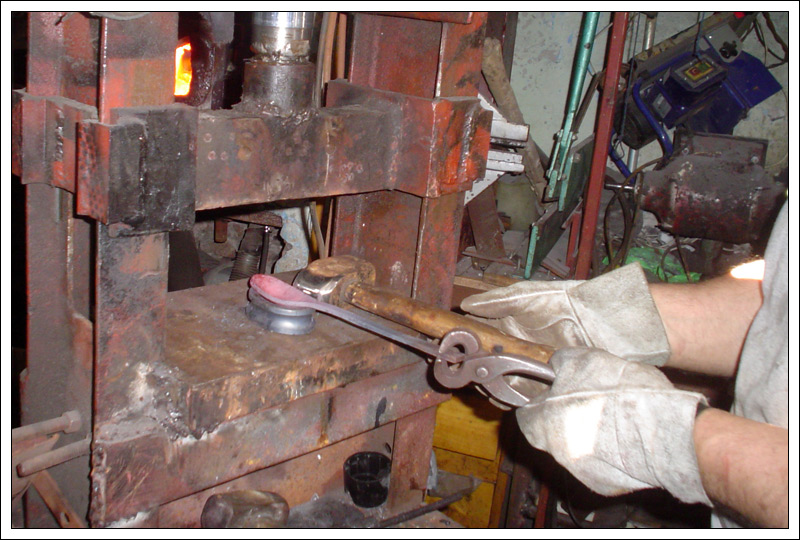
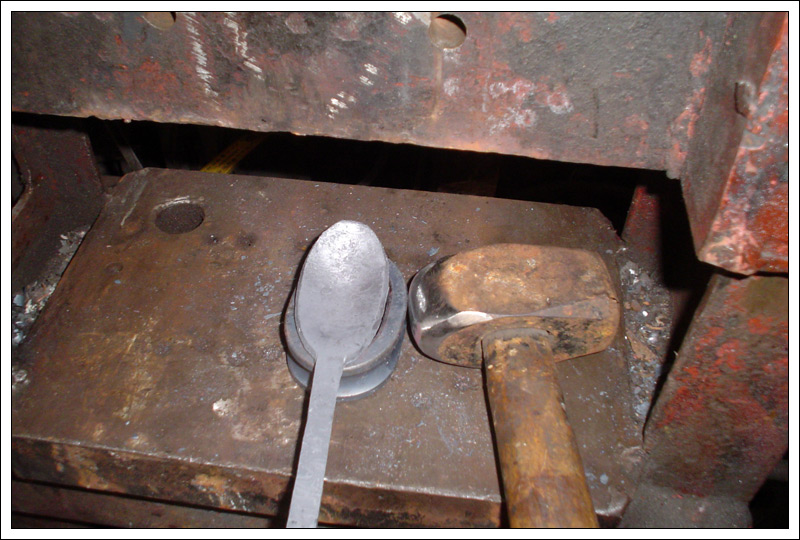
To get the proper spoon shape, after I heat the soon-to-be-spoon, I use a modified inner bearing ring (previosly heated and pressed to an oval shape) and a hammer head with a round end.

stainlessspoonmaking21.jpg


stainlessspoonmaking22.jpg


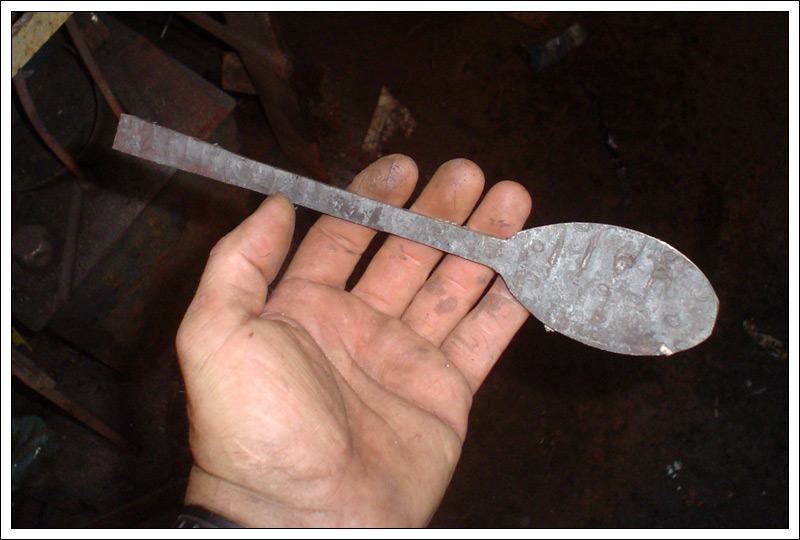
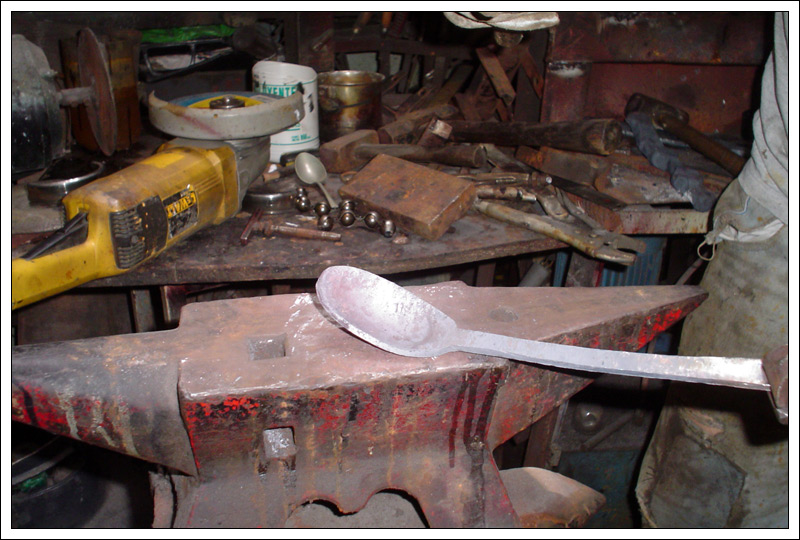
Now this starts to look like a real spoon.

stainlessspoonmaking23.jpg


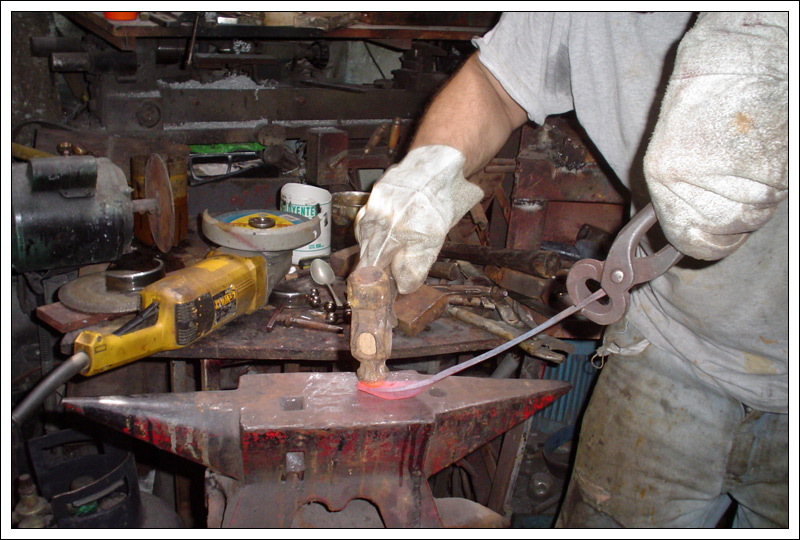
Then I finish the forging to shape manually, with a smaller hammer.

stainlessspoonmaking24.jpg


stainlessspoonmaking25.jpg


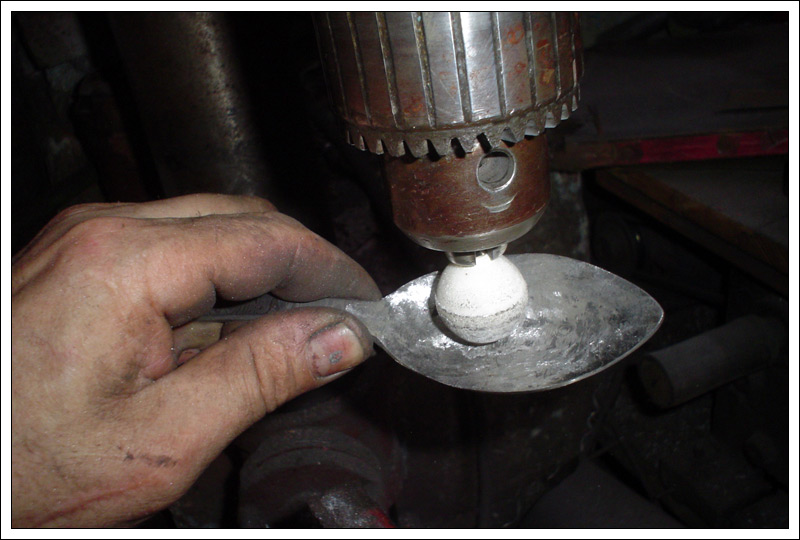
After the spoon is shaped, I grind the inner part of the head with a spherical grinding stone, mounted on a bench drill.

stainlessspoonmaking26.jpg


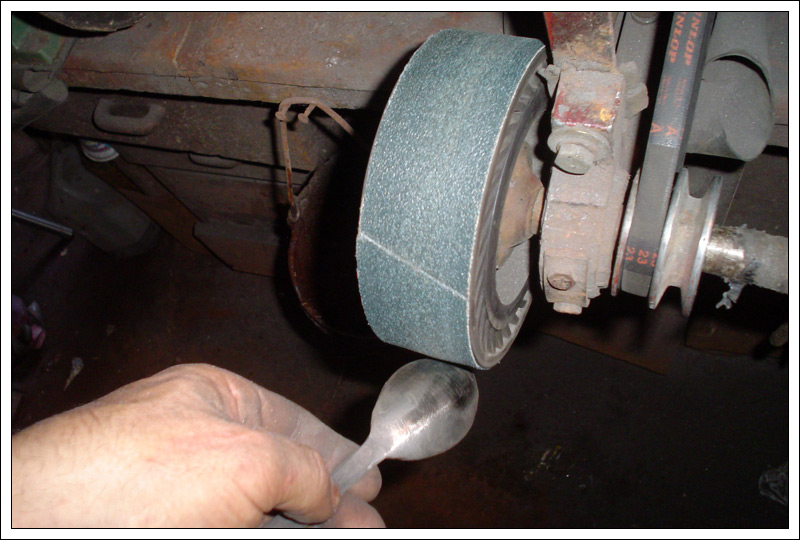
For the outter part I use regular sanding belts, mounted on a rubber adaptor on my bench grinder.

stainlessspoonmaking27.jpg


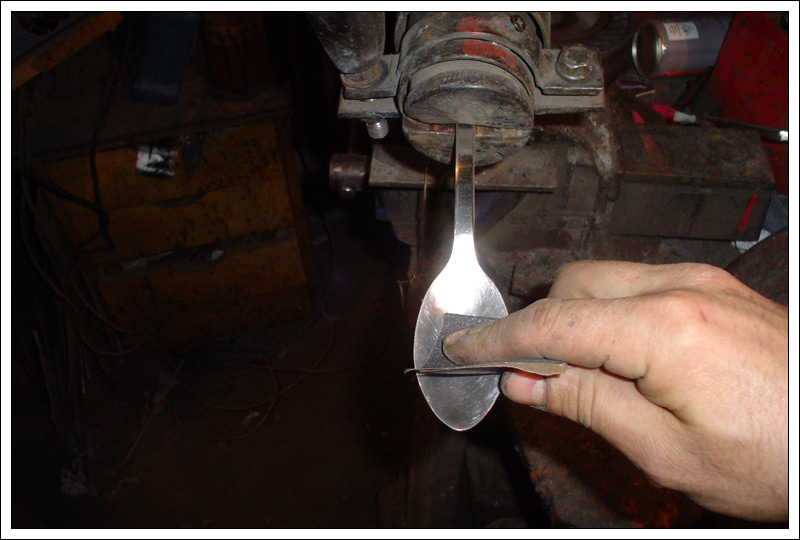
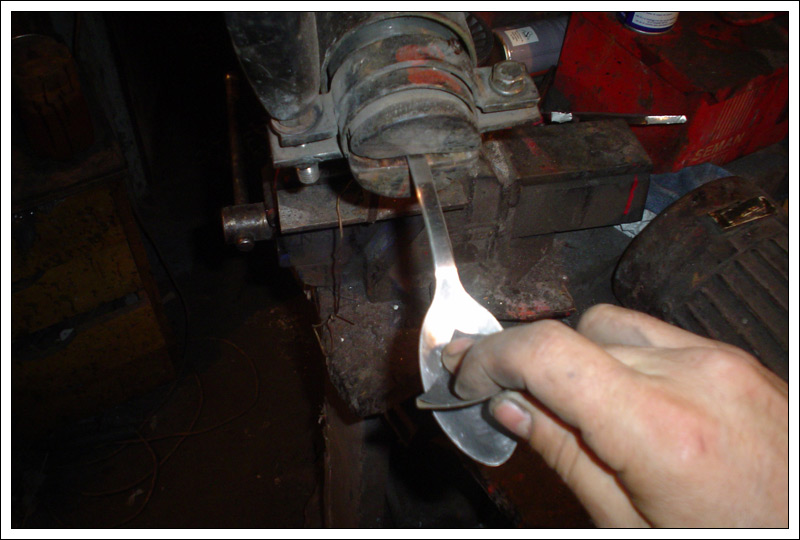
And then polish the inner part with sand paper, manually.

stainlessspoonmaking28.jpg


stainlessspoonmaking29.jpg


After I get a mirror polish, I etch it in acid just like I do with all my damascus pieces. Process is shown in this other Tutorial: Etching a Maker's Mark
http://www.aescustomknives.com/docs/tutorial13.htm


There are some concepts of forging and welding stainless steels that I'd like to talk about for a second.

Some makers I've known personally believe that welding and forging temperatures of stainless steels are higher than on carbon steels, as they assume stainless steels have a higher fusion point than carbon ones.

Nothing further from the truth!

Stainless steels melt at lower temperatures than regular carbon steels. Stainless steels can be hot forged just like carbon steels, but since they have intrinsec characteristics and properties, it's imperative that you take some particular and important meassures to achive a successful forging.

Stainless steels' thermal conductivity is lower than carbon steels'. At higher temperatures, stainless steels are harder and less plastic than carbon steels. They require about 40% more hits to achieve the same deformation.

This lack of plasticity causes the need for more heating cycles, and, as they have a "slow" thermal conductivity, these cycles should be done very slowly, to achieve a uniform temperature in the entire piece to forge.

It's better not to heat it to the direct flame, as this causes the steel to get oxidized. For this reason, as I still haven't finished my induction oven, is that I leave it thicker than needed and then I get rid of a good 1mm on each side, by grinding it off, after the piece cooled off.

It's also very important to properly measure the temperature in the oven while you're heating for forging, as if it goes lower than 900C, this can cause fissures on the steel.

Because of all of this precautions that I have to take into consideration when forging stainless steels, as well as the extra cost of the materials involved, is that I consider the cost of making this type of stainless damascus to be about as twice as making regular carbon damascus.


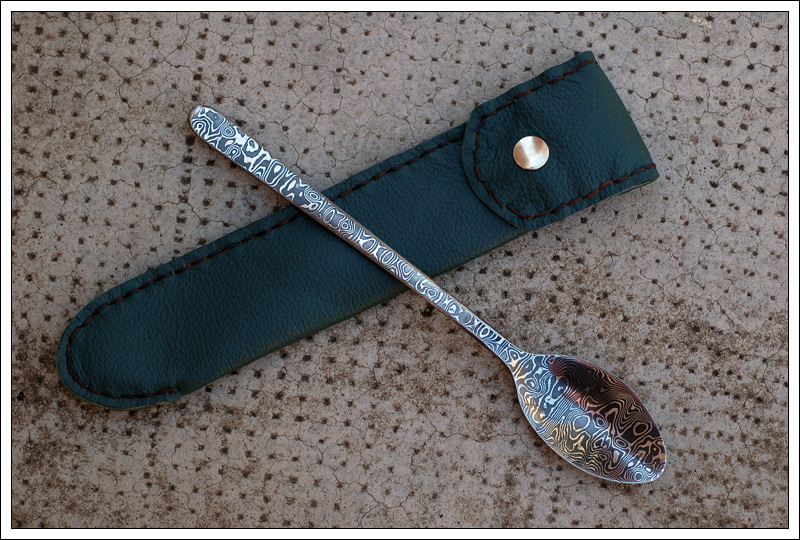
Here's a picture of the finished spoon

stainlessdamascusspoon2.jpg


More pictures of it on the Gallery of my website:
http://www.aescustomknives.com/docs/gallery.htm


Sign up for my Newsletter:
http://yourwebapps.com/WebApps/mail-list-subscribe.cgi?list=79955


Thanks for looking!


Ariel
 
Just beautiful, Ariel. I was just looking at your Ring Fighter post from back in 2004. Your work is just amazing!
 
Wow, that spoon is badass! I tried to get the wife to appreciate this work of art and she said it looked like a burnt meth spoon!:barf: go figure. Some people have no idea what they are looking at. If you were to make one of those for a customer what would the going rate be?
 
Just fantastic. I would think it was too easy after seeing your tutorials if I was a newbie. I know it is easy just for you, you are an amazingly talented artist all the way... Thanks for showing...
 
Back
Top