- Joined
- Mar 13, 2013
- Messages
- 112
Looking around at these knife forums inspired me to start building my own folding knife. I started with making the scales for a small kit knife, but wasn't satisfied with the final product and wanted to make one from scratch. After a lot of research and thought, I got started with an order from Jantz Supply:
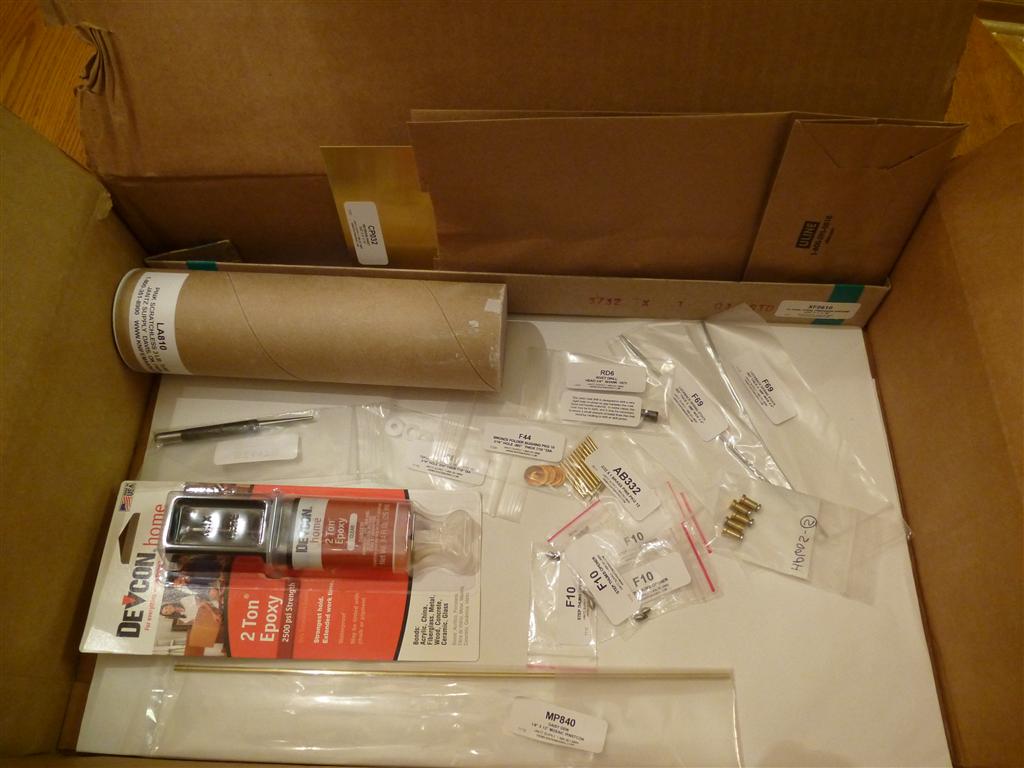
O1 tool steel bar, brass hardware, buffing compound, epoxy, jeweler's saw frame/blades, rivet drill, center punch, etc.

Designed the lockback-style knife mechanics in Sketchup.
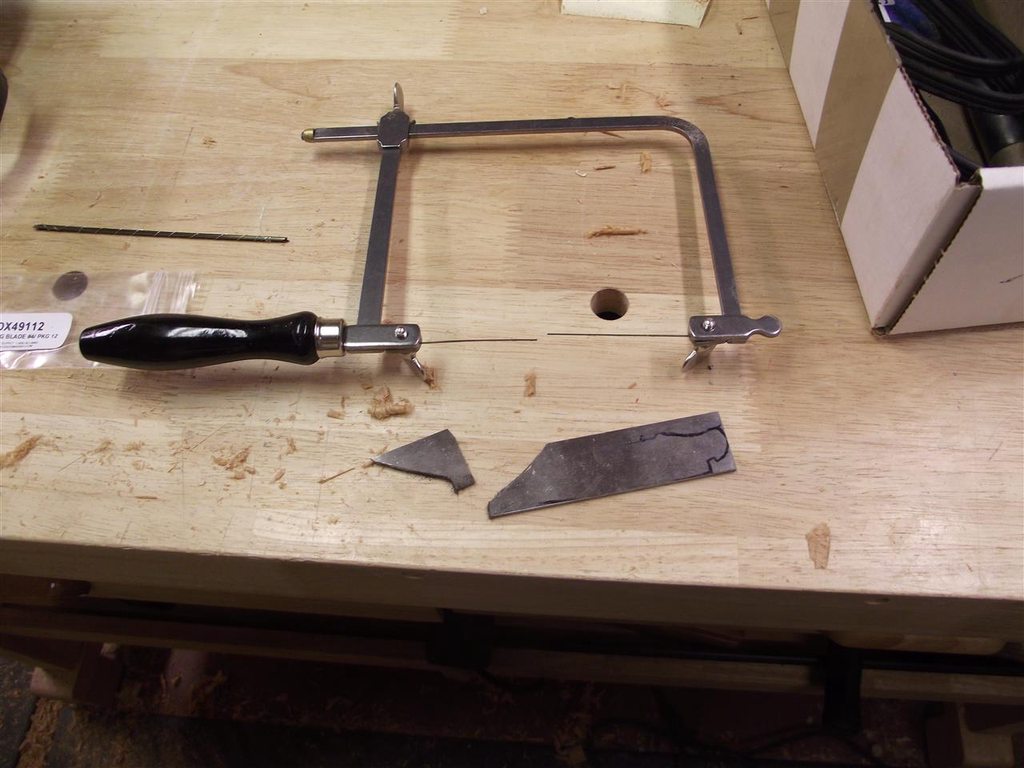
Breaking saw blades as I cut through the super-hard tool steel. These two pieces will be the blade and bolster.
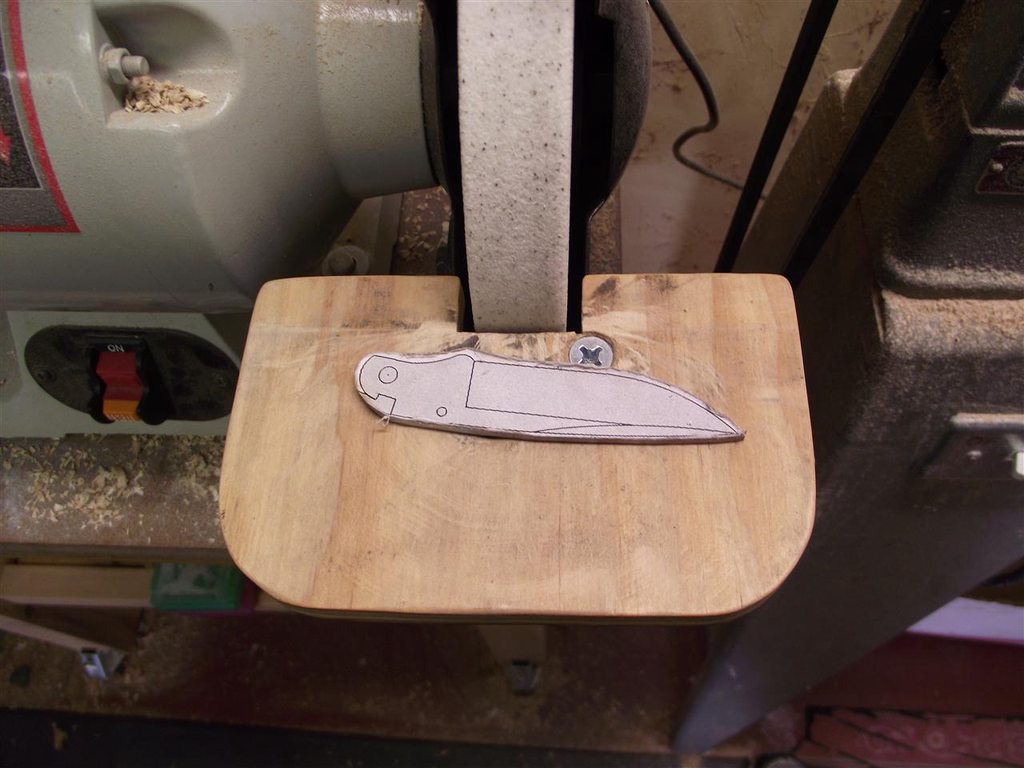
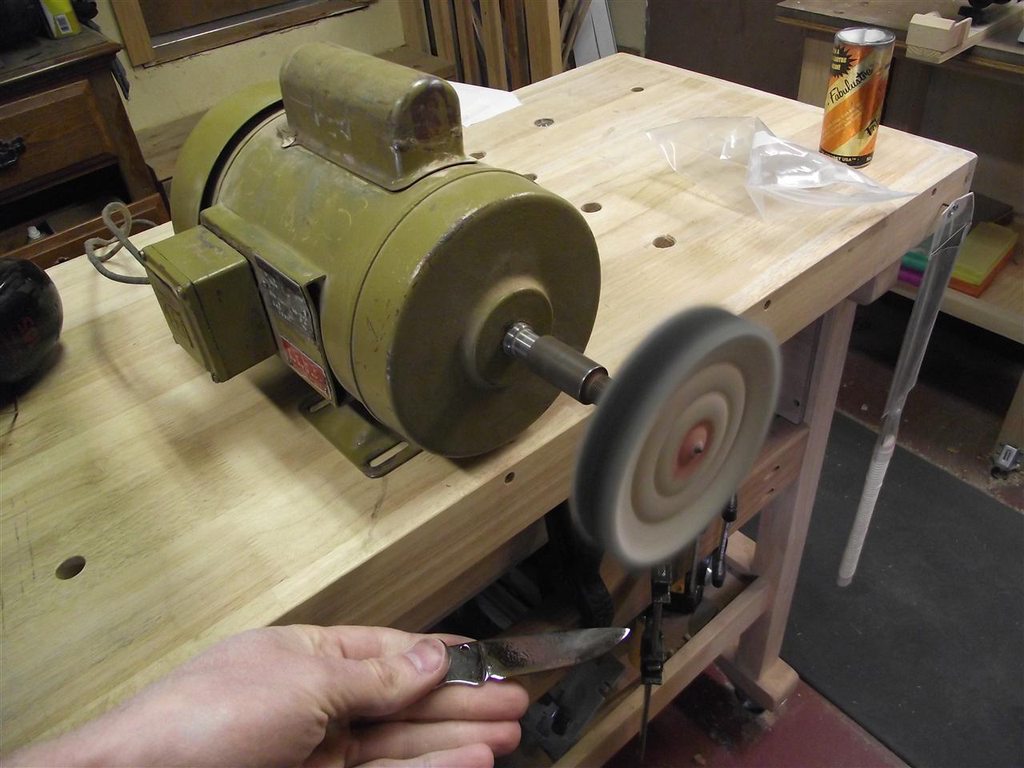
Grinding to rough shape on the 8" slow bench grinder.
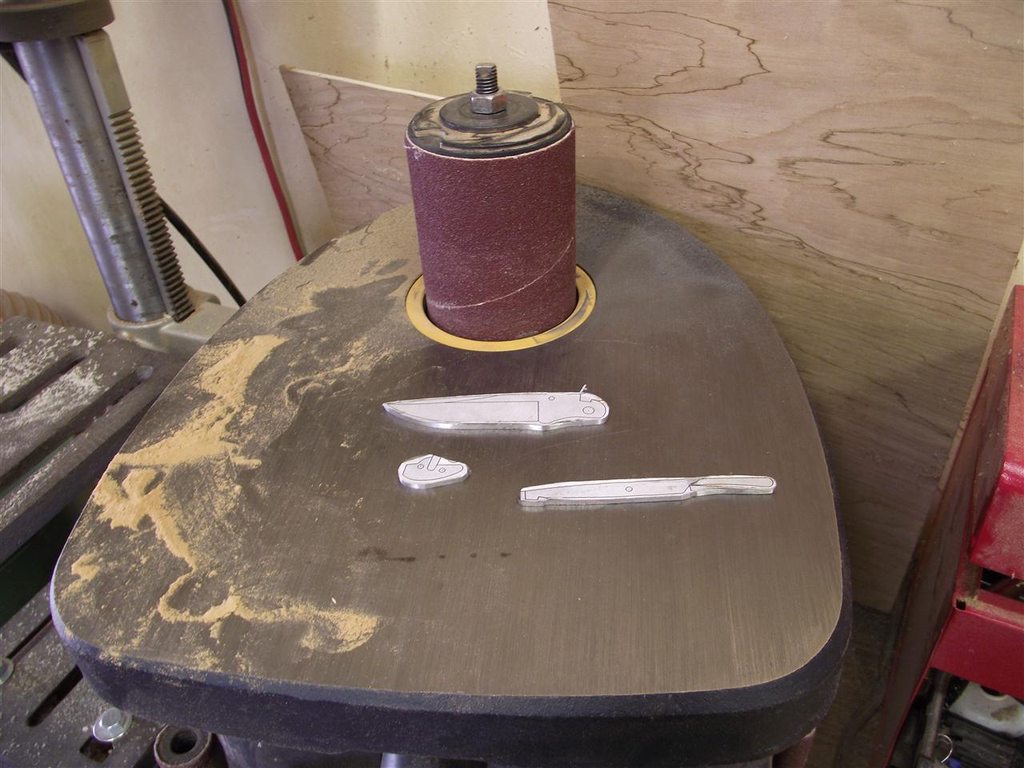
More grinding with the oscillating spindle sander.

Drilling out the blanks.
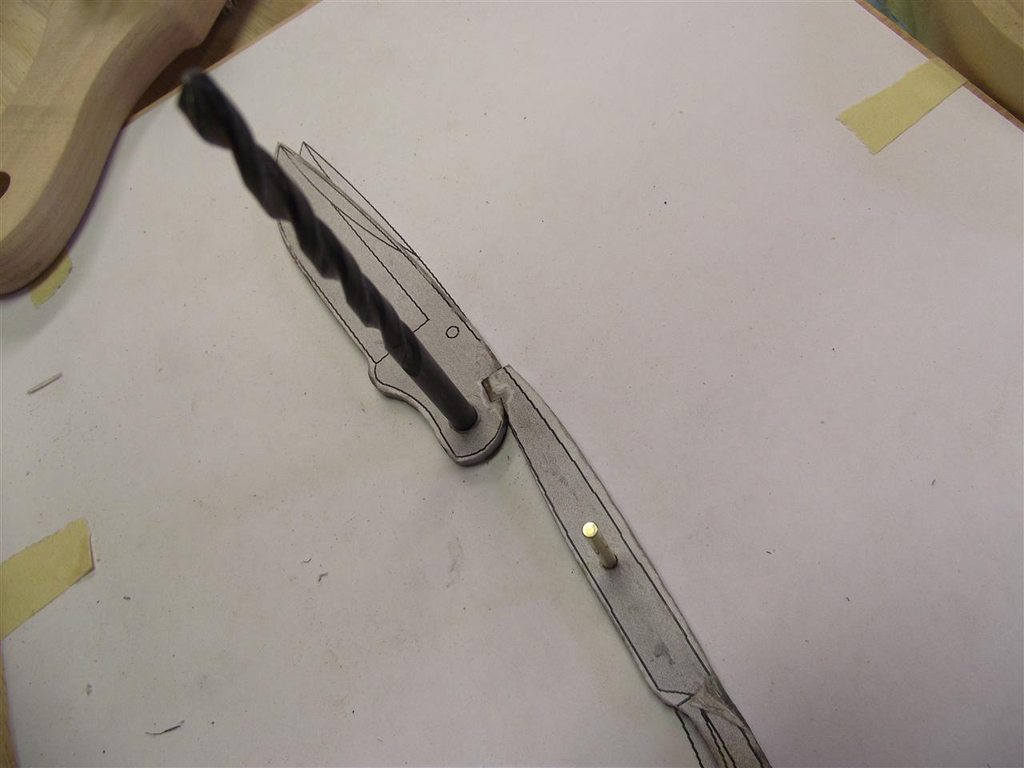
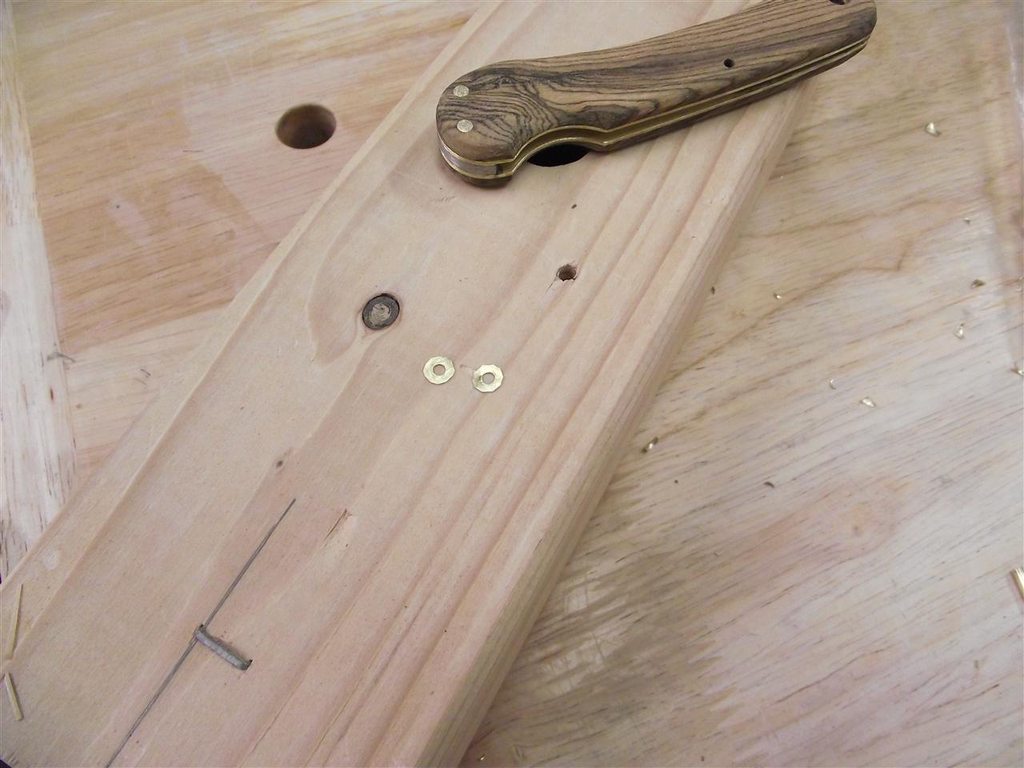
A plywood jig for test fitting the mechanisms. The locking bar fit came out a little loose, but it works.
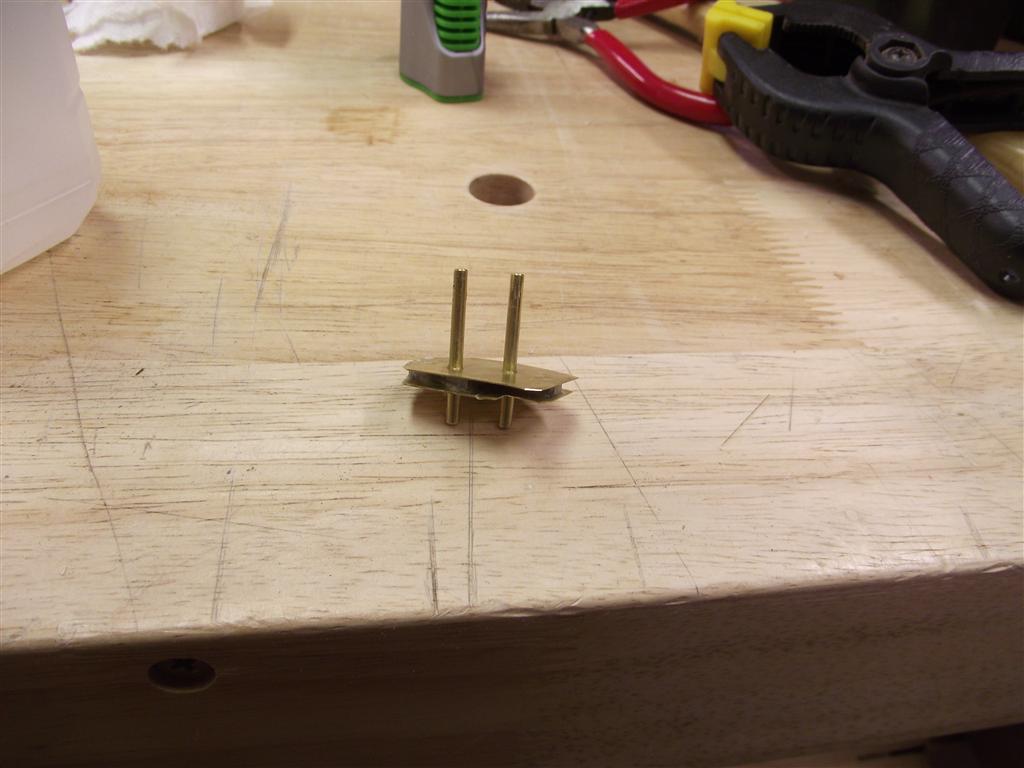
Supergluing (with fast-cure spray) brass shims on the bolster to match the blade washer thickness. I tried the "2 ton" epoxy before this and the bond failed immediately while grinding.
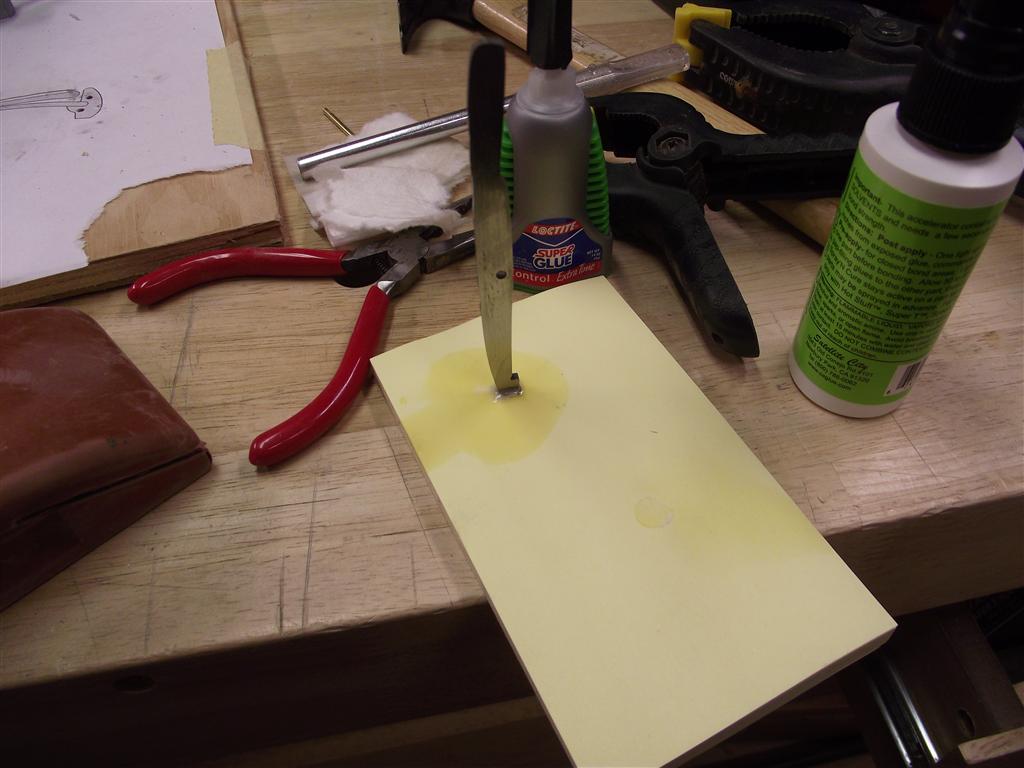
Super gluing (again with the fast-cure spray) a shim to the lock bar to improve the loose fit with the blade. It took a few tries, but the superglue held up during grinding and the shim seems to work great. I filed it until the fit with the blade was perfect.
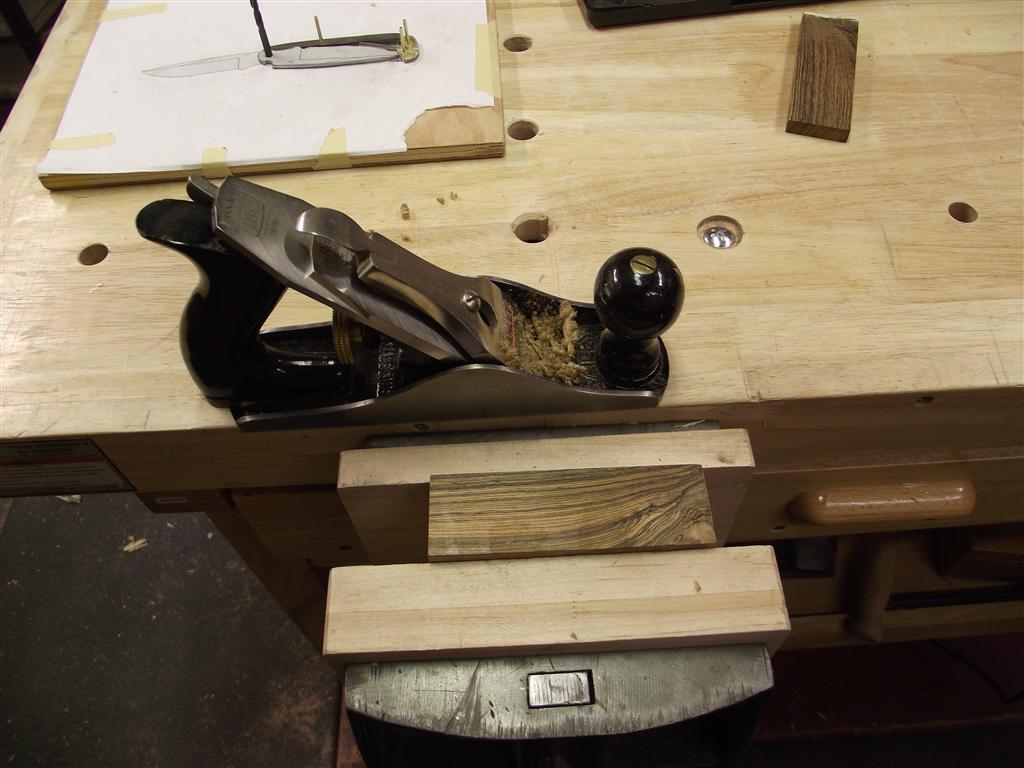
Hand planing a bocote knife scale flat on one face and one edge. I'm going to resaw one scale into two on the bandsaw, and this needs two flats square to each other for good results.
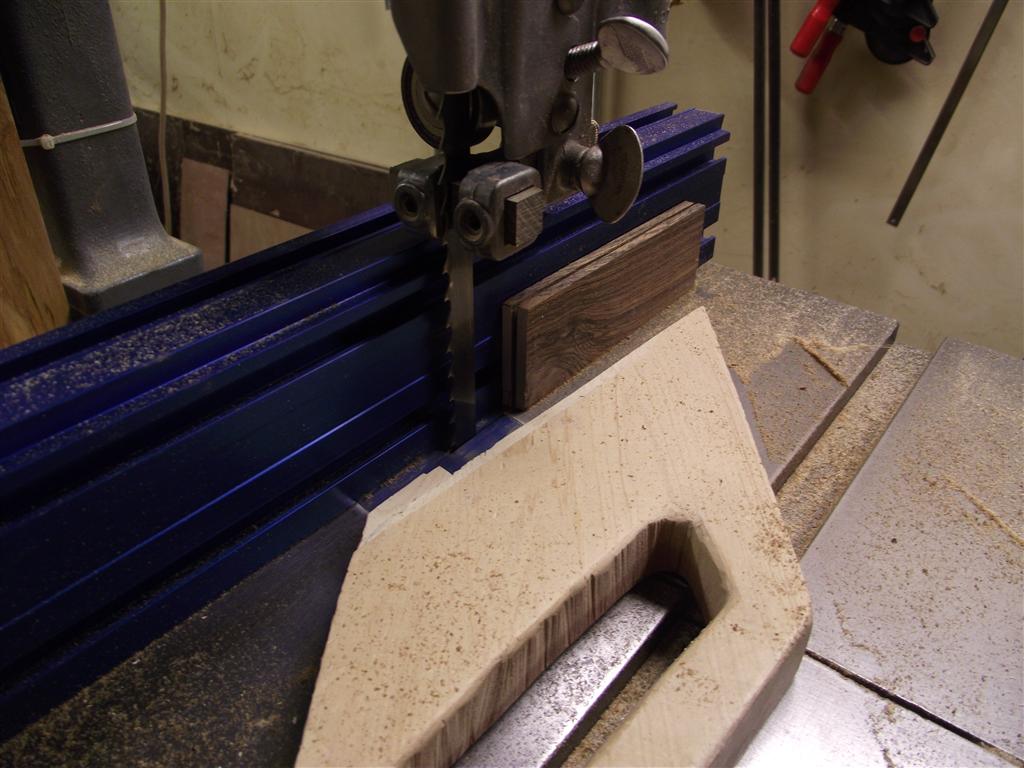
Resawing the single bocote scale into two thin bookmatched scales on my bandsaw.
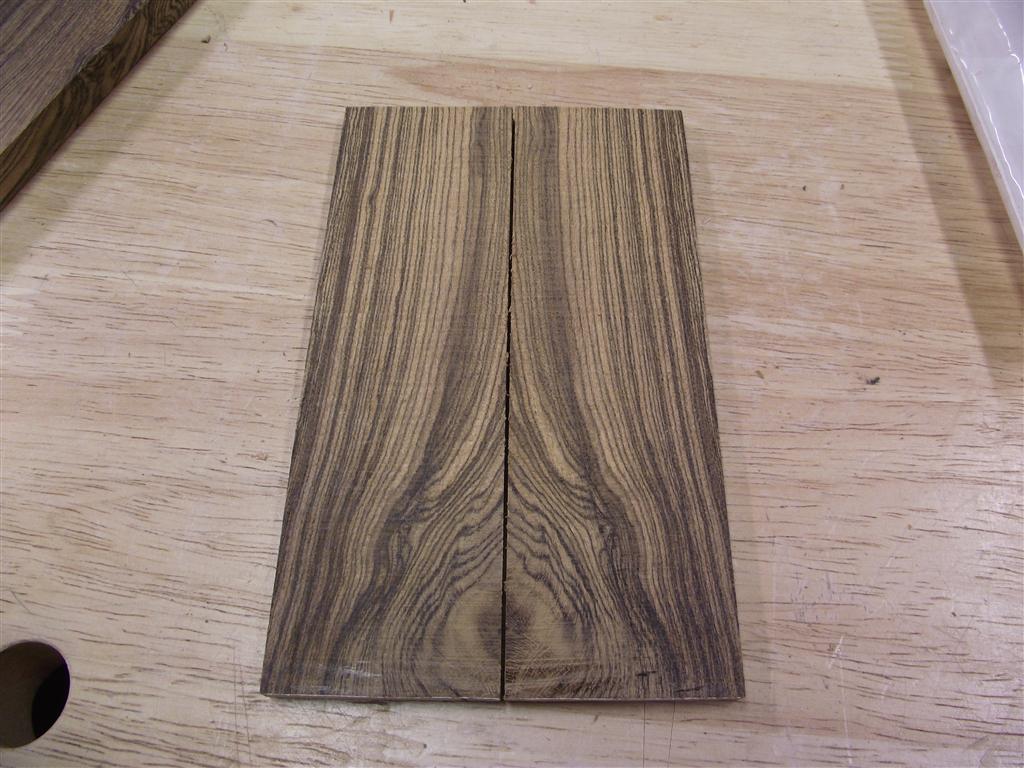
Bookmatching the grain looks pretty nice.
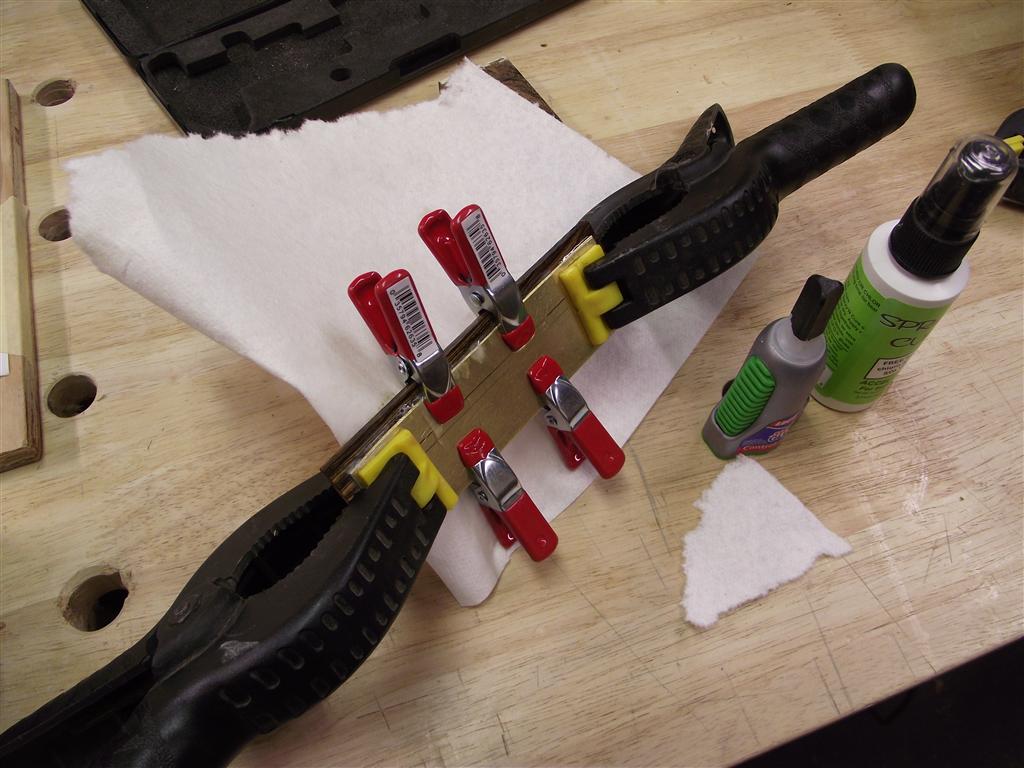
Gluing a brass liner to one of the scales. I used the super glue with curing spray trick again... it has been working great so far.
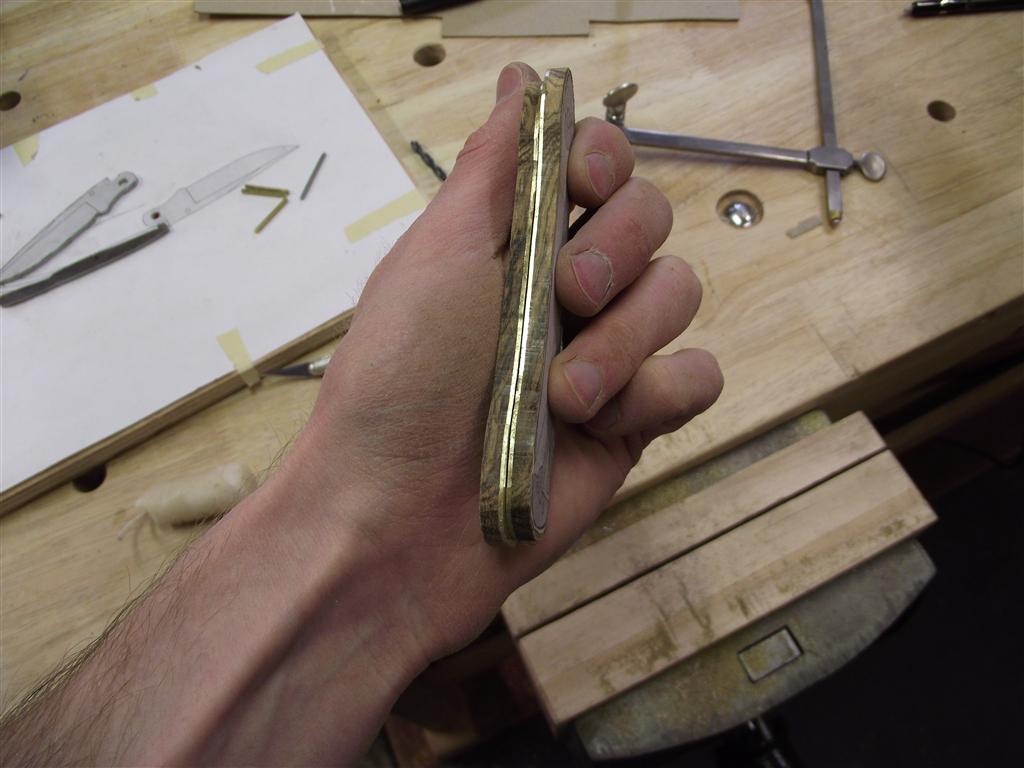
The superglue bond held up well to initial grinding with no visible gap. I did have to re-do one of the brass pieces due to a fumbled first glue-up. Superglue sets extremely quick... it's hard to get things into position fast enough.
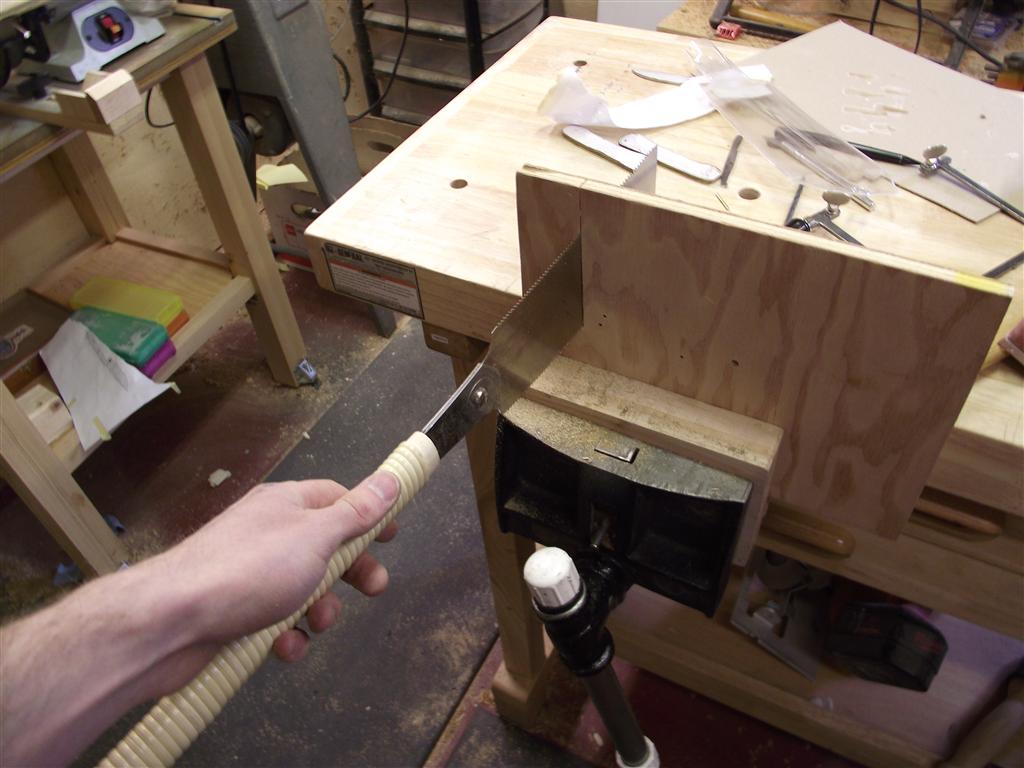
I cut out the center of the plywood fitting jig to act as a drill guide for the scales.
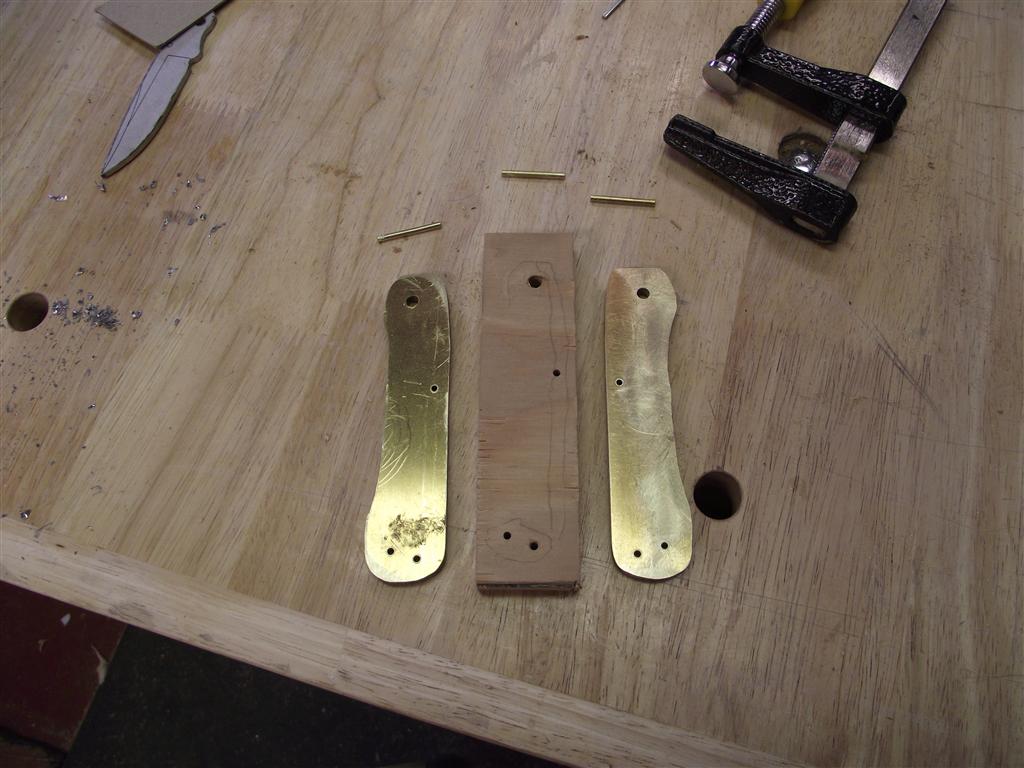
After drilling the scales.
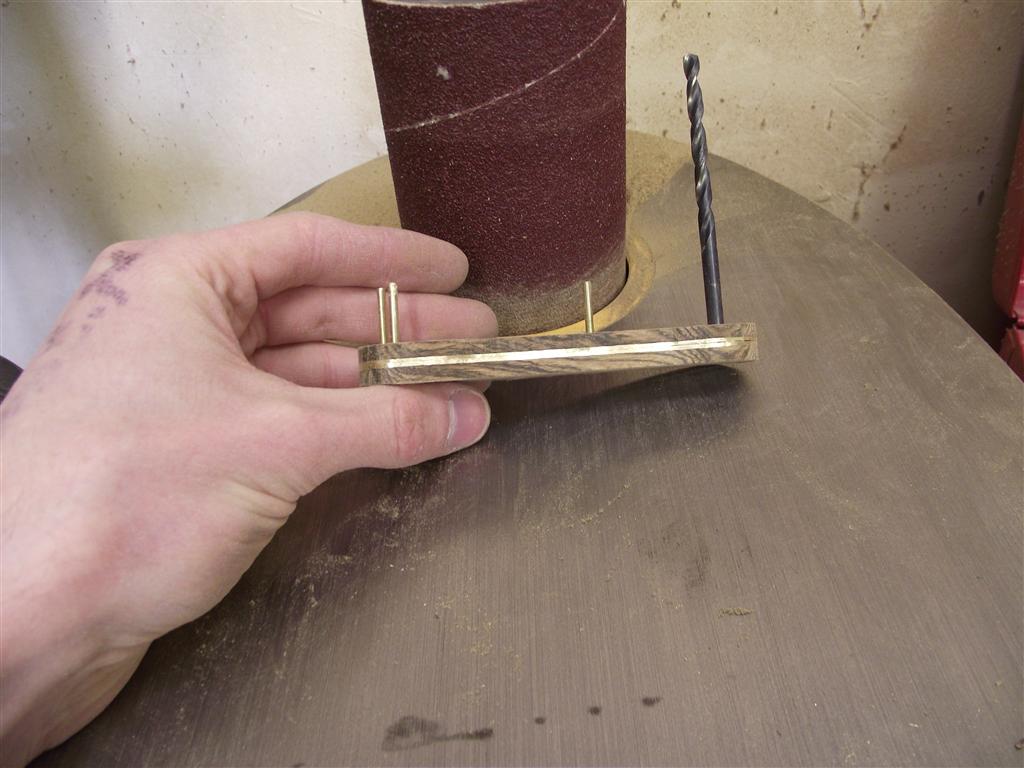
I pinned together the newly-drilled scales to do some rough shaping on the spindle sander.
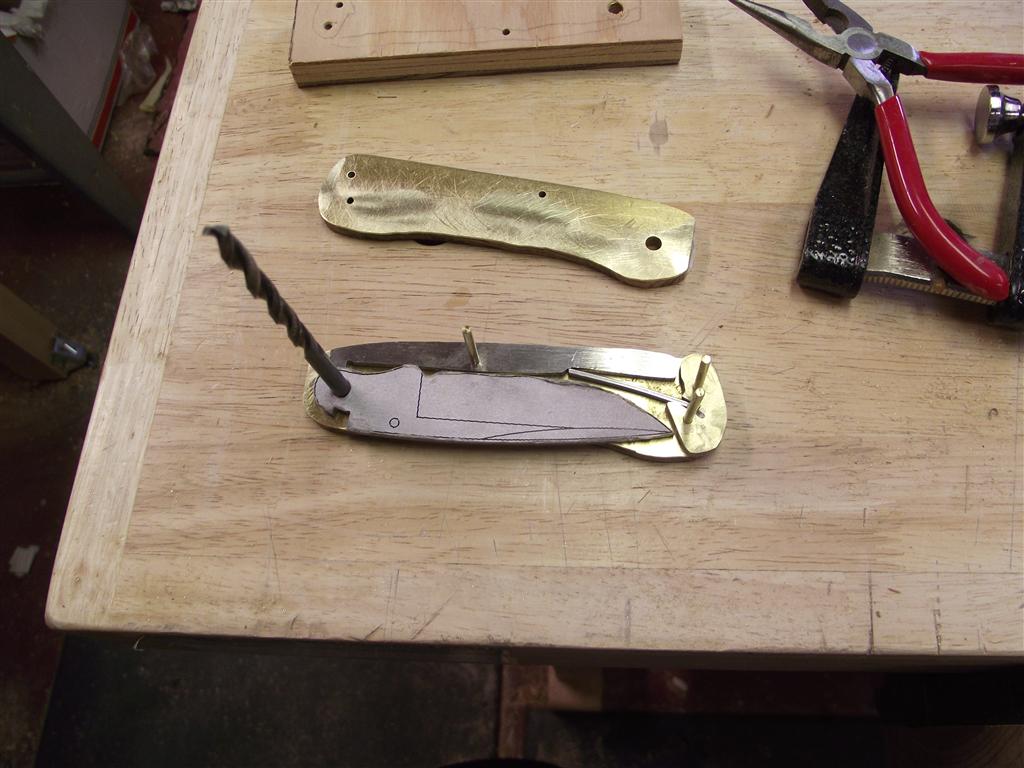
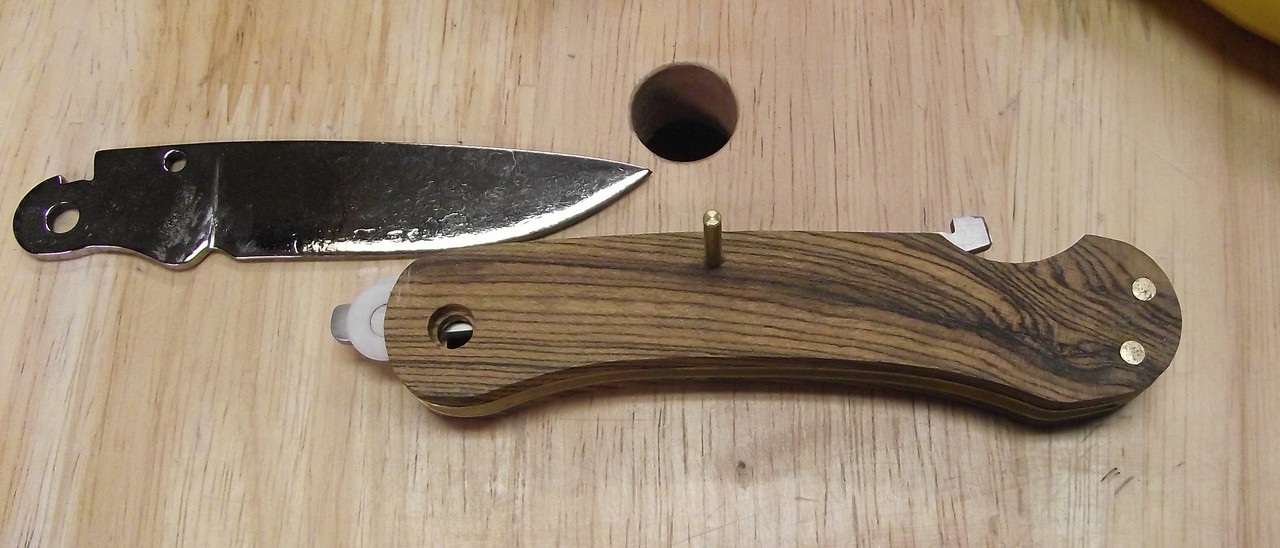
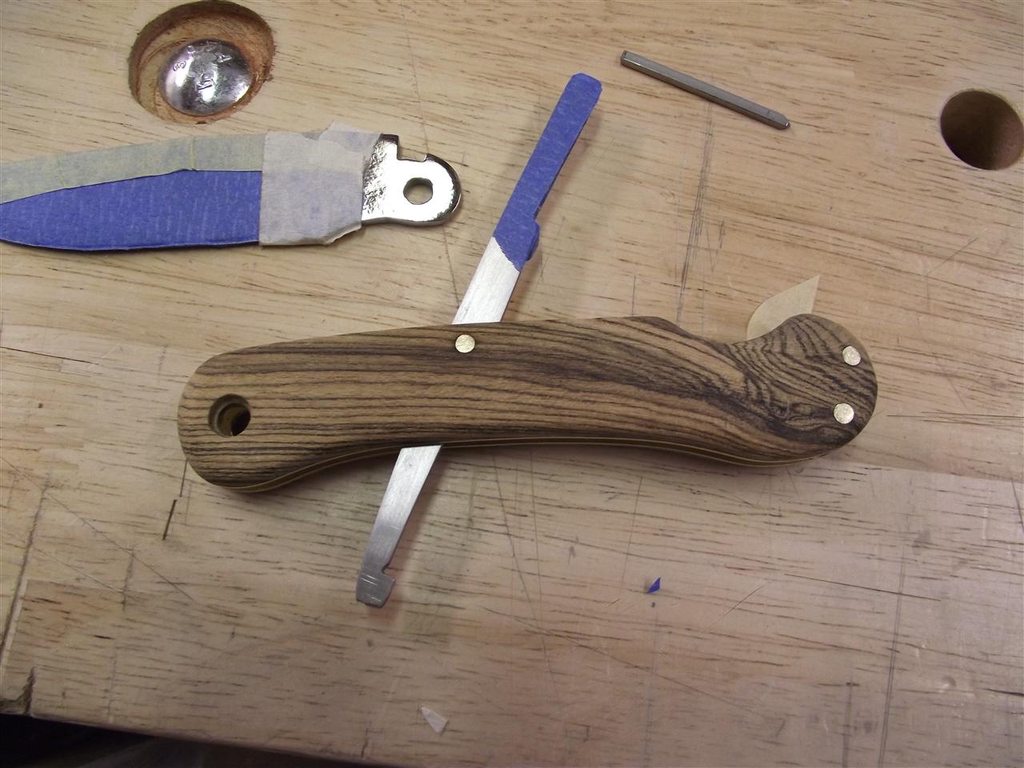
Test-fitting the rest of the knife to the scales to determine the final shaping geometry.

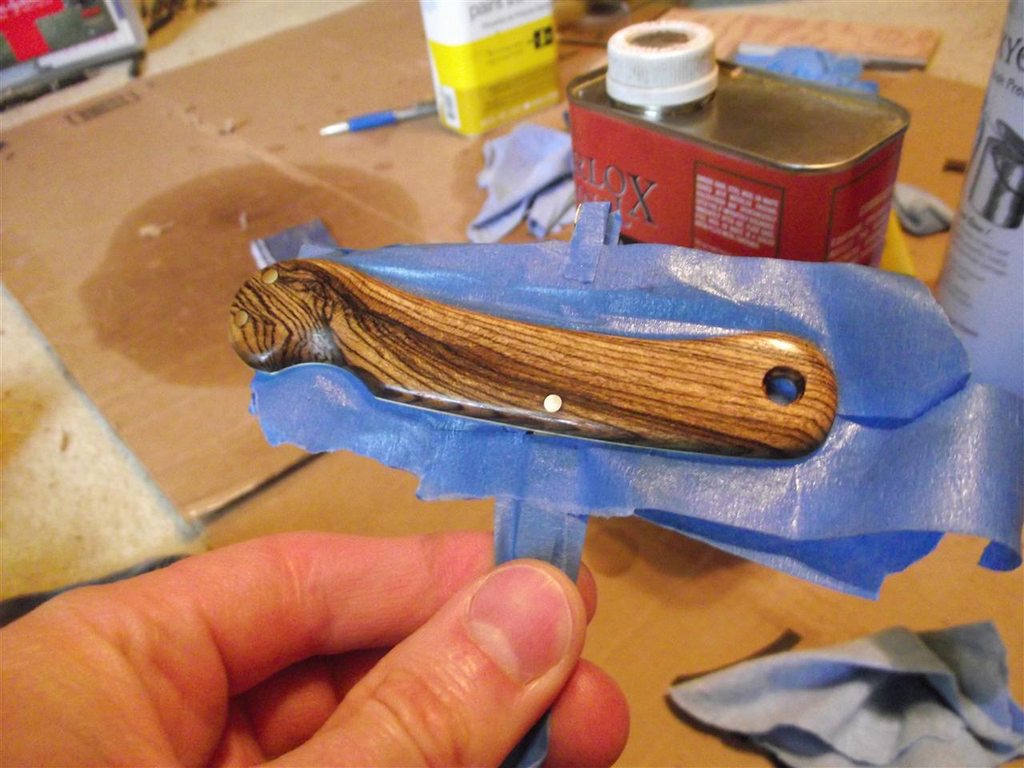
Scale outlines are done. The bocote grain looks nice.
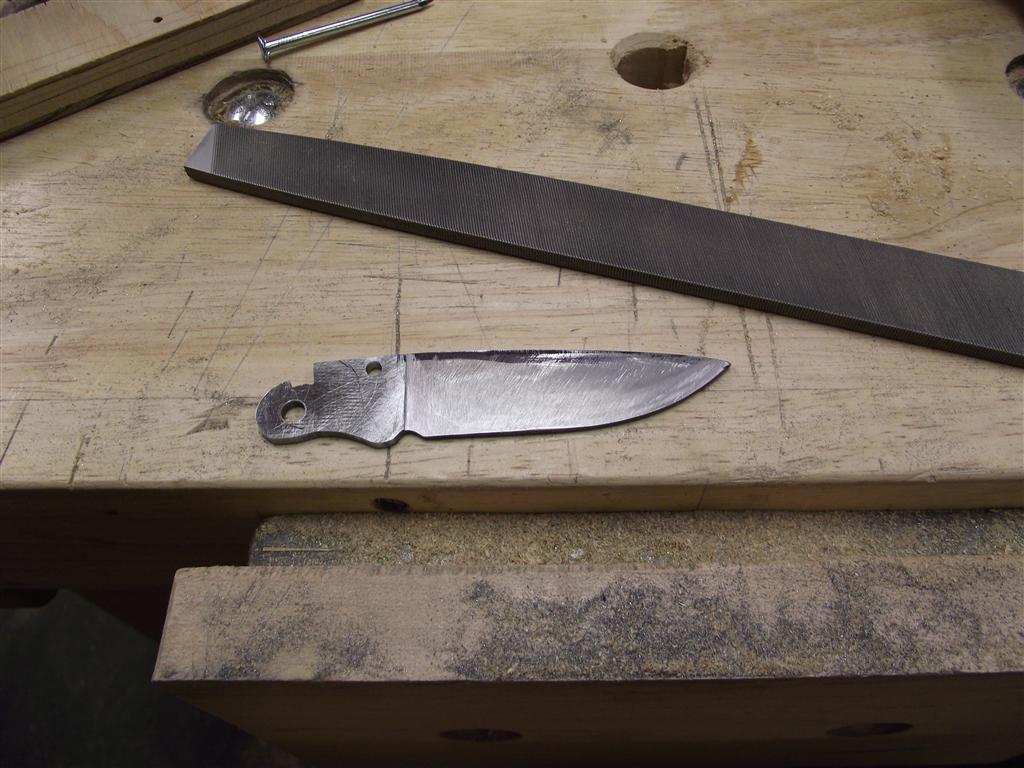
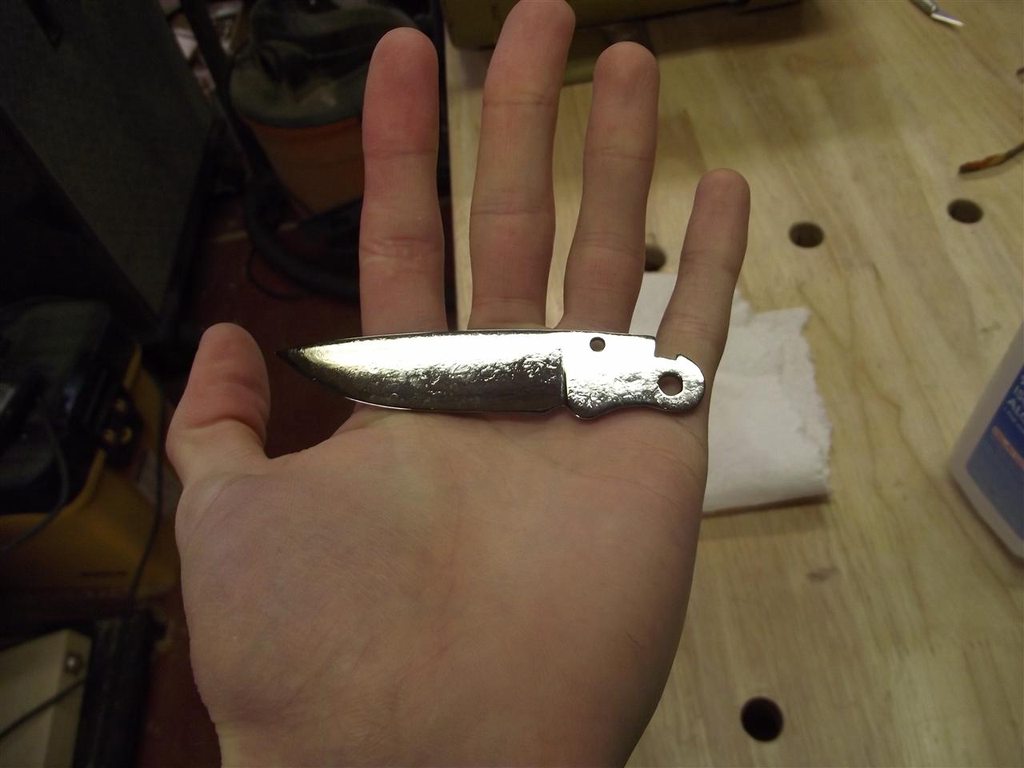
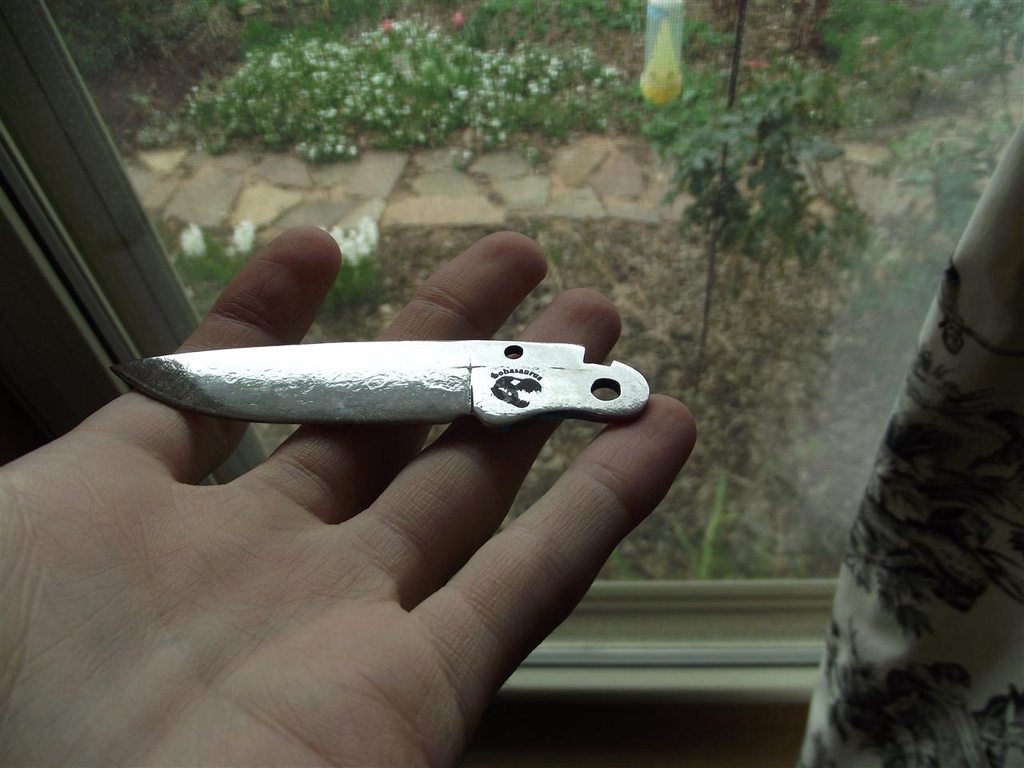
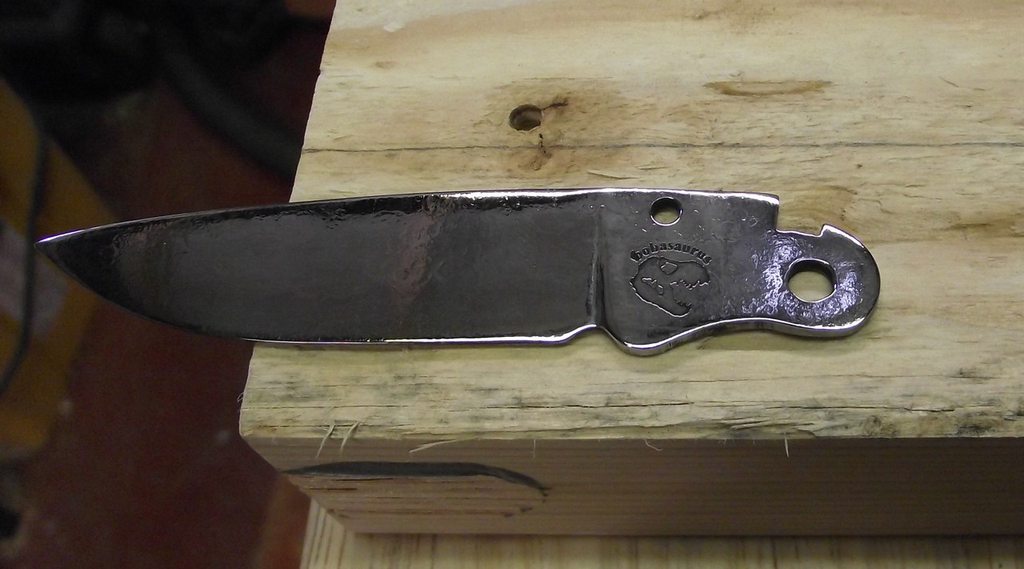
Grinding and filing the blade bevels while trying to make a "plunge" line where the edge ends. Lots of work, and I kind of suck at it so I gave up on the fancy grind I initially planned and just straight beveled the sides.
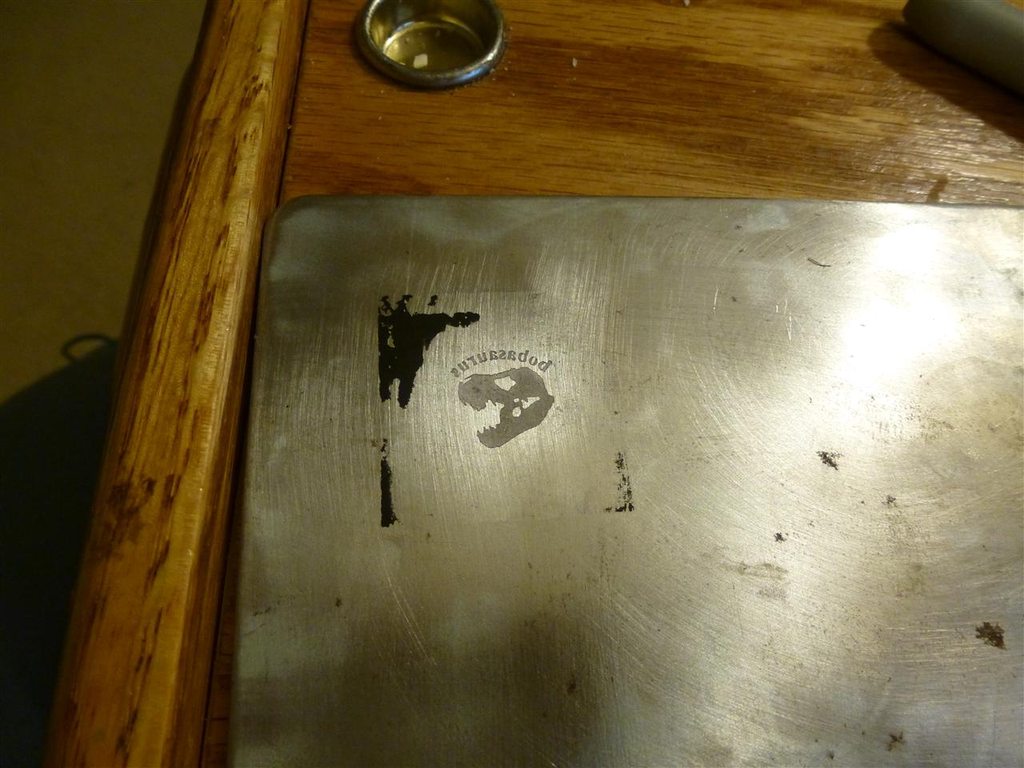
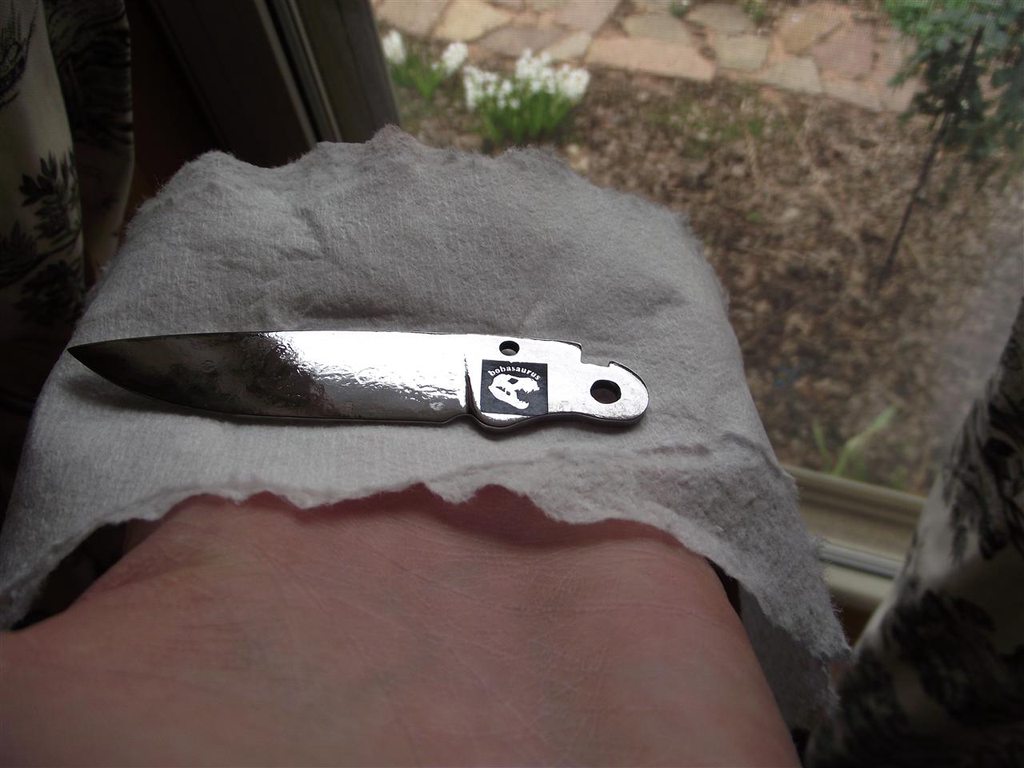
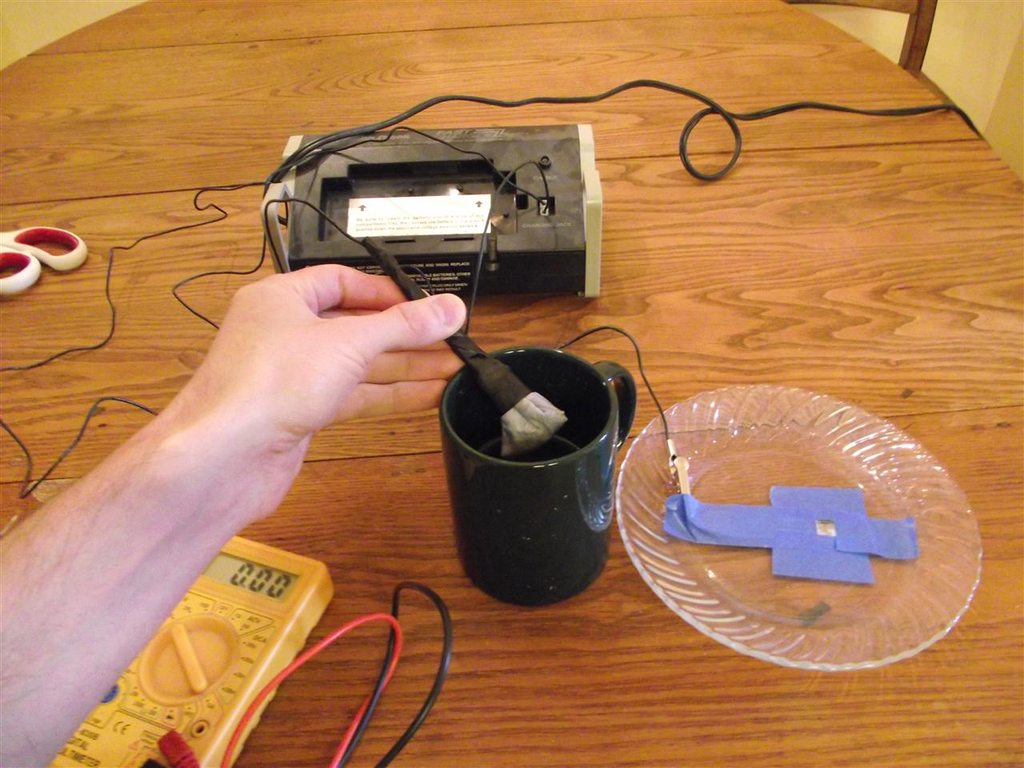
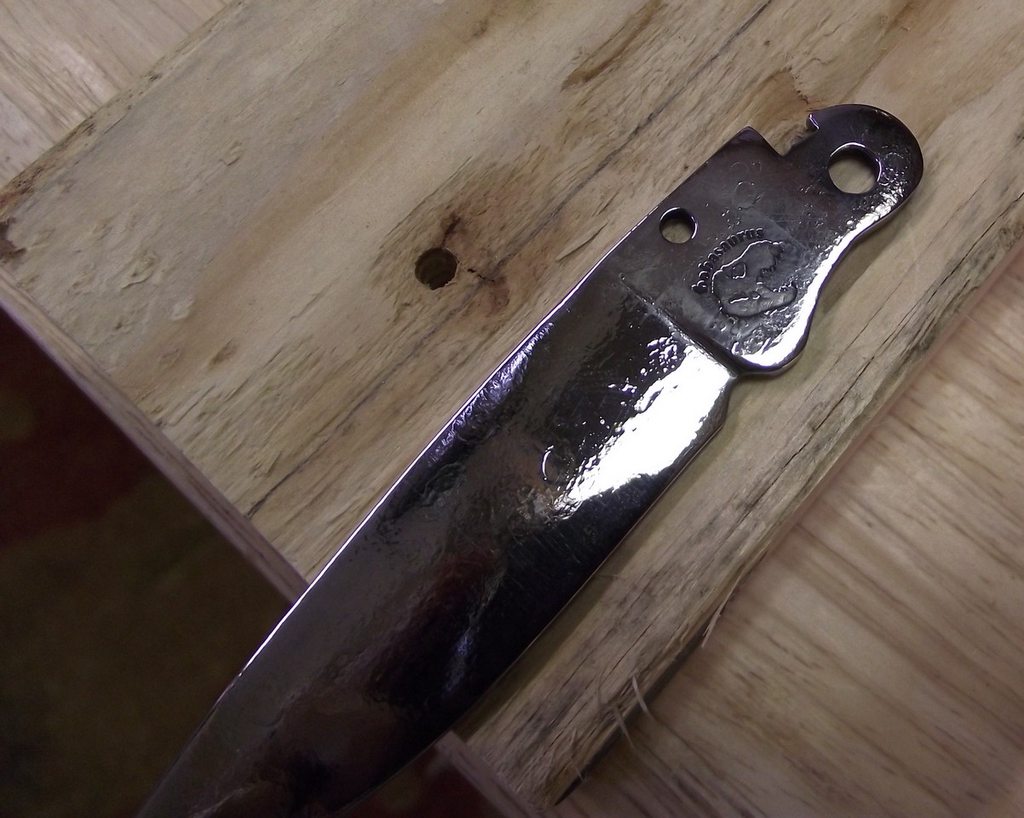
I'm playing around with electroetching to put a makers mark on the blade. I can use the toner transfer technique with any logo I can print from my laser printer. Here is an etched logo on a test sheet of steel (unfortunately flipped because I am stupid).
O1 tool steel bar, brass hardware, buffing compound, epoxy, jeweler's saw frame/blades, rivet drill, center punch, etc.
Designed the lockback-style knife mechanics in Sketchup.
Breaking saw blades as I cut through the super-hard tool steel. These two pieces will be the blade and bolster.
Grinding to rough shape on the 8" slow bench grinder.
More grinding with the oscillating spindle sander.
Drilling out the blanks.
A plywood jig for test fitting the mechanisms. The locking bar fit came out a little loose, but it works.
Supergluing (with fast-cure spray) brass shims on the bolster to match the blade washer thickness. I tried the "2 ton" epoxy before this and the bond failed immediately while grinding.
Super gluing (again with the fast-cure spray) a shim to the lock bar to improve the loose fit with the blade. It took a few tries, but the superglue held up during grinding and the shim seems to work great. I filed it until the fit with the blade was perfect.
Hand planing a bocote knife scale flat on one face and one edge. I'm going to resaw one scale into two on the bandsaw, and this needs two flats square to each other for good results.
Resawing the single bocote scale into two thin bookmatched scales on my bandsaw.
Bookmatching the grain looks pretty nice.
Gluing a brass liner to one of the scales. I used the super glue with curing spray trick again... it has been working great so far.
The superglue bond held up well to initial grinding with no visible gap. I did have to re-do one of the brass pieces due to a fumbled first glue-up. Superglue sets extremely quick... it's hard to get things into position fast enough.
I cut out the center of the plywood fitting jig to act as a drill guide for the scales.
After drilling the scales.
I pinned together the newly-drilled scales to do some rough shaping on the spindle sander.
Test-fitting the rest of the knife to the scales to determine the final shaping geometry.
Scale outlines are done. The bocote grain looks nice.
Grinding and filing the blade bevels while trying to make a "plunge" line where the edge ends. Lots of work, and I kind of suck at it so I gave up on the fancy grind I initially planned and just straight beveled the sides.
I'm playing around with electroetching to put a makers mark on the blade. I can use the toner transfer technique with any logo I can print from my laser printer. Here is an etched logo on a test sheet of steel (unfortunately flipped because I am stupid).