Stacy E. Apelt - Bladesmith
ilmarinen - MODERATOR
Moderator
Knifemaker / Craftsman / Service Provider
- Joined
- Aug 20, 2004
- Messages
- 38,525
I was watching the Memorial Day Concert and it got me thinking. I want to thank all those who served and those who have had family, friends, and loved ones who gave for our country. Ther is aot more to their stories than what meets the camera at a big event.
I will tell a somewhat long story, which involves several families on two sides of a war and covers 50 years and four wars.
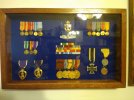
My Father was born in Richenau, Germany. His father, Max Apelt, was a somewhat legendary coal miner similar to out John Henry, known for his immense strength. In 1911 he was Germany's Greco-Roman wrestling champ and third place weight lifter. When WW1 started the Kaisers army came to his little mountain town and put all the men in a line … and off they went to war. His wife, Anna ( ah-nah), donated her gold wedding ring to help the raise money for the war effort. They gave her a band made of iron and copper that said, "Gold gab ich fur isen" (look it up). Grandpa became a machine gunner. The machine guns then were huge and heavy, taking two me to operate one - one to load and one to fire and control it. Grandpa could carry the huge gun by himself on his shoulder and carry ammo under the other arm. His unit was on a hill not far over the border into France. It was dug in and told to keep the French army from taking the hill. They were shelled for two days, firing to keep the enemy away and taking heavy casualties. When all of his unit ran out of ammo, the French advanced. Grandpa jumped out of his hole and ran up the hill. The French all fired at him, but he was fast and dodged left and right. He made it over the hill and his fellow remaining comrades all cheered. Some were considering trying to make a run for it themselves when Max came back over the hill carrying four 75 pound cases of ammo, and ran straight toward the French army. He threw the ammo in the hole, stood up, and loaded the gun with one hand while firing with the other. The French fell back and Max yelled to everyone, "Herausholen, macht schnell". He fired away as those not wounded (or dead) dragged the wounded up and over the hill. When he ran out of ammo, the French returned. Max jumped out of the hole and sprinted up the hill. The French started firing, but their officer ordered a cease fire, saying "That man deserves to live today." For his bravery, Max Apelt was awarded the Iron Cross by the Kaiser. He came home, put his medals in an old cigar box, had two kids … and never mentioned it for over 50 years. He became a simple gentle giant who liked beer, gardening, laughter, and family.
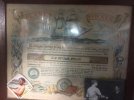
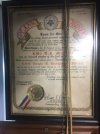
At the same time, a well trained and rugged Scottish-American nurse from the Ozarks of Missouri named Mary Elena Elliott wanted to help in the war effort, so she went to New York City and became a Red Cross Nurse. She joined with the Army and was taken to France. They would not let women be in the Army full time or nurses in combat, so they would hire her at each base in France, pay her off after a week or two working in the surgeries, and discharge her, and she would travel with a group of field nurses to the next camp and be hired again. She did this for 47 camps. I still have her Army pay record of all this. She was on one side of the battle lines while Max was on the other.
Upon returning to NYC, she met a young physicist, whom she married. She put all her nursing certificates and war records in a shoe box and set them away. She never told stories of the war to any of her four children or many grandchildren. They settled down in a quiet little town in New Jersey where they raised a family and her husband worked in NYC as a physicist and engineer for Bell labs.
Her son Leland Jr , who had an engineering degree from Dartmouth, volunteered for the army air corps and flew a Mustang fighter over Europe in WWII. I am told he was decorated, but he never mentioned it.
When WWII broke out, their youngest daughter Emily's sweetheart went off to the Pacific, so she quit her studies as one of the three women admitted to the engineering program at Drexel Institute (at that time) and went to nursing school in NYC. Her beloved came home in one piece, they got married, the war ended, she went with him to London with a new baby , returned a few years later, … and they lived a happy simple life in New Jersey where they had two more sons.
After the Great European Depression, Max had emigrated to America in 1930, became an American citizen, and his son, Egon Apelt was a senior in High School in 1941. The new war in Europe was getting worse, and everyone expected us to soon be in it. Egon went down in early September of '41 to join the Navy. He wasn't 18 until January, but they said it would take a while to process things, and filed out the paperwork. They needed a birth certificate with a raised seal on it. The one he had with his immigration papers was a photocopy. Grandma contacted her sister in Germany, and she went to the registrar in Richenau. He provided a new certificate with an official govt. seal - a Nazi seal. Dad took it to the navy office on Dec 6, 1941 and they said it was fine. The next day Pearl Harbor was attacked and we declared war on Japan, three days later we declared war on Germany.
On his 18th birthday in January of '42 he was sworn into the navy, went to Corpsman school, and was off to the Pacific. The military sent German-Americans to the Pacific and Japanese-Americans to Europe. He had an aptitude for medicine, and served on ships from fleet tugs to the Battleship Missouri. In many cases he was the only medical person there. He was decorated several times for saving lives. They signed the truce with Japan on the deck of his ship. They sent him home for a few weeks R&R, where he married his sweetheart who had been waiting, and they sent him to England. During that short stay, he fathered his son Richard (ree-hard). When the war ended in Europe, he handled the medical screening and transfer of prisoners and returning wounded through London, came home, had two more sons and transferred to serve on ships in the Atlantic while based in Norfolk. In 1953 the Korean war was still dragging on. The military was considering an air invasion of China and needed medical people to be in the advanced troops, with three young sons and a wife, Egon volunteered to go fleet marine and was sent to paratrooper school. He finished the school but before they were deployed, the war ended. He served on in the Navy, eventually running the School of Hospital Administration in Portsmouth until retiring in 1964.
Egon , the son of the WWI German war hero had married Emily, the daughter of the WWI field nurse.
Fast forward to 1964, a new war was raging again, this time in Vietnam. My brother, Richard (now called rich-erd) was a senior in high school. He went down after graduation and joined the Navy. He went to the corpsman schools, had an aptitude for it, and then volunteered fleet marine to go to Nam. His unit was on a routine patrol maneuver at Hill 881. They ran into an entire NVA Battalion we did not know was there. They were crossing a rice paddy when all hell opened up. Many were killed instantly, others wounded, and then the shelling started. Richard ran from one fallen soldier to another, patching them up and sending them toward the tree line where they could find shelter. He patched up a marine, and when the man got up to run for it, he was shot and killed. There was nothing Richard could do, so he got up and moved to the next guy. As he went over the dirt dike, Richard was shot in the shoulder, destroying his whole shoulder joint. He was blown back over the dike. A few of the soldiers who were at the tree line went to get him, but a 60mm shell hit right where he fell. A lot of gore and his body flew about 10 yards in the air and landed out in the middle of the paddy. With nothing they could do, the few remaining soldiers and wounded withdrew. This was all part of the accidental start of the Khe-sanh battle when the US troops inadvertently ran into two battalions of Vietcong.
My parents received a visit from a Navy officer, a Marine officer, a Navy Chief, and Chaplin - telling them their son had been killed in action, and the body not recovered yet.
Meanwhile - A day after the battle, Richard awoke in a rice paddy with one arm dangling off his shoulder, no hearing, and blurred vision. He hurt from head to toe. The shell had hit directly into the body of the dead marine and while Richard was blown in the air and landed 50 feet or so away, he was alive. He injected himself with a lot of morphine and started for the trees. He found a marine with both legs blown off. He put on tourniquets, bandaged his legs, gave him the rest of his morphine, and headed down the trail. Shortly later Richard ran into a group of our soldiers, managed to communicate that there was a badly wounded man down the trail … and collapsed. He was airlifted to one base after another, and not expected to live. Two days after the first visit, another car showed up with four Navy folks and told mom and dad that Richard was alive … barely... and was being sent to the states in steps as they stabilized him. He went from Chu-lai to Da-nang, to the Philippines to Hawaii to San Diego and finally to Portsmouth. In one of these places a visiting high officer (we never found out who or where) took his own purple heart off and pinned it on Richard's pajamas, because he though there would never be a presentation while he was alive. When he got here, the purple heart was still pinned on his pajamas. They fused his humorous into his scapula, he took over a year to heal, got another purple heat (official this time) and a few other medals … and lived a very quite life away from people and noise. He lives quietly in the Catskills today. He never talks about the war.
I will tell a somewhat long story, which involves several families on two sides of a war and covers 50 years and four wars.
My Father was born in Richenau, Germany. His father, Max Apelt, was a somewhat legendary coal miner similar to out John Henry, known for his immense strength. In 1911 he was Germany's Greco-Roman wrestling champ and third place weight lifter. When WW1 started the Kaisers army came to his little mountain town and put all the men in a line … and off they went to war. His wife, Anna ( ah-nah), donated her gold wedding ring to help the raise money for the war effort. They gave her a band made of iron and copper that said, "Gold gab ich fur isen" (look it up). Grandpa became a machine gunner. The machine guns then were huge and heavy, taking two me to operate one - one to load and one to fire and control it. Grandpa could carry the huge gun by himself on his shoulder and carry ammo under the other arm. His unit was on a hill not far over the border into France. It was dug in and told to keep the French army from taking the hill. They were shelled for two days, firing to keep the enemy away and taking heavy casualties. When all of his unit ran out of ammo, the French advanced. Grandpa jumped out of his hole and ran up the hill. The French all fired at him, but he was fast and dodged left and right. He made it over the hill and his fellow remaining comrades all cheered. Some were considering trying to make a run for it themselves when Max came back over the hill carrying four 75 pound cases of ammo, and ran straight toward the French army. He threw the ammo in the hole, stood up, and loaded the gun with one hand while firing with the other. The French fell back and Max yelled to everyone, "Herausholen, macht schnell". He fired away as those not wounded (or dead) dragged the wounded up and over the hill. When he ran out of ammo, the French returned. Max jumped out of the hole and sprinted up the hill. The French started firing, but their officer ordered a cease fire, saying "That man deserves to live today." For his bravery, Max Apelt was awarded the Iron Cross by the Kaiser. He came home, put his medals in an old cigar box, had two kids … and never mentioned it for over 50 years. He became a simple gentle giant who liked beer, gardening, laughter, and family.
At the same time, a well trained and rugged Scottish-American nurse from the Ozarks of Missouri named Mary Elena Elliott wanted to help in the war effort, so she went to New York City and became a Red Cross Nurse. She joined with the Army and was taken to France. They would not let women be in the Army full time or nurses in combat, so they would hire her at each base in France, pay her off after a week or two working in the surgeries, and discharge her, and she would travel with a group of field nurses to the next camp and be hired again. She did this for 47 camps. I still have her Army pay record of all this. She was on one side of the battle lines while Max was on the other.
Upon returning to NYC, she met a young physicist, whom she married. She put all her nursing certificates and war records in a shoe box and set them away. She never told stories of the war to any of her four children or many grandchildren. They settled down in a quiet little town in New Jersey where they raised a family and her husband worked in NYC as a physicist and engineer for Bell labs.
Her son Leland Jr , who had an engineering degree from Dartmouth, volunteered for the army air corps and flew a Mustang fighter over Europe in WWII. I am told he was decorated, but he never mentioned it.
When WWII broke out, their youngest daughter Emily's sweetheart went off to the Pacific, so she quit her studies as one of the three women admitted to the engineering program at Drexel Institute (at that time) and went to nursing school in NYC. Her beloved came home in one piece, they got married, the war ended, she went with him to London with a new baby , returned a few years later, … and they lived a happy simple life in New Jersey where they had two more sons.
After the Great European Depression, Max had emigrated to America in 1930, became an American citizen, and his son, Egon Apelt was a senior in High School in 1941. The new war in Europe was getting worse, and everyone expected us to soon be in it. Egon went down in early September of '41 to join the Navy. He wasn't 18 until January, but they said it would take a while to process things, and filed out the paperwork. They needed a birth certificate with a raised seal on it. The one he had with his immigration papers was a photocopy. Grandma contacted her sister in Germany, and she went to the registrar in Richenau. He provided a new certificate with an official govt. seal - a Nazi seal. Dad took it to the navy office on Dec 6, 1941 and they said it was fine. The next day Pearl Harbor was attacked and we declared war on Japan, three days later we declared war on Germany.
On his 18th birthday in January of '42 he was sworn into the navy, went to Corpsman school, and was off to the Pacific. The military sent German-Americans to the Pacific and Japanese-Americans to Europe. He had an aptitude for medicine, and served on ships from fleet tugs to the Battleship Missouri. In many cases he was the only medical person there. He was decorated several times for saving lives. They signed the truce with Japan on the deck of his ship. They sent him home for a few weeks R&R, where he married his sweetheart who had been waiting, and they sent him to England. During that short stay, he fathered his son Richard (ree-hard). When the war ended in Europe, he handled the medical screening and transfer of prisoners and returning wounded through London, came home, had two more sons and transferred to serve on ships in the Atlantic while based in Norfolk. In 1953 the Korean war was still dragging on. The military was considering an air invasion of China and needed medical people to be in the advanced troops, with three young sons and a wife, Egon volunteered to go fleet marine and was sent to paratrooper school. He finished the school but before they were deployed, the war ended. He served on in the Navy, eventually running the School of Hospital Administration in Portsmouth until retiring in 1964.
Egon , the son of the WWI German war hero had married Emily, the daughter of the WWI field nurse.
Fast forward to 1964, a new war was raging again, this time in Vietnam. My brother, Richard (now called rich-erd) was a senior in high school. He went down after graduation and joined the Navy. He went to the corpsman schools, had an aptitude for it, and then volunteered fleet marine to go to Nam. His unit was on a routine patrol maneuver at Hill 881. They ran into an entire NVA Battalion we did not know was there. They were crossing a rice paddy when all hell opened up. Many were killed instantly, others wounded, and then the shelling started. Richard ran from one fallen soldier to another, patching them up and sending them toward the tree line where they could find shelter. He patched up a marine, and when the man got up to run for it, he was shot and killed. There was nothing Richard could do, so he got up and moved to the next guy. As he went over the dirt dike, Richard was shot in the shoulder, destroying his whole shoulder joint. He was blown back over the dike. A few of the soldiers who were at the tree line went to get him, but a 60mm shell hit right where he fell. A lot of gore and his body flew about 10 yards in the air and landed out in the middle of the paddy. With nothing they could do, the few remaining soldiers and wounded withdrew. This was all part of the accidental start of the Khe-sanh battle when the US troops inadvertently ran into two battalions of Vietcong.
My parents received a visit from a Navy officer, a Marine officer, a Navy Chief, and Chaplin - telling them their son had been killed in action, and the body not recovered yet.
Meanwhile - A day after the battle, Richard awoke in a rice paddy with one arm dangling off his shoulder, no hearing, and blurred vision. He hurt from head to toe. The shell had hit directly into the body of the dead marine and while Richard was blown in the air and landed 50 feet or so away, he was alive. He injected himself with a lot of morphine and started for the trees. He found a marine with both legs blown off. He put on tourniquets, bandaged his legs, gave him the rest of his morphine, and headed down the trail. Shortly later Richard ran into a group of our soldiers, managed to communicate that there was a badly wounded man down the trail … and collapsed. He was airlifted to one base after another, and not expected to live. Two days after the first visit, another car showed up with four Navy folks and told mom and dad that Richard was alive … barely... and was being sent to the states in steps as they stabilized him. He went from Chu-lai to Da-nang, to the Philippines to Hawaii to San Diego and finally to Portsmouth. In one of these places a visiting high officer (we never found out who or where) took his own purple heart off and pinned it on Richard's pajamas, because he though there would never be a presentation while he was alive. When he got here, the purple heart was still pinned on his pajamas. They fused his humorous into his scapula, he took over a year to heal, got another purple heat (official this time) and a few other medals … and lived a very quite life away from people and noise. He lives quietly in the Catskills today. He never talks about the war.
Last edited: