
Micarta colors

Joined
Sep 27, 2013
Messages
148
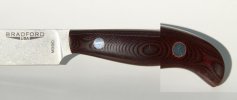
What are the best micarta colors for polishing out to a high gloss finish, I have only used maroon and natural brown but want to know others that might work well for what I'm doing.
Out of these 2 I kind of lean towards the maroon, but the natural brown came out way better than I expected!
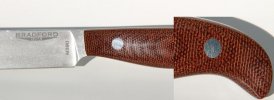
magnified natural.jpg
maroon magnified.jpg

Thanks,
Bradford
 
I've used most of the available colors, but don't have too many photos.

This is black G10 hand sanded to 800X and then very lightly buffed-
standard.jpg


Same process with natural Micarta (that turns maroon over time)-
standard.jpg


Same process with Olive Drab G10-
standard.jpg


standard.jpg


Same ODG G10, but hand sanded to 500X for a satin finish-
standard.jpg
 
The big variations in micarta come not with color, but with the material used for substrate (e.g., paper, linen, canvas). In addition, the manufacturing process also introduces a lot of variability. A lot of what is sold as "micarta" today doesn't use the same manufacturing process as the original Micarta phenolic laminates manufactured by Westinghouse and later by Norplex. They used a very high-pressure, high-temperature cure that made an exceptionally hard and dense end product. The mainstream "micarta" sold today seems to be a lot softer and sometimes isn't even manufactured with phenolic resins. Needless to say, these softer products tend to finish with a different look than true high-pressure/temperature phenolic laminates.

G10 and related products are a completely different animal - they are typically epoxy-resin and fiberglass cloth laminates.

TedP
 
Might even try Formica, which is where Micarta came from.

Otherwise, what Phillip said.

Typically Formica laminates are made from melamine resin, which is a thermoset resin related to phenolic. Melamine tends to be harder and a little more brittle than the other resins - but a lot of that depends on the cure technique. Melamine is also used in G5 and G9 glass fiber laminates, which you sometimes find used for knife handles (although epoxy-based G10 is much more common).

The thing to remember about melamine is that it is so hard and inflexible that it tends to get chippy and fracture more easily than phenolic or epoxy.

TedP
 
Back
Top