- Joined
- Apr 3, 2011
- Messages
- 6,017
Any tips how to mill fine jimping? Not even sure what end mills to use or how to go about it - use a vise that tilts? Tilt the head and use an edge of the end mill?

The BladeForums.com 2024 Traditional Knife is available! Price is $250 ea (shipped within CONUS).
Order here: https://www.bladeforums.com/help/2024-traditional/

There are a number of ways to do this. Tilting the head and using a regular endmill limits you to 90 degree jimping profile, but is probably the easiest way to do it on a vertical mill while avoiding head clearance issues. I would avoid trying to do it in a way that requires you to center cut the root of a profile, as the surface speed prevents any actual cutting at the point and the tools are fragile.
Honestly I think it's faster and easier to do with a checkering file, if you're going to do it across the thickness of a blade. If you're going to do it on the side and the cuts are longer it might be worth the setup. I could jimp an inch by hand faster than you could tilt your head to 45, then tilt it back and tram it level again, not including the time you spend milling.


You might try a high RPM slightly more than spring pass climb milling to get a better surface finish.
I understand climb milling in reference to the direction of the cutter and the direction of the feed. Can you explain spring pass?
I have never jimped anything, but wonder why you would run a square end mill at 45 degrees rather than just running a 45 degree end mill at 90 degrees? At least that way you don’t have to re tram the head.

I think hes referring to a bevel cutter.A 45 degree cutter has zero surface speed at the center and drags its way through the cut. Hard to get a decent finish.
I think hes referring to a bevel cutter.

When making a cut at depth the tool and work deflect from each other. Even in very rigid setups, it can be minimized but not eliminated. A "spring pass" refers to making the same cut without additional feed, you've allowed the tool and work to spring back to their unconstrained state and are making a cut at the same dimension with whatever is left over.
When I say "a little better than a spring pass" I mean if he was making a .060" depth of cut, then, on the spring pass, possibly advance .001 or .002" to climb mill back. Just enough to match the depth of the surface roughness he's trying to eliminate, but not enough to create a significant amount of deflection.
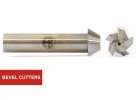
This is what I used to use to cut my nail nicks.A double angle cutter? That's possible but would be a tough setup depending on where the jimping is on the knife.
Not to derail the thread too much but that's interesting! What size do you recommend? Looks like since it's solid carbide it would work on doing a blade even after htLike this.
This is what I used to use to cut my nail nicks.