- Joined
- May 17, 2006
- Messages
- 4,290
Muskrat Man Custom Knives
I have admired Kaleb and his knives for months now finding myself on his website looking at his Nessmuks before I ever even liked that design. I remember reading a thread on a knife he was making for his dad who wondered into his shop and pointed out a blade he liked. He then put it together and gave it to him for his birthday. That knife really cought my eye becouse of the honest simplicity it displayed. I thought it was a great story and ironic since his dad was a retired bladesmith!
Full Tang Puuko
Puuko Design
In the Nordic countries, the puukko is an "everyday" knife that is used for everything from hunting, fishing, and garden work to opening boxes in the warehouse.
Getting one's first puukko is considered, in Finland, the symbol of coming of age for both boys and girls. Men's and women's puukkos do not significantly differ. The only difference is that women's puukkos are often shorter, may have decorated sheaths, and are better suited for working with foodstuffs. Both boy and girl Scouts consider the puukko their scouting symbol as well as a handy tool. Getting a good puukko as a gift or present is considered a great honour in Finland.
The basic components of a puukko are a hilt and a blade along with a sheath, which can be attached to a belt. The puukko's blade has a single curving edge and a flat back. The flat back allows the user to place a thumb or his other hand on it to concentrate the force. Puukkos are used both as a tool for all kinds of carving, especially to work wood, and to clean the catches of anglers and hunters. Some puukko designs have a slightly upwards or downwards curved point, depending on what purpose the knife has. A hunting puukko's tip is often curved downwards to make skinning and opening the animal easier and less messy. The blade is relatively short, usually about the same length as the handle. Fisherman's puukkos sometimes have a small dovetail on point to ease scraping off the innards of a fish. Most puukkos have a slight shoulder but no choil, since the point where the edge ends and the handle begins is also the point where most power can be applied. A puukko often has no guard to stop the hand from slipping onto the edge, but this is of no great importance, since it is primarily considered a cutting tool, not a stabbing weapon. In cases where the knife and the hand are expected to get wet, like if the puukko is meant for gutting fish or game, some form of guards are carved into the handle. The traditional length of the puukko blade is the same as one's palm width.
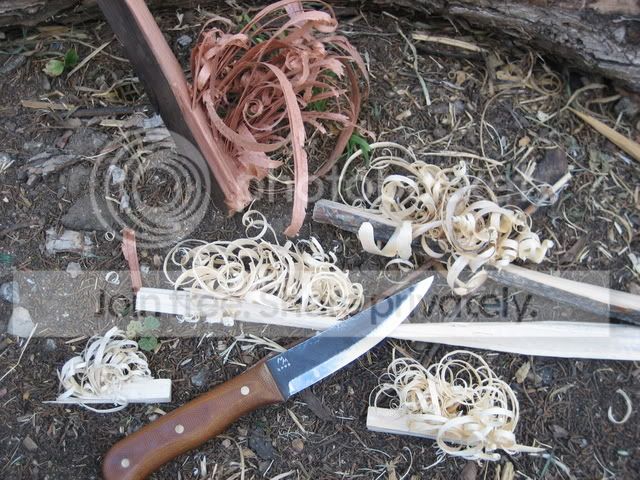
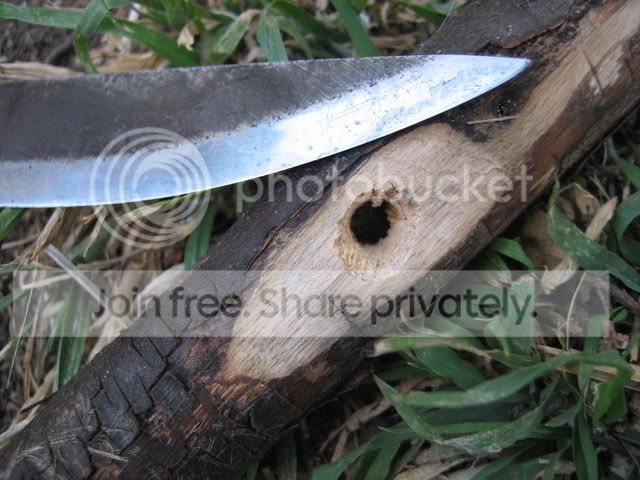
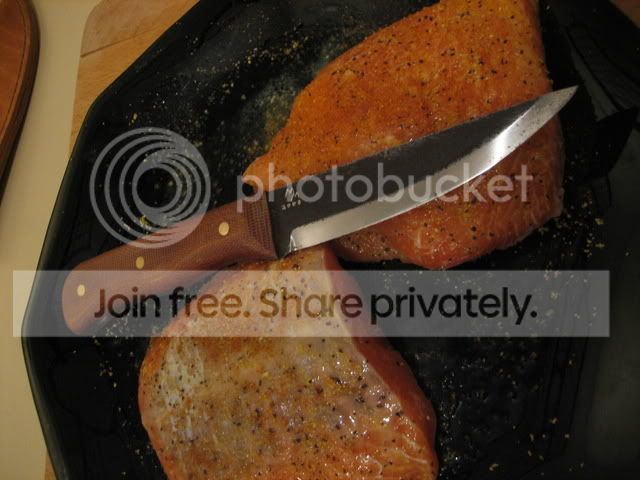
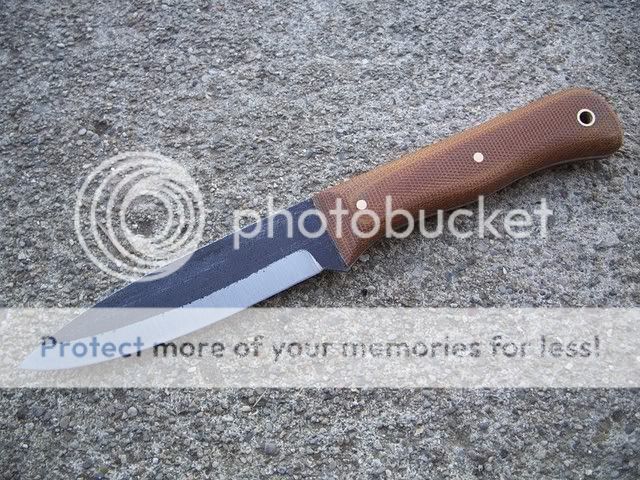
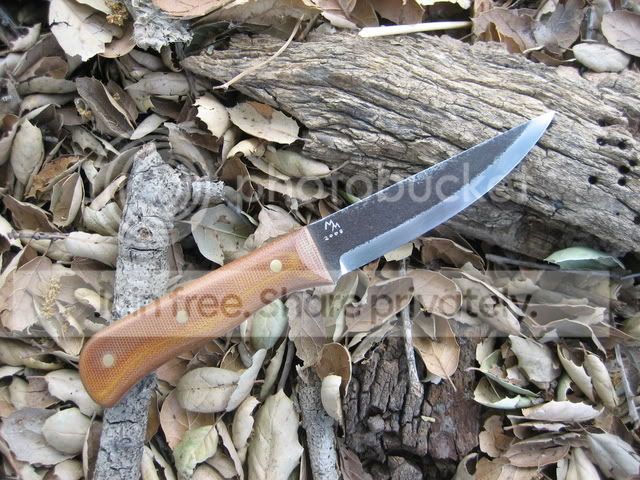
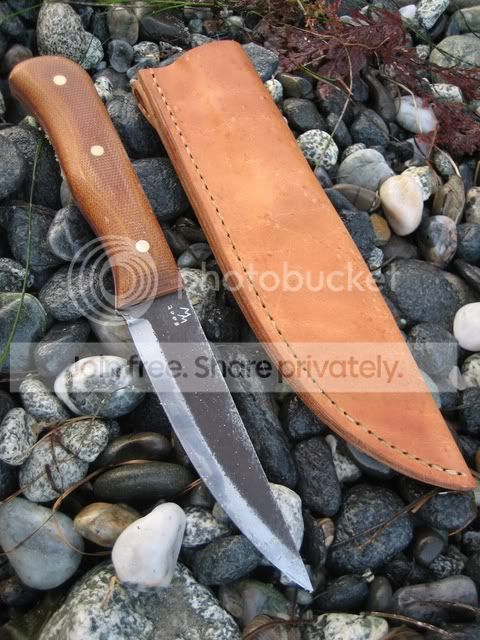
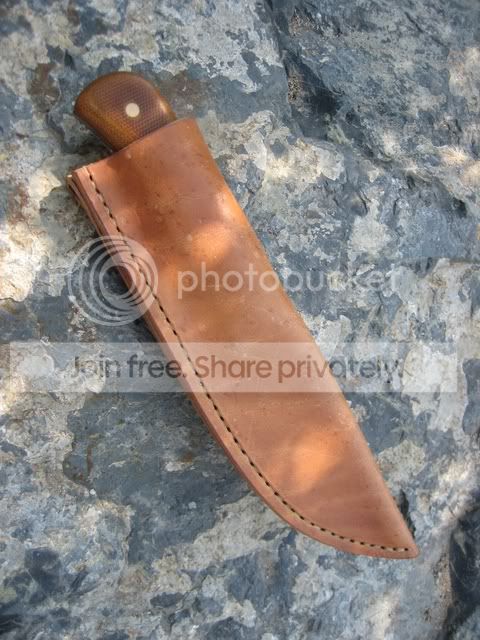
Here is the Muskrat Man Full Tang Puuko
Specs:
Overall Length is 8 5/8"
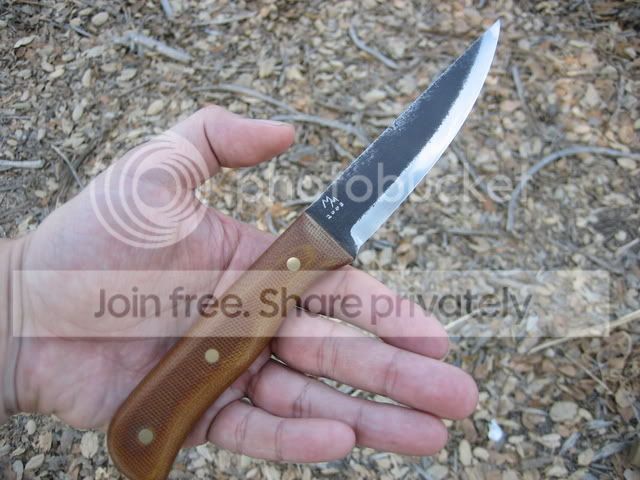
Blade length is 4 1/4" with a cutting edge of 4 1/8" Scandi Grind
L6 Carbon Tool Steel
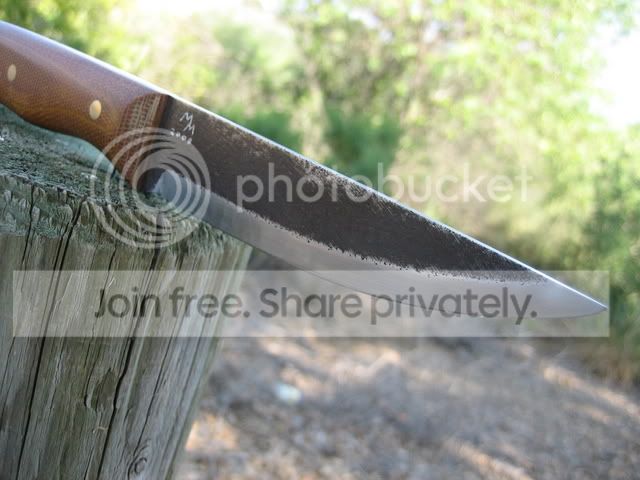
Spine is 1/8" thick with nice red liners
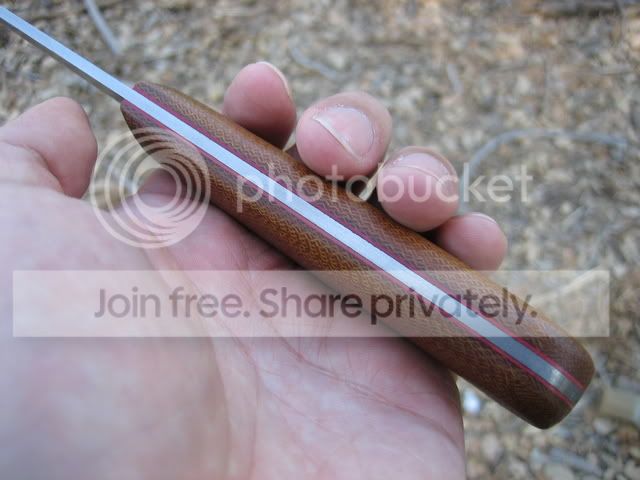
Handle is brown micarta
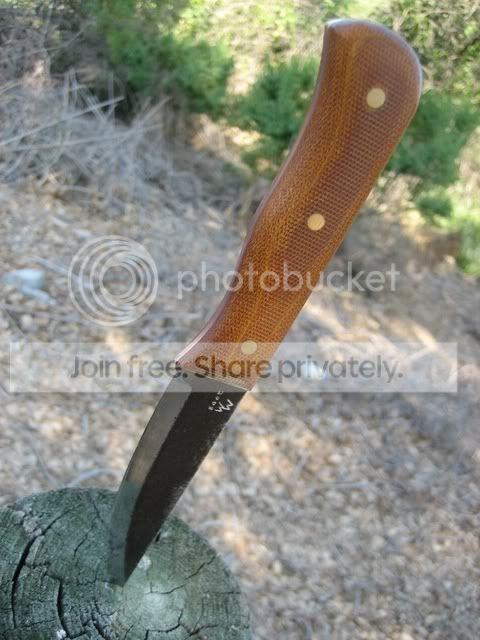
Quality of this knife and leather sheath was 100% perfect. Great attention to detail. The sheath fit like a glove and was very secure. Deep pouch carry.
Sized up with some favorites

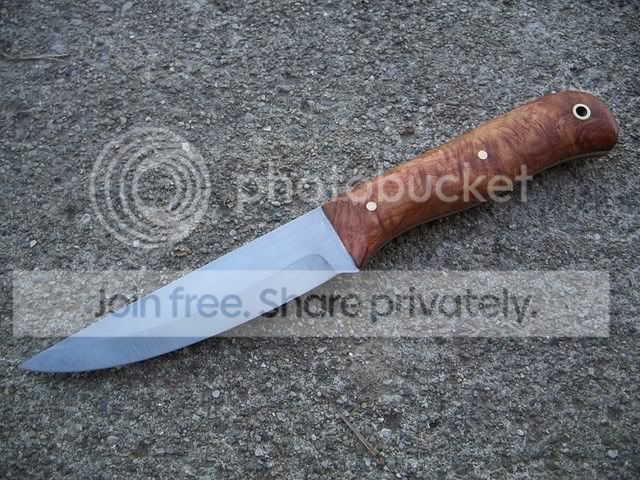
Here is another Full Tang Puuko Clean (satin) with thick (3/8")Stabilized amboyna burl
I have admired Kaleb and his knives for months now finding myself on his website looking at his Nessmuks before I ever even liked that design. I remember reading a thread on a knife he was making for his dad who wondered into his shop and pointed out a blade he liked. He then put it together and gave it to him for his birthday. That knife really cought my eye becouse of the honest simplicity it displayed. I thought it was a great story and ironic since his dad was a retired bladesmith!
Full Tang Puuko
Puuko Design
In the Nordic countries, the puukko is an "everyday" knife that is used for everything from hunting, fishing, and garden work to opening boxes in the warehouse.
Getting one's first puukko is considered, in Finland, the symbol of coming of age for both boys and girls. Men's and women's puukkos do not significantly differ. The only difference is that women's puukkos are often shorter, may have decorated sheaths, and are better suited for working with foodstuffs. Both boy and girl Scouts consider the puukko their scouting symbol as well as a handy tool. Getting a good puukko as a gift or present is considered a great honour in Finland.
The basic components of a puukko are a hilt and a blade along with a sheath, which can be attached to a belt. The puukko's blade has a single curving edge and a flat back. The flat back allows the user to place a thumb or his other hand on it to concentrate the force. Puukkos are used both as a tool for all kinds of carving, especially to work wood, and to clean the catches of anglers and hunters. Some puukko designs have a slightly upwards or downwards curved point, depending on what purpose the knife has. A hunting puukko's tip is often curved downwards to make skinning and opening the animal easier and less messy. The blade is relatively short, usually about the same length as the handle. Fisherman's puukkos sometimes have a small dovetail on point to ease scraping off the innards of a fish. Most puukkos have a slight shoulder but no choil, since the point where the edge ends and the handle begins is also the point where most power can be applied. A puukko often has no guard to stop the hand from slipping onto the edge, but this is of no great importance, since it is primarily considered a cutting tool, not a stabbing weapon. In cases where the knife and the hand are expected to get wet, like if the puukko is meant for gutting fish or game, some form of guards are carved into the handle. The traditional length of the puukko blade is the same as one's palm width.
Here is the Muskrat Man Full Tang Puuko
Specs:
Overall Length is 8 5/8"
Blade length is 4 1/4" with a cutting edge of 4 1/8" Scandi Grind
L6 Carbon Tool Steel
Spine is 1/8" thick with nice red liners
Handle is brown micarta
Quality of this knife and leather sheath was 100% perfect. Great attention to detail. The sheath fit like a glove and was very secure. Deep pouch carry.
Sized up with some favorites
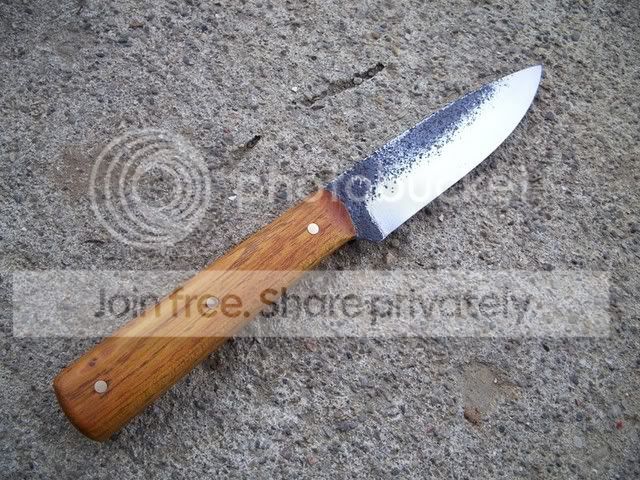
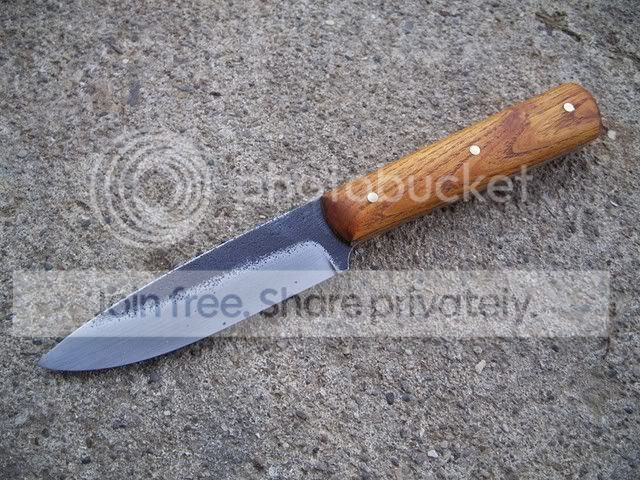
Here is another Full Tang Puuko Clean (satin) with thick (3/8")Stabilized amboyna burl
Last edited: