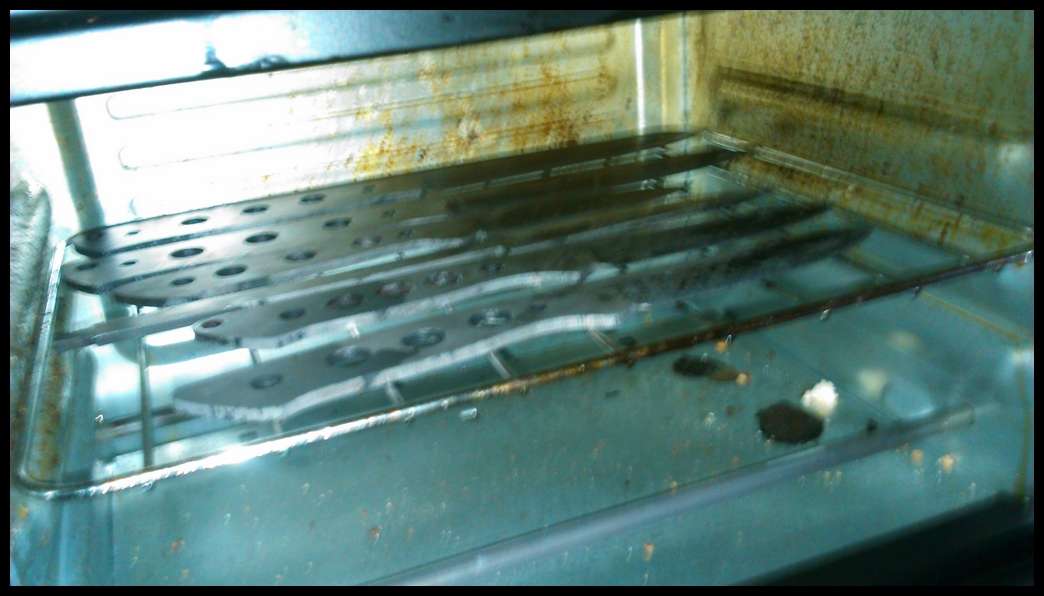
My first HT :D - 80CrV2 knives

Joined
Aug 25, 2013
Messages
1,220
Hello everyone :D

Today I just first time done HT by myself :D

6 knives from 3,17mm 80CrV2 ( in PL NCV1)

2x Bushcraft - 1 curved 2mm to left ( will be for crash test ]:-> ) second straight
3x Garmr - 1 curved 0,5mm to left - rest straight
1x Pukko for friend - straight :)

HT:
Annealing: 650*C 2h i 14h colling down (Kiln temp. fluctuation: +/-10*C)
Hardening: 790*C + 15 minutes hold (Kiln temp. fluctuation : +/- 10*C)
Cooling: Rapeseed oil rafined- ~130*C
Tempering: 190*C 2h. (Now :) )

yp2h74.jpg


I think what hardness I will achieve on this knives... (I don't have Rockwell :( )

What do you think about this HT of NCV1 steel ?
 
Probably some ~58-59HRC

XguVx1.jpg


By File test, I probably get a nice decarb ;_;

ATP-641 will be a good help with this steel ?
 
Last edited:
Good job.

I wouldn't worry about coating the blades, Decarb is to be expected in carbon steel, and is ground off in finishing.
 
Next knives from 2,7mm 80CrV2 I will make like this:

Annealing: 650*C 2h i 14h colling down
Hardening: 830*C + 20 minutes hold
Cooling: Rapeseed oil rafined- ~180*C
Tempering: 2x 175*C 2h.

This should give me 61-62HRC.
 
Be careful when tempering in that oven... i'd shield the blades from direct exposition to the elements (put them into an iron pipe etc..), and i'll stick a probe inside anyway for making it sure of the real temperature.
I have one similar and i also lay a firebrick inside to steady temperature fluctuations
 
I thinking about to build oven/kiln for tempering and hardening Ceracote coating :)

Ok roaste overshooted for about 100*C....

Dark-blue on knives... This will be about 53HRC...
 
Last edited:
That oven is not necessarily bad. I'll tell you what i did.
I drilled a small hole from the back (at shelf height) to insert my termocouple... i have firebricks on the shelf and a piece of square tube resting on them.
The TC go inside the oven and into the tube, close to the blades.
Another thing: let the oven equalize at the correct temperature before inserting the blades....it requires time to soak the firebricks and the tube and you'll have to turn the knob a couple of time to nail the correct temperature (the tc readings). You can now insert the blades...of course the temperature will drop, but don't touch the knob...it'll rise again to the correct setpoint and then you can start timing.
That's it.
 
Next knives from 2,7mm 80CrV2 I will make like this:

Annealing: 650*C 2h i 14h cooling down
Hardening: 830*C + 20 minutes hold
Cooling: Rapeseed oil refined- ~180*C
Tempering: 2x 175*C 2h.

This should give me 61-62HRC.


I am not understanding your cooling specs. Are you quenching in 180C oil ( 355F)? Are you trying for a marquench?
For an oil quench, the oil should be about 55-65C (130-150F). Remove the blade from the oil after 30 seconds and air cool to room temperature.

The annealing method you gave would be great if the cooling is at 10C per hour. Otherwise, just air cool to black after the soak and quench in water when it is about 450C ( 850-900F). Both will give spheroidized steel.

I don't have my books and charts here, but your temper sounds a little low for Rc-61-62. I would go to about 190C, twice.
 
This steel is Polish made NCV1.

Stress relief annealing, not for spheroidizing.
And for slower cooling I need to get better PID. (Lumel RE82)

175*C is propper temp for this steel when quenching in oil.
190*C would be for water quench. ( And this steel can get nice deform then)

And why in that hot oil?
I'm still able then to straighten knife, if it bends.

Ps.: "marquench" - What that mean ? ( I don't know this word in EN)
 
I am confused to your "anneal". Are these not stock removal or are they forged? If stock removal then an "anneal" is not necessary. If you want to do stress relief, 30 minutes at 1200F will do that. If you are forging this steel, then you might anneal it if you still had more grinding to do, but only after normalizing it and cycling it a few times.

You said your oil was at 180C. That is 356F. The oil needs to be at 130F....or 54C. (Unless you are marquenching as stacy mentioned) You don't need the oil to be hot in order to straighten a blade that has bent on you. You have about a minute or two after the quench to do that with gloved hands....as the martensite is being formed between 400F and 100F. So quench in 130F, hold for a solid 10 count, pull blade out, straighten as needed, back into oil until ambient temp. Then temper.

I would keep my hardening temperature at 800C with a 15 minute soak. For temper I would do one hour at 190C (375F), and then check the edge. If it's too chippy, bump up the temper temp to 204C (400f), and check again.
 
".....175*C is proper temp for this steel when quenching in oil.
190*C would be for water quench. ( And this steel can get nice deform then)
...."


Water can not be used as a quenchant at 190C. It turns to steam at 100C. I think you are looking at a transformation chart, not quench oil temps.

water quench is usually at 50C and oil at 55C.

Stress relief would be taken care of with a much shorter cooling unless the drop is around 10C per hour. One to two hours at 650C and then air cool to 500C and then water quench will remove all stress and leave the blade ready to grind.
 
I think he was saying that the instructions for this steel told him that if he used water as a quenchant...then to temper at 190C, but that if he used oil as a quenchant, to temper at 175C.
 
Samurai is right :)

NCV1 is not totally like 80CrV2 .
This is our Polish steel.

Norm: PN-86/H-85023 / 3.1 EN 10204
Melt No.: 61454
Producer: Stalowa Wola Steelworks

Composition from certificate:
C: 0,84%
Mn: 0,49%
Si: 0,28%
P: 0,009%
S: 0,008%
Cr: 0,64%
Ni: 0,35%
Cu: 0,24%
Mo: 0,07%
V: 0,17%
 
As to why it would be really bad to quench an 800C blade in 190C oil...it could likely cause a very big fire.

Marquenching is when you quench the blade in a quenchant that drops the temperature quickly, and then stops the cooling right at the Ms ( martensite start point). This is normally molten salt in a salt pot. The blade is held in the salt for a while and then removed to slowly cool down to the Mf ( martensite finish point). Between the two points, all straightening is done.
While high temp oils are used in industry for marquenching, it is a very bad idea for a home setup. Marquenching has very little use in knifemaking.
 
This is normal practice in polish knifemaking.

And I don't have "Home" setup ;)
BHP is in the 1st place here. (Works Safety Regulations)

Mostly we working with insulated oil baths for cooling when hardening NCV1, NC6 ( NC6 can be turned into bainite in heated oil bath - Ms = 215*C) and simillar steels.
To get about 50-70% of retained austenite. And then take a knife between heated to 50*C Steel plates.
 
Last edited:
OK, I understand now. The processes you are using are industrial. When you said this was your first HT I thought it was a smaller setup.

Marquenching, aus-quenching, and aus-tempering to form bainite are not normally used in knife work, so I was confused.
 
For some time I was on Jagiellonian University studing Adveanced Materials and Nanotechnology ( not finished - because higher mathematic)
And some time on Robotics and Automatization studies... ( then I quit studies and started as company)

And I still learning about HT. ( in industrial way)

Probably next month I will have next kiln :)

ok, knives are now properly hardened :D

And decarb 0,3mm >.>
 
Last edited:
Back
Top