My first shield inlay

Joined
Jun 3, 2017
Messages
811
So I've finally got to where I can make a knife look like my drawings, and I feel a lot better about the overall design. I still need to work on my finishing techniques. I can't make nickel silver mirror finished like I see a lot of guys here doing. I think I need a good buffing wheel, maybe.

The shield isn't perfectly inlaid, I had a hard time cutting the endgrain in the pocket cleanly. Just needs practice I think.

uqvlZZJ.jpg

QFBi5A0.jpg


y7kNQHm.jpg
 
Here's a hint:
When inlaying in wood, remove most of the underlying wood-but not quite to the edges of your outline.
Then, press the inlay into place in a vise or with a hammer. There will be no visible seam.
Of course, you can't do this with brittle materials like bone.
 
I do inlay pretty much as Bill suggested. I also put a 15° taper on the inlay sides so it wedges tightly as I press it in. I recess the pocket more in the center so the inlay only seats along ta small lip around the edge. Use a good grade epoxy tinted to match the wood/ivory.
 
That's a good idea. Now what about bone? I used wood for my first attempt, but I plan on using bone exclusively once I get the basics down. I've been making slip joints almost 5 months now and am just getting the core elements figured out.
 
Bone is brittle, and you have to get the fit right. Using a template helps, but a good magnifier hood and patience will get a perfect fit. The taper of the inlay sides should be only 3-5 degree on bone.

TIP:
glue or solder a stud on the inlay so you can put it in and take it out during fitting. Nothing make you madder than ruining the edge of the inlay hole while digging out a stuck inlay with a scalpel blade tip.
On some inlays, having a stud or two on the back side to go through the scales is helpful in getting good retention. Materials may swell/shrink with time and tight inlays may fall out. The studs through the scale can be glued ad peined to make the inlay tight and permanent. This is almost a necessity on materials like MOP and ivory.
 
TIP:
glue or solder a stud on the inlay
I do this as well, except I drill all the way through the shield and pein it from both sides. This only works when your shield material matches your pin stock though. I have better success making these pins invisible than I do on the bolster pins. Here's one that's been riding around in my pocket getting scratched up but it's the only one I could get a pic of. The shield is pinned all the way through and peined from both sides. Also, like Bill mentioned, when creating the cavity, especially on the corners, I leave it a tiny bit small, and then drive the shield in with a couple of light taps.
a1lR
uc
 
Last edited:
I used a Dremel router bit chucked in my drill press, and used the depth stop to initially make the pocket. Then i tapped the shield with a hammer and chiseled away at the indentations until it fit. Then glued, hammered down tight, drilled all the way through, and peened from both sides. If I use different metals, I will probably solder a stud on as suggested.

I will practice on wood scrap and if I get good I'll give bone a try next. Take it slow I guess.
 
I probably should get a jewellers magnifying thing. I see all kinds of obvious flaws when I zoom in one pics that I don't see with the naked eye.
 
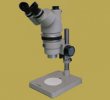
At one shop I used to work in we had these binocular microscopes at every work bench. They weren't like actual microscopes, but were on a swing arm stand adjustable for height, and about 20x power (could change the eye piece for less or more) with a light on the back side. They were incredibly useful for this kind of thing, far, FAR better image than any optivisor, and adjustable enough you could position them over the bench to work through them or off the bench just to inspect things in your hands.

I really wish I knew exactly what that device was called so I could find one for myself. Anything like "toolmaker microscope" just results in reams and reams of actual microscopes to sift through. It would be perfect for this kind of thing. Or inspecting edges or 100 other things we would like to inspect under magnification.
 
Here is a great workbench scope:
https://www.stuller.com/products/26-5101/?groupId=193780&recommendationSource=SiteSearch

The Zeiss glasses I wear for engraving, fine work, and diamond setting are somewhat like these. Mine look like old fashion wire rim round glasses with small microscopes mounted in the center of each lens. There are adjustments to move each lens exactly in front of the pupil for retna/object alignment. This gives perfect 3D vision at 14" focus.
https://www.ebay.com/itm/ZEISS-EyeM...401988?hash=item284599d7c4:g:QyEAAOSwXrdaAAbB
Mine were custom made by Zeiss with my prescription on the rear lenses. The loupes sit just a few millimeters over the lenses, and are very short. They are comfortable to wear and your brain learns to see around the center for regular vision ( sort of like how it deals with macular degeneration). It is weird to be able to see full vision when walking around or looking at a book, but to instantly have the brain switch to 20X super vision when you focus on something 14" in front of you.

I haven't seen ones exactly like mine in years, but you can buy suitable similar loupe glasses for $60-100 off ebay. They are fine for knife work.
 
Last edited:
Wow! That is a nice scope! Stacy, if you happen to have an extra sitting around I'll happily take it off your hands... you know as a favor... reducing clutter and all that...:D
 
Sorry, I sent the last spare to Patrice in Canada. I have just enough to go around the various shops now.
 
I've been tempted to pick up one of the used leica stereo microscopes off eBay for a while now. Places catering to engravers sell the scopes and arms as well.
 
I used a Dremel router bit chucked in my drill press, and used the depth stop to initially make the pocket. Then i tapped the shield with a hammer and chiseled away at the indentations until it fit. Then glued, hammered down tight, drilled all the way through, and peened from both sides. If I use different metals, I will probably solder a stud on as suggested.

I will practice on wood scrap and if I get good I'll give bone a try next. Take it slow I guess.
I am trying to make a single knife stand for kitchen knives I need a router but i am trying to use my DP with bits because my wife cut off my tool budget. So far disaster. First, every query on the internet says that it will destroy the dp because the load direction is off. Second even at its fastest my dp only runs at 1800 rps. A dremel runs up to 30000+ and a router 40000+. My understanding and observation so far is that the bit moves too slowly to cut cleanly. I fried two bits trying to make a 7" channel in purpleheart. You are having a different experience. What am I missing?
 
I am trying to make a single knife stand for kitchen knives I need a router but i am trying to use my DP with bits because my wife cut off my tool budget. So far disaster. First, every query on the internet says that it will destroy the dp because the load direction is off. Second even at its fastest my dp only runs at 1800 rps. A dremel runs up to 30000+ and a router 40000+. My understanding and observation so far is that the bit moves too slowly to cut cleanly. I fried two bits trying to make a 7" channel in purpleheart. You are having a different experience. What am I missing?

I have no idea at all what wood I'm using, but it's pretty soft. I have all kinds of wood scrap I got from a wooden box maker and hadn't heard of 70% of the woods he mentioned when he was stacking it up in my arms in a pile over my head! I've never used purple heart so I have no idea how hard it is. I used a 1/16" cutting bit, and also went pretty slow. I will build a little jig thing for my Dremel so I can do these pockets with, I probably will never do it on the drill press again as I don't want to side load it any. I've been doing the nail pulls on the drill press too and I want to change that. I can run my Dremel at 5k rpm and I hope that's slow enough to cut the nail pull consistent depth. The jig I make will do both nail pulls and inlay pockets. Now's a good time to build the jig as with Xmas and all I'll only have a few hours at a time to get out in the garage.
 
Last edited:
Also, considering the other makers discussing bench optics, and my amazement at how poor my finish is when I look at pics I take and zoom in, I will build a magnifying thing before I make a knife again. And I need a good buffer, that may have to wait a few weeks though. My local pharmacy has some pretty decent magnifying glasses and so I may pick one up and build an adjustable stand for it. I have to be cheap right now, Santa's been busy!
 
One of the first tools a knifemaker should get is a good quality optivisor. I wear one at least eight hours every day. Learn to use it as your "better set of eyes". The numbers on the lens are how it affects your focal distance. I use a #3 for most work. While they are called magnification powers, they are more realistically distance shorteners. A #3 will allow you to examine an object three times closer and still have your eyes focus normally. So, instead of holding it at 18" where your eyes normally focus, you hold it at 6". This make it look larger, because it is closer. You don't get eye-strain because your eyes are focusing as if they were looking at the item 18" away.
 
Back
Top