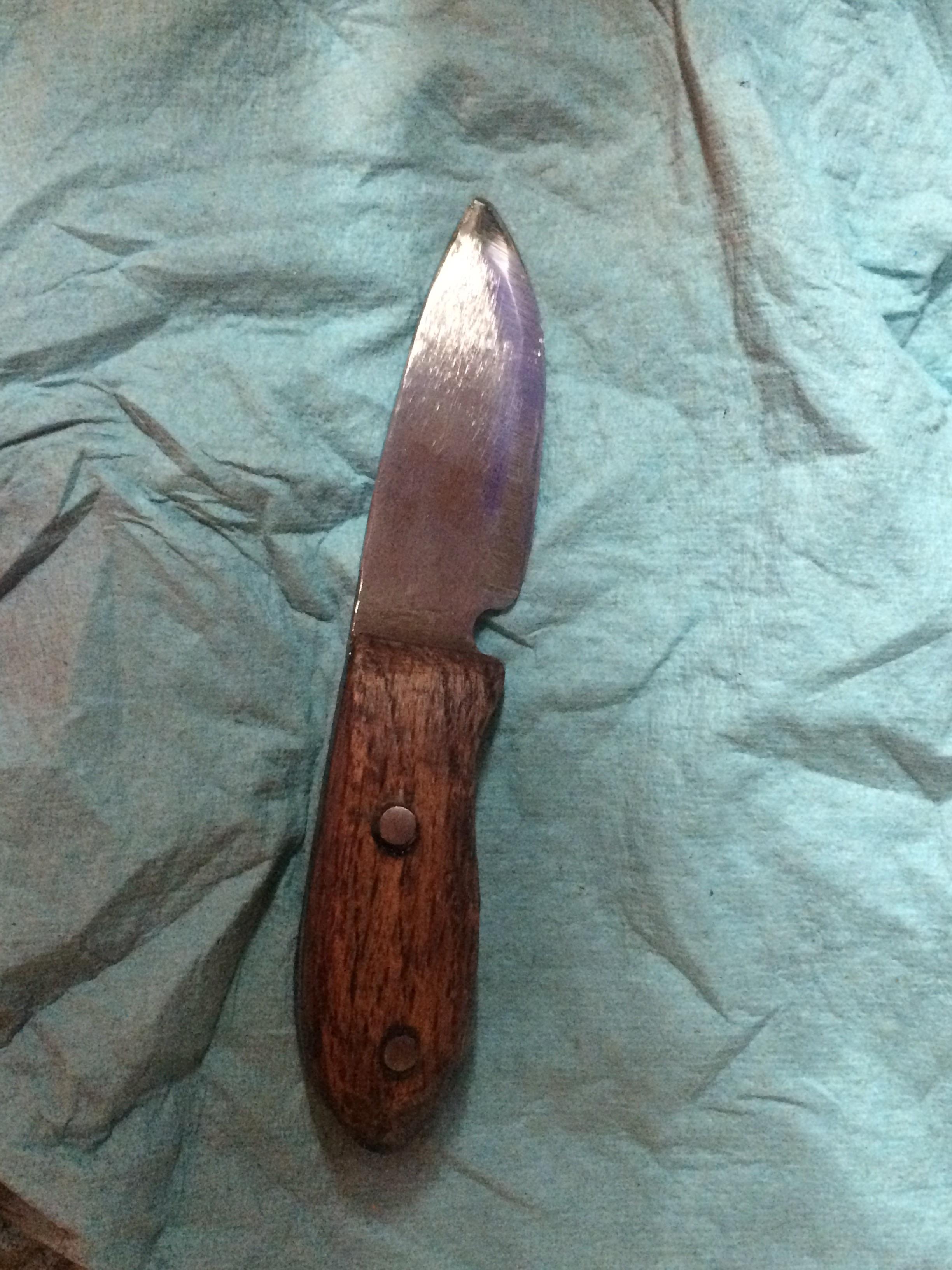
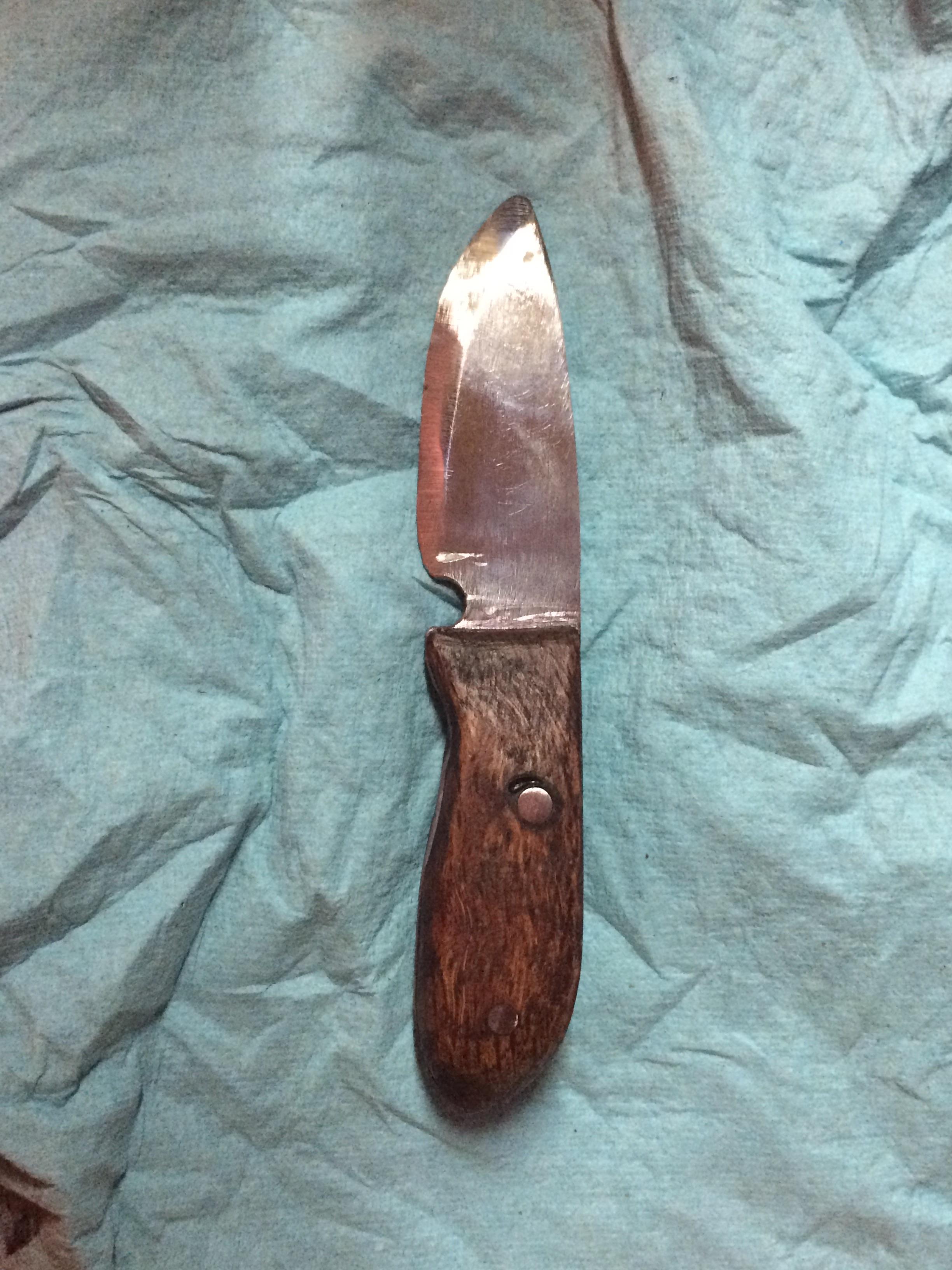
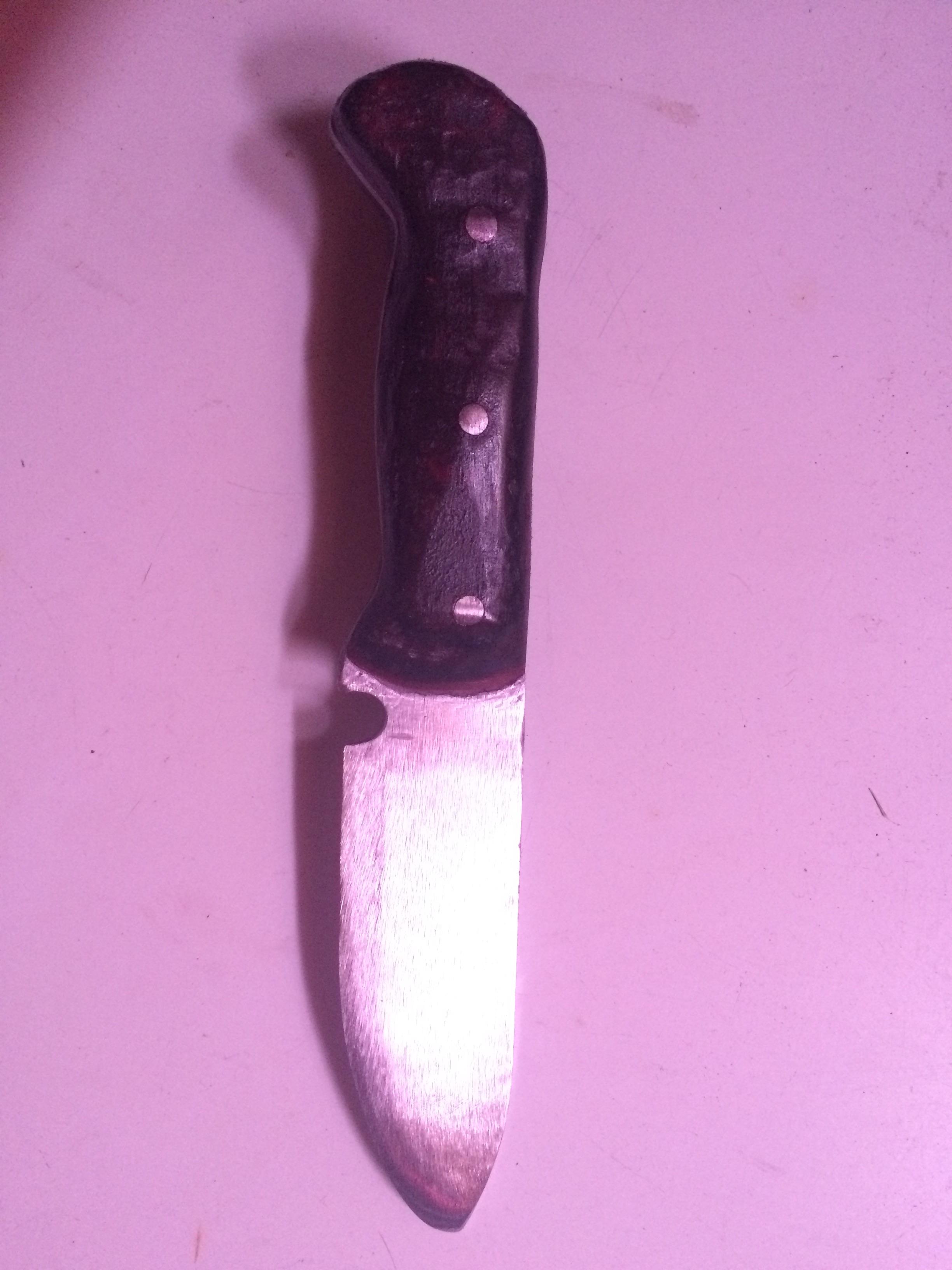
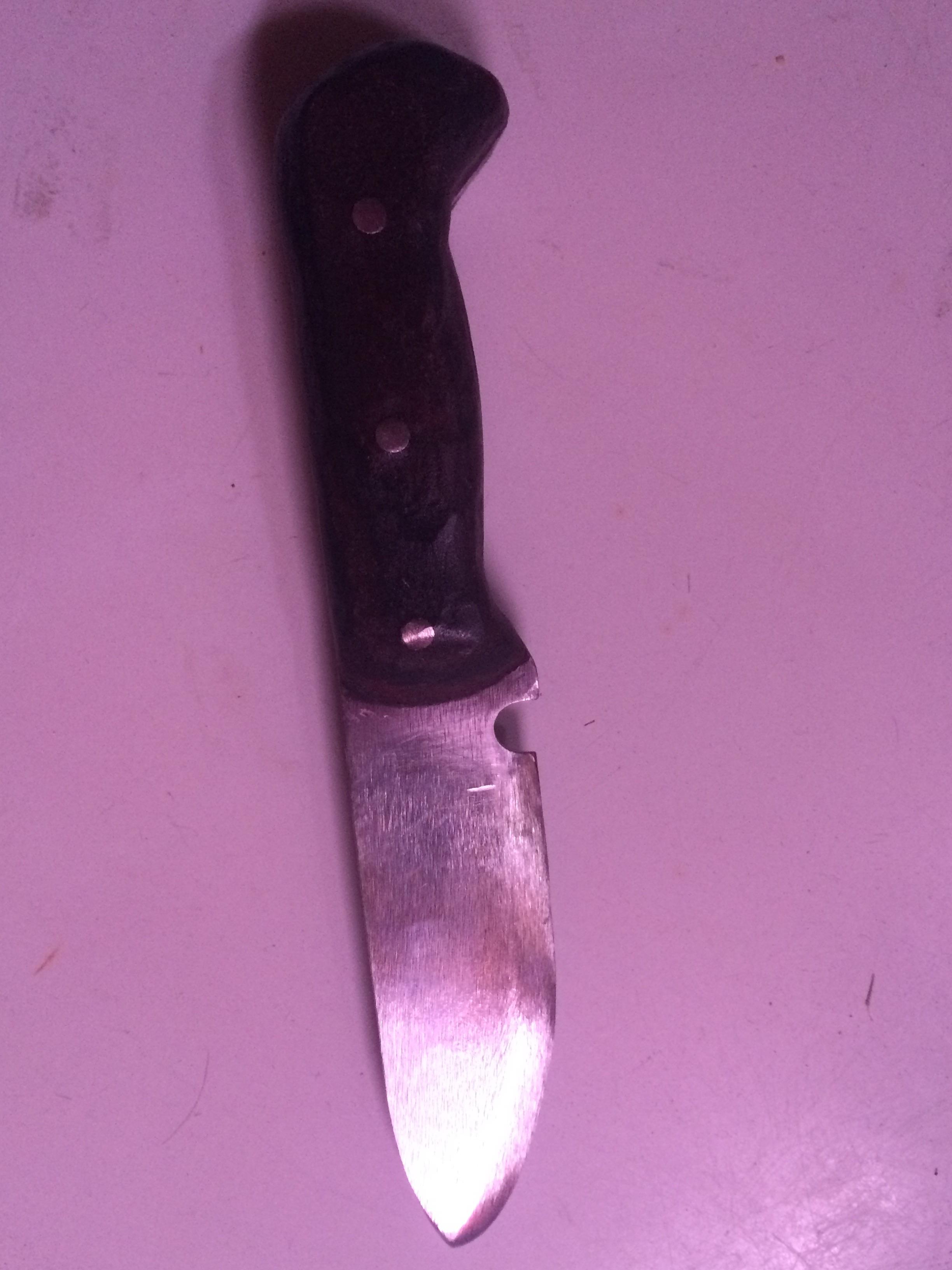
File the bevels by hand if needed, to get things straight and flat. Take your time on the belt grinder. The one you are using is probably a bit fast and scarry. Using a grinding magnet to hold the blade may help with control.
Try this order of shaping:
1) Draw the blade on paper. Redraw it until it looks good to you. Post the drawing here in Shop Talk for suggestions and improvements. You may not see something that is obvious to a seasoned maker. Pay special attention to the rivet holes and their placement. Avoid any feature that goes to excess. Deep finger grooves, extended bird's head butts, fat palm swells, deep choils, etc. A little goes a long way in design and attractiveness. ( see note below)
2) Cut the profile out in steel. Smooth the edges and look at it compared to the drawing. Make any adjustments before you start the bevels.
3) Grind in the distal taper first. Distal taper is a gradual thinning of the blade as it moves toward the tip. Some taper from the ricasso to the tip, and others from the butt to the tip. In the beginning, it is better to taper from the ricasso to the tip and leave the tang flat. The distal taper makes a knife feel, handle, and cut better.
4) Lay out the bevels and grind them in slowly. It is always easier to remove a little more metal. You can't put any back on. A full flat grind is almost always the best grind to do. In the beginning, it should be the only grind you do. Using a file and starting the bevels by hand is a good way to get the feel of shaping them.
5) Sand up the grits and remove each prior steps scratches before moving to the next grit or step. Hand sanding with the paper wrapped around a block of very hard wood or metal is a good way to get flat and smooth bevels.
6) Don't rush the process. Finish each step fully before moving on. Take as long as it takes, and enjoy yourself. Don't start the handle until the blade is finished all except sharpening. Tape up the blade to keep the surface clean and prevent scratching in the handle work.
7) Simple is usually better in the beginning. A simple drop point hunter ( like you did) is far easier to learn on than a bowie. Same for handle materials. Use simple to finish materials. Commercial canvas or linen Micarta is a good choice, as it needs no special finishing beyond sanding to 800-1000 grit. Woods like cocobolo, and other hard and oily woods are also good choices, as they just need sanding and hand buffing with a soft cloth.
8) When doing the handle, shape and sand the front part at the ricasso before assembly. You can't work on that area without damaging the blade after assembly.
Note:
In design, the tendency is to throw the entire box of tricks in to get the "max effect". The truth is the opposite. A subtle accent will stand out far more than a pile of accents all fighting each other. Take a woman's shape and looks. A normal girl next door type with just a bit of figure and pleasant facial features may be far more attractive than a 48DD stripper with two-tone hair and 6" heels. There really can be too much of a good thing.
Simple things, like just a tiny bit of curve to the spine from butt to tip make a stiff knife look fluid. Same for a small choil or a small amount of palm swell. The best guide rule for beginners is, "If it sticks out...take it out." Any feature that immediately catches your eye is probably over done.