My hatred of serrations, and yours, perhaps

Not many, it's one of the many things Spyderco specializes in.

That's weird. I've seen Cold Steel folders cut up tons of rope in a sitting. I'd have thought they had one that snuck past me. Ah well, thanks!

 
Now this thread is making me think seriously about obtaining a Spyderco Aqua Salt and maybe a Jumpmaster... I could use a couple of good fixed fully serrated blades to complement my pair of folder ones.
 
Why would they be more popular with the carbide crowd? Those "sharpeners" tend to have poor results on plain edges--let alone serrated ones!
 
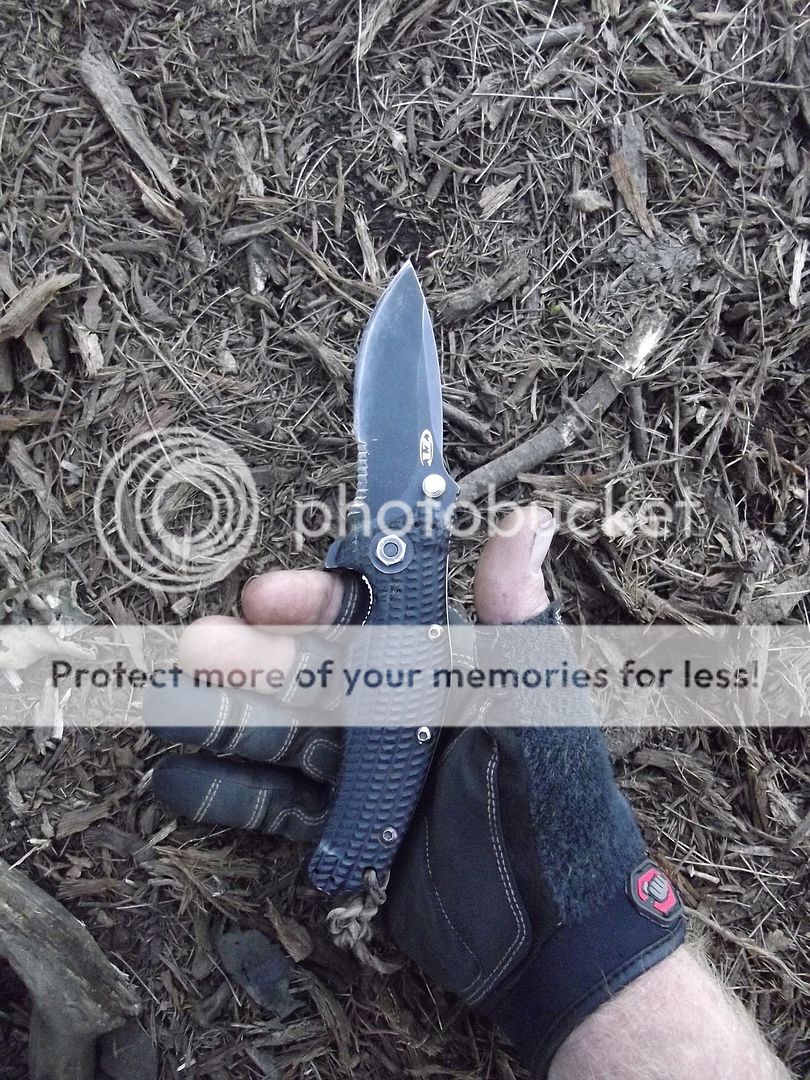
Jaiofspam, hah, that's hilarious! So clever! Actually, between my two jobs, I actually cut quit a lot of both (more cardboard than rope, but still, lots of both). I'm usually carrying a folder with a decent steel(ZT0200 in154Cm, or Para 2 In S30V), and keep my blades really sharp. Haven't had a problem. Maybe the serrated knives I've tried out were bad examples, that's totally possible. As I said, most of the serrated blades I owned, I bought early on, when I didn't know much about knives, and knew next to nothing about blade steels, and sharpening. I do like them for certain things (steaks, especially!). maybe I'll get a good quality one and try one out at work, but I just haven't found using a plain edge blade to a problem at all for me.
 
That's weird. I've seen Cold Steel folders cut up tons of rope in a sitting. I'd have thought they had one that snuck past me. Ah well, thanks!

Alright, you got me, that post may not have been the most informative in the thread. I would have a hard time recommending Cold Steel's serrations though, those things are closer to a saw IMO.
 
Certain knives are ok with serrations , but I like most of them with plain edges. CS's micro serrations seemed the worst , Imo , and the ones on Spyderco performed the best on what I tried with them.
 
I bought a serrated (and chisel ground) knife, the BM/Emerson CQC7, and I found that serrations are not nearly as bad as I thought to sharpen up. The edge of a cardboard strop (with polishing compound) worked pretty well for sharpening it up. I still prefer straight edge, but I didn't give serrations their fair chance. I apologize for attacking serrations as hard as I did. Still wish they were dual ground, though. If nothing other than looking better.
 
We are doing pretty good if this is the best thing we have to argue about. :thumbup:
 
I still prefer straight edge, but I didn't give serrations their fair chance. I apologize for attacking serrations as hard as I did. Still wish they were dual ground, though. If nothing other than looking better.

I too prefer a plain edge but I want to wade into the unknown of a serrated folder - probably would get a Pacific Salt but the darn thing is pinned and "non-takeapartable-adjustable." :confused:

Do you think serrations are chisel ground to make them sharper, tougher or both or neither? They would look cooler if the were a V grind.
 
Being chisel ground I know they are much easier to sharpen (due to only having to do one side), but that is all I know about the advantages of being chisel ground. As for the Pacific Salt, you shouldn't have an issue with it being pinned, because if I am not mistaken, the warranty will cover the blade not being centered or the pins being loose/whatnot, and taking the knife apart voids said warranty. I, by the way, hate when a company's warranty is voided by disassembly. Just feels like they want to make it so you have to ship it back for everything.
 
Food for thought...

With the recent discussion about the Spyderco serrated edge, I thought it would be useful for all of us experts to pull together a list of examples where the serrated edge and the plain edge excel and fall short. Surprisingly there is little information on this subject which I think would really benefit from having some hows, whys and concrete examples.

I hold the belief that both the SE and PE are simply two versions of man’s most useful tools. And that tools will, by their design, excel at specific tasks while falling short at other tasks.

So, I’ll start the discussion …

Serrated Edge - Preferred

Slicing: The SE’s domain is in slicing and it is here where this edge design really shines, especially for soft and fibrous materials. Held horizontally with the edge pointing down towards the material the blade can be drawn horizontally to slice through the material. The blade does not need to be tilted at an angle to the material, so one has great control on the depth of the cut. As the blade is drawn, the curved edges cut the material at numerous angles to cut quickly and efficiently. These features make the SE the preferred choice for:
1. Slicing soft material like bread, tomatoes, etc. This is because the slicing motion and force are not down, smashing the item, but across the material where it is not constrained.
2. Slicing rope. Again, because you can cut the rope without pushing it away, which is not an easy task with a rope that is not carrying any tension.
3. Sawing through cardboard and similar material. Not particularly neat, but fast.

Slippery Materials: The serration scallops tend to “grab” materials. I liken the scallops to numerous little hawkbills. This makes the SE preferred for slick materials like:
1. Wet materials
2. Plants
3. Wire ties
4. Poly rope
5. Plastic e.g. packaging, tapes
6. Fish. Apparently for quick initial processing of your fresh catch.

Edge Retention: The geometry of a SE has two features that extend the life of the sharpened edge. First, a significant increase is total length of the edge compared to a PE. The circumference of each scallop adds to the length of edge. This gives you more edge to use up. Second, the scallops move the cutting edge away from the edge of the blade. The material being cut must be drawn into the cutting edge. This protects the cutting edge from hard materials that might dull the edge. The SE sharpness is said to last 5 to 10 times longer than a PE.

Quick, Rough Cutting: With many materials the SE will leave a cut edge that is jagged, but the aggressive nature of the blade makes quick work of cutting chores. Hence, the SE is preferred to cutting where speed, not neatness counts.


Serrated Edge – Not Optimal

Fabric: The SE has a bit of a problem cutting fabrics especially cottons and other natural materials. The threads tend to get caught and the cutting can come to a halt as the edge essentially gets jammed. An experience cutting fabric with a SE is probably a primary reason why some avoid the SE, but that is unfortunate, since it just doesn’t do well with this material.

Nylon or Cotton Core Rope: As with fabric, the SE can catch on some ropes. Your results may vary.

Plain Edge - Preferred

Push Cutting: The PE wins when it comes to the push cut. Hence, the edge is preferred for:
1. Chopping. Items on the cutting board, trees, etc.
2. Batonning (sp?)
3. Whittling
4. Shaving
5. Scraping
6. Trimming materials
7. Cutting paper
8. Cutting thread and string. SE edges can get hung up and pull.

Slicing, Firm Materials: The PE is used for slicing firm materials where precise cuts are needed. Hence, it preferred for:
1. Filleting
2. Most food prep. Look at kitchen knife set, all PE blades except for the bread knife.
3. Skinning

Clean Cutting: The PE edge is preferred for making clean, neat, precise cuts.

Plain Edge – Not Optimal

Slicing Soft Materials: Most cuts with a PE are made with some slicing (motion perpendicular to the direction of the cut), but the primary force is in the direction of the cut i.e. you are pushing into the material. If the material is soft like a very ripe tomato, you can end up smashing the veggie. This is not to say that soft materials can not be cut with a PE. But, the edge must be very sharp to minimize the forces needed and the action must be primarily slicing. Often the blade can be angled such that the cut is not made perpendicular to the cutting board (for example), but parallel to the supporting surface.


Articles

http://www.ebladestore.com/plain_vs_serrated.shtml
http://www.missionknives.com/articles/Serrations.html


OK, now it’s your turn …

Jim
 
I think that serrated edges have gotten a bit of a bad name because most knife knuts liked them when they were new and green to knives. You could take a factory serrated edge and cut and cut with no sharpening, even with less than great steel.

As we have learned about good steel and how to sharpen we begin to revel in the "snick" of a scary sharp PE blade cutting through something. Sharpening often becomes fun as we tell ourselves how useful our knife addiction has become.

Still, as the previous post has said, SE blades are better for some things.

The tool for the job and all that.
 
Last edited:
I hate serrations as well, for most edc type knives i prefer plain edge but if i'm out in the woods where hard use could potentially dull my knife significantly before i have a chance to sharpen it, or for whatever reason i don' want to carry a sharpener that way i can still effectively cut because serrations are fairly effective even when they get pretty dull. I also used to love serrations before i learned to put a decent edge on a knife
 
I use this knife daily at work...the serrations work much better than the (very sharp)main blade,for thick plastic strapping and heavy rope...if it didnt work i wouldnt use it.........FES

frosty019.jpg
 
My first couple of Spydercos had serrations. I bought them as climbing knives, with their main use being to cut climbing tape, accessory cord, and rope, and they were absolutely great for that. I EDCed one of them, the Co-Pilot, for years when I spent my time climbing and mountaineering, generally I'd also have other knives with me too, but it worked OK for a lot of things. I've only tried one or two other knives with serrations, but wasn't so impressed with them, (a Buck knife I had with serrations wasn't good for cutting much at all), and apart from one of my 3 Frosts Swedish Army Knives, which has a short serrated section, all my other knives have straight-edges, even my kitchen knives. The only exception is the gutting blade on the Victorinox Hunter, which also slices climbing tape, rope, etc very well, and I when I reviewed it for a Brit outdoor magazine in the early 90's, I suggested Victorinox use the blade for a rescue or emergency release knife, which in a longer version, they now do.
 
Try using a piece of leather and strop your serrations. Use the edge of the leather in the groves!!!

The best type are like these found on the RAT 1
RAT1.jpg
 
Try using a piece of leather and strop your serrations. Use the edge of the leather in the groves!!!

The best type are like these found on the RAT 1
RAT1.jpg

Not sure on the quality of serrations used on RAT-1 folders but a softer metal (might be the heat treat or the AUS8) suggests some resistance to chipping & breaking.

For sharpening I use a little bit of 700 to 1000 grit sandpaper. Fold it into a loose fold and scrub lightly in the grooves. Works great.

Finish on strop - sounds okay to me. :)
 
The performance on rope for marine purposes is excellent with the Mora Robust. Also, for diving applications you'll not see a seasoned plunger head under the murky waves without some sort of serrated knife. I have used my Mission MPK for many dives and can assure you that the design is well founded.

On terra firma I'd say that my crusty bread is handled much better with one of my cutco knives that feature a double D edge offering. Three years ago I packed a clip point with the double D edge on a hunt in northern Idaho. That little blade was used for cutting rope, tarp, food prep and meat processing. I ended up giving it to our guide who still comments about the merits of this serrated edge type to this very day.

Funny thing about this thread...after looking at what I thought was my sharpest blade (Murray Carter kneck knife) I brought out the old microscope and did some viewing. All of our knives, no matter how keen, have an element of serration to them. My Crowell/Barker was amongst the smoothest edges in my quiver.
 
Back
Top