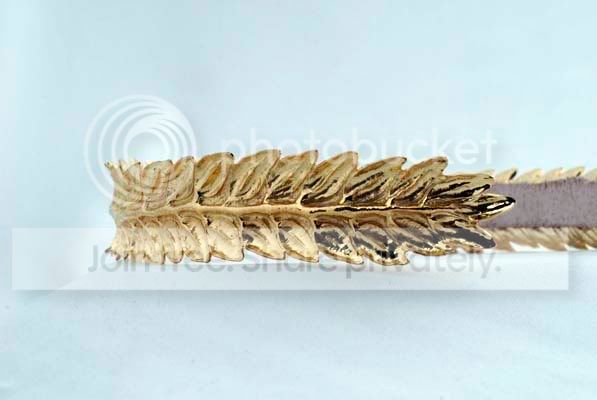
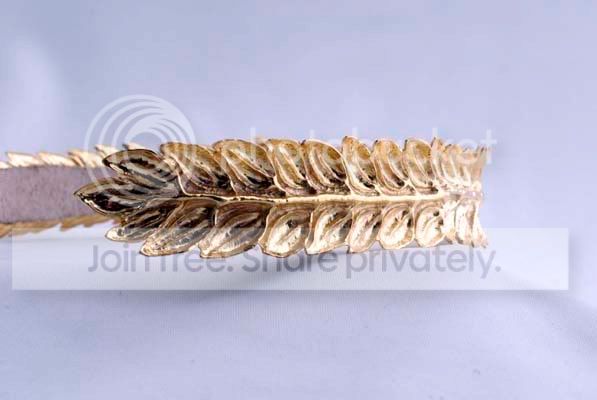
My latest work, not a knife but some may like it

Joined
Oct 2, 2006
Messages
3,238
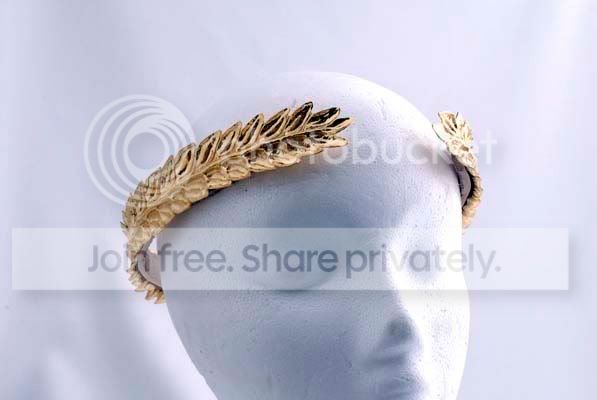
I just thought I'd share a couple pics of my latest piece, it is sterling silver, repousse formed from 20 gauge sheet sterling silver, then goldplated. It is for an award in the Society fr Creative Anachronism. My customer has earned the SCA's highest award for excellence in the arts and the laurel wreath is the token of achieving that.

I have about 90 hours into this hat, some of the relief is more than 3/8 inch deep.
_DSC5097.jpg


_DSC5063.jpg


_DSC5073.jpg


Thanks for looking

-Page
 
Holy moly! That's some incredible work! I wish I had more time available, I' d' really like to learn how to do that.

Thanks for posting.

Rick
 
now thats some fine craftsmanship, and a patience tester.......man thats good

andrew
 
One of my best friends in the SCA is a Master of the Laurel, and if it were not for his Quaker (simple and unassuming) leanings, I'm sure that he would love to have received that along with the awarding!
 
Wow! Page that is cool. I dig this kind of work. Was looking at repousse tools the other day, though for a different application. That's really amazing. I didn't realize you could do that much relief in repousse. Is it the gauge of the silver that allows it? If so, is there a rule of thumb for such things? You can tell how ignorant I am of this but I've always thought these practices might be applied to knifemaking, and I look through the Rio Grande catalogs with that in mind all the time. Thanks for the inspiration!
 
Spectacular piece of work! I love all types of artistic mediums,whether it is metal, jewelry, woodworking , quiltmaking, ect... This looks like it was a labor of love and it really shows in the finished piece.Fantastic work!!
 
Wow! Page that is cool. I dig this kind of work. Was looking at repousse tools the other day, though for a different application. That's really amazing. I didn't realize you could do that much relief in repousse. Is it the gauge of the silver that allows it? If so, is there a rule of thumb for such things? You can tell how ignorant I am of this but I've always thought these practices might be applied to knifemaking, and I look through the Rio Grande catalogs with that in mind all the time. Thanks for the inspiration!

The gauge of the silver is one partially limiting factor. If you work just straight up and down 20 gauge will start to blow through in sharp transition areas, With proper annealing and upsetting metal into transition areas I have been able to get almost 1/2 inch relief (that's detail relief, not general raising depth) Thicker metal is harder to move but allows more transition relief.
Silver is extremely good to work with, high karat yellow gold is great, copper is good, high copper bronze is workable, mild steel is painful and stainless doesn't work.
The repousse tools in Rio are a good start, but very clumsy, I have modified all of the tools that came in the set from Rio. I make my own now from square water hardening drill rod.

-Page
 
This piece has close to a half inch relief in the sharp edged ridges on the base level of the bottom layer, it is also worked in repousse from 20 gauge sterling. My first attempt I didn't move metal into the transittions, and had several ruptures

giulietta2.jpg


What you see here is the second attempt. I have kept the first one as a teaching tool for when I teach repousse.

-Page
 
The gauge of the silver is one partially limiting factor. If you work just straight up and down 20 gauge will start to blow through in sharp transition areas, With proper annealing and upsetting metal into transition areas I have been able to get almost 1/2 inch relief (that's detail relief, not general raising depth) Thicker metal is harder to move but allows more transition relief.
Silver is extremely good to work with, high karat yellow gold is great, copper is good, high copper bronze is workable, mild steel is painful and stainless doesn't work.
The repousse tools in Rio are a good start, but very clumsy, I have modified all of the tools that came in the set from Rio. I make my own now from square water hardening drill rod.

-Page

That's excellent information, thanks very much. Interestingly, looking at the forms in the catalog I did start to think I might want to make something different. But I don't really know what works. Can you describe at your leisure, in laymen's terms, what sort of modifications you made to the production tools? Is there a reason you used water hardening steel as opposed to, say, O1 drill rod? Just curious, as I always think "O1" because that's my preferred steel, about the only one I think I understand. I hadn't even thought of using square stock, that's a great idea.

This is really valuable input, and seeing your work above has really done something for my knife thinking. One thing that occurs to me, can you use repousse tools like you would a stamp set, in solid non-ferrous material?
 
That's excellent information, thanks very much. Interestingly, looking at the forms in the catalog I did start to think I might want to make something different. But I don't really know what works. Can you describe at your leisure, in laymen's terms, what sort of modifications you made to the production tools? Is there a reason you used water hardening steel as opposed to, say, O1 drill rod? Just curious, as I always think "O1" because that's my preferred steel, about the only one I think I understand. I hadn't even thought of using square stock, that's a great idea.

This is really valuable input, and seeing your work above has really done something for my knife thinking. One thing that occurs to me, can you use repousse tools like you would a stamp set, in solid non-ferrous material?
First step and this is a big one RADIUS THE EDGES! The rio tools all have a shape to the end, and a sharp corner , that corner will bite in and cause stress risers that will tear open at the worst possible time. The tools in Rio would be alright as stamping tools where you want a well defined clear sharp impression, as a deep forming tool (which is how you have o look at repousse tools) they are too flat and too sharp, for repousse tools there
needs to be radius to just about anything that touches metal. Your planishing punches should be flat, but they still need radiused edges. Square stock helps your fingers index to the tool so you don't have to look at the tool to know it's orientation (important with complex tools) and water hardening steel is easy to work and heat treat on the bench
Yes you can stamp non ferrous metals with repousse tools. I will go into more detail when I get back from the show I'm packing for if you would like.

-Page
 
Back
Top