
My Opinel no. 6 100% friction.

Joined
Jul 4, 2005
Messages
978
Hi you all, :)

For the past week or so I have been carrying my Opinel 6 from which I permantly removed the locking ring to carry it as a true friction folder.
And to be honest, for my day to day cuttings I have yet to miss the locking ring.
I peened the pivot to a nice and tight action and sanded the handle to fit my big paw with a solid 3 finger grip.
I might be the only one but I find the Opinel looking better without the ring.

Sorry for the bad pic :o, but this is a try out of my new web cam at the same time (got myself a new laptop)
Soon I will have a true digital cam, so more pics to follow soon.

Thanx much for reading :thumbup:
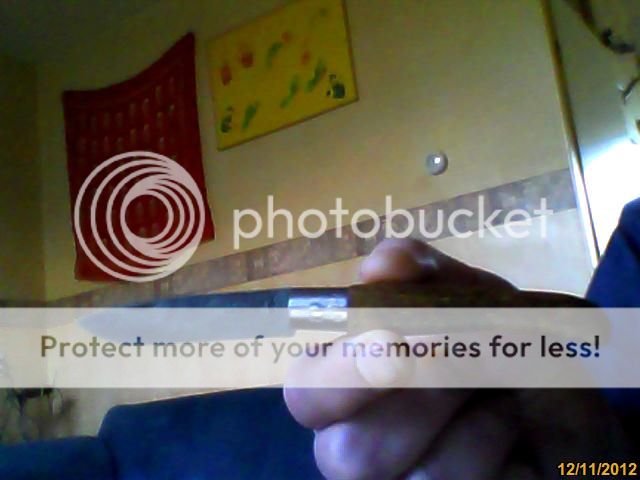
image201212110004.jpg
 
We must have been on the same mental wave length. About a month ago, I snugged up a number 8, and have been using it as a friction folder. I left the ring on it for 'just in case' moments though. I've been using it in the kitchen, and as an around the house cutter, and so far so good. For just cutting a piece of rope or twine, opening a box, or slicing something off in the fridge for a snack, it works good.

I got to to thinking about it after Fausto and Alfredo have been posting those beautiful Italian knives, of which many are friction folders. It's been a little enlighting to me. In some ways, a friction folder is better than a strong spring slip joint in use. Like the kind of thing that has to be experienced to be understood or believed.

Carl.
 
Thanks for your insights.
You see, my ancestors have used "pure" friction folders for centuries, and around here things haven't changed till today. As I wrote before, a well made friction folder (with the proper amount of friction) does not open nor close accidentally. It's more a mindset (due to what we're used to, or not used to) than a need. Same thing for the locking ring on Opinel knives. When I use my Opinel #6, sometimes I twist the ring when the knife is closed but just for play, while I never really twist it when the knife is open. I do disagree with you on one thing though: I prefer the looks of these knives with the locking ring. Otherwise, I would probably carry a #5 instead of a #6 :)

Fausto
:cool:
 
As I wrote before, a well made friction folder (with the proper amount of friction) does not open nor close accidentally. It's more a mindset (due to what we're used to, or not used to) than a need.
Fausto
:cool:

I agree with this 1005. Mindset from upbringing is responsible for much of our behavior. We usually go with what we are familiar with from growing up. Like most Americans, I was used to pocket knives with a spring holding the blade open and closed. Maybe not the best way to build a knife, but it's what we had.

Fooling around with Opinels since 1982, there's been lots of times I used one, never bothering to twist the lock ring. I was aware of what I was doing, and kept the forces on the blade going the right way to keep it open. Like a slip joint, a friction folder just needs to be used as it was intended, as a cutting tool, to keep the blade open. I don't think I would have any problem using one of those Sardinian folders as an edc pocket knife.

Having thought about it for some time, I've come to think that for a light to medium duty pocket knife, a friction folder has a great deal to offer over a standard design slip joint. Especially in the way of safety. I like the idea of no spring to snap a blade shut on a finger if you loose your grip on it during opening. Or if the blade tip slides or skids on something, and the blade is shoved partway closed, the friction folder blade will stop once the closing force is gone. A lot of folks have been bitten by the snap of a closing slip joint, where they may have been unscathed if using a friction folder.

There has to be a very good reason the old penny folder has been around Europe for many hundreds of years. They work very well as a knife.

Carl.
 
I guess I don't get why anyone would be against the addition of a lock. 99 percent of modern folders are basically friction folders with locks aren't they?

Or would that be a false statement since moderns such as a sebenza have as little friction as possible and rely on a lock for open and a precise dentent system for staying closed?

I'm not trying to go into moderns but I would appreciate a contrast from Fausto on the idea or possibly evolution?
 
To elaborate, if it is considered safer to have a friction folder with no lock vs a slipjoint with a spring, why would it not be even safer to have a locking collar such as the opinel does. Quite honestly the locking collar design is one reason I love the opinel. You don't ever have to worry about lock play developing and its pretty fool proof IMHO. So would sticking with a true friction folder be the same mindset as sticking with an american slipjoint? Just sticking with tradition?
 
It could be argued that the Opinel without the locking ring is actually more 'traditional' than with it. The first Opinel folders were produced in 1890, essentially looking like today's versions (minus the lock). The full range of sizes (1 thru 12) became available in 1897. The locking ring didn't come about until 1955.

Whether one is actually safer than another, I won't speculate. I tend to believe, as others here do, that safety is more about how the knife is handled & used (and maintained). For somebody who's never used a locking folder, and developed the necessary habits for using a non-locking folder safely, the addition of a lock might seem superfluous. I usually lock the ring on mine, but mainly just because 'it's there', and I think for most uses, I could live without it. The locking ring does get somewhat loose at times on it's own, and I have to constantly keep aware if it's becoming disengaged. At those times, it almost seems a distraction.


David
 
Thank you for those thoughts, David. From your words I would understand the lock becomes a distraction due to an inferior design? Therefore you can't trust it anyhow so what's the point?
 
Thank you for those thoughts, David. From your words I would understand the lock becomes a distraction due to an inferior design? Therefore you can't trust it anyhow so what's the point?

That's sort of what I was getting at. I don't think it's necessarily 'inferior', though. It has the potential to be useful. Some steps can be taken to tighten up the lock, like compressing the ring, or 'notching' it, like some have done, to make it engage more positively. All that aside, when it is more of a 'distraction', I often notice I can just leave it disengaged, and use the knife accordingly, without much penalty.


David
 
Thanks again, David.

For a long time I went back to slipjoints with no lock keeping with the idea that they can not be trusted so what is the point. Lately though with certain lock designs I have come to appreciate the locks very much so. I just have to keep in mind that even the best lock does not make a folder a fixed blade. Aside from that I do not feel having a lock can lead to poor knife use habits or anything like that. For me using a locker like I would use a slipjoint is the safest way.

Kevin
 
What's kind of curious to me is, about the only time I've felt a real need for the lock is when I'm stropping the blade. Occasionally, the blade will try to swing closed on the strop, so I always make sure the lock is at least partly engaged. When using the knife otherwise, I almost never think about needing the lock.


David
 
Kevin,
how are you buddy? Hope you are fine, I will email you later. But first I will answer your question.
First of all, I never meant to despise backsprings or modern locking folders. Nowadays, I carry more slipjoints than friction folders, for example. Still, I think there's more "safety" in friction folders than in slipjoints.
Yes you are right, modern folders have alot in common with friction folders, in the sense that they do not open or close on their own from a certain position, which, somehow, makes me see them as safer (but again it's just me).
The difference between friction folders and modern lockbacks/framelocks/linerlocks is that the amount of friction in modern folders is way less, thus allowing the blade to move more freely when disengaged. I know that, in actual use, these knives are never really around half-opened, so possibly there's no difference.
I know that, to most of you, a backspring (even a stiff one) is not considered a source of possibly accidental cuts. To me it is, and that's why, somehow, I feel safer with friction folders. But, as Carl said, this might easily be due to the fact I was raised with friction foldes.
One thing is tradition, one thing is safety, one thing is perceived safety.
I'm not against the locking ring on Opinel's: I just don't feel the need of it, but it does not hassle me at all. And it looks just fine on that knife. And yes, I agree with you, there is some sort of "bypass line" between Southern European friction folders and modern folders, which jumps above the whole slipjoint and multiblade tradition.
Am I rambling enough? :D

Fausto
:cool:
 
I don't think about needing a lock but I sure don't mind a well executed one present.

Kevin
 
Kevin,
how are you buddy? Hope you are fine, I will email you later. But first I will answer your question.
First of all, I never meant to despise backsprings or modern locking folders. Nowadays, I carry more slipjoints than friction folders, for example. Still, I think there's more "safety" in friction folders than in slipjoints.
Yes you are right, modern folders have alot in common with friction folders, in the sense that they do not open or close on their own from a certain position, which, somehow, makes me see them as safer (but again it's just me).
The difference between friction folders and modern lockbacks/framelocks/linerlocks is that the amount of friction in modern folders is way less, thus allowing the blade to move more freely when disengaged. I know that, in actual use, these knives are never really around half-opened, so possibly there's no difference.
I know that, to most of you, a backspring (even a stiff one) is not considered a source of possibly accidental cuts. To me it is, and that's why, somehow, I feel safer with friction folders. But, as Carl said, this might easily be due to the fact I was raised with friction foldes.
One thing is tradition, one thing is safety, one thing is perceived safety.
I'm not against the locking ring on Opinel's: I just don't feel the need of it, but it does not hassle me at all. And it looks just fine on that knife. And yes, I agree with you, there is some sort of "bypass line" between Southern European friction folders and modern folders, which jumps above the whole slipjoint and multiblade tradition.
Am I rambling enough? :D

Fausto
:cool:

Thank you Fausto and I am feeling a little better my friend :)

I knew you would have a very sensible response and take no offense to my inquiry. That is one reason you are a friend.

For what its worth, I find nothing wrong with sticking to your tradition. I admire it in fact. This topic just got my mind thinking and I know you always enjoy a good conversation. I really appreciate you taking the time to share your thoughts on this.

Kevin
 
Not for a second the "offence issue" got into my mind, and I'm glad you knew it in advance.:)
There's one thing I wanted to mention after Carl's post, so I will do it now (I hope Arend doesn't feel bad about us derailing a bit from his thread).
Tradition, or the mindset we were raised with (be it knives or anything else), is never a bad thing, unless it becomes a self imposed limit. I come from a land of strong traditions which I love and carry (figuratively) all the time...yet if you knew more about me, you'd be surprised of many things. I'm aware of my roots, and love them, but this doesn't keep me from considering other things.
As one wise man once told me, a tree needs deep roots to grow up to the sky and catch the winds :)
I love "my" friction folders...but today I was carrying a Case Swayback jack :rolleyes:

Fausto
:cool:

P.S.: glad you're feeling a little better :)
 
No thanks needed :)
Now, back to the OP :rolleyes:
As for David's thought on locking the Opinel when sharpening, I think I understand why you do it. It never happened to me, but now you got me thinking if I twist the ring when I'm sharpening it, and I'm not sure whether I do it or not :p either way, sharpening (stropping with a trailing move) is way different than any "normal" cutting move, therefore exuding the concept that a "normal" cutting movement won't make the blade close.

Fausto
:cool:
 
No thanks needed :)
Now, back to the OP :rolleyes:
As for David's thought on locking the Opinel when sharpening, I think I understand why you do it. It never happened to me, but now you got me thinking if I twist the ring when I'm sharpening it, and I'm not sure whether I do it or not :p either way, sharpening (stropping with a trailing move) is way different than any "normal" cutting move, therefore exuding the concept that a "normal" cutting movement won't make the blade close.

Fausto
:cool:

That's actually something I know I've done. When stropping mine, my thumb rests almost directly on the 'gap' in the locking ring, more often than not, during the 'away' stroke. Depending on which direction the ring is rotated to lock it, my thumb will sometimes tend to push the ring towards disengaged position. If I lock the ring by turning it in the opposite direction, my thumb tends to try to push the lock closed, and then it's not an issue. Again, it becomes one of those 'distractions' that takes my mind away from the intended task, albeit a relatively minor distraction.


David
 
Very interesting comments you guys :cool:
@ Kevin: I don't have anything against the lock of the Opinel, but I hardly ever use it and I just love the old ancient look of the Opinel without it. Just the kind of knife the ancient Romans may have used. The same way I like the old flint guns or muskets. I'm just a sucker for old, ancient things :p
@ Fausto: of course I don't mind the derailing at all. I found it a very interesting read.

Thanx a lot for all the comments :thumbup:
 
Does anyone have a problem with their opinel tip dulling very quickly due to it rubbing the spine? Ive got an opinel #6 carbon steel and i would love it except for the fact that the tip dulls almost instantly as soon as i close it, ive sharpened it multiple times and it does the same thing. I would love to carry it but a dull knife really makes me mad.
 
Back
Top