My Second Hidden Tang Knife

Joined
Jan 10, 2011
Messages
1,448
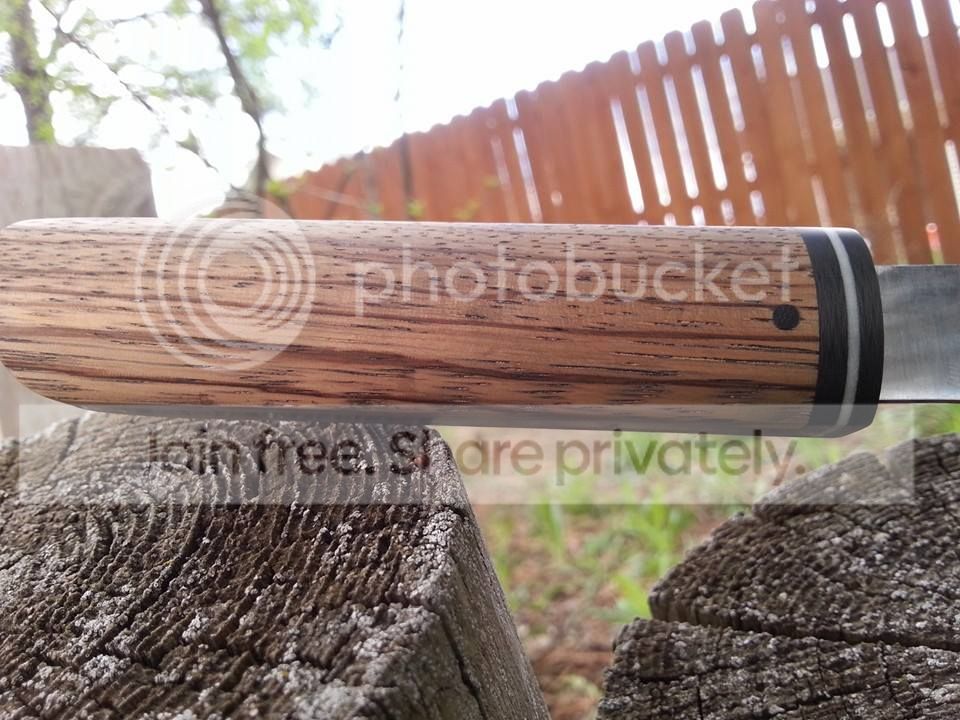
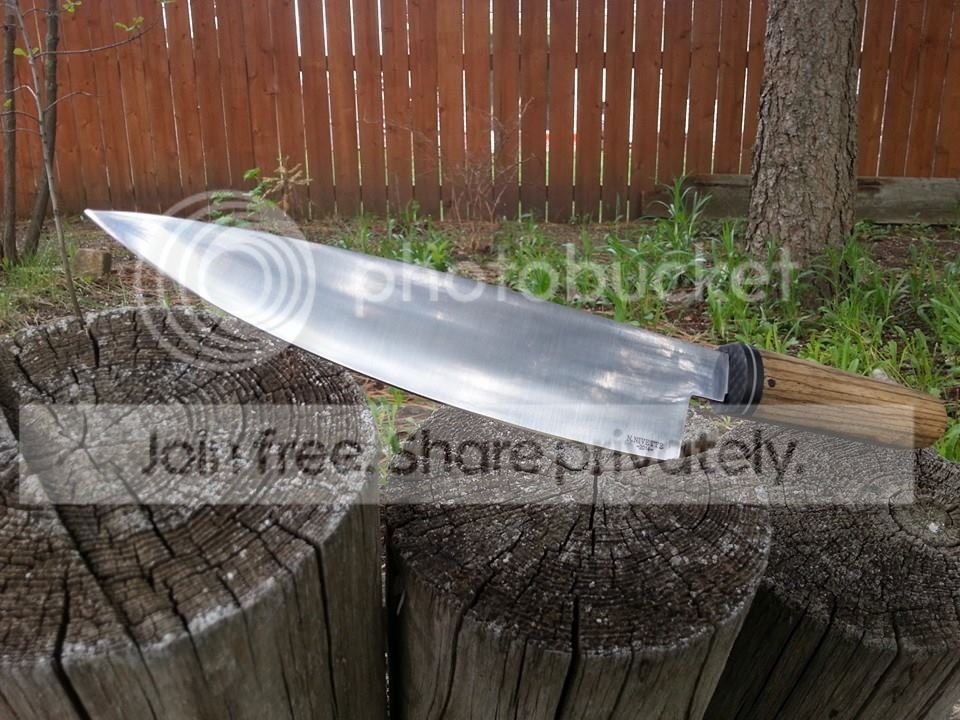
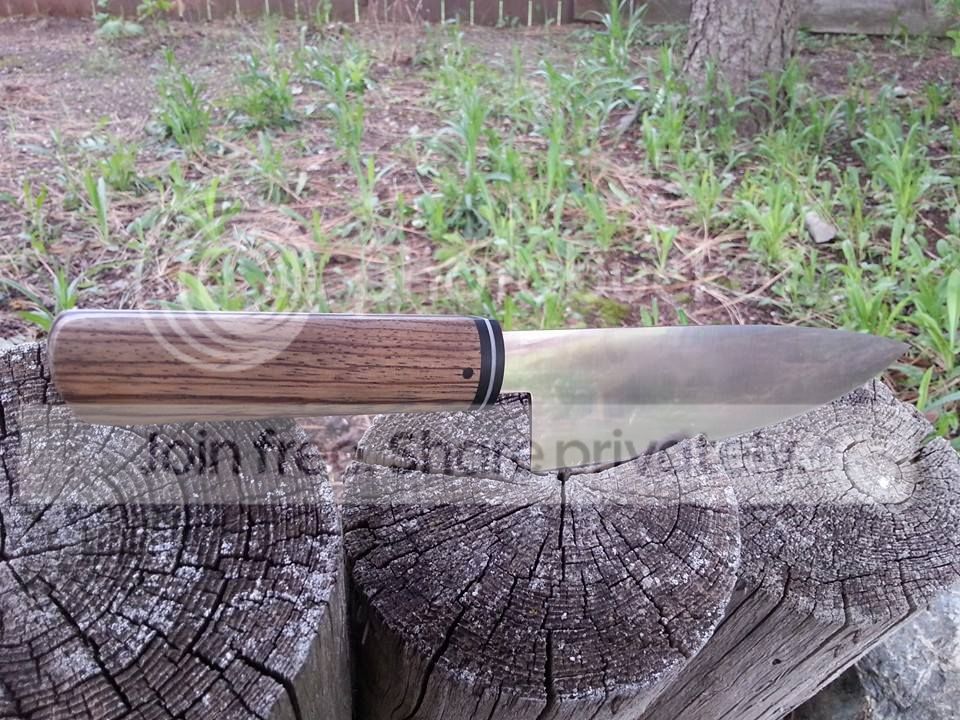
I'm calling this an 8" chef, if there is a different name you can think of please let me know. I have been told it looks like a gyuto, but I'm just not sure. I think I executed the handle fairly well, but wasn't able to connect to butt the front of the handle up with the ricasso(not sure if that is what you call it) and still put the pin in. It's still solid and construction and the pin really helps with the strength of the handle. Please let me know if you have any tips how to avoid this in the future. I was thinking, of just building the handle pre- HT then drilling the pin hole thru the handle and the tang, at the same time. Also I'm coming up on a year anniversary of knifemaking and I'm thinking of making one of these out of damascus, but I'm not sure where I can get thin damascus stock. Let me know if you have a hook up. Please let me know if you have any other feedback. Below are the specs....

.100 52100 ball bearing steel
8.25" blade, 13" total length
Bos heat treat and cryo to 61rc
Flat convex grind with a buffed finish
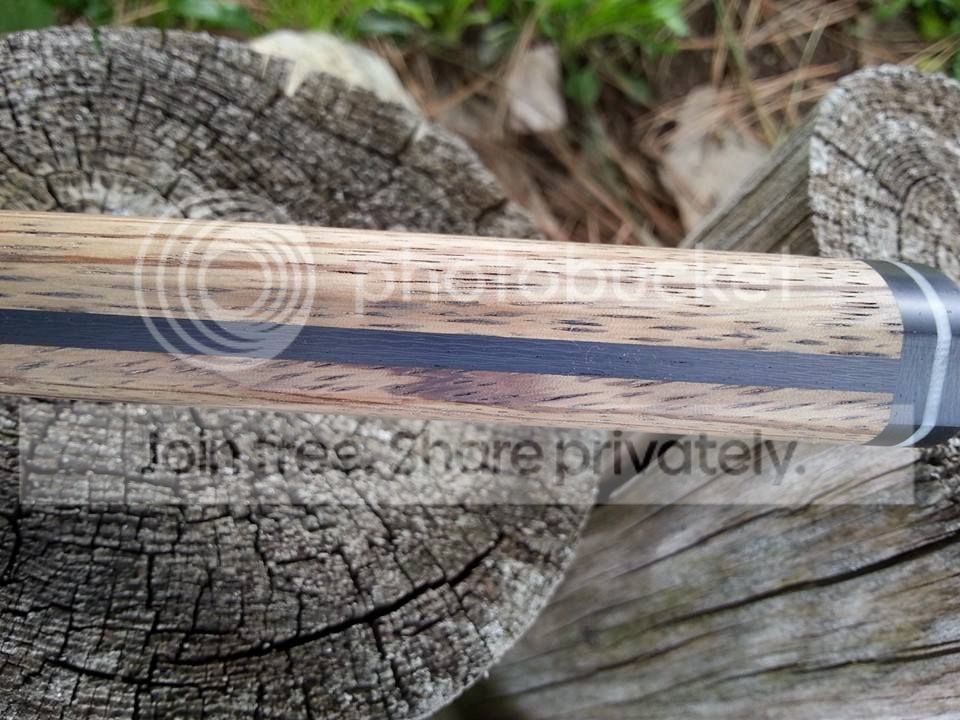
6 piece handle is made with carbon fiber bolsters white g10 and zebrawood with a carbon fiber backspacer
This one also has a distal taper
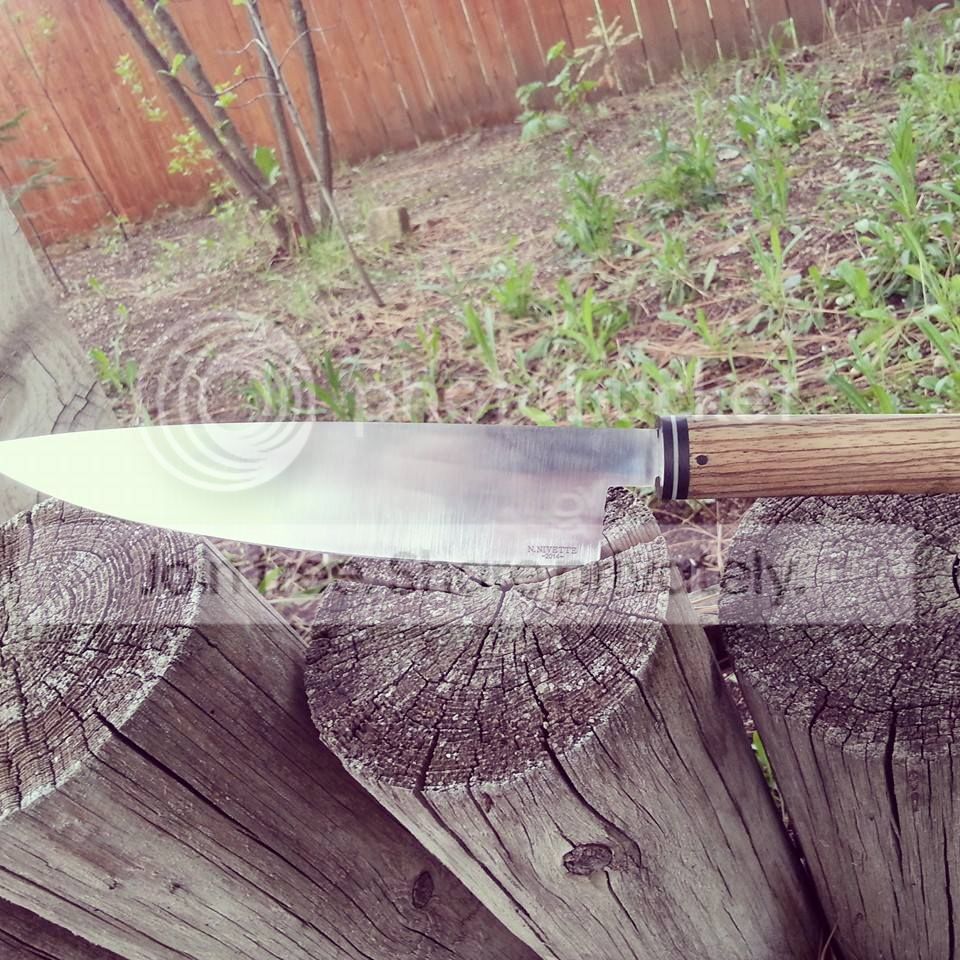
chef1.jpg

chef6.jpg

chef4.jpg

chef5.jpg

chef3.jpg
 
Feedback:

Positive:

I like it. Zebrano is one of my favorite woods.
The profile of the blade is nice.
It looks like you went full flat ground.

Areas to focus:
It looks like you are doing the same as I have been with a gentle continuous curve along the blade edge. Keeping the 1/2 to 2/3 of the blade flat will work better.
It looks like you have some pretty big gaps at the front of the handle, and the pin looks a bit too far forward.
The handle looks thick at the front.
The finish sanding looks a bit coarse/uneven.

Keep at it! Kitchen knives are a lot harder than they look. I am eager to see what the next one looks like!
 
Here's what I observe...

Blade looks pretty good, but as was pointed out before the finish sanding has left visible lines/grooves/ripples in both the flats and the bevels. I personally prefer to get rid of those, but can understand if that was the design look you were shooting for.

The tang seems to needlessly narrow before plunging into the handle. The bolster and the handle are plenty wide to accept the full width of the forward part of the tang, so I'm not sure why you would narrow it like that. More pointedly, the narrowing of the tang is visible because you didn't push the tang far enough into the hole so that the larger part of the tang sat flush with the G10 bolster.

The handle seems to me to be too wide from side to side. I like the mix of the G10 and the wood, and using G10 as the bolster makes perfect sense to me. The zebrawood looks surprisingly uninteresting for such an exotic sounding wood. Was it stabilized? I also like the way you used the G10 to form a sort of frame around the tang. I think that looks great.
 
The zebrawood is sanded up thru 1200 grit and no it isnt stabilized. Its a natural hardwood. Im going to slim the handle down a bit and try to maybe taper it from back to front.

By ripples do you mean grind lines? I ground this to an a100 gator belt then buffed I guess I could have stopped at the gator belt. It would have turn out more even.

I appreciate the feedback
 
A 100 gator is about 150x in traditional grits iirc ? Most go to 400 to 800x on kitchen knives. It's a pain, but looks really good.
 
Back
Top