My Test of 52100

G L Drew

Knifemaker / Craftsman / Service Provider
Joined
Feb 3, 2005
Messages
4,808
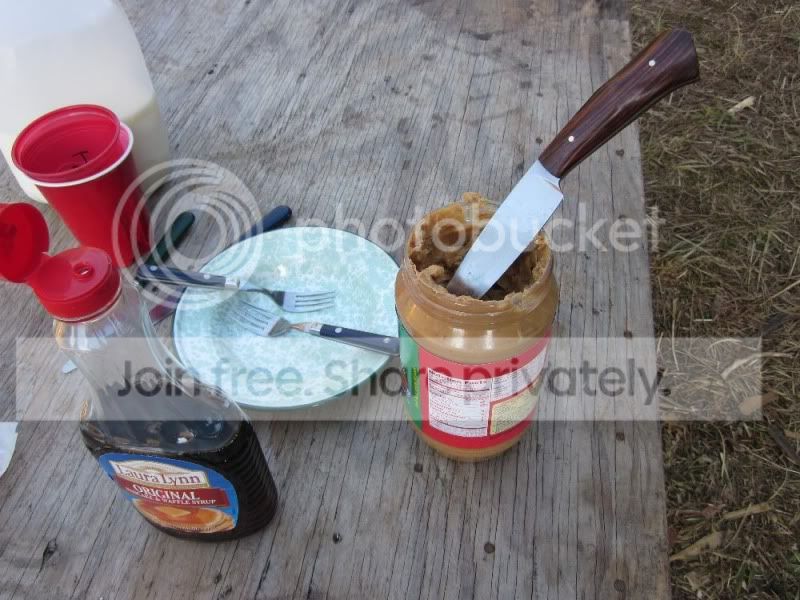
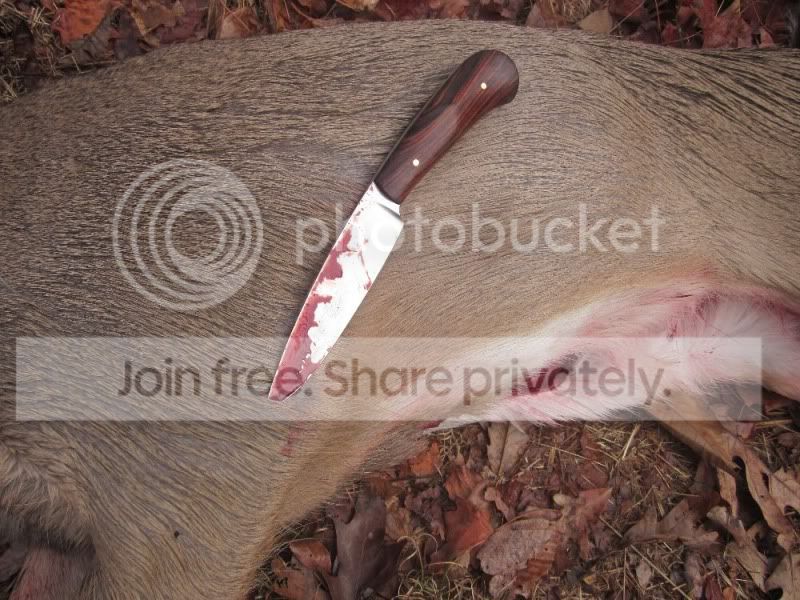
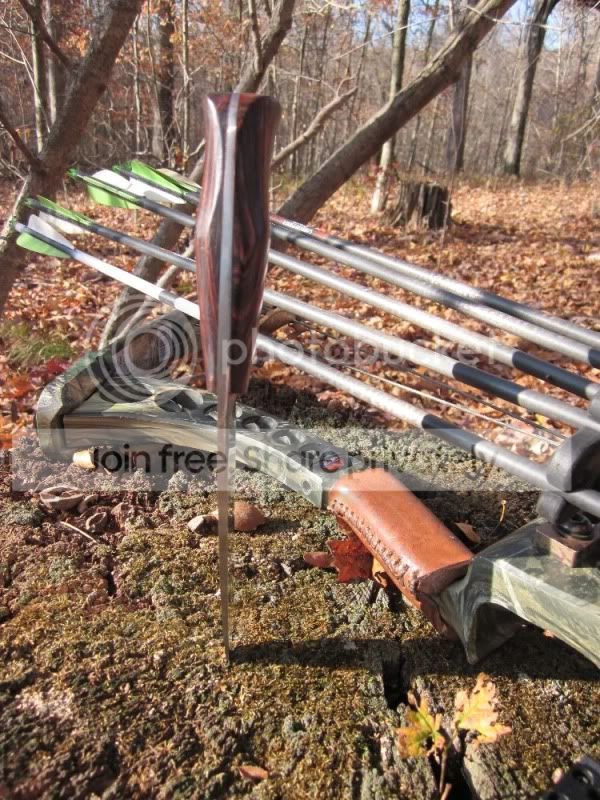
I have made a few knives from 52100 tested by chopping 2x4's, cuting rope and shaving arm hair but I wanted to put the steel to an actual use test. So, as much as I hated having to do this I packed up this knife and went to deer camp for a couple of weeks. I made this one a little longer and thinner than I normally would for myself but I had a lot of different uses planned. Hopefully putting up a lot of venison.
11-28-1.jpg


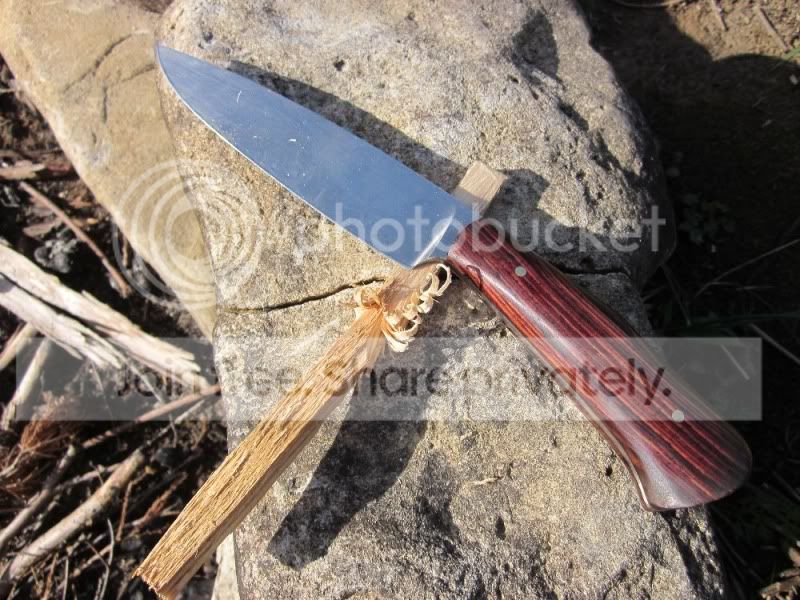
Two fires a day started with shaved fatwood.
11-28-3.jpg


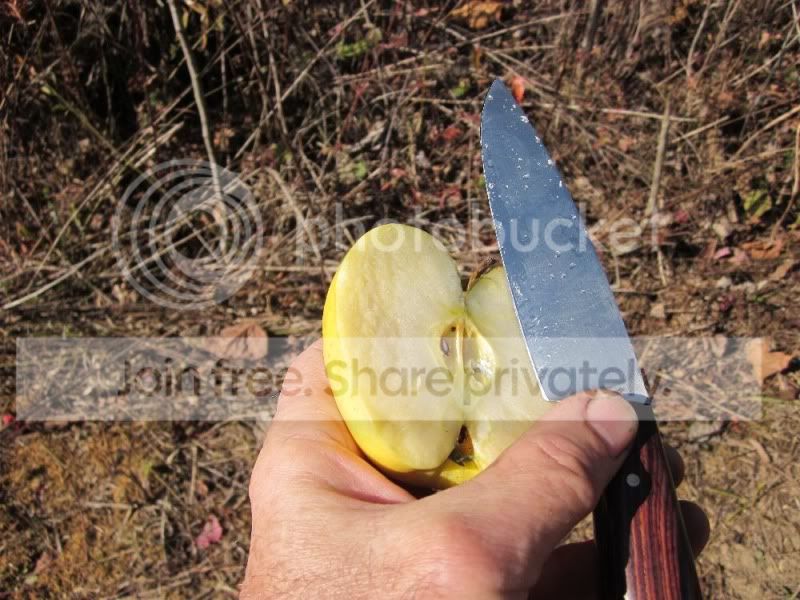
The apple did not stain the 52100 until I left it in the scabbard with the apple juice still on the blade. Just a slight dull gray stain like vinegar might cause with extended exposure. No rust.
11-28-2.jpg


Lots of camp chores.
11-28-4.jpg


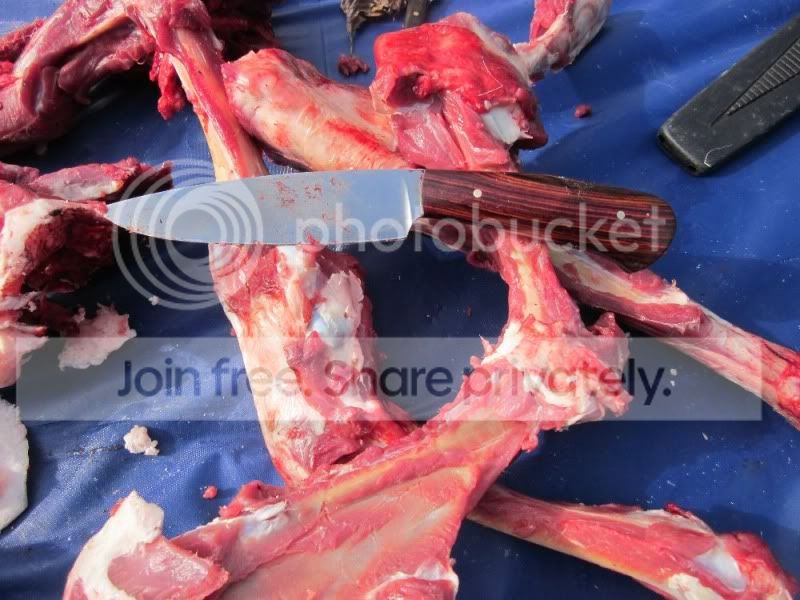
A small doe is field dressed.
11-28-6.jpg


Skinned, boned and cut to steaks and roasts.
11-28-5.jpg


Conclusions:
When I got home I looked at my edge with a 10X glass and found no chips or folding of the edge. The chromium in this steel not only makes it tough, it makes it fairly stain resistant. A knife from 52100 could easily be kept rust free; I like that. Using Ed Fowler's heat treating methods the knife had a very fine grain and cut meat, wood and other materials very well. Does 52100 make a better hunting knife than the 5160 that I have been using? I don't know yet, I will have to continue my testing for a few more years.....darn.
 
I like your meathod of testing. The knife looked pretty darn nice from what I could see!!! Frank
 
Mr Drew Thanks for posting. I really like 52100 I have found the same test results I think your really going to like it as much as 5160 if not more.. Congrats on the venison. I didn't know you were a bow hunter.
 
I just bought 2 hawk heads made in 52100 and your review sounds encouraging. Thank you for writing it.
 
I'm suprised. Cutting peanut butter usually chips the blade every time.
 
Last edited:
I have made a few knives from 52100 ~~ but I wanted to put the steel to an actual use test. So, as much as I hated having to do this I packed up this knife and went to deer camp for a couple of weeks. ~~~~I don't know yet, I will have to continue my testing for a few more years.....darn.
Gee, thanks for the sacrifice as well as the great pictures and feedback. I know it was a chore for you G L. :D .. :D .. :D .. :D .. ;)
 
52100 is a great steel. It's got great edge retention because the carbides that it forms when properly heat treated are tiny so you dont get large carbide ripout like you do with some of the fancier steels. The only problem I've got with 52100... it's a @#%@#% to move under the hammer, even at perfect forging temp =)
 
My suggestion is to let it soak a little longer at forging temp. before you try to forge it. The book says 2 hours for every linear inch to the center. We don't have any trouble forging it when we let it soak at 1625 f.
 
My suggestion is to let it soak a little longer at forging temp. before you try to forge it. The book says 2 hours for every linear inch to the center. We don't have any trouble forging it when we let it soak at 1625 f.

Ed. I got some 52100 round stock I'm going to work on over the weekend. How long do you let it soak at 1625?
 
52100 is a great steel. It's got great edge retention because the carbides that it forms when properly heat treated are tiny so you dont get large carbide ripout like you do with some of the fancier steels. The only problem I've got with 52100... it's a @#%@#% to move under the hammer, even at perfect forging temp =)

Justin,
I forged a little 52100 last year for a special project, and I didn't notice any difficulty at all. It moved under the hammer easier than L-6 and similarly to and maybe even a little easier than O-1.
Thanks,
Del
 
The book calls for 2 hours for every linear inch to the center (2 inch round bar would soak for 2 hours). This is one time we agree with the books. I usually place my bar stock in the forge immediately after I light it and let it to come up to temp with the forge then let it soak until it moves easily. If it is bounding around as you forge it, you need to let it soak a little longer.

As scale is a function of both time and temperature you will have larger scale after the soak than with the following heats which if you are at the right temp will be no larger than snow flakes. This takes a lot of thermal cycles to get a blade forged, but each one refines grain and is actually beneficial. If you get tired, just heat the bar to non-magnetic and let it cool in still air at 70 f. giving it a normalizing heat. It also prolongs the life of your weld to the bar to include it in the normalizing cycles.
 
It's probably soak time that's my problem then with forging it. (by hand) Even with it at temp all the way through, it fights / resists the hammer more than most any other steel i've forged (well other than the time i accidentally got a bar of h13... talk about something that doesnt want to move!), rebounding the blows a lot.
 
It may be that what you are using is not 52100. Years ago Dick IIams brought down a ball bearing that we could not forge, no matter how hot we got it.
 
Also could be very true. I sorta gave up on the bearing after a good half hour of hammering didnt really move it that much, and went back to some of the 01 and 1084 I usually use =)
 
Back
Top