Need help learning to make handles and then......

Joined
Dec 7, 2008
Messages
7,187
I figured the best way for me to learn would be to start in one area of knife making and get good before I move on to the next. Since the equipment I have on hand are woodworking tools it only makes sense to start with handles.

The two knives here are made with blade blanks provided to me by Adam Michael knives. I really like their shape and the tapered tangs.

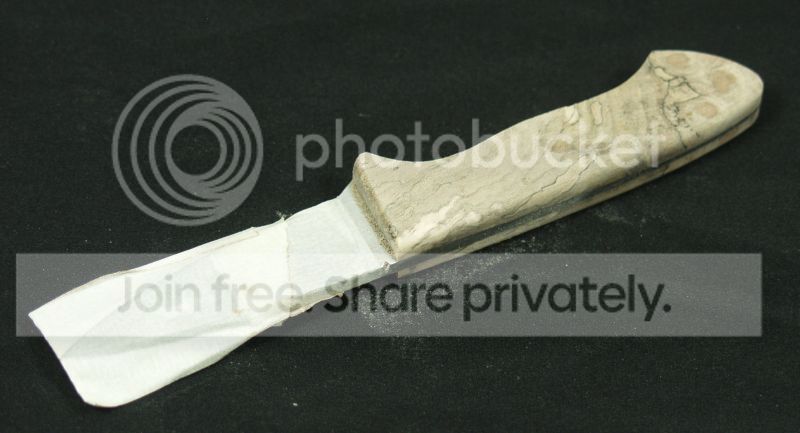
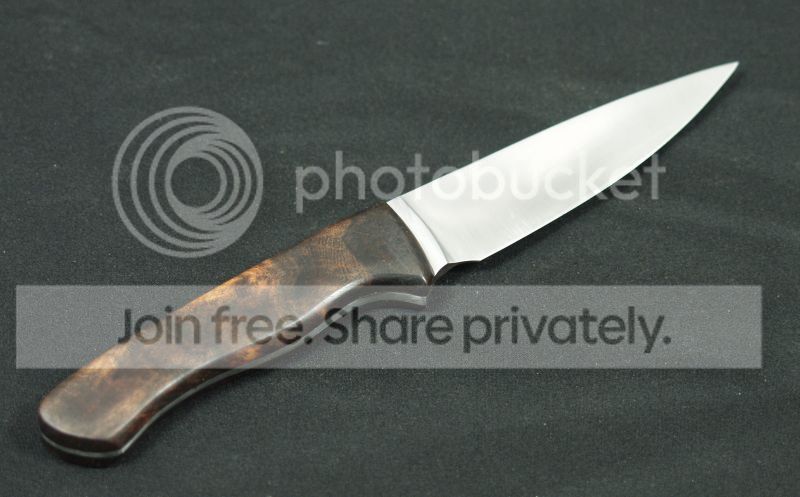
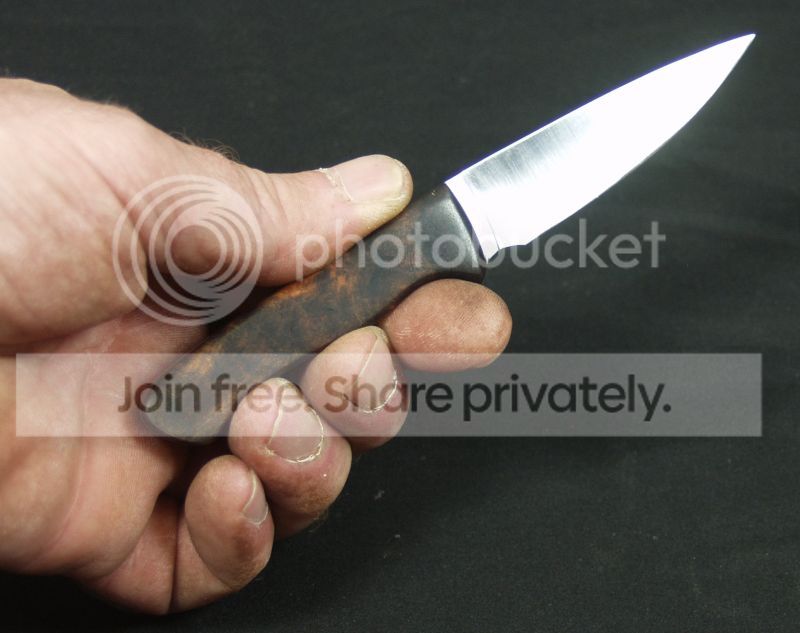
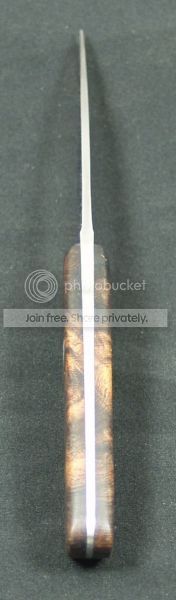
On the first knife I cut the scales from a piece of end grain ironwood scrap. After epoxying on the scales I sanded away the excess and did a little shaping rounding off the edges with a folded piece of sandpaper. It doesn't look as bad as my previous attempts, but I am wondering if I should be doing things differently for a more gracefully shaped handle. ....or should I just keep doing things how I am and hope to get better in time?
iwk21006.jpg

iwk21007.jpg


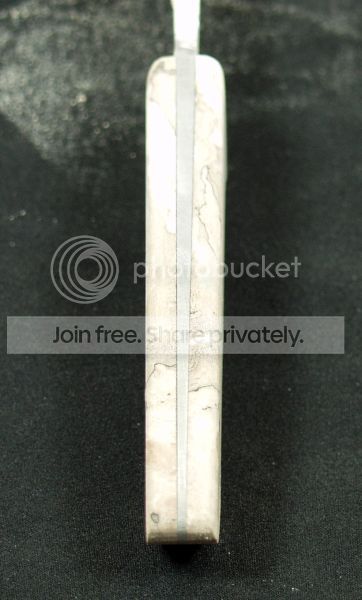
The scales are about 1/8" thick. On future ones like this should I attempt a swell in the middle or taper the edges more?
iwk21003.jpg


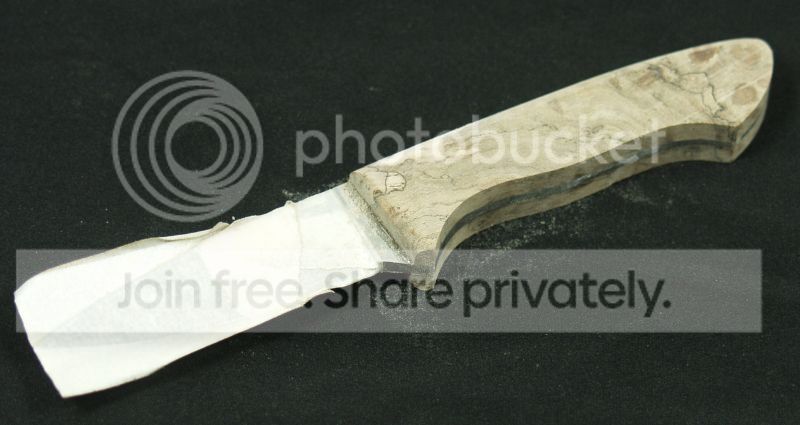
This next one I have sanded away the excess and was starting to round the top edge. I figured I would wait to hear what advice you guys give before I go any further.
iwk21008.jpg

iwk21009.jpg


Instructions, advice or comments are welcomed and appreciated.
Thanks, Mark
 
Mark
Are you using hidden pins,or no pins at all. Other than that their looking good.
On the second knife those long ears on the front of the scales at the finger guard look good but have a tendency to break off along the grain if bumped a little hard.I usually round the front of my scales.
Stan
 
It is probably a mistake but both of these are no pins at all. The blanks were drilled for pins so the no pins thing was probably a mistake. I was thinking with such a small knife that will only be used for stuff like opening packages and such they wouldn't be necessary. ????

Right now to me, my handles look like flat pieces of wood with rounded edges. I was hoping to learn to a achieve a more refined look. I plan to taper down the ears on the second knife. I was waiting before going further to hear if someone told me a different way to do things. I read somewhere about using a strip of sandpaper like a shoeshine rag for shaping. Should I try that?

I am also getting a really thin dark line between the tang and the wood. Is that normal? or... should I clamp the scales tighter?
iwk21010.jpg
 
Last edited:
Mark,
thicker wood and like a 1x30 belt sander would do you wonders buddy!
 
Hi Mark,

Ed Caffrey had a good tip not too long ago about not taping the blade. If you get more into fancy contours, it gets tougher to keep things looking symmetrical if you can't sight off of the straight balde.

Nothing wrong with using rasps and files if you're used to woodworking tools. Maybe some way to clamp the blade end securely would help. Do the pins next time, a scale may pop off unpredictably.

Nice blanks Michael, and you're turning them into nice little knives Mark.

Take care, Craig
 
Mark,
thicker wood and like a 1x30 belt sander would do you wonders buddy!

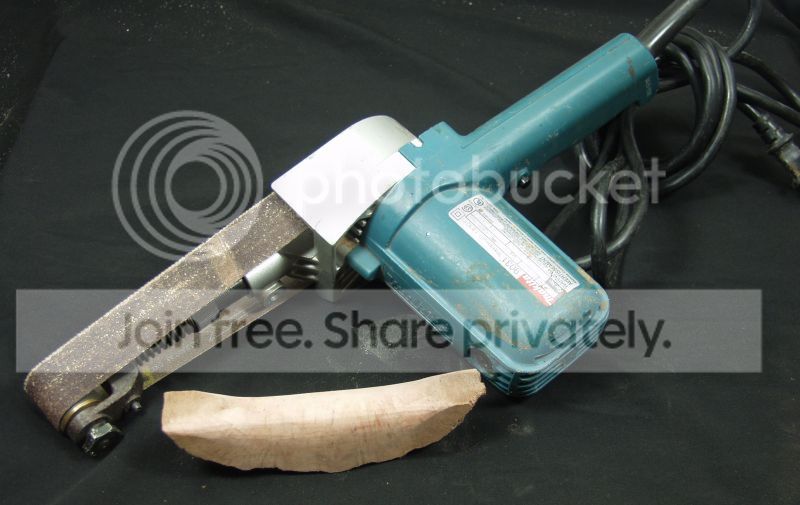
I found this is one of the tool cabinets. Just tried it on a scrap and it seems to round off the wood pretty easily. Now, if only I wasn't such an uncoordinated klutz. Guess I better set up a vise in my work area. This thing is really good at launching stuff.

iwk21011.jpg
 
That line is from not having a good fit to the tang,sand the back of the scales on a flat surface IE apiece of glass or surface plate until no light is visible between the scale and tang.you don't want to clamp too tight or you will squeeze out the epoxy.
Stan
 
If you hold your empty hand as if you were holding a knife you'll notice that the natural
opening is really more egg shaped than round or oval. I try to mimic that in my handle
cross section (unless I have a design reason not to). Smoothly rounded all the way
around but with the top a bit more circular and the bottom more tapered. IMHO, this
feels good in the hand and in use as well as looking good.

I also like palm swells, my most recent handles narrow a little just past the guard then
swell to the palm and narrow a again at the butt (all in terms of thickness). For this
reason I very seldom consider scales less than 3/8 thick (though mostly prefer to cut
my own from blocks anyway).

On the other hand, there are people who really dislike all of the ergonomic handle
treatment...
 
One tip I will give is to finish the area of the scales near the ricasso before you put them on. Once they're on you'll constantly worry about scratching up the blade. Tape, or if you can do it with corbys, rivet the scales together and shape them together and take them to whatever finish you plan to do the whole scales. Having some kind of pins for attaching those scales would probably be the preferred method to be honest. Besides if you're essentially practicing here why not attempt putting some kind of pins in there. If you screw it up it's not like you'll have a hard time finding more wood :p.

And heck stop dancing around and get to making a knife :D. Didn't you read my WIP I did? I was clueless (I mostly still am) however the point being is just jump in and have fun. Do a WIP if you really want some good help. I'm 100% positive if I tried doing a knife on my own without doing it like I did it would have turned out A LOT worse. The amount of help I received through it was about as close as working along side a seasoned maker as it could have been. It was like a virtual knife making class to me.
 
Last edited:
i think this thread is very useful for learning to shape handles
http://www.bladeforums.com/forums/showpost.php?p=7838333&postcount=4

i too had a problem with 'square' handles on my first couple of knives.
you just gotta try and not be afraid of taking off too much.

I also finish the front end of the handle since it's alot more difficult to shape and sand it when its stuck on the knife without damaging the ricasso.

The thread was helpful. I liked the photo that showed how he sanded the bevel in the handle and then shaped. At first it seemed like an awful lot of material to take off but now I can see how it would make the shaping easier and more even.

Fletch's comments "go ahead and make a knife". I have made several that were nothing to be proud of.
Mike Turner lives pretty close by and has made a few offers for me to come out to learn to forge and grind some blades. Last time he was out he gave me a billet of damascus he made. I think it was meant as motivation to get me off my butt to become a real knife maker.
 
Last edited:
Keep making them then :D. No matter what the activity, a person can only get better by doing. I'll never forget what my instructor told me when I first started in Jeet Kune Do. I asked him about watching videos about to get better at things like grappling, throws, and ground fighting. His response to me, and I kid you not was: "You can't get better at ****ing watching porn".
 
dont worry about getting everything perfect just jump in. My first knife looked like crap but I learned fast, improving the handle, blade, and fit and finish all at once.
 
Damascus certainly works as an inspiration to me. Go for it, Mark. To heck with convention... start out with the good stuff, and let it drive you to better things.

- Greg
 
here is something that helped me. I do mostly through-tangs. I used to drill or drill and burn the hole for the tang.

I got a router bit and some chisels (ok - I had the chisels), and I put the router bit in my drill press. I now buy handle material by the BOARD, so I can make handles and matching wooden scabbards. Draw an outline of the tang on a piece of board, do the same with another matched piece, then route out the space necessary to put the tang between the two pieces. make sure everything is sanded perfectly flat around the channel. 'glue and clamp. This is how saya are made, too. Here is the first video in a series of 15 that show a really talented bladesmith making a wooden sheath for a katana. You can use the same technique to make handles for hidden or through tangs, and they are much more precise than drilling or burning.
this is how tsuka are traditionally made, too.
http://www.youtube.com/watch?v=oJjaPWYSXjo

plus, you can make killer sheaths.

There are about 60 videos from this guy, he shows how to make a patternwelded katana, en suite.

good stuff.

kc
 
Back
Top