Need help with my sanding bar

Joined
Nov 29, 2005
Messages
475
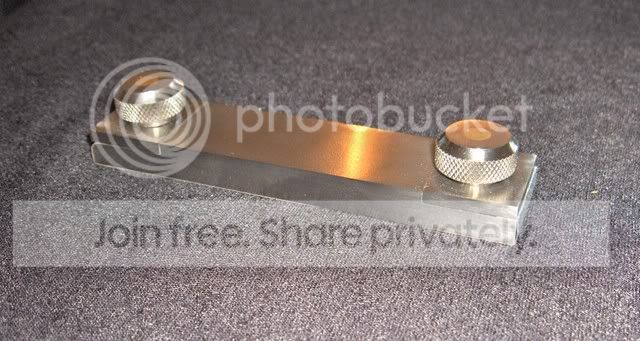
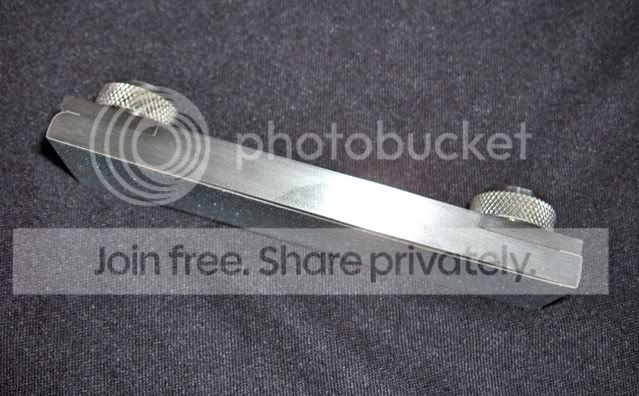
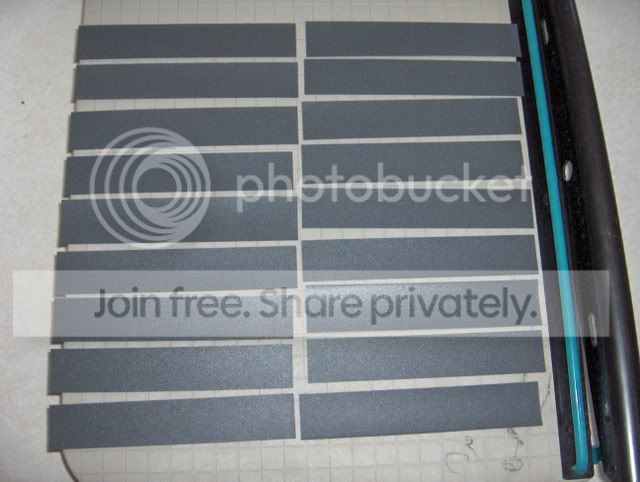
I filed out myself a sanding bar (Don't know what else you'd call it. One of those double handled flat bar dealies for use with shop rolls) today out of some 154 cm I had left, but now that I'm about to heat treat it I was wondering about how I'll attach the shop roll strips to it. I think I saw one person who used something like this (Don Fogg perhaps) with a can of spray adhesive nearby.. Then I remember a recent post from Stacy talking about having slots to pull the paper up through with something similar. Which do you guys use, which is more convenient, etc... It's 1.5" wide stock, so I could put 1" slots where each handle meets the flat rectangular part.

Thanks in advance :)
 
I made this last winter out of titanium. It hard, light and won't scratch the steel if the paper wears through or slides off.

sandingblock4.jpg


The radius on one end allows you to slide the paper in easier.
sandingblock5.jpg


The sanding block's dimensions use the sandpaper very efficiently w/o much waste.
sandingblock3.jpg


I have used it on several knives and will be making a larger one that will use a 1/6th sheet for larger blades.
 
This is my sanding set up. I use two pieces of aluminum bar and squeeze the paper between the bars. Then I wrap the paper around the bar. I can use rolls or full sheets, and I don't have to mess with spray adhesive.

Hand-Sanding-Chair.jpg


Sanding-Rig.jpg


Sanding-Rig-2.jpg


This is Don Fogg's set up (from Ashokan 2006)
Fogg-finishing-stuff.jpg


Fogg-finishing-equip.jpg


Fogg-finishing-demo.jpg

 
Yes that was where I saw it. I wanted one after I had a file bite through some sandpaper and gouge a blade once. Alright, thanks for the ideas, I think I'll work out some way to pull the strips tight rather than use glue... (I don't think that it'll have fancy knurled knobs though ;)) I go through paper pretty quick, so I wouldn't want to be dealing with glue.
 
I made some sanding sticks from angle iron. I flattened the flats, rounded off sharp corners, and on one, I cemented a piece of leather for a softer finish.

To hold the paper on, I just use a spring clamp. I cut squares that fit handily on the strips. I can rotate the squares to get the most out of the paper.

IMG_6490.jpg


--nathan
 
That's a cool one too. There's probably a million ways to skin this cat, I may as well use the foot and a half of stainless (I could've used 1095, but that stuff turns brown and crusty overnight in my shop, and I know I'm likely to leave it there) I've cut up though ;)

Wish there'd been a thread like this when I first started! On the previously mentioned file-gouged knife from my early days, I probably went through 25 sheets of 220 trying to fix it. Having some different ideas on sanding sticks might have led me to figure something better out.

My only problem now is drilling the 154cm to start slots, I always melt my bits in that stuff even running slow.
 
Way back when, Bruce Evans came up with a way for sanding that I've used ever since. Use a common palm sander, replace the rubber platen that comes on it with one of Micarta. You can radius one or two edges to match your typical plunge. This works so well that I've never looked back. When I get to the final finish, I just wrap the paper around a hardwood block with a sharp edge to pull in the final long lines and viola! Done. It's pretty painless. I'll never go back to elbow grease again. ;)
 
I use a flat bar like Don's, 2 inches wide and 1/4 thick with leather on one side.
3M feathering adhesive in a tube to attach it. You squeeze a little on, spread it with some
old sandpaper or something and it will hold a good many sheets for sanding before you
need more adhesive.
 
So you just kinda wear a strip out, and pull it off before the glue ever dries and do another? That was sort-of what I was wondering originally. I was worried if it was like, having to let it dry, and then prying the paper up later, etc..
 
ok! great for flat grind now how about showing your sanding block for hollow ground
vern
 
I'm reading all these methods and planning on making some Fogg style sanding "sticks" because I don't have a belt grinder. Then the question hits me

Why wouldn't you use a belt grinder with a platen for this work. Of course I ask this specifically because I don't have one and have no idea how it would help or the unforseen problems it could cause.

Anyone care to enlighten me why sanding by hand is chosen over using a grinder?

BTW thanks for all the great info, You will undoubtedly save me time that I'm gonna spend with my wife and kids.:D
 
So you just kinda wear a strip out, and pull it off before the glue ever dries and do another? That was sort-of what I was wondering originally. I was worried if it was like, having to let it dry, and then prying the paper up later, etc..

Yep. The glue lasts for at least 5-6 strips, even over a week or two of little snatched sanding periods in "spare time". Tracy Mickley carries it.
 
Why wouldn't you use a belt grinder with a platen for this work. Of course I ask this specifically because I don't have one and have no idea how it would help or the unforseen problems it could cause.

You want to get as close as you can with the grinder because it's a lot faster.
Then you go to hand because:

1. You probably didn't get it really flat with the grinder. Folks with fancy
disk grinders don't have this problem. Lucky them.

2. Grits finer than 220-400 don't work well on a flat platen because the joint
bump creates more marks than the belt removes.

3. It's hard to do a lengthwise finish on a blade on a platen. it's basically
impossible around the plunge.
 
feathering disk adheasive never really gets quite dry. It was and still is used to hold round sanding disks onto da sanders to feather out the edges of auto body repairs. bodymen like knife makers use sandpaper as if it were free. So it goes on dries to a super tacky film and then stays that way until it gets so contaminated with dirt and other stuff that it is no longer tacky, at which point it is cleaned off with laquer thinner and reapplied. it will last a little longer if it is allowed to dry properly before use.
 
Weeeell, I've only ground like three blades on my coote.. and I'm not great at it yet. :o I was doing better with my files, haha. For the foreseeable future I plan on using the coote to take my blades close to final shape, then a little draw filing and hand sanding to finish. I'm sure the platen works great, but I still have issues with grinding on my weak side, etc... I'd rather work a little harder and have less risk of screwing up.
 
Back
Top