
Need some advice - grinding to zero bevel

Joined
May 12, 2010
Messages
303
I want ask you guys for a little advice on grinding kitchen knife bevels to zero or near zero.

My quest to make awesome kitchen knives has been hitting road bumps. What ends up happening is I get a low point along the edge. If I sand or grind the edge on the higher points on either side of the low point, to even it back out, then continue working on the bevel I end up making it worse. The steel at the high points is obviously thicker, so when I try to thin/even it all back out along the edge I end up also thinning what was the low point, only now it's lower.

I've been doing about half of the grinding post heat treat to avoid warping in the long thin steel.

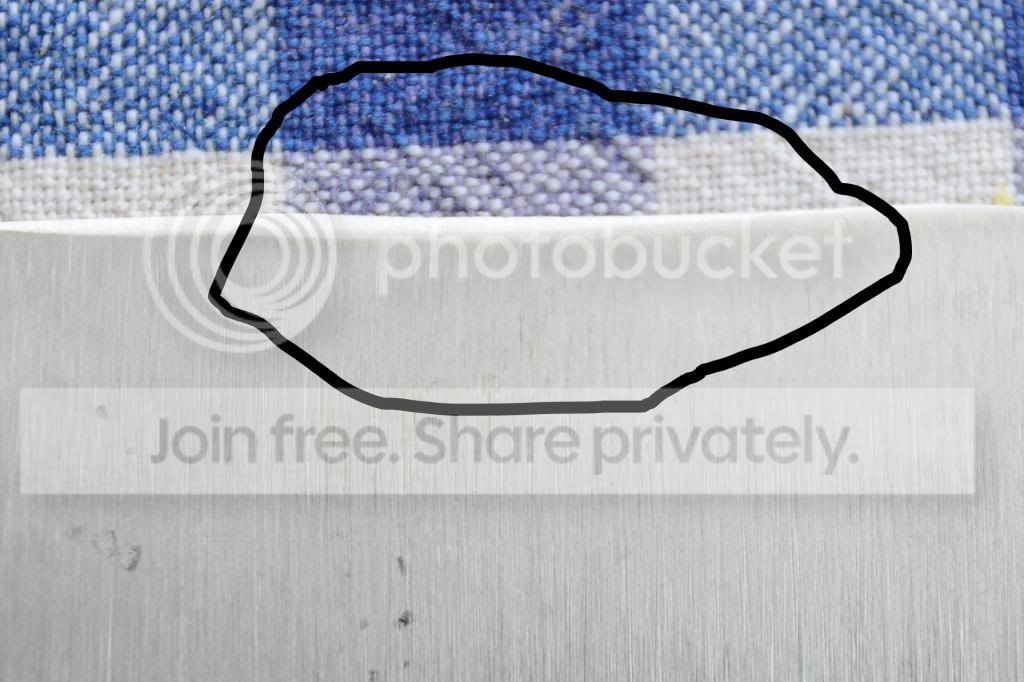
Below is a sample pic. I'd like to say I was testing my heat treat to destruction, but alas, I lost my temper and took a hammer to it :mad:. Anyway, I've over exaggerated this sample, on the grinder, to demonstrate what I'm talking about.

I'm pretty sure this is happening because I need more practice holding the blade steady and even. That being said, how would you guys go about fixing a zero bevel with low spots along the edge?
CSC_6251_zpsc1f81ab1.jpg
 
Kitchen knife grinds to me are as tricky as they get.

I like to do a fair bit of hand finishing with a granite surface plate and paper to ensure flatness.

Grinding sideways on your platen can be like draw filing in the way that it helps keep a bevel flat... I only do this on kitchen knives.

I like to use EDM and waterstones for final bevel finishing, just keep paying attention to flatness.


Nick Wheeler made a video on hand sanding recently that covers this method much better than I can explain it.
 
Last edited:
Is that mark 2 inches from the plunge? It could be where you focused on one area and got a 2 inch mark at the other end of the belt. I get the same stuff sometimes. If it's bad enough have some fun with it and abuse it before you scrap it.

Maybe try to be aware of the full belt width on the grinder, keep the sparks in the middle of the belt.
 
Also, make sure you check your platen. Naturally, any sort of deviation from dead flat is going to give you problems. The platen on my cheapo griner had a low spot in the center, and I had to flatten it in order to get decent results.
 
I agree with Daniel about Culinary knives being a real chore and If I am understanding the question correctly, the way I would fix the dips in the edge of the blade is to re grind it flat by starting at the heel with the edge pointing up at me and bring the blade towards me to the tip.

If it's then too thick I re grind the bevels to my desired edge thickness. That will of course change the over all height of the blade and be what I call a D.M. That's stands "design modification" :D

Well I started out with this fine 8" chef knife but I had this brilliant idea and D.M.ed it into a 8" Suji Slicer carving knife!;)

I am over stating my technic to some extent. LOL, But I am sure you get the idea. Remember as long as its hardened steel you can D.M. it into some other kind of smaller knife or tool with a handle. LOL
 
My WAG would be that if you have access to a nice flat disk grinder your bevels will suddenly get much better.
 
I've often thought a 10" wide vertical belt sander would be ideal for flat grinds, figuring out how to make it a quick change belt system would be the hard part of building one I think
 
Is that mark 2 inches from the plunge? It could be where you focused on one area and got a 2 inch mark at the other end of the belt.

I'm actually not sure were this particular section was from. I picked up of from the pieces of my "destruction test" and took it to the grinder so I could show a visual. The problem area on the knife before destruction was about an inch away from the plunge, toward the blade.

Thanks for the tip though, it makes me re-look at how I'm holding the blade while I grind and now that I thing about it I believe that I'm over compensating, in trying not over grind at the two inch mark and putting the steel to the belt prematurely on the plunge side.
 
If it's then too thick I re grind the bevels to my desired edge thickness. That will of course change the over all height of the blade and be what I call a D.M. That's stands "design modification" :D

I was attempting to do this and then got frustrated as I envisioned my 10" slicer quickly becoming a steak knife :) On a positive note, after smashing the blade with a hammer I did get a good look a the grain structure, and a good idea for how tough this knife was. So even though I walked away angry, once cooled down I learned a bit more on my heat treat than I could have by just cutting and sharpening. I was impressed with the results so it worked out ok in the end.
 
I agree with Daniel about Culinary knives being a real chore and If I am understanding the question correctly, the way I would fix the dips in the edge of the blade is to re grind it flat by starting at the heel with the edge pointing up at me and bring the blade towards me to the tip.

If it's then too thick I re grind the bevels to my desired edge thickness. That will of course change the over all height of the blade and be what I call a D.M. That's stands "design modification" :D

Well I started out with this fine 8" chef knife but I had this brilliant idea and D.M.ed it into a 8" Suji Slicer carving knife!;)

I am over stating my technic to some extent. LOL, But I am sure you get the idea. Remember as long as its hardened steel you can D.M. it into some other kind of smaller knife or tool with a handle. LOL

I was told this by a friend:
"Knifemakers don't make mistakes they make smaller knives."
 
That is often referred to as an over grind and is very tough to deal with on a kitchen knife, as it will leave a hole in the edge where it wont contact the board. I check and recheck the edge on a granite surface plate to catch these early and fix them. Grinding to thicker steel, thus reducing the height of the knife is the only fix I know of. The trick is to catch it early and fix when it is small. Canting the blade in relationship to the platen reduces the amount of belt in contact with the knife and increases stock removal rates. As you get close to your final thickness, only grind with the blade square to the platen to reduce this from happening. Good luck .
 
Back
Top