- Joined
- Apr 7, 2013
- Messages
- 600
Alright folks,
I need some advice with this particular blade. I am making a Japanese boning/butcher knife i.e.: Honesuki. This will be a couple of firsts for me, number one, my first hollow/chisel grind and second, my first hidden tang handle (wa-handle). I have a few questions and I wanted to thank you in advance for your help. Here's a picture to aid in answering questions.
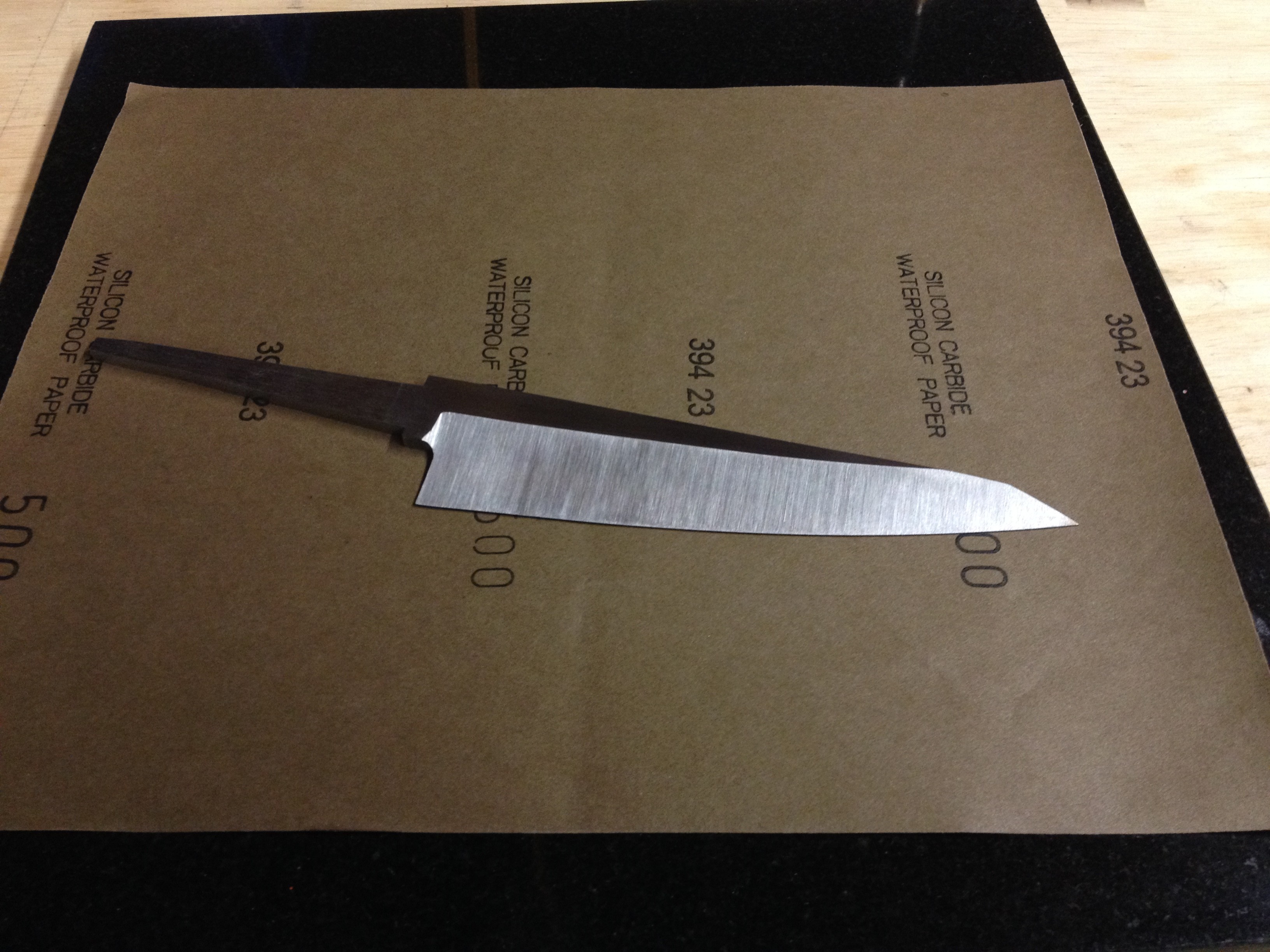
1. With the tang, should I taper the tang in it's thickness as in making it thinner towards the end of it or is the same thickness going to be ok? Also, the blade stock is 5/32" is this going to be too large to use a hidden dowel with my wa-handle construction? If yes, any other construction methods?
2. The blade is made from 5/32" O1, for those of you familiar with this style of knife, what recommend hardness would you go for? It will be used for deboning chickens primarily i.e.: breaking down wings or pieces for fried chicken.
3. I know deep hollow grinds typically spell death for chopping vegetables, but as a protein slicer, do you see any issues? I am planning on keeping the back flat, so no ura like a traditional japanese blade. I will create a final bevel on the hollow side and simply deburr the back like one would when properly sharpening a traditional japanese blade. Do you see any issues with this style of edge, will it be too fragile? Should I include a small micro bevel on the back?
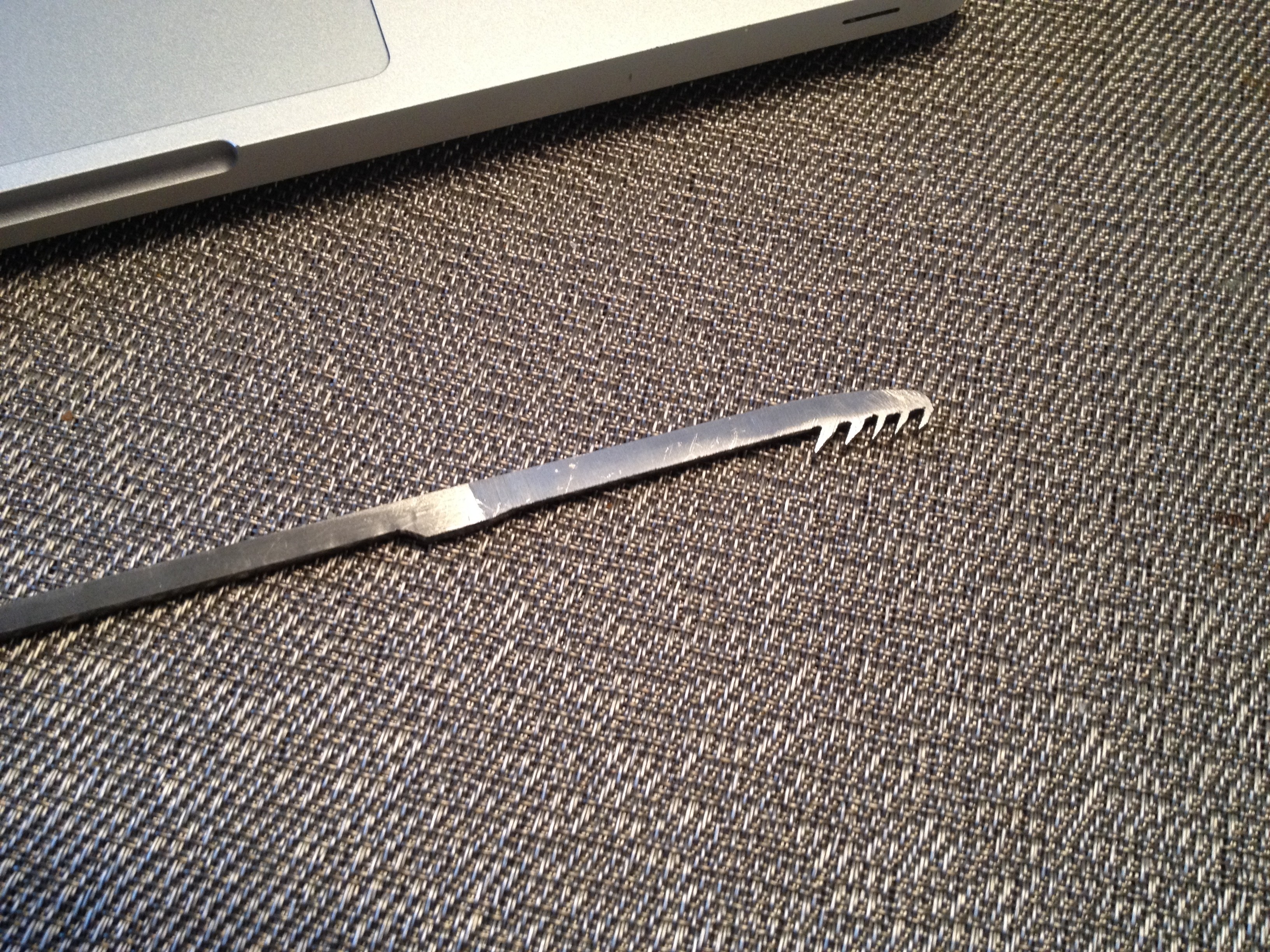
4. I made this broach out of 1/8" O1, which I plan on using to help me with future hidden tang handles. I will be sending this tool out for heat treatment as well, and was wondering what hardness you recommended.
Thanks again folks,
Pete
I need some advice with this particular blade. I am making a Japanese boning/butcher knife i.e.: Honesuki. This will be a couple of firsts for me, number one, my first hollow/chisel grind and second, my first hidden tang handle (wa-handle). I have a few questions and I wanted to thank you in advance for your help. Here's a picture to aid in answering questions.
1. With the tang, should I taper the tang in it's thickness as in making it thinner towards the end of it or is the same thickness going to be ok? Also, the blade stock is 5/32" is this going to be too large to use a hidden dowel with my wa-handle construction? If yes, any other construction methods?
2. The blade is made from 5/32" O1, for those of you familiar with this style of knife, what recommend hardness would you go for? It will be used for deboning chickens primarily i.e.: breaking down wings or pieces for fried chicken.
3. I know deep hollow grinds typically spell death for chopping vegetables, but as a protein slicer, do you see any issues? I am planning on keeping the back flat, so no ura like a traditional japanese blade. I will create a final bevel on the hollow side and simply deburr the back like one would when properly sharpening a traditional japanese blade. Do you see any issues with this style of edge, will it be too fragile? Should I include a small micro bevel on the back?
4. I made this broach out of 1/8" O1, which I plan on using to help me with future hidden tang handles. I will be sending this tool out for heat treatment as well, and was wondering what hardness you recommended.
Thanks again folks,
Pete
Last edited:


 .
.