Need some real help with shaping

Joined
Jan 3, 2011
Messages
71
I hope this works im not sure if I can load pictures from my location.

I have sarted many blades in the last year and not completed one... Its getting VERY discouraging.
The issue is with the shaping of the blade. I make a profiled blank easily enough but when I try to shape the blade edge I keep running into the same issues and I then put the blade away and start another just to run into the same thing again.

ATM im trying to make simple drop point hunting knives with a flat ground edge.
I cant get a clean plunge line with a belt grinder. So I flat grind the blade with hand files.
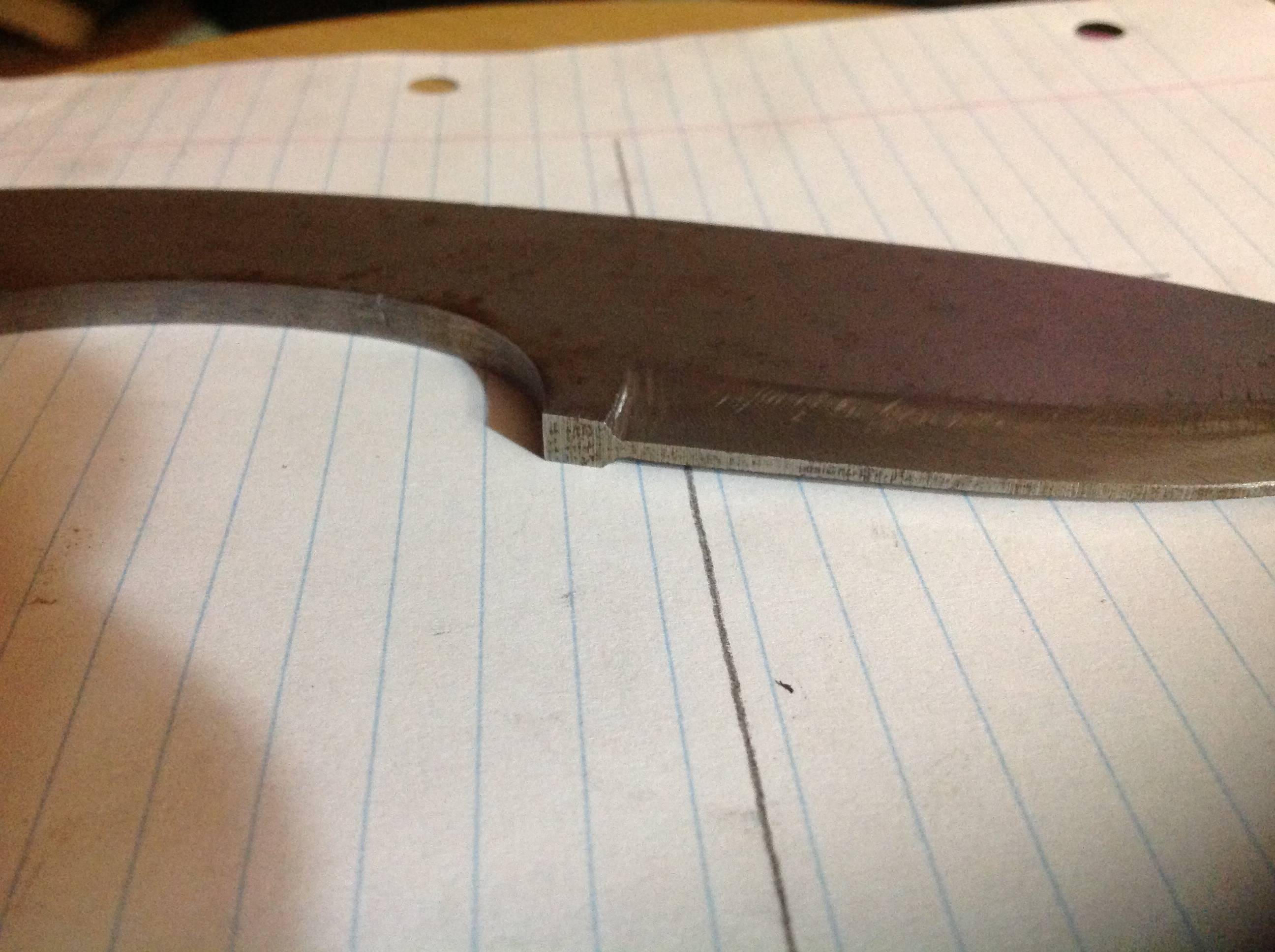
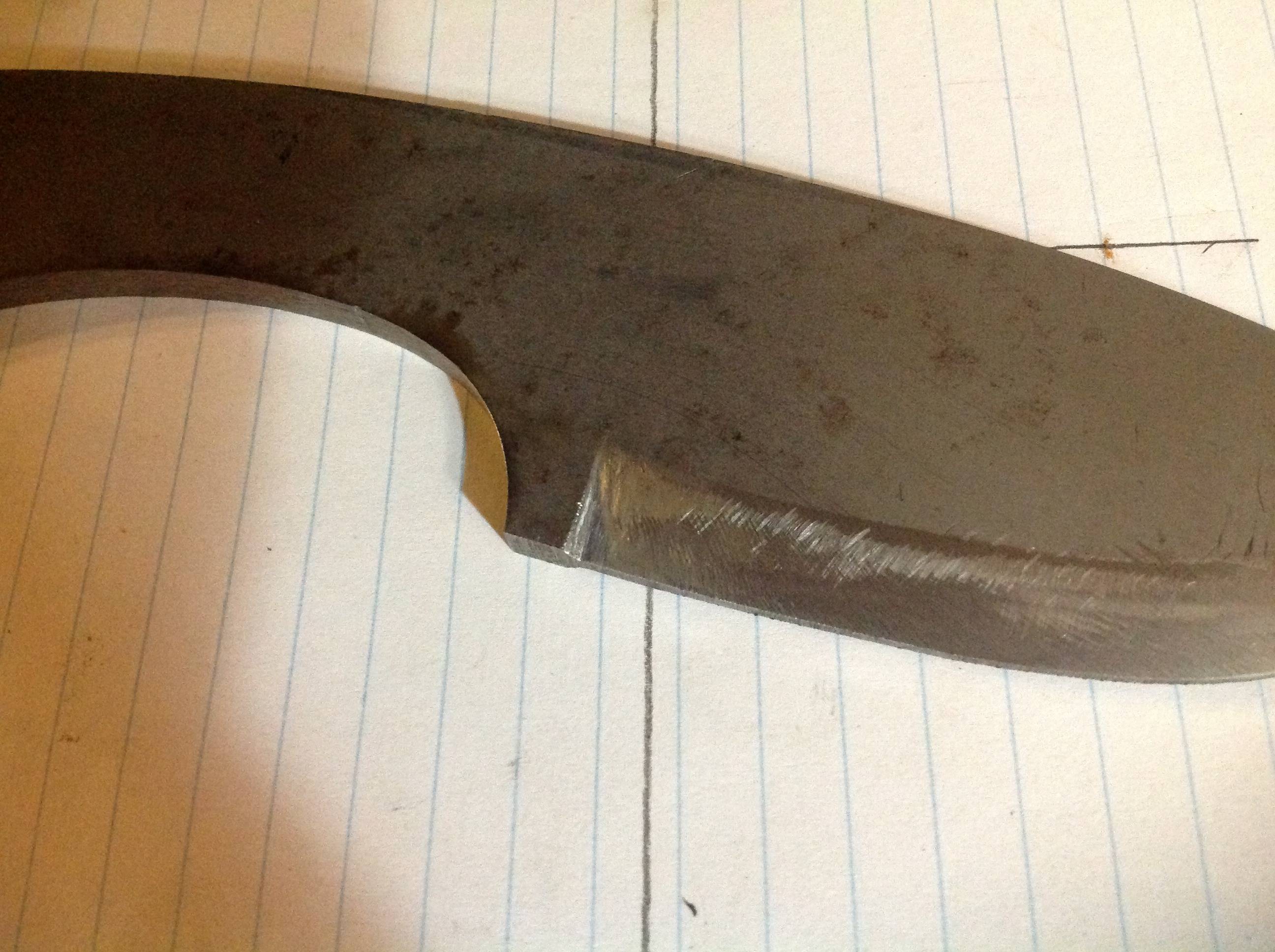
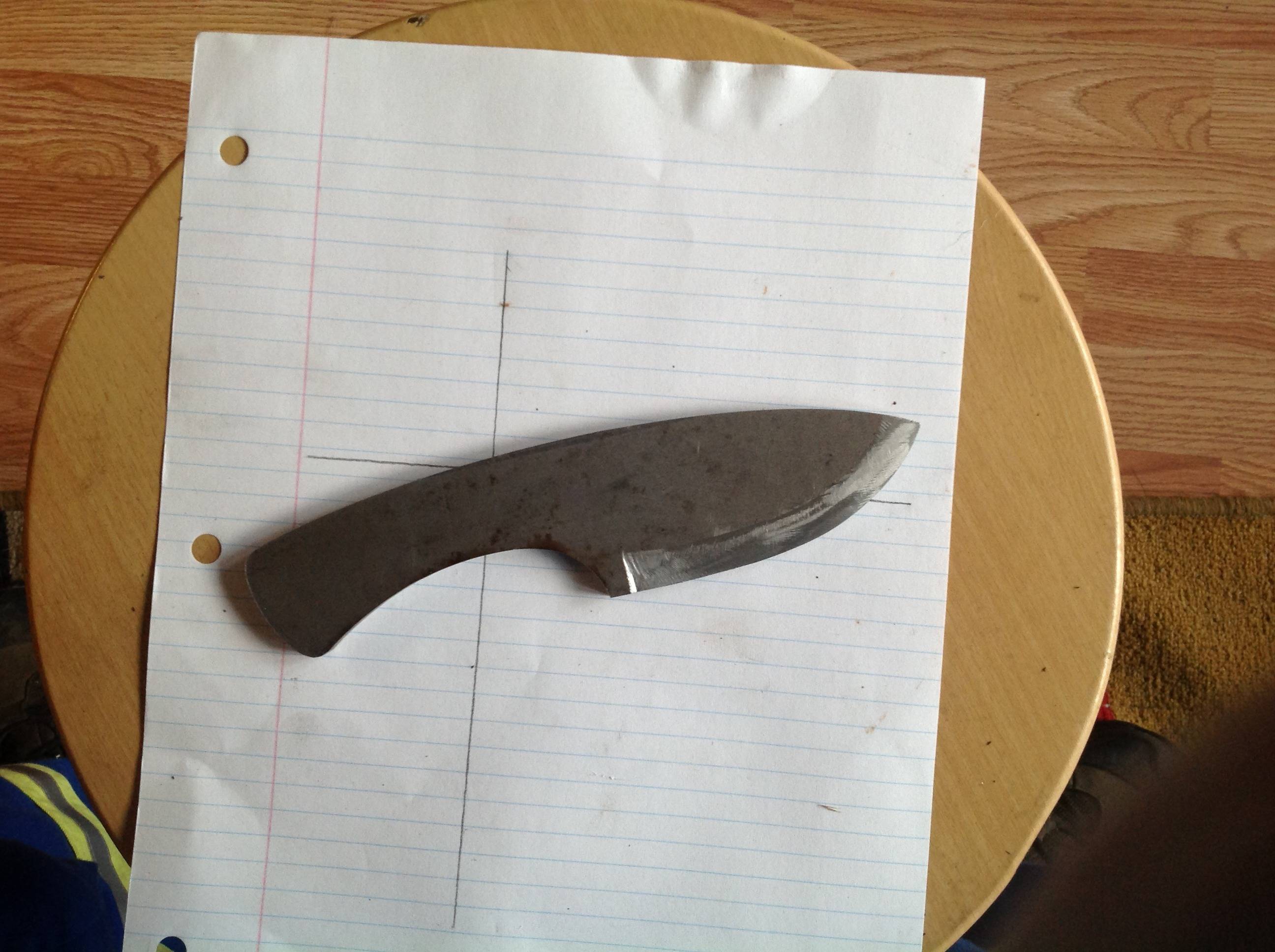
Even with the files I cant get a proper plunge line. Its difficult to describe but I keep cutting into the ricasso and getting a tapered plunge line instead of a nice clean cut if that makes sense. Im actually having a difficult time with my filing and edge shaping in general and cant find a lot on how to get a nice clean shape. I made this simple 1084 drop point today just to practice. I hope these pictures of it load I would appreciate some opinions on this... Its a standard example of my technique (or lack of) Thanks!
rgTwsM3.jpg
CkXKXGz.jpg
5WhVUHW.jpg
 
You can see in the second image the square surface at the bottom of the ricasso... Im not sure what this part is called. There you can see where it tapers to meet the blade edge rather than a nice square shape that I'm trying to achieve.
 
Not sure if I am understanding correctly but a plunge should typically be a bit rounded and not a sharp squared cut. A perfect square plunge from ricasso to edge may seem appealing but it can also produce a possible weak point or stress riser in my opinion. Others with more expertise may have another opinion.
 
you could get what you want by using a smaller finer square file, but most makers seem to do a more rounded transition as Grayzer notes - which you could get using a small fine round file.
 
I agree with the other guys about stress risers and think it looks pretty good so far and you're well on your way. Try draw filing and keep moving the bevel up. Post more pictures when then edge is about as thick as a dime.
 
I think your plunge lines look fine, they should be rounded some what. Don't let something like that stop you from completing a knife, I have found even with flaws, a completed makes you feel good and you can learn from your mistakes. I like the shape of that knife by the way!:thumbup:
 
That looks good to me. I would carry it higher up the side, though. Personally, I like full flat grinds, where the plunge goes all the way to the spine.

One way to get things lined up and make filing easier is to purchase a file guide. It is a pair of hardened bars of steel ( some with carbide faces) that are held parallel with two bolts connecting them. This is placed where you want any straight and equal line from side to side. They are also great for getting the shoulders on hidden tang blades dead straight.
http://www.knifemaking.com/product-p/fg100.htm

As to the sharp cut plunges, as said, it may look neat to be a perfect 90°, but that isn't as great metallurgically. The transition should be a curve in the perfect plunge. Many makers start the cut with a chain saw file against the file guides, and then switch to the flat files to file the bevels in.
 
That looks good to me. I would carry it higher up the side, though. Personally, I like full flat grinds, where the plunge goes all the way to the spine.

One way to get things lined up and make filing easier is to purchase a file guide. It is a pair of hardened bars of steel ( some with carbide faces) that are held parallel with two bolts connecting them. This is placed where you want any straight and equal line from side to side. They are also great for getting the shoulders on hidden tang blades dead straight.
http://www.knifemaking.com/product-p/fg100.htm

As to the sharp cut plunges, as said, it may look neat to be a perfect 90°, but that isn't as great metallurgically. The transition should be a curve in the perfect plunge. Many makers start the cut with a chain saw file against the file guides, and then switch to the flat files to file the bevels in.

:thumbup:+1 on that file guide. I bought that exact one and it is great. Others have made their own file guides with angle iron and other steel, but that guide is hardened and really helps you achieve a true straight plunge line.
 
Try grinding one side of the file smooth, then when you try to square up an edge you don't file something on the other plane.
 
Wow thanks for these replies they answered my questions and then some! It had crossed my mind that squared up might not be good... Now I know! That makes it much easier. A while back I was thinking it would be so much easier if I could make some sort of hardened steel file guide. I didn't know there was such a thing already. That will also come in handy! I like the idea of grinding some files smooth on one side too. I have been rolling the idea around in my mind of bringing the edge up higher on this blade or all the way to the spine even as well. I went with this simple flat grind because I still cant for the life of me figure out how to get a decent hollow. I could hollow on a straight edge but cant make it curve to follow a typical edge profile. Thanks for the help !
 
:thumbup:+1 on that file guide. I bought that exact one and it is great. Others have made their own file guides with angle iron and other steel, but that guide is hardened and really helps you achieve a true straight plunge line.

I also made a poor man's file guide and used it for years before I purchased a Bruce Bump MS File guide.

Take two pieces of any stock you have about 1" x 2 1/2" x 1/8' and clamp them with one of those tiny 1" c-clamps at your plunge line/Ricasso area. Then file or grind away! When the edges get rough from contact with the belt, just clean them up again or make two new pieces.
 
A hollow grind will require a wheel of some sort. The curvature of the grind is relative to the diameter of the wheel. In the old days big stone wheels were used. Now most people do it with a belt sander/grinder. However I was thinking about this the other day and I suppose that if one were vigilant enough then a hollow grind could be achieved with a properly shaped sanding block and lots of sand up, sand down the length of the blade. I would probably have to play "Eye of the Tiger" on repeat if I were to tackle such. May I recommend that you consider a convex grind if a full flat grind to the spine is not curvy enough. It is quite functional and easy to achieve with a little roughing in by draw filing and then smoothing and shaping with a padded sanding stick. Also it is not too tough to get some distal tapper with the draw filing/sanding technique. Some good youtube videos are by sugarcreek forge concerning these techniques.
 
A hollow grind will require a wheel of some sort. The curvature of the grind is relative to the diameter of the wheel. In the old days big stone wheels were used. Now most people do it with a belt sander/grinder. However I was thinking about this the other day and I suppose that if one were vigilant enough then a hollow grind could be achieved with a properly shaped sanding block and lots of sand up, sand down the length of the blade. I would probably have to play "Eye of the Tiger" on repeat if I were to tackle such. May I recommend that you consider a convex grind if a full flat grind to the spine is not curvy enough. It is quite functional and easy to achieve with a little roughing in by draw filing and then smoothing and shaping with a padded sanding stick. Also it is not too tough to get some distal tapper with the draw filing/sanding technique. Some good youtube videos are by sugarcreek forge concerning these techniques.
I was thinking of how to do that on a belt grinder. I have a craftsman 2x42 and a couple craftsman 1x30s I was looking at those trying to figure out if it can be done on them. The top wheel looks like an option but they dont seem right.
 
:thumbup:+1 on that file guide. I bought that exact one and it is great. Others have made their own file guides with angle iron and other steel, but that guide is hardened and really helps you achieve a true straight plunge line.

In the photo what is the big hunk on the bottom of the guide? A stand or is that part of the guide?
 
Back
Top