New stainless "super steel."

Mk-211

Gold Member
Joined
Jan 8, 2025
Messages
3,284
Looks like there's another super steel coming out.

Maybe Larrin can give us some details, if he knows anything about it.
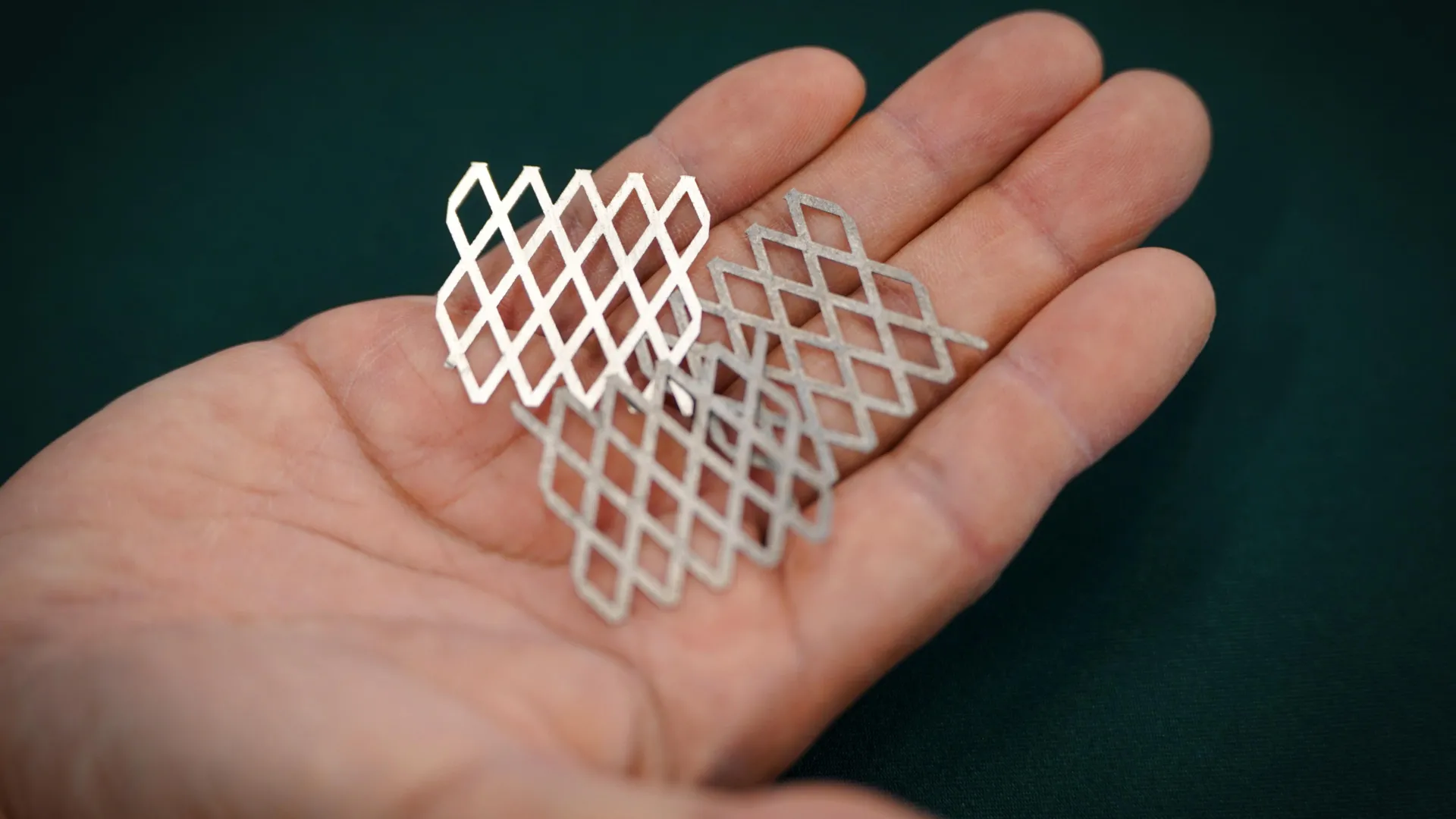
 
Spyderco Salt has some H2 models already , is different from above ? :confused:
 
Looks like there's another super steel coming out.

Maybe Larrin can give us some details, if he knows anything about it.


Screenshot_20260510-125319.png

Matthew Gregory Matthew Gregory
 
Looks like there's another super steel coming out.

Maybe Larrin can give us some details, if he knows anything about it.

This says that it only works when being used as an electrode, so unless you're using one of these it's pretty useless for knives.

stun-gun-knife_400x333.jpg
 
Last edited:
But can this new steel be made into sheets, to make knives out of?

If it can be rolled/pulled through dies into electrodes, it can be flattened into plate.
 
But can this new steel be made into sheets, to make knives out of?

If it can be rolled/pulled through dies into electrodes, it can be flattened into plate.
I'm saying that the improved corrosion resistance which is due to a layer of manganese oxide, only exists when the steel has a certain voltage running through it. In fact, if you read the paper, it says that at lower voltages, the manganese actually increases corrosion. So this is in fact worse than useless for knives that don't have voltages running through them.
 
I'm saying that the improved corrosion resistance which is due to a layer of manganese oxide, only exists when the steel has a certain voltage running through it. In fact, if you read the paper, it says that at lower voltages, the manganese actually increases corrosion. So this is in fact worse than useless for knives that don't have voltages running through them.

I'll have to go back and re-read it, thought they were talking about regular SS, when they were mentioning voltages.
 
I'm saying that the improved corrosion resistance which is due to a layer of manganese oxide, only exists when the steel has a certain voltage running through it. In fact, if you read the paper, it says that at lower voltages, the manganese actually increases corrosion. So this is in fact worse than useless for knives that don't have voltages running through them.
TASER knife ! :p
 
I think that's still talking about regular stainless and not SS-h2.


From the article:
The Steel That Builds a Second Shield

The HKU team's answer was a strategy called "sequential dual-passivation." Instead of relying only on the usual chromium oxide barrier, SS-H2 forms a second protective layer.

The first layer is the familiar Cr2O3 based passive film. Then, at around ~720 mV, a manganese based layer forms on top of the chromium based layer. This second shield helps protect the steel in chloride containing environments up to an ultra high potential of 1700 mV.

That is what makes the finding so striking. Manganese is usually not viewed as a friend of stainless steel corrosion resistance. In fact, the prevailing view has been that manganese weakens it.

Initially, we did not believe it because the prevailing view is that Mn impairs the corrosion resistance of stainless steel. Mn-based passivation is a counter-intuitive discovery, which cannot be explained by current knowledge in corrosion science. However, when numerous atomic-level results were presented, we were convinced. Beyond being surprised, we cannot wait to exploit the mechanism," said Dr. Kaiping Yu, the first author of the article, whose PhD is supervised by Professor Huang.
 
TASER knife ! :p
Unfortunately I don't think 700-1700 millivolts works for a taser knife either.

I think that's still talking about regular stainless and not SS-h2.


From the article:
The Steel That Builds a Second Shield

The HKU team's answer was a strategy called "sequential dual-passivation." Instead of relying only on the usual chromium oxide barrier, SS-H2 forms a second protective layer.

The first layer is the familiar Cr2O3 based passive film. Then, at around ~720 mV, a manganese based layer forms on top of the chromium based layer. This second shield helps protect the steel in chloride containing environments up to an ultra high potential of 1700 mV.
No, it's saying SS-H2 forms a manganese oxide layer at 720 mV. Regular stainless steel would not even necessarily have manganese. The entire point of the paper is that different oxide layers form at different voltages, so the corrosion resistance is determined by the voltage. Improved corrosion resistance was only observed within a specific range of voltage.
 
Last edited:
The actual research was published in 2023. Any updates since then? This article doesn't say so that I see.
 
Interesting paper. Probably not applicable to knife steel given the high Mn content but still interesting. Mn is a very strong “austenite stabilizer” so retained austenite would basically be unavoidable in these alloys. You need to be able to form martensite for a good knife steel.
 
Back
Top